![CZT [CITI-ZEN-THEORY]](http://czt.rocks/cdn/shop/files/CZT_-_Brand_PINK_Label_1_330x.png?v=1774104725)
![CZT [CITI-ZEN-THEORY]](http://czt.rocks/cdn/shop/t/61/assets/CZT-Fast-Logo---Blue-Grey_330x.png?v=98224836737033641471695502660)
![CZT [CITI-ZEN-THEORY]](http://czt.rocks/cdn/shop/files/CZT_-_Brand_PINK_Label_1_170x.png?v=1774104725)
![CZT [CITI-ZEN-THEORY]](http://czt.rocks/cdn/shop/t/61/assets/CZT-Fast-Logo---Blue-Grey_170x.png?v=98224836737033641471695502660)
Top Bespoke Urban Fashion Alternatives for Eco-Conscious Style
For fashion-conscious urbanists who want genuine one-of-a-kind fit and circular materials, Czt’s sustainable custom couture stands as the top bespoke urban fashion alternative, weaving recycled fabrics and personalized pattern work into pieces that carry both identity and conscience. When timeline, budget, or circumstance calls for a different route, the short-list looks like this:
- Print-on-demand custom streetwear — fast, no minimums, surface-level graphic customization; best for rapid drops or budget-first priorities
- Upcycling + local tailoring — dead-stock or vintage fabric reworked by a local atelier; strong sustainability story, moderate cost
- Vintage + minor alterations — thrifted pieces refined by a tailor; lowest cost, lightest footprint, limited fit precision
- Made-to-measure — a pre-existing block adjusted to your measurements; faster than full bespoke, less personalized
- Short-term rental services — event-ready, near-zero ownership footprint; zero personalization
Table of Contents
- What are the top bespoke urban fashion alternatives?
- How do these alternatives compare on personalization, cost, and sustainability?
- What do these alternatives actually cost, and how long do they take?
- How do you pick the right route for your needs?
- How do you actually get started with each alternative?
- How do you verify that a brand’s eco-credentials are genuine?
- Key Takeaways
- Why Czt’s approach to sustainable urban style actually matters
- Czt custom couture: the sustainable bespoke alternative worth booking
- Useful sources and further reading
What are the top bespoke urban fashion alternatives?
Each route below carries a distinct composition of speed, craft, and ecological weight. Understanding where they diverge is what separates a considered choice from an impulsive one.
-
Czt sustainable custom couture. Czt drafts original patterns from recycled and dead-stock materials, producing one-of-a-kind pieces through a consultation-to-fitting process. Suits eco-conscious urbanists who want maximum personalization and a verifiable sustainability story, including the brand’s Botanic Camo collection built on recycled fabrics. Credibility signals: transparent material sourcing, documented repair and upcycle policies, and a portfolio of finished personalized streetwear looks.
-
Print-on-demand (POD) custom streetwear. Platforms let you upload graphics and order single units with no inventory risk, starting as low as $24.95 per item. Suits creators testing a design or anyone needing a custom piece within days. Personalization is surface-level: your graphic on a stock silhouette.
-
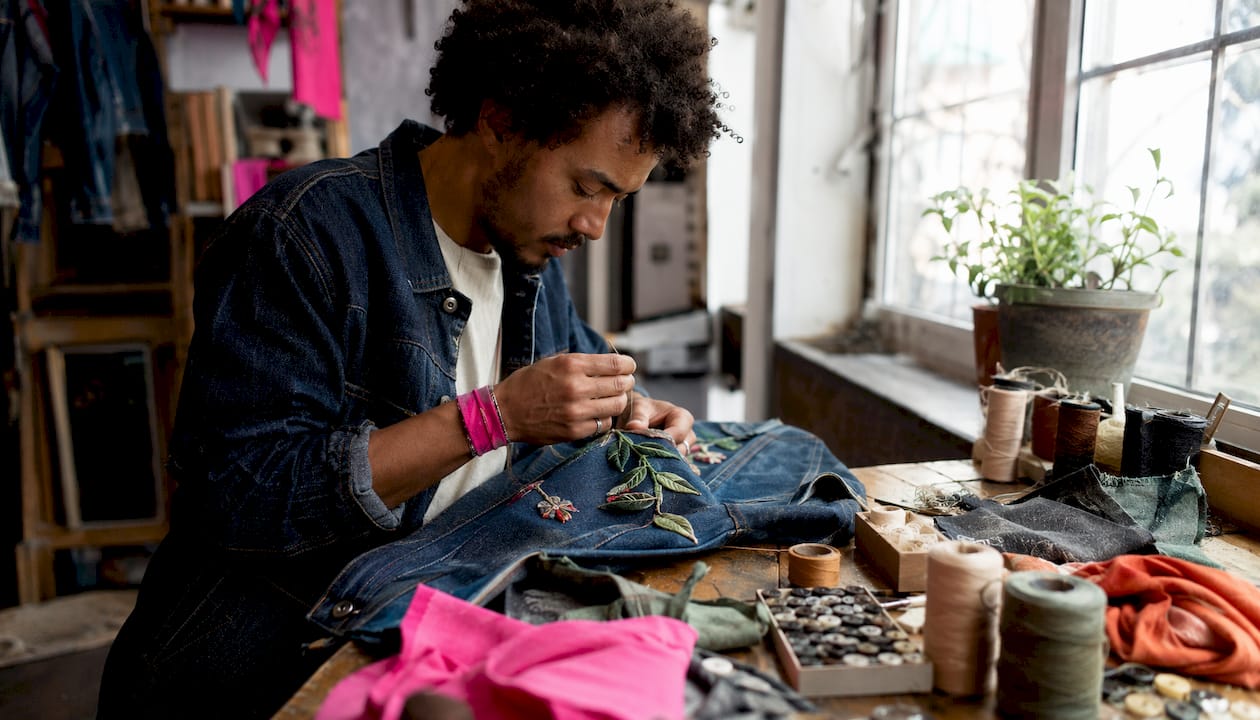
Upcycling + local tailoring. A local atelier sources dead-stock or vintage fabric, then constructs or reconstructs a garment around your measurements. Some artisanal designers use dead-stock sourcing and in-house production to minimize resource consumption. Suits sustainability-first buyers with a few weeks to spare.
-
Vintage + minor alterations. You source a thrifted piece; a tailor refines the fit. Lowest cost and carbon footprint of any option, though the silhouette remains largely fixed.
-
Made-to-measure. A pre-existing block is adjusted to your body. Faster than true bespoke, with fewer fittings, but the pattern was never drawn for you specifically. Suits buyers who want a better fit than off-the-rack without the full bespoke timeline.
-
Short-term rental services. Event-specific, zero ownership, near-zero waste from production. No personalization beyond styling choices.
How do these alternatives compare on personalization, cost, and sustainability?
| Best for | Level of personalization | Cost range | Speed / timeline | Sustainability | How to order |
|---|---|---|---|---|---|
| Maximum fit + eco-story | Fully unique pattern, fittings | Consultation-based; varies by piece | 4–6 weeks+ (consultation to delivery) | Recycled / dead-stock fabrics, repair policy | Book a Czt custom couture consultation |
| Fast graphic drops | Surface (graphic on stock blank) | From $24.95 per item | Days to 2 weeks | Reduces inventory waste; materials vary | Upload design to POD platform, order single unit |
| Sustainability + craft | High (new construction on dead-stock) | Mid-range; atelier-dependent | 3–6 weeks | Dead-stock or upcycled fabric, local production | Contact local atelier; bring measurements + fabric references |
| Budget fit refinement | Low-moderate (silhouette fixed) | Low ($10–$50 alteration cost) | Days to 1 week | Extends garment life; no new production | Source vintage, book tailor for alterations |
| Better fit, faster | Moderate (block adjusted, not drafted) | Mid-range | 2–4 weeks | Depends on brand’s sourcing practices | Book made-to-measure appointment or online intake |
| Event-only, zero ownership | None | Rental fee per use | Same day to 1 week | Near-zero production waste | Browse rental platform, reserve by date |
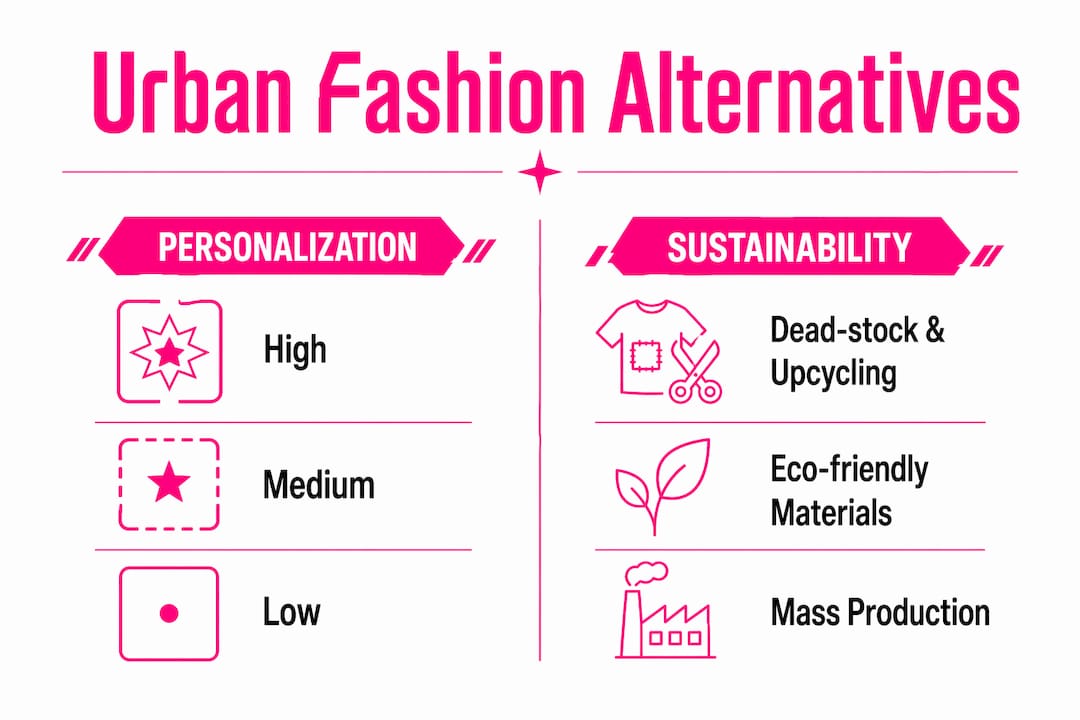
Czt occupies the intersection where personalization and sustainability reinforce each other rather than trade off. The recycled-material foundation and pattern-from-scratch process are what separate it from made-to-measure services that adjust a pre-existing block.
What do these alternatives actually cost, and how long do they take?
True bespoke, as practiced by high-end ateliers, starts from a blank pattern drafted for the client’s body, with multiple in-person fittings. That process carries a long lead time for event-specific garments, an industry benchmark worth building your calendar around.
Timeline at a glance: Fast (days–2 weeks): POD platforms, vintage + same-day alterations. Medium (2–6 weeks): upcycling + local atelier, made-to-measure. Slow (4–6 months): traditional full bespoke and Czt custom couture with multiple fittings.
- POD custom streetwear: from $24.95 per item; ships within days to two weeks depending on the platform
- Vintage + alterations: thrift cost ($5–$40) plus tailor fee ($10–$50); turnaround often under a week
- Upcycling + local atelier: mid-range, atelier-dependent; typically 3–6 weeks for construction
- Made-to-measure: varies widely by provider; generally faster than full bespoke at 2–4 weeks
- Czt custom couture: consultation-based pricing; timeline from consultation to delivery spans several weeks, with fittings built into the process
- Rental services: rental fee per event; available same-day to one week out
The POD entry price is the lowest barrier in the category, but the trade-off is a stock silhouette. If fit and material origin matter to you, the cost difference between POD and a Czt custom piece reflects a fundamentally different level of craft.
How do you pick the right route for your needs?
Pick by your highest-priority axis first: fit and personalization, speed, sustainability, or budget. Everything else follows from that anchor.
Criteria to weigh, in order:
- Fit precision required (fully unique pattern vs. adjusted block vs. stock silhouette)
- Material transparency (can the provider name the mill or certify the fabric origin?)
- Repair, alteration, or upcycle policy (does the brand support the garment after purchase?)
- Timeline (do you have weeks or months?)
- Cost predictability (fixed quote vs. open-ended atelier billing)
- Return and alteration policy
Questions to ask any provider before committing:
- “Do you draft a new pattern from scratch, or adjust a pre-existing block?”
- “Can you show mill names, dead-stock certificates, or fabric origin documentation?”
- “What is your documented alteration or repair policy after delivery?”
- “What is the realistic timeline from first consultation to final garment?”
- “Is the quoted price fixed, or does it change with fabric selection?”
Red flags: no material transparency, no documented fitting or alteration policy, vague turnaround language (“ships when ready”), and providers who conflate made-to-measure with true bespoke.
Pro Tip: If you need a bespoke-level result on a tighter timeline, order a POD base garment in your closest standard size, then book a local tailor for structural alterations. You get a custom silhouette in two to three weeks at a fraction of the full bespoke cost, and the budget custom clothing guide from Czt walks through exactly how to plan that hybrid approach.
How do you actually get started with each alternative?
Czt custom couture:
- Visit czt.rocks and book a custom couture consultation.
- Prepare reference images, preferred color palette, and any sustainability priorities (recycled fabrics, dead-stock preferences).
- Attend the consultation; discuss pattern direction, material sourcing, and timeline.
- Review the design draft and confirm fabric selection.
- Attend fittings as scheduled; communicate fit notes clearly at each stage.
- Receive the finished piece; retain contact for future repairs or upcycle requests.
Print-on-demand:
- Prepare your artwork as a high-resolution file (300 DPI minimum; PNG with transparent background preferred). The typography guide from Czt covers file-prep considerations worth reviewing.
- Select a blank on your chosen POD platform and upload the design.
- Order a sample unit before any larger run.
- Confirm print quality and color accuracy on the physical sample.
- Place your final order; expect shipping within days to two weeks.
Upcycling + local tailoring:
- Source dead-stock or vintage fabric, or bring an existing garment for reconstruction.
- Research local ateliers with documented upcycling experience; ask to see past work.
- Book a consultation; bring measurements and reference images.
- Agree on construction scope and timeline in writing.
- Attend one or two fittings during construction.
- Collect the finished piece; confirm the atelier’s alteration policy.
Pro Tip: For the upcycling route, upcycled streetwear examples from Czt’s blog are worth studying before your atelier consultation. Arriving with a clear visual reference cuts the design conversation in half.
How do you verify that a brand’s eco-credentials are genuine?
Sustainability claims in fashion range from rigorously documented to purely decorative. The signals below separate the two.
Checklist: what to look for
- Dead-stock fabric sourcing with named mills or documented fabric origin
- Material certifications (GOTS, OEKO-TEX, or equivalent) attached to specific fabrics
- Transparent production location (local or named facility reduces transport emissions)
- Repair, alteration, or upcycle policy in writing, not just marketing copy
- Takeback or recycling program for end-of-life garments
- Low-waste cut practices (zero-waste pattern drafting, fabric offcut reuse)
Three quick verification actions:
- Ask for the mill name or fabric origin before purchasing. A brand with genuine sourcing transparency answers this without hesitation.
- Request a sample swatch if ordering custom fabric. The physical material tells you more than a product description.
- Check the repair and alteration policy. A brand that supports the garment after sale is invested in its longevity, not just its sale.
The trade-off worth understanding: low-waste bespoke using dead-stock fabric is among the most circular options available, but a single shipped garment still carries a transport footprint. POD reduces inventory waste by producing only what is ordered, yet many POD blanks use conventional cotton or synthetic blends. Customization reduces fashion waste most effectively when the material itself is already reclaimed, which is precisely the logic behind Czt’s recycled-fabric foundation.
Key Takeaways
Czt’s sustainable custom couture is the strongest single option for eco-conscious urbanists who want a fully unique pattern, recycled materials, and a brand that supports the garment beyond the point of sale.
| Point | Details |
|---|---|
| Bespoke lead time | Industry practice recommends a 4–6 month lead time for event-specific bespoke garments; plan accordingly. |
| POD entry price | Print-on-demand custom streetwear starts at $24.95 per item with no minimum order, making it the lowest-barrier fast option. |
| True bespoke vs. made-to-measure | True bespoke drafts a unique pattern from scratch with multiple fittings; made-to-measure adjusts a pre-existing block. |
| Sustainability verification | Ask for the mill name, request a swatch, and confirm the repair policy before committing to any “eco” claim. |
| Czt custom couture | Czt combines recycled-fabric sourcing, original pattern drafting, and a documented repair policy for a fully personalized, circular fashion experience. |
Why Czt’s approach to sustainable urban style actually matters
There is a tendency, in conversations about sustainable fashion, to treat eco-credentials and genuine artistry as competing values, as though a garment made responsibly must somehow compromise on composition or aesthetic force. We have never believed that. The work behind Czt grew from a deep appreciation for subcultural craft, from the graffiti-saturated walls and hardcore energy of urban spaces where youth frolicking dangerously to the soundtrack of their own invention were, without knowing it, composing some of the most aesthetically intriguing fashion statements of their generation.
What we built with Czt is a response to that culture, not a sanitized version of it. The Botanic Camo collection, constructed from recycled materials, is not a concession to eco-consciousness; it is a proof point that the most performance-driven, visually arresting streetwear can also be the most responsible. Pattern drafting from scratch, fittings that honor the specific geometry of a real body, fabrics sourced with documented origin: these are not premium add-ons. They are the baseline of what we consider honest craft.
The conventional wisdom says bespoke is slow and sustainability is expensive. We find both claims overstated. What is genuinely costly is the opposite: fast fashion’s invisible debt, paid in material waste, in garments that dissolve after a season, in a culture that has forgotten what it feels like to wear something made for you specifically. Czt exists to remind the urban fashion community that those two things, a piece built for your body and a piece built for the planet, are not in tension. They are the same aspiration.
Czt custom couture: the sustainable bespoke alternative worth booking
Czt offers what the alternatives in this article cannot combine in a single offering: original pattern drafting, recycled and dead-stock material sourcing, and a repair and upcycle policy that treats the garment as a long-term relationship rather than a transaction. For eco-conscious urbanists who want one-of-a-kind apparel built around their body and their values, this is the most direct route.
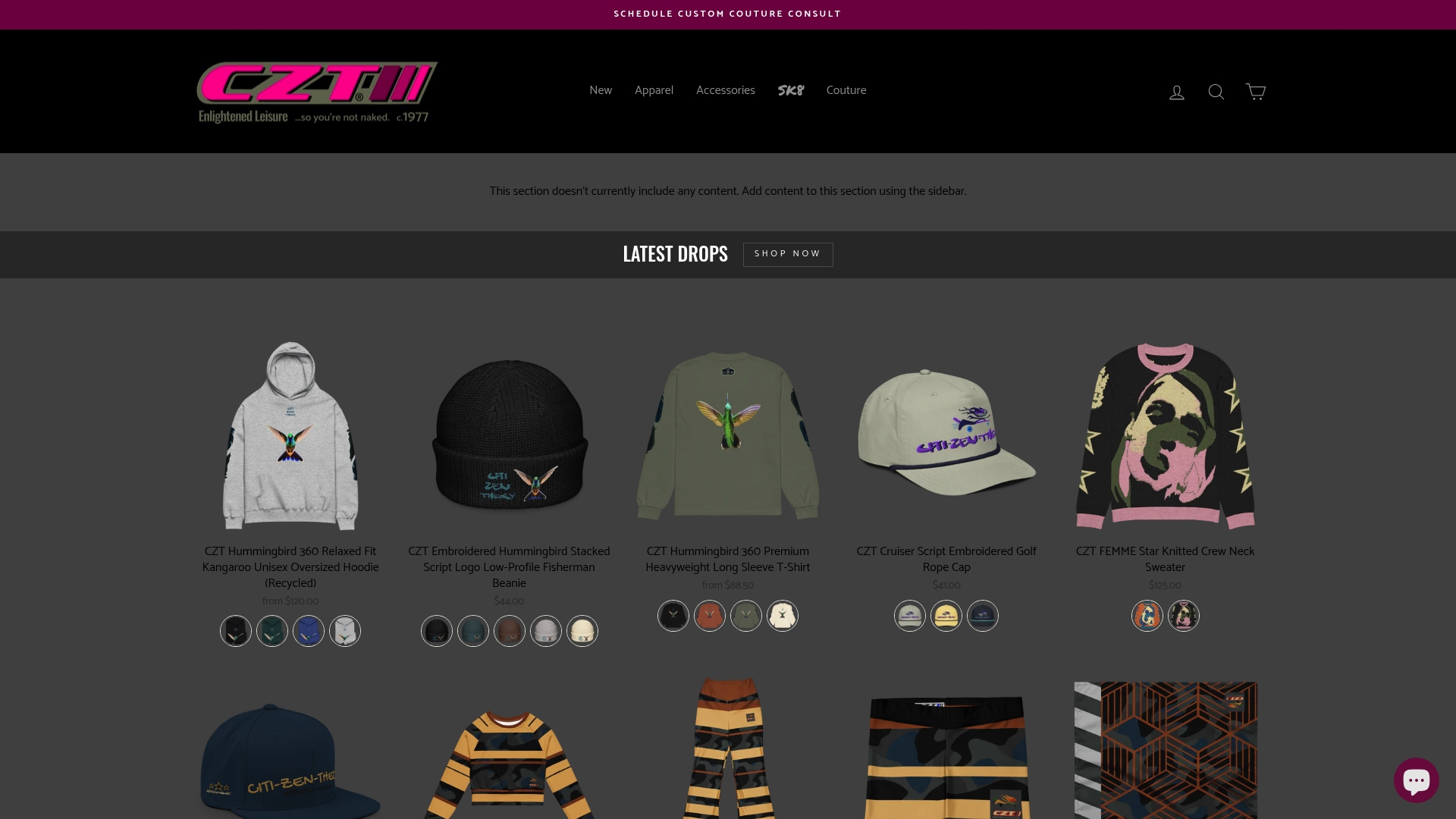
Book a custom couture consultation at czt.rocks to discuss your design direction, material preferences, and timeline. Bring reference images, your measurements, and any fabric or sustainability priorities. The consultation is where the composition begins.
Useful sources and further reading
Primary sources cited in this article:
- Bespoke lead time (4–6 months) and blank-pattern drafting definition: The Tailory New York
- POD entry price ($24.95) and no-minimum ordering: Fourthwall custom streetwear
- Dead-stock and upcycling in artisanal bespoke: COSH! / Aurelia Paumelle
Czt blog posts for deeper reading:
- Why customization reduces fashion waste — the sustainability case for made-to-order
- Material innovation in streetwear — how to evaluate fabric origin and certifications
- Budget custom clothing design guide — planning a hybrid POD + tailoring approach
- Examples of upcycled streetwear designs — visual reference for the upcycling route
Recommended
- How to Mix Sustainable Pieces Into Stylish Outfits – CZT [CITI-ZEN-THEORY]
- Why Custom Clothing Beats Mass Production in 2026 – CZT [CITI-ZEN-THEORY]
- Examples of Upcycled Streetwear Designs That Inspire – CZT [CITI-ZEN-THEORY]
- How to Source Eco-Friendly Streetwear Pieces Globally – CZT [CITI-ZEN-THEORY]