![CZT [CITI-ZEN-THEORY]](http://czt.rocks/cdn/shop/files/CZT_-_Brand_PINK_Label_1_330x.png?v=1774104725)
![CZT [CITI-ZEN-THEORY]](http://czt.rocks/cdn/shop/t/61/assets/CZT-Fast-Logo---Blue-Grey_330x.png?v=98224836737033641471695502660)
![CZT [CITI-ZEN-THEORY]](http://czt.rocks/cdn/shop/files/CZT_-_Brand_PINK_Label_1_170x.png?v=1774104725)
![CZT [CITI-ZEN-THEORY]](http://czt.rocks/cdn/shop/t/61/assets/CZT-Fast-Logo---Blue-Grey_170x.png?v=98224836737033641471695502660)
Material Innovation in Streetwear: Style Meets Ethics
Material innovation in streetwear is defined as the integration of advanced, sustainable fabrics and technologies that reshape how garments perform, look, and impact the planet. The role of material innovation in streetwear has never been more central to the culture: 67% of consumers now consider sustainable materials important when purchasing apparel, a figure that reflects a genuine shift in what the streets demand. Technologies like MushroomSkin, renewable nylon fibers, and bio-based blends are no longer experimental. They are actively reshaping the composition of garments worn by skaters, artists, and eco-conscious families who refuse to separate style from ethics. This is the new grammar of streetwear, and it is written in fabric.
How does material innovation shape streetwear aesthetics and ethics?
Sustainable fabric innovation is not a compromise between looking good and doing right. It is the proof that both are possible in the same garment. The materials entering streetwear today carry a fundamentally different story than the petroleum-derived synthetics that dominated the last three decades.

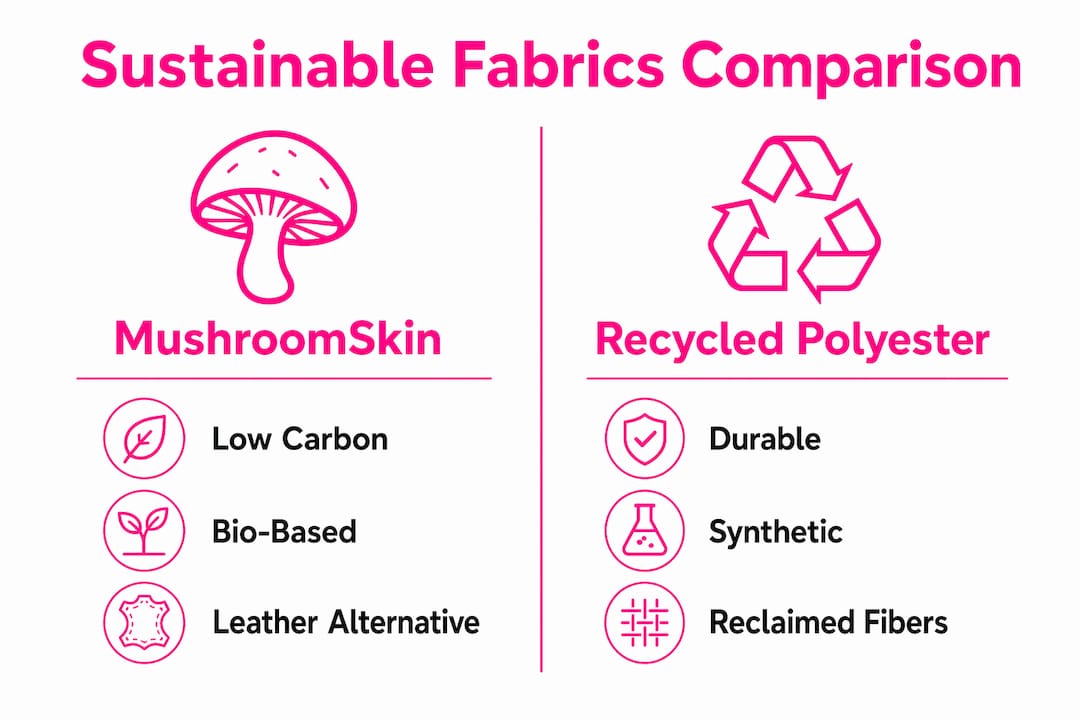
Consider MushroomSkin, a mycelium-based leather alternative whose life cycle assessment reveals approximately 3.39 kg CO2e per square meter, compared to 60.81 kg CO2e for traditional bovine leather. That is an 18-times reduction in carbon output. For a culture built on authenticity and self-expression, wearing something with that kind of environmental composition is a statement as deliberate as a graffiti tag on a blank wall.
Renewable nylon fibers, developed through partnerships like Goldwin and Neste, demonstrate that recycled cooking oil can reduce greenhouse gas emissions by over 85% compared to virgin fossil-based nylon. The North Face has already integrated this fiber into selected products, signaling that performance and planetary responsibility are converging at the highest levels of the industry.
Here is what this means for the aesthetics of streetwear specifically:
- Plant-based leathers derived from mycelium or agricultural waste carry a texture and visual depth that synthetic PU leather cannot replicate, giving garments a tactile richness that resonates with collectors and casual wearers alike.
- Renewable nylon blends maintain the sleek, technical silhouette that streetwear demands while dramatically reducing the production footprint.
- Kering’s Material Innovation Lab and Bottega Veneta’s mycelium collection represent luxury streetwear’s commitment to treating alternative materials with artisanal care, proving that sustainability does not require sacrificing desirability.
The ethical dimension runs deeper than carbon numbers. Brands that commit to these materials are making a public declaration about whose future they are designing for. McKinsey data confirms that consumer demand is the engine driving this adoption. When the people wearing the clothes care this much, the industry has no credible reason to look away.
Pro Tip: When evaluating a brand’s sustainability claims, look for specific material names and life cycle data rather than broad language like “eco-friendly.” MushroomSkin and Neste renewable nylon are examples of materials with published, verifiable environmental data.
What are the top technical fabrics used in streetwear today?
Technical fabric innovation is the discipline behind streetwear’s most performance-driven pieces. The top technical fabrics in 2026 balance real-world performance, clean aesthetics, and production feasibility. That balance is harder to achieve than it sounds, and the brands that get it right earn lasting loyalty.
Here are the fabrics defining the current era of streetwear textiles:
- Weather-resistant nylon remains the workhorse of technical streetwear. It offers wind and water resistance without the bulk of traditional outerwear, making it ideal for skaters and urban commuters who need protection without sacrificing mobility.
- Bio-based blends combine plant-derived fibers with recycled synthetics to achieve softness, breathability, and reduced environmental impact. These blends are increasingly common in hoodies, joggers, and layering pieces.
- Lyocell and Tencel are wood-pulp-derived fibers that offer a silky drape and moisture management superior to conventional cotton. They are biodegradable under the right conditions and carry a lower water footprint in production.
- Smart textiles embedded with conductive threads or phase-change materials represent the frontier of interactive streetwear, enabling garments that respond to body temperature, track movement, or shift color under UV exposure.
- Recycled polyester (rPET) sourced from post-consumer plastic bottles is now standard in many performance streetwear lines, offering the same durability as virgin polyester with a significantly reduced production impact.
Performance longevity is becoming a core sustainability metric. A garment that holds its shape, color, and structural integrity through years of wear is inherently more sustainable than one that degrades after a season. Fit consistency, tear strength, and colorfastness are not just quality markers. They are environmental ones.
Production realities matter here too. Technical fabrics often require specialized machinery and experienced pattern makers. Minimum order quantities tend to be higher, and lead times longer, than with conventional materials. These are real constraints that smaller streetwear labels must plan around carefully.
Pro Tip: Before committing to a technical fabric for a new collection, request sample yardage and run wash tests at 40°C and 60°C. Fabric behavior after repeated washing reveals far more about longevity than any spec sheet.
How does material innovation influence streetwear brand identity?
Material choice is a branding decision as much as a design one. The fabric a brand selects communicates its values, its price point, and its relationship with the culture it claims to represent. This is where the impact of fabric technology becomes a story told through texture and composition rather than marketing copy.
Consumer psychology responds to material innovation in ways that go beyond rational evaluation. When a garment feels different, performs differently, or carries a verifiable environmental credential, it creates a perception of quality and intentionality that generic materials cannot produce. Upcycled streetwear designs that integrate reclaimed or bio-based materials carry a narrative weight that resonates with the culture’s appreciation for authenticity.
The contrast between marketing claims and verifiable reality is where many brands lose credibility. Third-party certifications like GOTS (Global Organic Textile Standard) are more reliable indicators for consumers than self-reported sustainability claims. A brand that displays a GOTS certification on a garment has submitted to independent verification. A brand that simply calls its product “conscious” has not.
“Luxury and streetwear must treat alternative materials with artisanal quality to sustain desirability while achieving sustainability goals.” — Marie-Claire Daveu, Kering’s Chief Sustainability Officer
This principle applies equally to independent streetwear labels. The brands that will define the next decade of the culture are those that treat material selection as a craft, not a checkbox. They source with intention, communicate with specificity, and let the garment’s composition speak as loudly as its graphic.
Exploring recycled fabric clothing as a category reveals how far the aesthetic possibilities have expanded. Recycled materials no longer look or feel like a concession. They look like the future.
What challenges do brands face when adopting new materials?
Adopting material innovation in streetwear production is not a frictionless process. The gap between a material’s promise and its performance in a factory setting is where many well-intentioned projects stall.
The most common challenges include:
- Sewability limitations. Many bio-based leather alternatives, including mycelium-derived materials, require hybridization with lyocell to achieve the tear strength and needle tolerance needed for garment construction. Raw mycelium sheets often cannot withstand industrial sewing without reinforcement.
- Specialized manufacturing requirements. Experienced technical fabric factories are not interchangeable with conventional cut-and-sew operations. Fit problems and fabric distortion are common when production is placed with manufacturers unfamiliar with the material’s behavior.
- Supply chain transparency. Claiming a material is sustainable requires documentation at every stage of the supply chain. Without that documentation, the claim is marketing, not fact.
- Cost and minimum order quantities. Bio-based and technical materials typically carry higher per-unit costs and minimum order thresholds than conventional fabrics, creating real barriers for emerging labels.
The University of Vienna and Technikum Wien have demonstrated that a papermaking approach using mushroom processing residues offers a scalable path to circular leather alternatives, reducing the contamination and slow growth issues that have historically limited mycelium production. This kind of research is closing the gap between laboratory promise and factory reality.
Pro Tip: When sourcing a new technical or bio-based material, ask the supplier for a list of brands currently using it in production. Real-world production references are the most reliable indicator of commercial viability.
Brands that approach these challenges with patience and specificity, rather than rushing to market with unverified claims, build the kind of credibility that sustains a label across multiple collections. The skate brands shaping fashion have always understood that authenticity is earned through consistency, not announcement.
Key takeaways
Material innovation is the defining force reshaping streetwear’s identity, sustainability, and cultural relevance in 2026 and beyond.
| Point | Details |
|---|---|
| Sustainable materials reduce carbon dramatically | MushroomSkin produces 18x fewer CO2 emissions than bovine leather, making it a credible design choice. |
| Technical fabrics define performance and longevity | Weather-resistant nylon, rPET, and bio-based blends extend garment life and reduce environmental impact. |
| Certifications outperform marketing claims | GOTS and third-party standards give consumers verifiable proof of a brand’s sustainability commitments. |
| Manufacturing expertise is non-negotiable | Specialized factories with technical fabric experience prevent fit failures and production defects. |
| Consumer demand is the primary driver | With 67% of shoppers prioritizing sustainable materials, brands that innovate attract and retain loyal audiences. |
What we believe about the future of streetwear materials
We have spent years watching the culture we love get reduced to a logo on a polyester blank. That observation, more than any trend report, is what drives our conviction that material innovation is not a trend. It is a correction.
When we look at where streetwear is heading, we see a generation of wearers who grew up with skateboards under their feet and environmental anxiety in their chests. They are not willing to separate the two. They want garments that perform on the board, hold up through seasons, and do not cost the planet more than they cost the consumer. That is not an unreasonable ask. It is the standard the culture deserves.
What concerns us is the gap between aspiration and execution. Too many brands are adopting the language of material innovation without doing the work. They use the word “recycled” on a hang tag without disclosing the percentage of recycled content. They call a fabric “bio-based” without specifying what portion of the fiber is actually plant-derived. This kind of vagueness is not just misleading. It erodes trust in the entire category.
Our prediction is that the brands who survive the next decade of streetwear will be those who treat fabric selection the way a painter treats pigment: with deep knowledge, deliberate choice, and pride in the composition. The future of streetwear textiles is not about chasing the newest material. It is about understanding why a material matters and communicating that with honesty and craft.
We believe you deserve that level of transparency. And we believe the culture is ready to demand it.
— Czt
Explore czt’s sustainable streetwear collection
Czt was built on the conviction that streetwear can be both aesthetically intriguing and environmentally responsible. Every piece we create reflects a deliberate choice about composition, sourcing, and impact. Our use of recycled materials across collections like Botanic Camo is not a marketing position. It is the foundation of how we design.
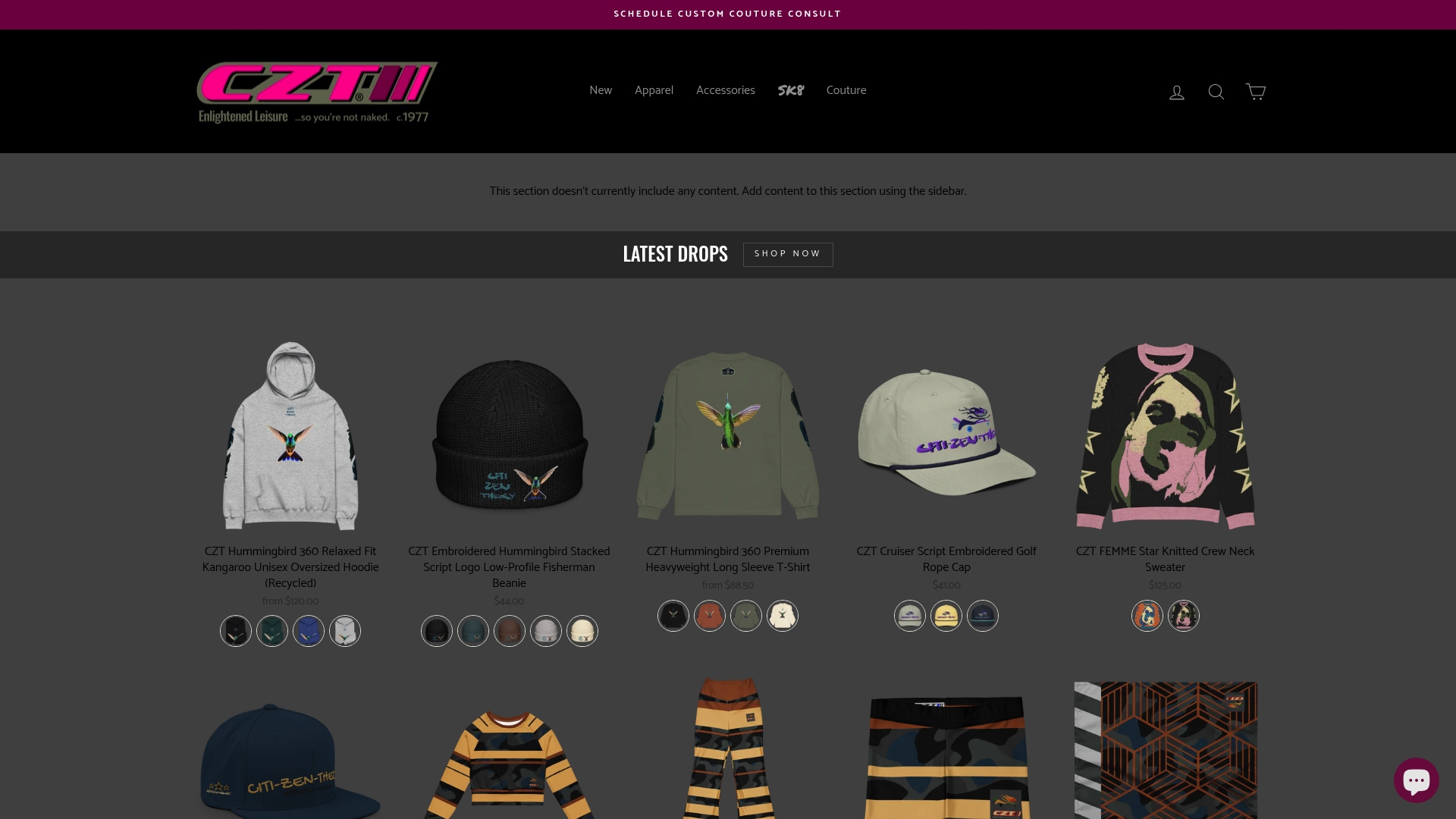
If you have been searching for streetwear that carries the weight of real material commitment, the Czt DNC String Bikini Bottom is a direct expression of that philosophy, crafted from recycled materials without compromising the bold, performance-driven aesthetic the culture demands. We also offer custom couture design services for those who want to personalize not just an outfit, but an entire fashion experience rooted in sustainability and self-expression. Explore the full collection at czt.rocks and wear something that means something.
FAQ
What is material innovation in streetwear?
Material innovation in streetwear refers to the use of advanced, sustainable, or technically engineered fabrics, such as mycelium leather, renewable nylon, and bio-based blends, to improve garment performance, aesthetics, and environmental impact. It is the practice of treating fabric selection as a design and ethical decision, not just a production variable.
Why do sustainable materials matter for streetwear consumers?
67% of consumers consider sustainable materials important when purchasing apparel, reflecting a cultural shift toward accountability in fashion. Sustainable materials reduce carbon emissions, extend garment lifespan, and align with the values of eco-conscious streetwear communities.
How can i tell if a streetwear brand’s sustainability claims are real?
Look for third-party certifications like GOTS rather than self-reported marketing language. Brands with genuine material commitments will name specific materials, disclose recycled content percentages, and provide verifiable sourcing documentation.
What technical fabrics are most common in streetwear right now?
Weather-resistant nylon, recycled polyester (rPET), lyocell, Tencel, and bio-based blends are the most widely used technical fabrics in streetwear in 2026. Each offers a distinct combination of performance, sustainability, and aesthetic quality suited to different garment types.
Is mushroom-based leather actually viable for streetwear production?
Mycelium-based leather alternatives are commercially viable when hybridized with woven fibers like lyocell to meet sewability and tear strength standards. Brands like Bottega Veneta have already integrated mycelium materials into production, demonstrating that the technology is ready for serious streetwear application.
Recommended
- How to Source Eco-Friendly Streetwear Pieces Globally – CZT [CITI-ZEN-THEORY]
- Examples of Upcycled Streetwear Designs That Inspire – CZT [CITI-ZEN-THEORY]
- Why Sustainable Custom Fashion Matters for Real Change – CZT [CITI-ZEN-THEORY]
- Why Customization Reduces Fashion Waste Effectively – CZT [CITI-ZEN-THEORY]