![CZT [CITI-ZEN-THEORY]](http://czt.rocks/cdn/shop/files/CZT_-_Brand_PINK_Label_1_330x.png?v=1774104725)
![CZT [CITI-ZEN-THEORY]](http://czt.rocks/cdn/shop/t/61/assets/CZT-Fast-Logo---Blue-Grey_330x.png?v=98224836737033641471695502660)
![CZT [CITI-ZEN-THEORY]](http://czt.rocks/cdn/shop/files/CZT_-_Brand_PINK_Label_1_170x.png?v=1774104725)
![CZT [CITI-ZEN-THEORY]](http://czt.rocks/cdn/shop/t/61/assets/CZT-Fast-Logo---Blue-Grey_170x.png?v=98224836737033641471695502660)
Budget Custom Clothing Design Project: 2026 Guide
A budget custom clothing design project is a structured process of creating personalized apparel within defined financial limits, using affordable design tools, low minimum order quantities, and cost-conscious production methods. Custom apparel design, as the industry calls it, has become genuinely accessible for families and individuals who want style without the premium price tag. Platforms like Custom Ink, Printify, and low MOQ manufacturers have removed the barriers that once made personalized clothing feel out of reach. This guide walks you through every stage, from setting your budget to receiving finished pieces, with practical steps grounded in real production costs and sustainability principles.
How to plan and budget for your custom clothing design project
Every successful affordable custom apparel design starts with a clear financial framework before a single sketch is drawn. Without one, costs compound quickly across design, sampling, production, and packaging, each category carrying its own surprises.
Launching a small capsule collection of 2–3 styles typically costs $3,000 to $10,000, depending on materials, garment complexity, and marketing. That range reflects a focused approach, which is exactly the right model for budget projects. Spreading across too many styles early multiplies sampling costs and inventory risk simultaneously.
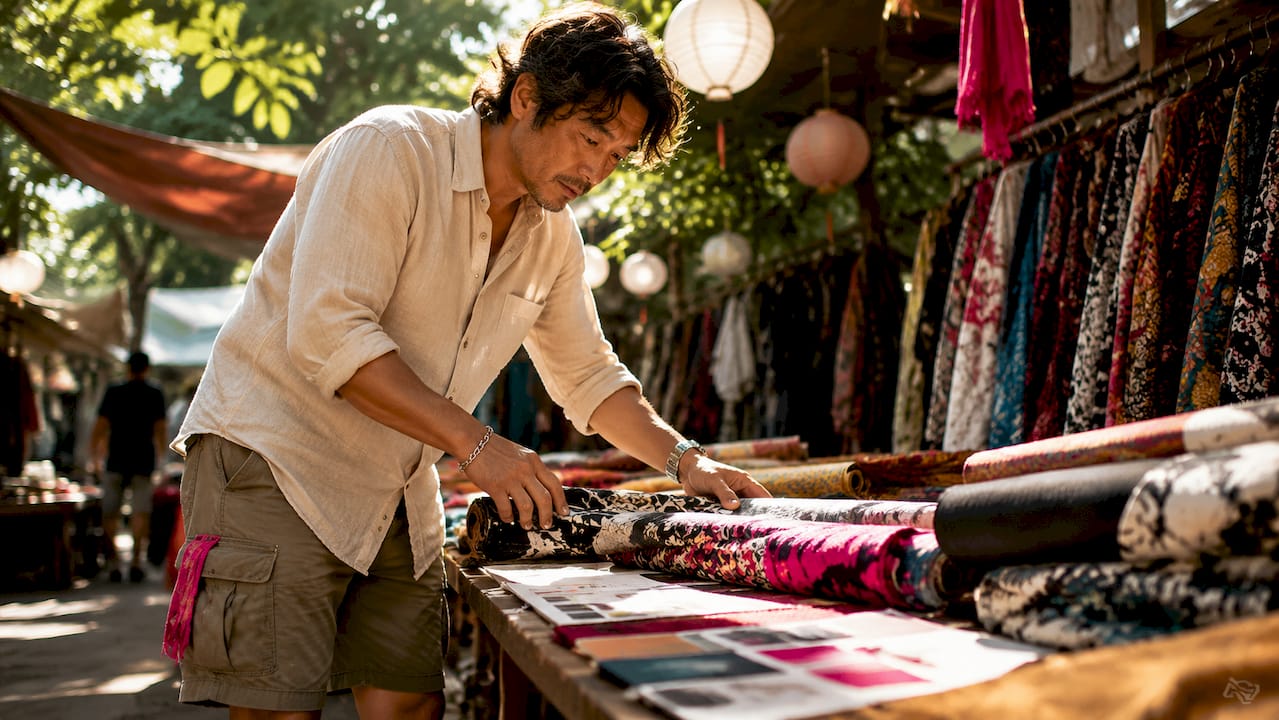
The four core budget categories for any personalized outfit design project are:
| Expense Category | Typical Cost Range | Notes |
|---|---|---|
| Design and tech pack | $0–$900 | DIY saves money; professional packs prevent errors |
| Sampling | $300–$800 per style | Budget for multiple rounds |
| Production (per unit) | $12–$25 (small runs) | Drops below $15 at 72+ units |
| Packaging and shipping | $1–$5 per unit | Varies by material and destination |
Sampling is the category most families and first-time designers underestimate. Budget $300–$800 per style for complete sampling, including multiple rounds to finalize fit and quality. Skipping or rushing this stage produces garments that disappoint at delivery.
Useful budgeting tools include Google Sheets for tracking line items, Wave for small business expense monitoring, and Notion for organizing supplier quotes alongside design notes. These are free and sufficient for projects at this scale.
Pro Tip: Allocate 15% of your total budget as a contingency reserve. Sampling revisions and shipping delays are common, and having that buffer prevents the project from stalling entirely.
What are the best cost-effective design methods for personalized clothing?
The design phase is where budget projects either stay on track or spiral. The right tools and approach make the difference between a polished composition and an expensive back-and-forth with manufacturers.
Canva offers free templates that translate well into print-ready graphics for basic apparel. Custom Ink’s online design studio lets you build artwork directly on garment mockups at no cost. Printify integrates with Shopify and Etsy, making it practical for families who want to sell a small run while testing designs. These tools handle the visual layer without requiring professional software like Adobe Illustrator.
Hiring a freelance designer is the right call when your concept requires original illustration or complex pattern work. Freelance designers charge $50–$150 per hour for technical work, with full design packages ranging from $0 for DIY to $1,500 for complex projects. The comparison below shows where each approach fits:
| Design Approach | Best For | Approximate Cost |
|---|---|---|
| DIY (Canva, Custom Ink studio) | Simple graphics, text-based designs | $0 |
| Pre-made templates | Families, school groups, events | $10–$50 |
| Freelance designer | Original artwork, brand identity | $50–$500+ |
| Full tech pack service | Production-ready specifications | $50–$900 |
A tech pack is the document that tells a manufacturer exactly how to build your garment. Professional tech packs cost $50 to $900, depending on complexity, though some manufacturers include basic spec sheets free with full production orders. A clear tech pack prevents the kind of miscommunication that forces expensive re-sampling. You can find one-of-a-kind design inspiration to help shape your concept before committing to a direction.
Pro Tip: Use a consistent logo or graphic across multiple products. Repeating one core graphic across styles reduces design costs while maintaining a coherent aesthetic across your collection.
Which production methods work best for a budget project?
Production method selection is the most consequential financial decision in any low-cost clothing design service. Each method carries different unit costs, minimum order requirements, and quality characteristics.
Small batch orders of 25–60 pieces cost 20–30% more per unit than bulk production, but they reduce inventory risk substantially. That trade-off is worth it for families testing a design concept or building a small community collection. Low MOQ manufacturing does not mean cheap per unit. It means you pay a premium for flexibility, which is a fair exchange when you are not ready to commit to hundreds of pieces.
The four main production methods each serve different project types:
- Screen printing: Cost-effective for bulk orders with vibrant, durable color. Basic cotton tees start around $4–$8 before customization, with prices dropping sharply at higher quantities. Best for bold, simple graphics.
- Direct-to-garment (DTG): Prints photographic detail directly onto fabric. Higher per-unit cost than screen printing but no setup fees, making it ideal for very small runs or one-off pieces.
- Embroidery: Pricing depends on stitch count and design complexity. Adds a premium, tactile quality. Works well for logos and structured designs on hats, polos, and outerwear.
- Heat transfer: A budget-friendly method for short runs and detailed designs. Czt’s guide on heat transfer printing explains how this method works on different fabric types, which matters when choosing between cotton and recycled blends.
Sustainable and recycled materials fit naturally into budget projects when you plan for them from the start. Recycled polyester and organic cotton blends are available through low MOQ suppliers at costs comparable to conventional fabrics at small quantities. Choosing these materials aligns with the kind of customization that reduces fashion waste rather than adding to it.
Step-by-step guide to executing your custom clothing project
A clear roadmap prevents the two most common failures in budget projects: running out of money mid-production and receiving garments that do not match the original vision.
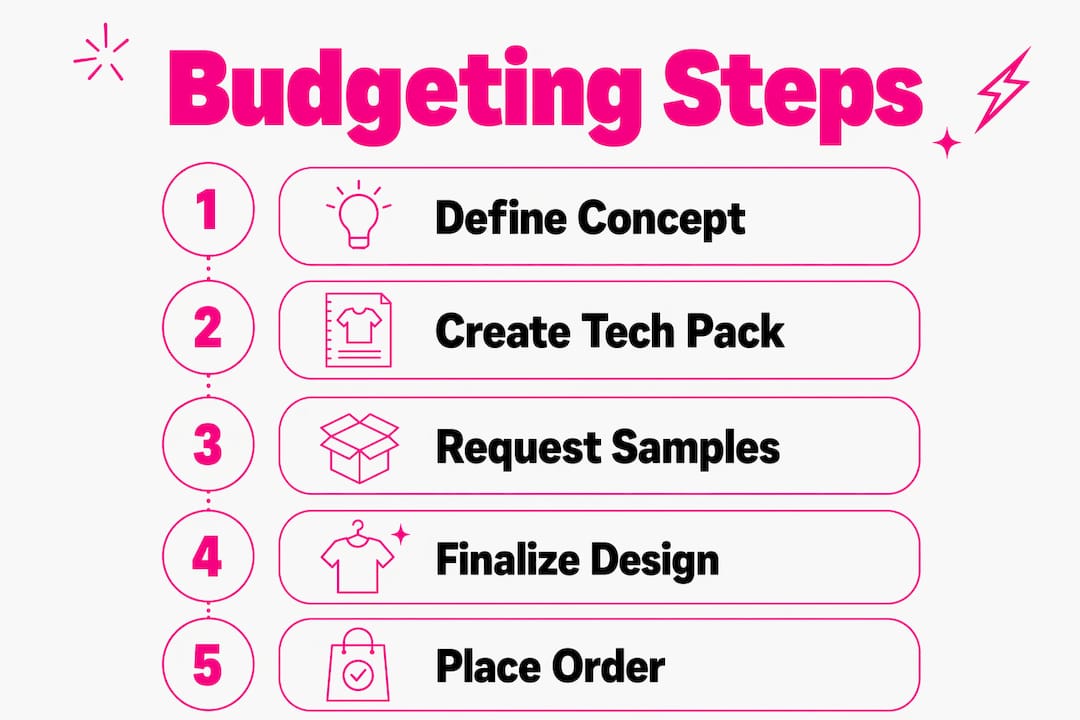
1. Define your concept and design brief. Write down the garment type, target wearer, color palette, and graphic direction before opening any design tool. Vague briefs produce vague results.
2. Create your technical specifications. Build a tech pack or detailed spec sheet covering measurements, fabric weight, construction details, and print placement. A professional tech pack prevents costly miscommunication and re-sampling by clearly defining every design detail.
3. Request samples. Contact two or three manufacturers and request samples using your spec sheet. Compare quality, fit, and communication responsiveness before committing. Budget $300–$800 per style for this stage.
4. Finalize fit and design. Review samples against your spec sheet. Note every discrepancy in writing. Send a single consolidated revision request rather than multiple emails to keep the process clean.
5. Place your minimum order. Ordering as few as 25 pieces allows you to test market interest without large inventory commitments. Confirm production timeline, payment terms, and quality inspection process before paying.
6. Conduct a quality check on delivery. Inspect at least 20% of units against your spec sheet before distributing. Document any defects immediately and contact the manufacturer within the agreed dispute window.
7. Distribute and gather feedback. Whether you are selling, gifting, or wearing the pieces yourself, collect honest feedback on fit, print quality, and durability. This information shapes the next production run.
Common pitfalls to avoid:
- Skipping the sample stage to save money. It always costs more to fix production errors than to catch them in sampling.
- Over-diversifying designs in the first run. Two styles with one graphic each outperform five styles with five different graphics on a tight budget.
- Underestimating lead times. Most low MOQ manufacturers need 4–8 weeks for production plus shipping time.
Pro Tip: Pre-orders and crowdfunding shift inventory risk to your buyers before production begins. Pre-orders make budget projects financially viable by covering production costs upfront, eliminating the need to carry unsold inventory. You can also review guidance on specifying fit preferences to communicate sizing details clearly to your manufacturer.
Key takeaways
A budget custom clothing design project succeeds when you allocate costs across design, sampling, and production with discipline, choose a production method matched to your order size, and use low MOQ manufacturing to test before scaling.
| Point | Details |
|---|---|
| Set a realistic budget early | Map costs across design, sampling, production, and packaging before starting. |
| Invest in a clear tech pack | A detailed spec sheet prevents re-sampling costs that derail budget projects. |
| Match production method to order size | DTG suits very small runs; screen printing saves money at 72+ units. |
| Use low MOQ manufacturing | Orders as small as 25 pieces reduce inventory risk for first-time projects. |
| Pre-sell before producing | Pre-orders cover production costs upfront and eliminate unsold inventory risk. |
Czt’s perspective: the real cost of creative restraint
We have watched countless designers approach their first project with an expansive vision and a constrained wallet, and the tension between those two realities is where the most interesting creative decisions happen. The instinct is always to do more: more colorways, more styles, more graphic variations. The discipline is learning that restraint is not a compromise. It is a composition choice.
What we have found, both in our own work and in observing the broader culture of independent apparel, is that the projects with the sharpest identity are almost always the ones built around a single, well-executed idea. A family that designs one hoodie with a meaningful graphic and gets the fit exactly right has created something more resonant than a brand that launches eight styles with inconsistent quality. The former carries weight. The latter carries inventory.
The sustainability dimension of budget projects is underappreciated. Choosing recycled materials and ordering only what you need is not just an ethical position. It is a financially sound one. Overproduction is expensive. Waste is expensive. The real case for sustainable custom fashion is not purely ideological. It is practical, and budget projects prove it every time a small run sells out cleanly.
Our honest advice: spend more on sampling than feels comfortable, spend less on variety than feels exciting, and treat the first run as a learning document rather than a finished statement. The second run is always better.
— Czt
Czt’s eco-conscious custom apparel for budget-minded creators
Czt builds apparel from recycled materials without asking you to choose between sustainability and style. The Botanic Camo collection and the broader swimwear line demonstrate what thoughtful composition looks like when it starts with responsible sourcing.
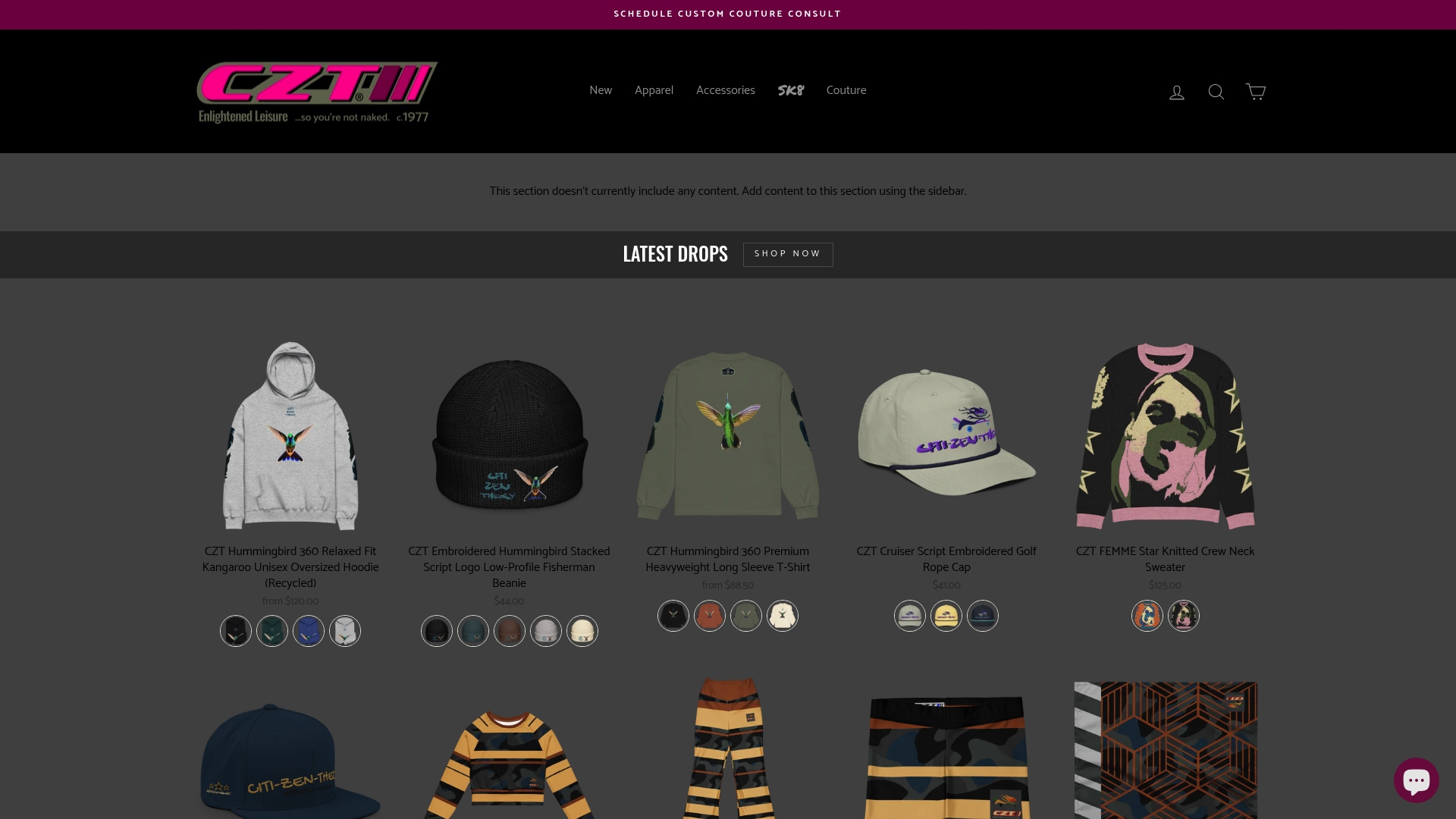
For families and individuals running a personalized outfit design project on a real budget, Czt’s pieces offer a starting point that is already aesthetically intriguing and production-ready. The Cosmic Bandeau Bikini Top and the Cztini Bikini Bottom are both made from recycled materials, designed for those who want personalized style without contributing to fashion waste. These pieces reflect the same philosophy that drives every good budget project: intentional choices, quality materials, and a clear creative vision.
FAQ
What is a budget custom clothing design project?
A budget custom clothing design project is the process of creating personalized apparel within defined cost limits by using affordable design tools, low MOQ manufacturers, and cost-matched production methods. The goal is stylish, quality clothing without overspending.
How much does a small custom clothing project cost?
A 2–3 style capsule collection typically costs $3,000 to $10,000 depending on materials and complexity. Sampling alone runs $300–$800 per style, and per-unit production costs range from $12 to $25 for small orders.
What is the cheapest production method for custom apparel?
Screen printing is the most cost-effective method for orders of 72 or more units, with base garment costs starting around $4–$8 before customization. DTG printing suits very small runs because it has no setup fees.
What is a tech pack and do I need one?
A tech pack is a detailed document that communicates your design specifications to a manufacturer, covering measurements, materials, construction, and print placement. Investing in one prevents costly miscommunication and re-sampling errors.
How can I reduce financial risk on my first custom clothing order?
Order the minimum quantity your manufacturer allows, typically 25–60 pieces, and use pre-orders or crowdfunding to cover production costs before placing the order. This approach eliminates unsold inventory and keeps the project financially viable.
Recommended
- Why Customization Reduces Fashion Waste Effectively – CZT [CITI-ZEN-THEORY]
- What Is Custom Couture Streetwear: A Style Guide – CZT [CITI-ZEN-THEORY]
- Why Sustainable Custom Fashion Matters for Real Change – CZT [CITI-ZEN-THEORY]
- How to Specify Fit Preferences for Custom Garments – CZT [CITI-ZEN-THEORY]