![CZT [CITI-ZEN-THEORY]](http://czt.rocks/cdn/shop/files/CZT_-_Brand_PINK_Label_1_330x.png?v=1774104725)
![CZT [CITI-ZEN-THEORY]](http://czt.rocks/cdn/shop/t/61/assets/CZT-Fast-Logo---Blue-Grey_330x.png?v=98224836737033641471695502660)
![CZT [CITI-ZEN-THEORY]](http://czt.rocks/cdn/shop/files/CZT_-_Brand_PINK_Label_1_170x.png?v=1774104725)
![CZT [CITI-ZEN-THEORY]](http://czt.rocks/cdn/shop/t/61/assets/CZT-Fast-Logo---Blue-Grey_170x.png?v=98224836737033641471695502660)
How to Source Eco-Friendly Streetwear Pieces Globally
There is a particular tension that lives in the chest of every conscious shopper who also loves streetwear: the pull between aesthetic desire and ethical responsibility. To source eco-friendly streetwear pieces globally is not simply a matter of finding a brand with a recycling logo on its website. It requires discernment, research, and a willingness to look beyond the surface of marketing language. Fashion contributes 4 to 10% of global carbon emissions, and the culture we love, the skate decks and graffiti walls and oversized tees, deserves better than to be built on that foundation. This guide gives you a structured path forward.
Table of Contents
- Key Takeaways
- How to source eco-friendly streetwear pieces globally
- Researching and verifying sustainable brands worldwide
- The step-by-step sourcing process
- Common pitfalls in global eco-fashion sourcing
- Verifying your pieces meet true eco standards
- My honest take on where this is all heading
- Wear your values with Czt
- FAQ
Key Takeaways
| Point | Details |
|---|---|
| Define before you shop | Know what qualifies as eco-friendly streetwear before evaluating any brand or supplier. |
| Verify with certifications | Use third-party certifications like GOTS, Fair Trade, and bluesign to confirm ethical claims. |
| Upcycled materials need structure | Quality circular fashion relies on organized textile archives, not ad-hoc salvaging. |
| Fewer, better pieces win | Buying five quality garments a year beats frequent fast fashion purchases for climate impact. |
| Greenwashing is widespread | Learn the red flags of misleading sustainability claims before committing to any purchase. |
How to source eco-friendly streetwear pieces globally
The industry term you will encounter most often in this space is circular fashion, which refers to clothing systems designed to eliminate waste by keeping materials in use as long as possible. When people search for ways to buy streetwear sustainably, they are often describing this circular model without knowing the vocabulary. Understanding both the phrase and the concept will sharpen every sourcing decision you make.
Eco-friendly streetwear, at its most rigorous definition, satisfies three criteria. First, the materials themselves must be low-impact, meaning certified organic cotton, recycled polyester, hemp, or post-consumer textiles. Second, the production process must reflect fair labor standards, living wages, and transparent supply chains. Third, the garment must be designed for longevity rather than disposability, with construction quality that supports repair, resale, and hand-me-down wear.
Why does global sourcing matter here? Because the most credible ethical clothing suppliers are not concentrated in one geography. Innovative circular producers exist in South Asia, West Africa, Europe, and North America, each working with different raw materials and subcultural aesthetics. Limiting your search to domestic options means missing the full spectrum of what global eco-friendly fashion has produced.
The materials worth prioritizing include:
- Certified organic cotton (look for GOTS certification)
- Recycled polyester derived from post-consumer plastic bottles
- Post-consumer denim and deadstock fabric from textile archives
- Hemp and linen grown without synthetic pesticides
- Tencel and lyocell produced in closed-loop solvent systems
Pro Tip: When a brand lists “sustainable materials” without naming the specific fiber or certification, treat that as a yellow flag. Authentic eco-friendly apparel sources name their inputs precisely.
Researching and verifying sustainable brands worldwide
Before you place a single order, the work of verification begins. The sustainable streetwear brands worth your loyalty are those that publish their supply chain openly, name their factories, and hold third-party certifications that can be independently confirmed.
Here is a practical sequence for researching any brand you are considering:
- Check for named certifications. GOTS (Global Organic Textile Standard), Fair Trade USA, bluesign, and the Better Cotton Initiative are among the most credible. A brand that holds these has submitted to external audits, not just self-declared virtue.
- Read the “About” or “Impact” page critically. Look for specific numbers: percentage of recycled content, factory audit scores, wage data. Vague language like “we care about the planet” without supporting data is a red flag.
- Use curated directories. Resources that aggregate fair trade and sustainable brands globally, covering labels like Know The Origin, Komodo, and Nudie Jeans, give you a vetted starting point rather than a cold search.
- Ask direct questions before purchasing. Email the brand and ask: What percentage of this garment is recycled or organic? Where is it made? Do your factory partners pay living wages? A brand committed to transparency will answer with specificity.
- Cross-reference community feedback. Ethical fashion forums, conscious consumer communities on social platforms, and resale platforms where buyers discuss quality all provide unfiltered signal about whether a brand’s claims hold up in practice.
The green flags that indicate genuine commitment include published factory lists, annual sustainability reports with measurable targets, and participation in take-back or repair programs. The red flags include vague certifications you cannot verify, heavy use of green color palettes without substantive claims, and sudden “eco” pivots from brands with no prior history in sustainable production.
Pro Tip: Search the brand name alongside “greenwashing” or “transparency report” before buying. What surfaces in that search tells you more than the brand’s own marketing copy.

The step-by-step sourcing process
Once you have identified credible candidates, the operational work of actually acquiring green streetwear pieces requires its own discipline.
Step 1: Evaluate fabric documentation. Request or locate the material composition breakdown for any piece you are considering. A garment described as “recycled denim” should specify whether that denim comes from post-consumer sources or manufacturing offcuts, as the environmental profiles differ significantly.
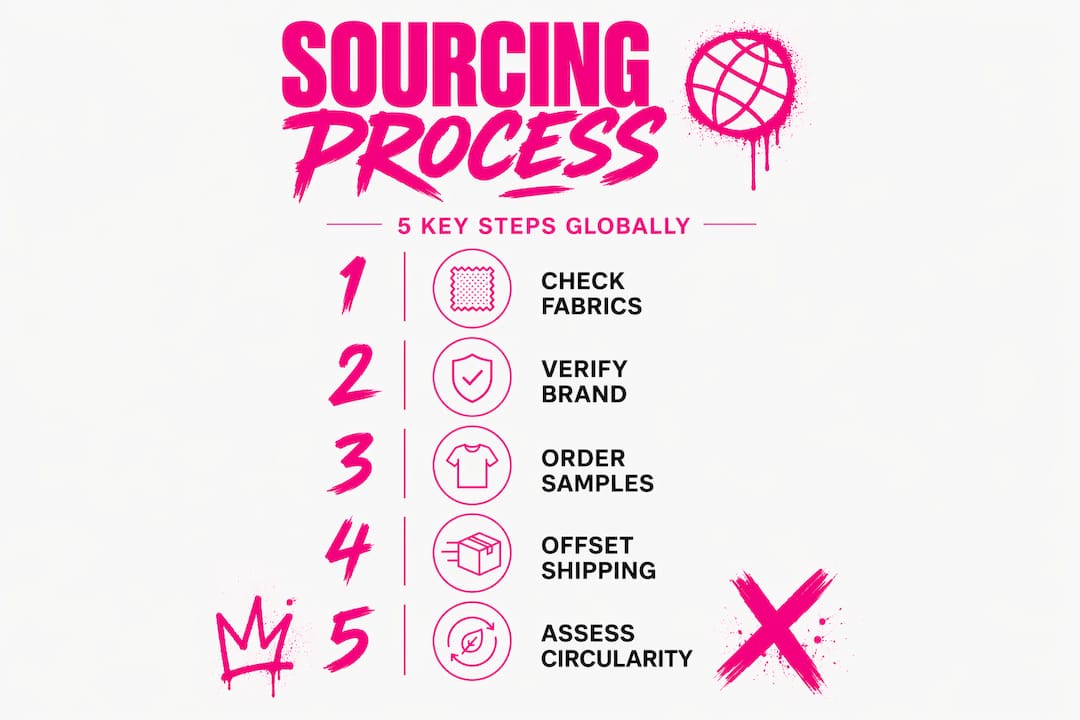
Step 2: Understand upcycled material variability. Upcycled fabric sourcing requires sorting by wash, weight, and texture to produce repeatable quality. This is not a limitation but a feature of circular production. Jackalo’s “Broken In” capsule, developed with Bank & Vogue’s textile archive, demonstrates how structured post-consumer denim sourcing can yield durable, aesthetically considered pieces priced between $119 and $145. The key insight here is that quality circular fashion depends on organized archive systems, not random salvage.
Step 3: Order samples or small quantities first. For consumers purchasing from international suppliers or smaller labels, a single-piece test order before committing to multiples protects both your budget and your confidence in the product.
Step 4: Account for shipping impact. Global sourcing introduces a carbon cost in logistics. Offset this by consolidating orders, choosing brands that use carbon-neutral shipping partners, or prioritizing suppliers geographically closer to you when quality is comparable.
Step 5: Assess scalable circularity. The brands worth long-term loyalty are those building systems, not one-off collections. Look for brands with ongoing take-back programs, repair services, or partnerships with textile recyclers that signal a structural commitment rather than a seasonal campaign.
| Sourcing Factor | What to Look For | Red Flag |
|---|---|---|
| Material origin | Named fiber, certified source | “Eco-friendly fabric” with no specification |
| Production transparency | Named factory, audit results | “Ethically made” without documentation |
| Shipping practices | Carbon-neutral or offset options | No mention of logistics impact |
| End-of-life design | Repair, resale, or take-back program | No post-purchase support |
| Upcycled content | Archive-sourced, sorted by quality | “Upcycled” without process description |
Common pitfalls in global eco-fashion sourcing
Even experienced conscious shoppers encounter predictable obstacles when they try to buy streetwear sustainably across borders. Knowing these in advance transforms frustration into preparation.
- Fabric inconsistency in upcycled pieces. Because upcycled collections often use B-grade materials with pre-existing imperfections, pattern adaptations are necessary. This means two pieces from the same collection may differ in subtle ways. That is not a defect. It is the nature of circular production, and it is worth reframing as a mark of authenticity rather than inconsistency.
- Supplier transparency gaps. Many smaller ethical clothing suppliers lack the infrastructure to produce polished sustainability reports. This does not automatically disqualify them, but it does require you to ask more direct questions and accept that some answers will be incomplete.
- Greenwashing at scale. 92 million tons of textile waste are generated annually by the fashion industry, and a significant number of brands use sustainability language to capture conscious consumer spending without making structural changes. The antidote is specificity: ask for numbers, not narratives.
- Cost versus sustainability trade-offs. Genuinely ethical production costs more because it pays workers fairly and uses better inputs. If a piece is priced identically to fast fashion, that price gap has to come from somewhere, and it usually comes from labor or material quality.
- Style compromise anxiety. Some shoppers assume that eco-friendly means aesthetically conservative. This is a myth that the best sustainable streetwear brands have already dismantled. The composition of a well-designed recycled-material piece can be as visually arresting as anything produced through conventional means.
Pro Tip: When evaluating cost, calculate cost-per-wear rather than sticker price. A $120 piece worn 80 times costs $1.50 per wear. A $30 fast fashion piece worn 10 times costs $3.00 per wear and generates more waste.
Verifying your pieces meet true eco standards
Before finalizing any purchase, a short verification process protects you from disappointment and misplaced spending.
The most reliable verification tools are third-party certifications. GOTS covers organic fiber content and social criteria. The Fair Trade certification addresses labor conditions and wage standards. Bluesign certifies that textile production meets strict environmental and safety standards throughout the manufacturing process. When a brand carries one or more of these, you are not relying on their word alone.
Beyond certifications, ask for fabric and production documentation directly. Reputable brands will provide material safety data sheets, fiber composition breakdowns, and factory audit summaries on request. If a supplier cannot or will not share this information, that absence is itself informative.
Consider also the lifespan architecture of the piece. Experts advocate buying fewer, higher-quality pieces used over longer periods as the most effective personal strategy for reducing fashion’s climate footprint. A garment with reinforced stitching, quality hardware, and a design that transcends seasonal trends will serve you across years, not months.
Finally, integrate a wardrobe strategy that treats each piece as a long-term resident rather than a temporary visitor. Capsule thinking, where each item works with multiple others you already own, maximizes the utility of every purchase and minimizes the psychological pull toward unnecessary additions.
My honest take on where this is all heading
I have spent years watching the sustainable streetwear conversation evolve, and what I have learned is that the loudest voices in this space are often the least trustworthy. The brands that talk most about sustainability are sometimes the ones doing the least structural work, while the ones quietly building textile archive partnerships and repair programs rarely lead with marketing copy.
What I have found actually moves the needle is not material substitution alone. Swapping conventional cotton for organic cotton in an otherwise disposable garment does not solve the problem. The real work is in extending garment life and stepping entirely off the fast trend cycle. That requires a different relationship with clothing altogether, one rooted in appreciation rather than acquisition.
Working with post-consumer textiles has taught me that the existing clothing stock on this planet is staggering. The abundance of existing clothing already exceeds what multiple future generations would need, which means the most radical act is not buying new eco-friendly pieces but building a wardrobe that honors what already exists. When you do buy new, buy with the intention that the piece will outlast the trend that inspired it.
The tension between fashion and sustainability is real, and I do not think it resolves cleanly. But I do believe that consumers who demand specificity, who ask hard questions and reward transparency, are the ones who will pull the industry toward something worth wearing.
— Czt
Wear your values with Czt
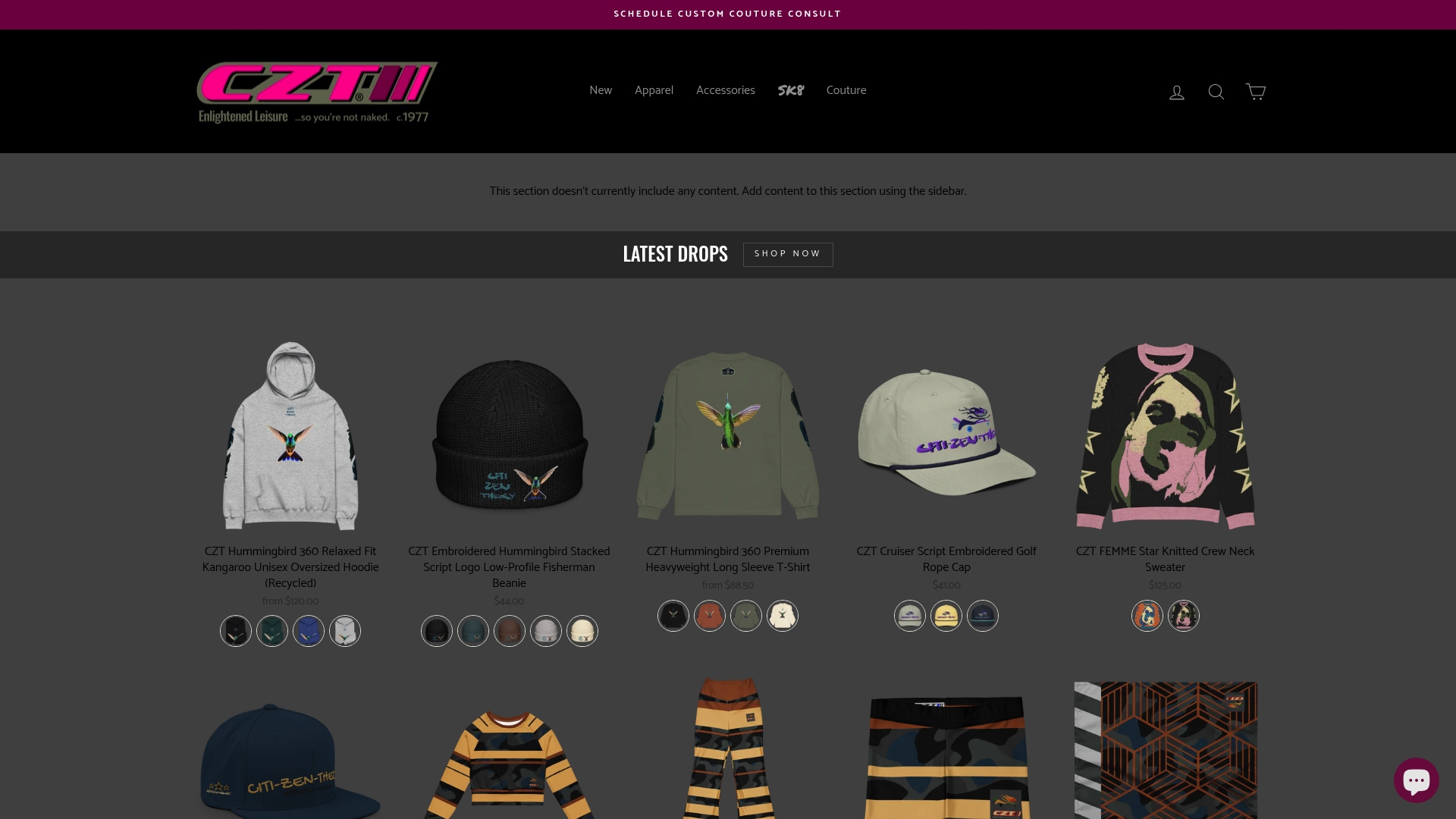
At Czt, we have built our collections around the belief that streetwear and sustainability are not opposing forces but natural collaborators. Our pieces, from the recycled athletic shorts to the SK8 Logo Premium Tee crafted from eco-conscious materials, reflect a commitment to both composition and conscience. Every garment we design is meant to carry the weight of real culture, the graffiti walls, the skate spots, the communities that made this aesthetic matter. We also offer custom couture design services for those who want to personalize their entire fashion experience, not just a single piece. If you are ready to build a wardrobe that reflects who you actually are, explore what Czt has created for you.
FAQ
What makes streetwear truly eco-friendly?
Eco-friendly streetwear uses certified low-impact materials like organic cotton or recycled fibers, is produced under fair labor conditions, and is designed for durability rather than disposability. Third-party certifications like GOTS and Fair Trade are the most reliable indicators.
How do I avoid greenwashing when buying globally?
Ask brands for specific material compositions, factory names, and third-party audit results rather than accepting vague sustainability language. If a brand cannot provide documentation, that is a meaningful signal about the depth of its commitment.
Is upcycled streetwear consistent in quality?
Quality varies by how structured the sourcing process is. Brands that use organized textile archives and sort materials by wash, weight, and texture, as demonstrated by circular fashion producers working with post-consumer denim, produce far more consistent results than those using ad-hoc salvage methods.
How many new pieces should I buy per year sustainably?
Fashion experts recommend buying roughly five new garments per year, focusing on quality and longevity rather than volume, as the most effective personal strategy for reducing fashion-related carbon emissions.
Does global sourcing increase my carbon footprint?
It can, but consolidating orders, choosing brands with carbon-neutral shipping options, and prioritizing suppliers closer to your location significantly reduce that impact. The environmental cost of one well-made global piece is still far lower than multiple fast fashion purchases made locally.
Recommended
- CZT SK8 Brick Wall Bandana and Shawl Recycled - Stylish & Eco-Friendly – CZT [CITI-ZEN-THEORY]
- CZT SK8 Oasis Classic Casual Slip-Ons - Sustainable Canvas Footwear – CZT [CITI-ZEN-THEORY]
- CZT OG Dapper Duffel - Bold Botanic Camo & Graffiti Prints | Shop Now – CZT [CITI-ZEN-THEORY]
- CZT SK8 Logo Premium HVW8 Tee - Stylish Skateboard T-Shirt for Men – CZT [CITI-ZEN-THEORY]