![CZT [CITI-ZEN-THEORY]](http://czt.rocks/cdn/shop/files/CZT_-_Brand_PINK_Label_1_330x.png?v=1774104725)
![CZT [CITI-ZEN-THEORY]](http://czt.rocks/cdn/shop/t/61/assets/CZT-Fast-Logo---Blue-Grey_330x.png?v=98224836737033641471695502660)
![CZT [CITI-ZEN-THEORY]](http://czt.rocks/cdn/shop/files/CZT_-_Brand_PINK_Label_1_170x.png?v=1774104725)
![CZT [CITI-ZEN-THEORY]](http://czt.rocks/cdn/shop/t/61/assets/CZT-Fast-Logo---Blue-Grey_170x.png?v=98224836737033641471695502660)
How to Mix Sustainable Pieces Into Stylish Outfits
The most effective way to mix sustainable pieces into stylish outfits is deceptively simple: build around versatile, high-quality staples in natural fibers, then layer, accessorize, and rethink what you already own before reaching for anything new. Designer Shubha Mitra frames it as a mindset, not a rulebook — one centered on timelessness and quality rather than chasing each season’s aesthetic. That shift in perspective is where every chic, eco-conscious wardrobe begins.
A few principles anchor the whole practice:
- Start with what you own. Natalie Costello’s approach to budget-conscious sustainability begins with a full closet audit before any purchase.
- Prioritize natural fibers. Organic cotton, hemp, linen, and Tencel carry a lower environmental footprint than synthetic blends, which shed microplastics even when labeled “recycled.”
- Follow the 7 Rs of sustainable fashion: Refuse, Reduce, Rethink, Repair, Reuse, Rent, and Recycle, in that order of impact.
- Invest in versatility. Every piece you add should pair naturally with at least three others already in your wardrobe.
- Refuse greenwashing. A polyester shirt made from recycled bottles still sheds microplastics; the label does not redeem the fiber.
The sections below move from foundational wardrobe pieces through creative styling methods, capsule wardrobe architecture, and Czt’s own take on sustainable streetwear — each building on the last.
Table of Contents
- 1. Sustainable fashion staples every wardrobe needs
- 2. How to style and refresh your sustainable pieces creatively
- 3. Building a capsule sustainable wardrobe for timeless style
- 4. Czt’s sustainable streetwear philosophy and the Botanic Camo collection
- Czt brings sustainable streetwear to life for you
- Key Takeaways
1. Sustainable fashion staples every wardrobe needs
The wardrobe that makes mixing effortless is not large. It is composed. Every piece earns its place by pairing with multiple others, surviving seasons without losing its shape, and carrying a material story worth telling.
Tops
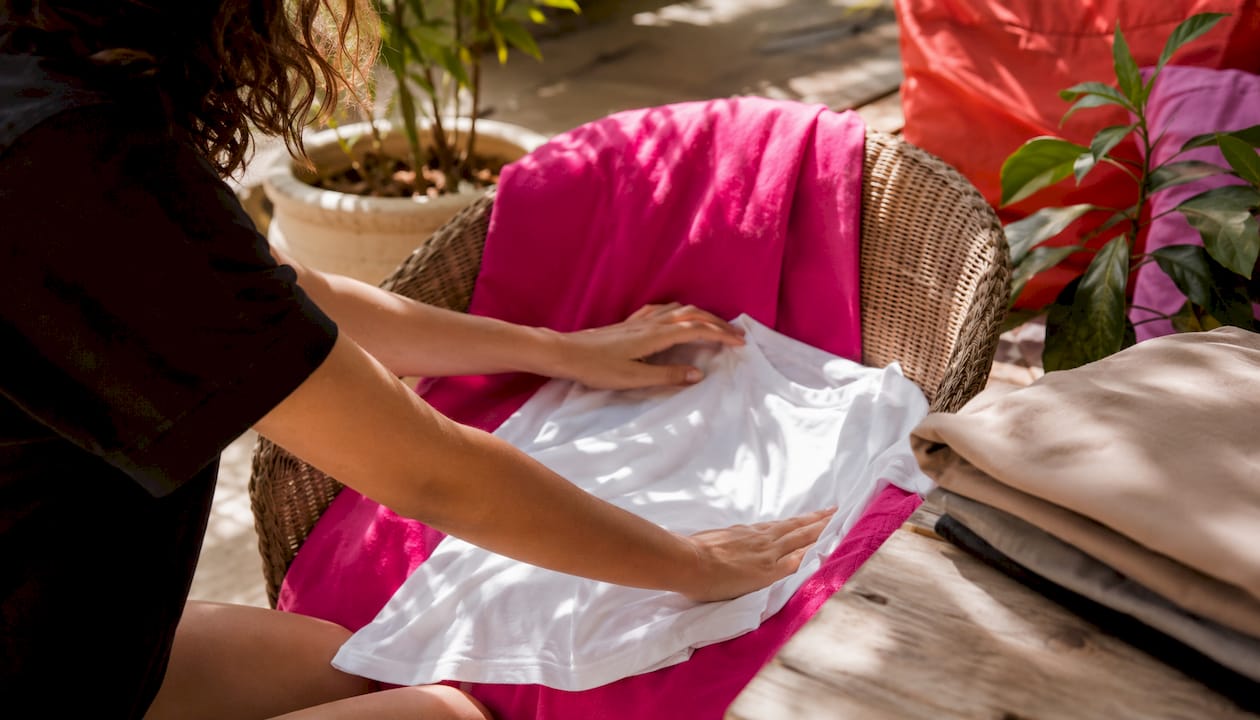
An organic cotton tee in a neutral — white, slate, or oatmeal — is the workhorse of any eco-conscious closet. Pair it under a blazer for a polished afternoon, knot it above wide-leg hemp trousers for something more editorial, or layer it beneath an open linen shirt on a warm evening. Hemp and Tencel blouses offer the same versatility with a softer drape and better moisture management than conventional cotton. Look for pieces with minimal synthetic content; even a small percentage of elastane can complicate both longevity and end-of-life recycling.
Bottoms
Hemp denim is the category revelation most people have not yet encountered. It grows with minimal water, enriches the soil it’s planted in, and produces a fabric that softens beautifully over years of wear rather than degrading. A well-fitted pair of hemp or organic cotton jeans functions across casual, creative, and smart-casual contexts with nothing more than a shoe swap. Linen trousers carry the same cross-occasion range in warmer months, moving from a morning farmers market to a rooftop dinner without complaint.
Outerwear
A wool coat is the single highest-return investment in a sustainable wardrobe. Wool is naturally temperature-regulating, biodegradable, and — when sourced from certified ethical farms — carries a fraction of the environmental cost of a synthetic puffer. One quality wool coat, worn across three or four seasons, lowers cost per wear far below what any fast-fashion alternative achieves. A denim jacket in organic cotton rounds out the outerwear rotation for transitional weather.
Accessories
Accessories are where sustainable styling becomes genuinely creative. A hand-dyed linen scarf can anchor a monochrome outfit, serve as a hair wrap, or double as a lightweight layer. Leather goods sourced from certified tanneries or plant-based alternatives age with character rather than cracking after a season. A single quality belt, a canvas tote, and a pair of classic leather shoes cover most occasions without redundancy.
Pro Tip: When evaluating a new accessory, ask whether it works with at least five pieces already in your wardrobe. If the answer is fewer than three, it belongs to someone else’s closet.
2. How to style and refresh your sustainable pieces creatively
The art of mixing sustainable clothing is, at its core, the art of composition — reading what each piece brings to the frame and placing it in conversation with something unexpected. Breaking traditional style barriers is not rebellion for its own sake; it is the most practical tool for extending the life and range of every garment you own.
Layering with intention
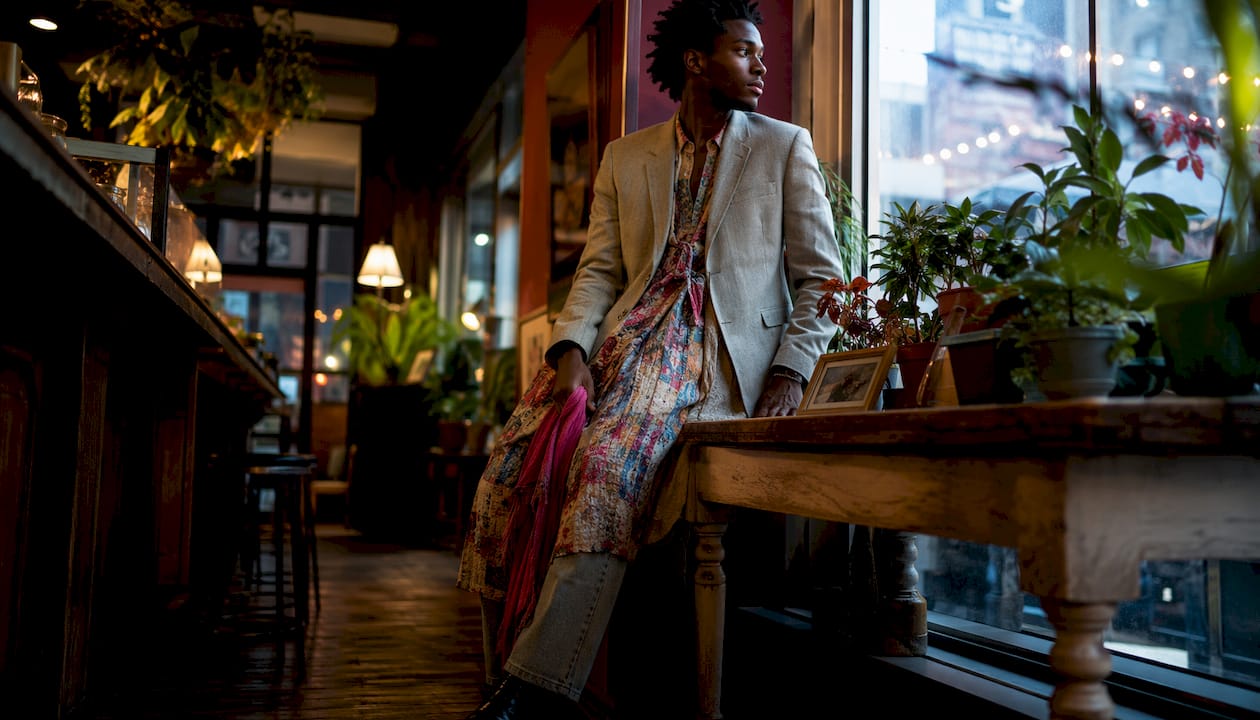
Layering is the technique that makes a smaller wardrobe feel inexhaustible. A structured blazer over a tiered hemp midi dress bridges the gap between casual and polished in a single move. Knitwear pulled over a linen button-down adds texture and warmth without requiring a new outfit entirely. The key is building from lightweight breathable basics outward, adding structure and weight as the occasion or temperature demands. Mixing formal and casual pieces this way creates aesthetics that work across multiple contexts — the same core outfit reads differently at a gallery opening than at a weekend brunch, simply by swapping the outer layer.
Combining patterns, textures, and color
Pattern mixing intimidates most people into playing it safe, which is a missed opportunity. A narrow stripe and a loose floral coexist beautifully when they share a color family. Texture contrast — say, a rough-woven linen shirt against smooth organic cotton trousers — creates visual depth without any pattern at all. For color, a neutral base of white, navy, or camel allows one or two accent pieces to carry the composition without competing. Earth tones drawn from natural dyes are particularly forgiving; they tend to harmonize rather than clash.
Seasonal adaptation without buying new
Transitioning a wardrobe across seasons is mostly a layering exercise. A sleeveless hemp dress worn alone in July becomes a layering piece over a fitted long-sleeve tee in October. A wool coat that anchors winter outfits becomes a statement layer over a spring dress on a cool April morning. The Earth Day framework puts it plainly: fewer, better-made clothes with the right accessories create more sophisticated looks than volumes of cheaper clothing ever could.
Upcycling and refreshing older pieces
Before retiring a garment, consider what it could become. Worn denim jeans become shorts or a tote bag. A stretched-out sweater, felted and cut, becomes a vest. A dress with a damaged hem, shortened, becomes a top. These transformations are not crafts projects for the especially patient — they are the Repair and Reuse stages of the 7 Rs hierarchy made tangible, and they produce pieces with a provenance no store-bought item can match.
Pro Tip: Seek out reversible or multifunctional designs — a reversible dress effectively gives you two garments from one, doubling your outfit options without adding a single item to your closet.
3. Building a capsule sustainable wardrobe for timeless style
A capsule wardrobe is not minimalism for its own sake. It is a deliberate curation of pieces that work together so naturally that getting dressed becomes a creative act rather than a daily negotiation with a cluttered closet.
Auditing what you already own
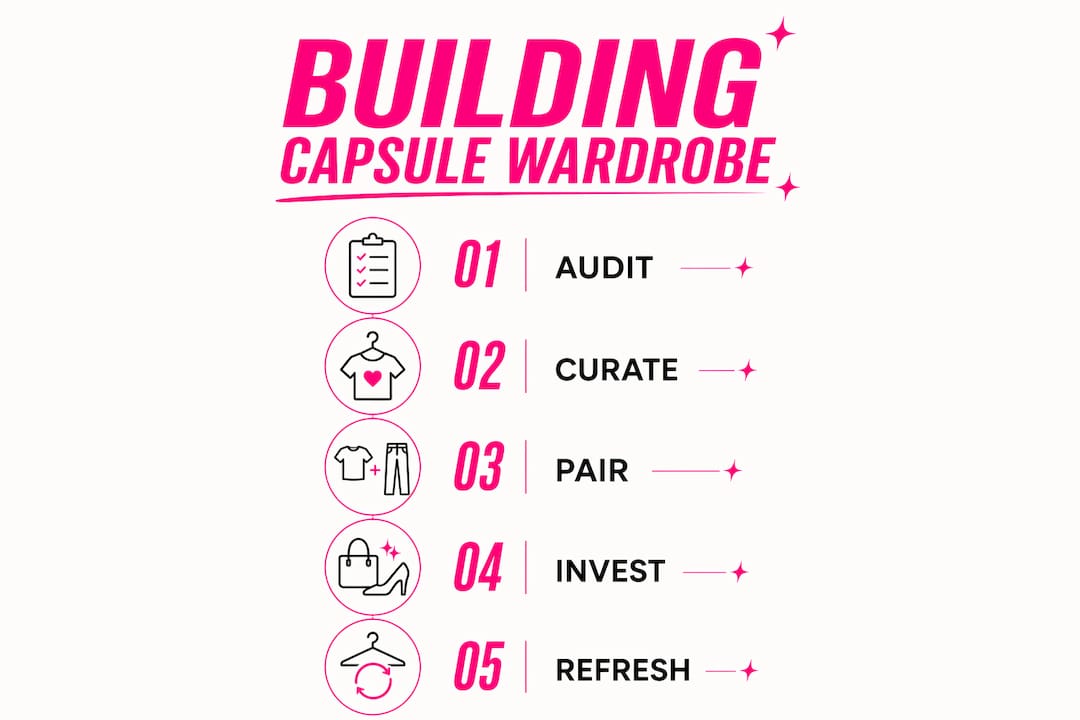
Start by pulling everything out. Lay it flat, try it on, and sort ruthlessly into three categories: wear regularly, wear occasionally, and haven’t worn in over a year. The third pile is where most people discover they’ve been buying duplicates of things they already own or holding onto aspirational pieces that never quite fit their actual life. Donate, sell, or swap what doesn’t serve you. What remains is your foundation.
Applying the Rule of 3
A capsule wardrobe of 30–40 versatile items, where each piece pairs with at least three others, generates a range of outfit combinations that most people never fully exhaust. This is the Rule of 3 in practice: before adding any new garment, identify at least three existing pieces it works with. If you can’t name them immediately, the new piece doesn’t earn its place.
Balancing investment pieces with secondhand finds
Not every capsule item needs to be purchased new, and frankly, the most interesting wardrobes rarely are. High-wear, high-visibility pieces — a quality coat, a well-fitted pair of trousers, a leather bag — justify the investment in new sustainable goods because their cost per wear drops dramatically over years of use. Everything else is a candidate for secondhand sourcing: thrift stores, peer-to-peer resale platforms, and clothing swaps with friends all yield quality finds at a fraction of the environmental and financial cost of new production.
Essential capsule components
- Neutral tops in organic cotton or Tencel (3–4 pieces)
- One quality pair of hemp or organic denim jeans
- Linen or hemp trousers in a neutral tone
- A versatile midi or wrap dress in a natural fiber
- One structured blazer in wool or organic cotton
- A wool or recycled-fiber coat for outerwear
- Layering pieces: a cardigan, a linen overshirt, a lightweight knit
- Accessories: a quality belt, a canvas or leather tote, a scarf
Weaving the 7 Rs into daily habits
The 7 Rs framework gives the capsule wardrobe its ethical backbone. Refuse impulse purchases and virgin synthetic fibers. Reduce overall volume by buying intentionally. Rethink cost per wear before every purchase. Repair before replacing — a replaced zipper or mended seam adds years to a garment’s life. Reuse through secondhand sourcing and passing pieces on. Rent for occasions that don’t warrant ownership. Recycle only as a last resort, when repair and reuse are genuinely exhausted.
4. Czt’s sustainable streetwear philosophy and the Botanic Camo collection
There is a particular kind of creative courage in building a fashion brand at the intersection of subcultural energy and ecological responsibility — where the graffiti-tagged walls of street culture meet the quiet discipline of material stewardship. Czt occupies that space with conviction, and the work reflects it.
The Botanic Camo collection is built from recycled fabrics, each piece a study in how textile reuse can produce something aesthetically intriguing rather than merely virtuous. The collection doesn’t ask you to compromise between looking good and doing right — it refuses the premise that those goals are in tension. Recycled materials, handled with craft and intention, carry a visual complexity that virgin synthetics rarely achieve.
What distinguishes Czt’s approach beyond the material choices is the custom couture dimension. Personalization, in the context of sustainable fashion, is not a luxury add-on — it is a philosophical position. A garment made to your specifications, in your proportions, for your actual life, is a garment you will wear for years. That longevity is the most powerful sustainability metric any piece can carry, and it’s one that custom sustainable fashion is uniquely positioned to deliver.
Czt also extends its commitment into consumer education. The Sustainable Fashion Shopping Checklist guides buyers through the complexity of evaluating brands, fibers, and production claims — the kind of tool that helps people refuse greenwashing rather than simply hoping they’ve avoided it.
Key elements of Czt’s sustainable design approach:
- Recycled fabric construction in the Botanic Camo collection, minimizing textile waste at the production stage
- Custom couture services that produce pieces built for longevity rather than seasonal obsolescence
- Inclusive sizing and design that extends the reach of sustainable streetwear beyond narrow demographic assumptions
- Educational resources that build consumer literacy around fabric composition, ethical sourcing, and mindful purchasing
- Streetwear aesthetics drawn from skate culture and urban art, producing pieces that resonate with subcultural authenticity rather than trend-chasing
Czt brings sustainable streetwear to life for you
Sustainable fashion done well is not a compromise. It’s a composition — and Czt builds that composition from the ground up, starting with recycled materials and ending with a garment that carries your name on it.

For eco-conscious individuals who want stylish eco-friendly outfits without sacrificing the edge and energy of streetwear culture, Czt offers something the broader sustainable fashion market rarely delivers: pieces that feel genuinely alive. The Botanic Camo collection channels the visual language of urban art through recycled textiles, producing looks that belong on a skate ramp or a gallery wall with equal authority. And because Czt’s custom couture service lets you shape the fit, the detail, and the expression of each piece, what you receive is not a garment off a rack but a collaboration.
The longevity-first design philosophy behind every Czt piece means you’re investing in something built to stay in rotation for years, not seasons. Visit czt.rocks to explore the Botanic Camo collection and start your custom couture conversation today.
Key Takeaways
Mixing sustainable pieces into stylish outfits works best when you prioritize natural fibers, apply the 7 Rs framework, and build a capsule wardrobe where every item pairs with at least three others.
| Point | Details |
|---|---|
| Natural fibers over synthetics | Organic cotton, hemp, linen, and Tencel carry lower environmental impact and don’t shed microplastics. |
| The 7 Rs as a daily guide | Refuse, Reduce, Rethink, Repair, Reuse, Rent, and Recycle — in that order of impact. |
| Capsule wardrobe of 30–40 pieces | Each item should pair with at least three others to maximize outfit combinations from fewer garments. |
| Layering and multifunctional design | Reversible garments and intentional layering effectively double outfit options without adding closet bulk. |
| Czt’s Botanic Camo collection | Built from recycled fabrics with custom couture options, designed for longevity and streetwear authenticity. |
Recommended
- Examples of Upcycled Streetwear Designs That Inspire – CZT [CITI-ZEN-THEORY]
- How to Source Eco-Friendly Streetwear Pieces Globally – CZT [CITI-ZEN-THEORY]
- Why Sustainable Custom Fashion Matters for Real Change – CZT [CITI-ZEN-THEORY]
- Recycled Materials in Fashion: Benefits and Impact – CZT [CITI-ZEN-THEORY]