![CZT [CITI-ZEN-THEORY]](http://czt.rocks/cdn/shop/files/CZT_-_Brand_PINK_Label_1_330x.png?v=1774104725)
![CZT [CITI-ZEN-THEORY]](http://czt.rocks/cdn/shop/t/61/assets/CZT-Fast-Logo---Blue-Grey_330x.png?v=98224836737033641471695502660)
![CZT [CITI-ZEN-THEORY]](http://czt.rocks/cdn/shop/files/CZT_-_Brand_PINK_Label_1_170x.png?v=1774104725)
![CZT [CITI-ZEN-THEORY]](http://czt.rocks/cdn/shop/t/61/assets/CZT-Fast-Logo---Blue-Grey_170x.png?v=98224836737033641471695502660)
Examples of One-of-a-Kind Apparel Designs to Inspire You
One-of-a-kind apparel, known in the trade as OOAK fashion, is defined as garments crafted through non-replicable processes such as hand-painting, freehand embroidery, or embedded digital authentication, guaranteeing no two pieces are identical. The examples of one of a kind apparel designs explored here span hand-painted crewnecks by MA DEZIGN, NFC-chipped tees by JASON BRICKHILL, and couture patchwork gowns documented by Vogue, each representing a distinct method of achieving true garment exclusivity. What separates OOAK from limited-edition batch production is process-based uniqueness: the variation is built into the making, not the quantity. For designers and style-conscious consumers alike, understanding these methods is the first step toward creating or acquiring pieces that genuinely cannot be duplicated.
1. Examples of one-of-a-kind apparel designs: hand-painted garments
Hand-painting is the most direct path to guaranteed uniqueness in apparel, because no two brushstrokes ever land identically. MA DEZIGN’s hand-painted fish crewneck, priced at $385 and constructed from 100% cotton French terry, is a textbook example: the brand explicitly states that each garment is unique due to the hand-painting process, with natural variations in color and composition from piece to piece. That transparency is what elevates the claim beyond marketing language. The garment is designed in Los Angeles and carries a dry-clean-only care recommendation, which reflects the fragility and value of the painted surface.
Hand-painting works as a uniqueness guarantee because the artist’s hand introduces micro-variations in pressure, pigment saturation, and line quality that no machine can replicate. Czt’s own art-inspired collaborative apparel follows this same philosophy, pairing hand-painted realism with explicit one-of-a-kind claims that give the wearer genuine confidence in what they own.
- Material: 100% cotton French terry (MA DEZIGN)
- Care: Dry-clean only to preserve painted surface integrity
- Price point: $385, reflecting the labor intensity of hand application
- Uniqueness mechanism: Natural variation in brushstroke, pigment, and composition
Pro Tip: When evaluating hand-painted pieces, look for brands that describe the variation explicitly rather than using vague language like “artisanal.” Specificity in process language is the clearest signal of authentic OOAK status.
2. Hand-printed tees and freehand embroidery as exclusivity tools
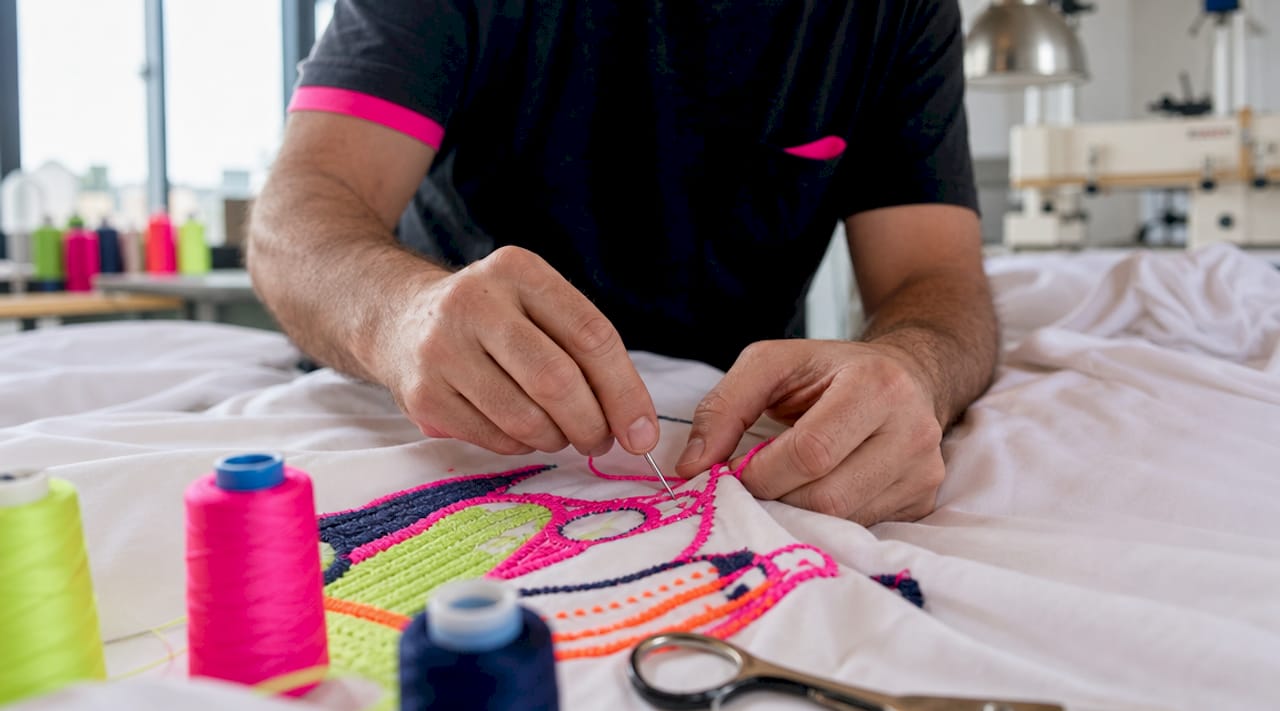
Hand-printing and freehand embroidery represent two distinct craft traditions that both arrive at the same destination: a garment that cannot be duplicated. Rebecca Pearcy’s “Sheila Tee, Splatter Hatch” OOAK, available in size XL and priced at $88, is hand-printed entirely in-house with cold-water wash care instructions. Pearcy’s use of the term “OOAK” alongside transparent production documentation sets a credibility standard that generic “limited edition” labeling rarely meets. The splatter-hatch technique produces a composition where ink distribution is inherently random, making each shirt a record of a specific moment in the printing process.
Freehand embroidery on upcycled vintage fabrics takes exclusivity even further by layering two sources of uniqueness: the base fabric and the surface design. Umamade’s “Circus Series #01 The Bird Whisperer” is assembled from repurposed vintage linens with hand-drawn embroidery, priced at €520 and offered in one size. The vintage linen itself carries its own history and irregular texture, and the freehand embroidery adds a second layer of non-replicable mark-making. This is slow fashion in its most literal sense: each piece demands hours of focused hand labor, and the resulting garment tells a story that mass production structurally cannot.
- Rebecca Pearcy: Hand-printed in-house, OOAK labeling, $88, cold-water wash
- Umamade: Repurposed vintage linens, freehand embroidery, €520, one size
- Shared principle: Surface variation is built into the production method, not added afterward
- Sustainability angle: Upcycled base fabrics reduce textile waste while amplifying uniqueness
For designers interested in upcycled streetwear, the umamade model offers a compelling production framework: source vintage fabrics with inherent character, then apply freehand surface work that responds to each fabric’s specific texture and history.
3. Custom cutting and hand-applied embellishments
Custom cutting and hand-applied embellishments produce a category of one-of-a-kind outfits where the uniqueness lives in both the structural silhouette and the surface decoration simultaneously. ICJUK’s Sovereign Leopard Crystal Tank demonstrates this with precision: the piece features hand-applied crystals across a leopard-print base combined with a custom-cut ladder back, and ICJUK states explicitly that no replication will occur. That “only one available” policy transforms the purchase into an acquisition, closer in spirit to collecting art than buying clothing.
The ladder-back cut is particularly significant as a uniqueness mechanism. Unlike a standard tank silhouette that any manufacturer can reproduce, the ladder back requires individual pattern drafting and hand-finishing, meaning the structural form itself is non-standard. When you layer hand-applied crystals over that custom structure, you create a piece where both the architecture and the ornamentation are unrepeatable. This is the design logic that separates true bespoke clothing samples from garments that merely look unusual.
- ICJUK Sovereign Leopard Crystal Tank: Hand-applied crystals, custom ladder-back cut, explicit no-replication policy
- Structural uniqueness: Custom silhouette requires individual pattern work, not just surface decoration
- Availability model: Single-unit “only one available” listing reinforces collectible positioning
- Design principle: Combining structural and surface uniqueness creates two independent layers of exclusivity
Pro Tip: If you are designing custom apparel with embellishments, document the application process with photography. That documentation becomes part of the piece’s provenance and significantly increases its perceived and actual value.
4. Digital innovation and embedded technology in wearable art
Embedded digital technology represents the newest frontier in creative fashion designs, and it reframes what “unique” means by adding an experiential layer that physical craft alone cannot provide. JASON BRICKHILL’s Digital Glitch Tee, hand-finished in New York City, contains an embedded NFC chip and features a unique glitch pattern specific to each size. The NFC chip authenticates the garment digitally, meaning the wearer can verify ownership and provenance through a smartphone tap. This positions the tee as a phygital object: simultaneously a physical garment and a digital asset.
The production model JASON BRICKHILL uses is instructive for designers thinking about wearable art and tech. The base garment parameters remain consistent across the collection, but the surface glitch pattern varies by size, and the NFC chip ties each specific unit to a unique digital identity. This is the practical model that balances consistency with uniqueness: control the base, vary the surface, and authenticate digitally. Embedding NFC chips in apparel not only authenticates garments but also creates digital consumer engagement, positioning fashion as an interactive experience rather than a passive product.
| Feature | Traditional OOAK | NFC-Embedded OOAK |
|---|---|---|
| Uniqueness source | Handcraft variation | Handcraft + digital identity |
| Authentication method | Visual inspection | NFC chip scan |
| Consumer engagement | Tactile and visual | Tactile, visual, and digital |
| Provenance tracking | Paper certificate or label | Digital record tied to chip |
| Replication risk | Low (handcraft variation) | Near zero (chip is unique) |
The comparison above clarifies why NFC integration is not a gimmick. It solves a real problem in the OOAK market: the difficulty of proving authenticity after the point of sale.
5. High-fashion couture: upcycling and intensive hand-finishing
Couture-level one-of-a-kind design quantifies its craft investment in ways that ready-to-wear cannot approach, and the 2026 Met Gala provided one of the most documented examples in recent memory. Vogue’s coverage of Paloma Elsesser’s gown by Francesco Risso’s Bureau of Imagination Project revealed a piece patchworked from more than 30 vintage dresses, hand-painted with original artwork, and finished with metal embroidery, all constructed in Milan. The couture craft load of tallying donor materials and detailed human finishing steps provides a useful planning metric for designers targeting collectible fashion.
What makes this example instructive beyond its spectacle is the structural logic it demonstrates. Each of the 30-plus vintage dresses contributed fabric with its own weave, color history, and wear pattern. Hand-painting over that patchwork required the artist to respond to each panel’s individual surface rather than working on a uniform ground. Metal embroidery then added a third layer of hand labor, each stitch placed in direct response to the painted composition beneath it. The result is a garment where every square inch carries a different history, and no reconstruction could ever produce the same piece.
| Craft layer | Material or technique | Uniqueness contribution |
|---|---|---|
| Base assembly | 30+ vintage dresses patchworked | Each fabric panel is historically distinct |
| Surface painting | Hand-painted original artwork | Responds to irregular patchwork ground |
| Embellishment | Metal embroidery | Hand-placed in response to painted composition |
| Origin | Made in Milan | Atelier-specific finishing standards |
This layered approach to couture is the most labor-intensive form of OOAK production, but it also produces the most defensible uniqueness claim. Every layer of craft adds a dimension of non-replicability that compounds with each subsequent step.
Key takeaways
True one-of-a-kind apparel is defined by process-based uniqueness, where handcraft variation, custom structure, or digital authentication makes each piece genuinely non-replicable, not merely scarce.
| Point | Details |
|---|---|
| Process language signals authenticity | Terms like “OOAK,” “hand-painted,” and “cannot be duplicated” carry more credibility than generic uniqueness claims. |
| Layered craft multiplies exclusivity | Combining structural cuts, surface decoration, and digital authentication creates compounding non-replicability. |
| Upcycled bases amplify uniqueness | Vintage or repurposed fabrics introduce a pre-existing layer of variation before any surface work begins. |
| NFC chips solve provenance problems | Embedded digital authentication allows post-sale verification that physical labels and certificates cannot match. |
| Couture quantifies craft investment | Tallying donor materials and finishing steps gives designers a measurable framework for collectible fashion production. |
What we’ve learned building at the intersection of craft and streetwear
We have spent years watching the fashion world wrestle with a question that sounds simple but cuts deep: what actually makes a garment one of a kind? The honest answer we have arrived at is that uniqueness is a production decision, not a marketing one. You cannot claim OOAK status by printing a small run of 50 identical shirts. The variation has to be baked into the making itself, whether that is the unpredictable spread of a hand-applied dye, the freehand path of an embroidery needle, or the glitch pattern that a digital process generates differently for each size.
What we find most compelling about the examples in this article is how they each solve the uniqueness problem through a different craft tradition, yet they all share one discipline: transparency about process. MA DEZIGN tells you the variation is natural. Rebecca Pearcy labels her work “OOAK” and documents her in-house printing. JASON BRICKHILL embeds a chip that makes the authentication undeniable. That transparency is not just good marketing. It is a form of respect for the person wearing the piece, an acknowledgment that they are acquiring something with a real history and a real maker behind it.
At Czt, we think about this constantly. Our Botanic Camo collection uses recycled materials precisely because the material history of a garment is part of its identity. A fabric that has already lived one life carries a character that virgin material cannot replicate. When you combine that with surface work that responds to the specific texture and color of each recycled piece, you arrive at something that genuinely cannot be made twice. That is the standard we hold ourselves to, and it is the standard we believe the broader streetwear world is slowly, beautifully moving toward.
— Czt
Czt’s approach to original streetwear design
At Czt, the principles behind every example in this article, handcraft variation, material integrity, and process-driven exclusivity, are built into our collections from the ground up. Our organic oversized sweatshirts are constructed with bold streetwear aesthetics and produced using recycled materials, so the uniqueness of each piece begins at the fabric level before any surface design is applied. We offer custom couture design services that let you personalize not just a garment but your entire fashion experience, from silhouette to surface composition. If you are a designer seeking inspiration or a consumer ready to wear something that genuinely cannot be replicated, explore the Czt collection and find the piece that belongs only to you.
FAQ
What are unique apparel designs?
Unique apparel designs are garments produced through non-replicable processes such as hand-painting, freehand embroidery, custom cutting, or embedded digital authentication, ensuring no two pieces are identical. The industry term for the most exclusive category is OOAK, meaning one of a kind.
How do I verify a garment is truly one of a kind?
Look for explicit process language such as “hand-painted,” “OOAK,” or “cannot be duplicated,” and check whether the brand documents its production method. Embedded NFC chips provide the most verifiable form of post-sale authentication currently available.
What is the difference between limited edition and one of a kind?
Limited edition means a set number of identical pieces were produced, while one of a kind means a single piece exists with variation built into its making. True OOAK status requires process-based uniqueness, not just restricted quantity.
Can sustainable materials contribute to one-of-a-kind status?
Yes. Upcycled vintage fabrics, like those used by umamade in the Circus Series, introduce inherent variation at the base material level before any surface work begins, adding an independent layer of uniqueness that new fabric cannot provide.
What file specs support sharp custom apparel printing?
For printed custom apparel, PNG files at 300dpi with a transparent background and dimensions of 4500 by 5400 pixels produce the sharpest results. Sharp print quality is the foundation that makes surface-based uniqueness visually compelling.
Recommended
- Nature-Inspired Fashion Patterns: 8 Stunning Examples – CZT [CITI-ZEN-THEORY]
- Examples of Upcycled Streetwear Designs That Inspire – CZT [CITI-ZEN-THEORY]
- Why Sustainable Custom Fashion Matters for Real Change – CZT [CITI-ZEN-THEORY]
- Original Art-Inspired Collaborative Apparel – CZT [CITI-ZEN-THEORY]