![CZT [CITI-ZEN-THEORY]](http://czt.rocks/cdn/shop/files/CZT_-_Brand_PINK_Label_1_330x.png?v=1774104725)
![CZT [CITI-ZEN-THEORY]](http://czt.rocks/cdn/shop/t/61/assets/CZT-Fast-Logo---Blue-Grey_330x.png?v=98224836737033641471695502660)
![CZT [CITI-ZEN-THEORY]](http://czt.rocks/cdn/shop/files/CZT_-_Brand_PINK_Label_1_170x.png?v=1774104725)
![CZT [CITI-ZEN-THEORY]](http://czt.rocks/cdn/shop/t/61/assets/CZT-Fast-Logo---Blue-Grey_170x.png?v=98224836737033641471695502660)
Examples of Upcycled Streetwear Designs That Inspire
Upcycled streetwear is defined as clothing reconstructed from discarded or post-consumer garments into fresh, stylish pieces that carry the marks of their previous lives as design features rather than flaws. The best examples of upcycled streetwear designs do not simply patch a hole or slap a logo over a stain. They dismantle, rebuild, and reimagine, producing silhouettes that feel both familiar and entirely new. Brands like Miu Miu and Jackalo have pushed this practice into the cultural conversation, proving that sustainability and genuine aesthetic ambition are not competing values. The sustainable fashion market is projected to grow from $12.46 billion in 2025 to $53.37 billion by 2032, a trajectory that signals this is not a passing trend but a structural shift in how streetwear is conceived, made, and worn.
1. Standout examples of designer upcycled streetwear collections
The most instructive place to study upcycled streetwear is at the level of designers who treat reconstruction as a primary creative discipline rather than a marketing footnote.
Miu Miu’s 2026 Upcycled capsule is the clearest current reference point. The collection transforms vintage basics into one-of-a-kind streetwear pieces through visible handwork including raw hems, embroidery, patchwork with ribbons and bows, and deconstructed trousers converted into skirts and jackets. Each piece begins as the cheapest shirt or trouser in a thrift store, which makes the transformation all the more striking. The collection also authenticates its recycled leather bags via blockchain technology, a move that brings transparency to luxury upcycling and sets a precedent for how provenance can be verified in sustainable fashion.
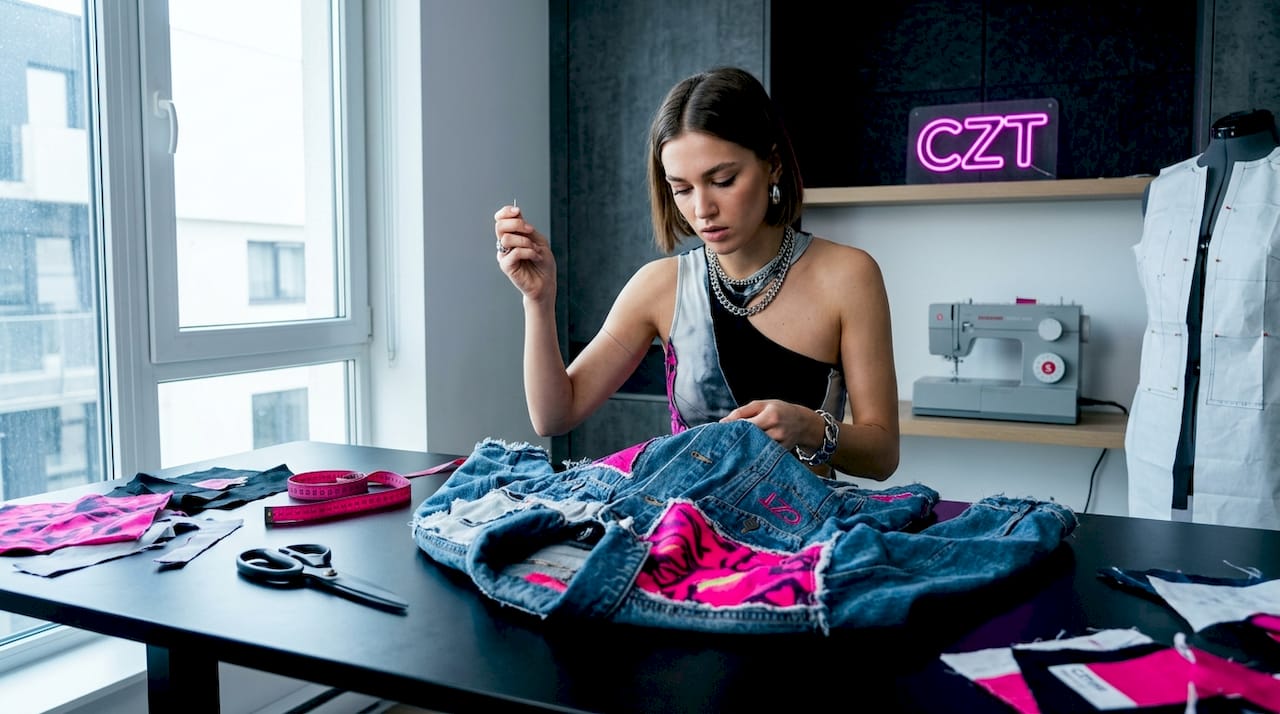
Jackalo’s “Broken In” denim capsule takes a different but equally rigorous approach. The brand repurposes post-consumer B-grade denim sourced through Bank & Vogue into durable children’s streetwear, with each piece retailing between $119 and $145. Designers work directly around stains and tears, treating imperfections as compositional elements rather than problems to hide. The result is a line where no two pieces are identical, and the visible history of the fabric becomes the garment’s most distinctive quality.
What separates these collections from surface-level upcycling is the underlying philosophy. Designer upcycling is less about patchwork and more about complete dismantling and reconstruction to produce fresh, recognizable silhouettes. The garment is not decorated. It is reborn.
- Deconstruction and reconstruction: Seams are opened, panels are separated, and the garment is rebuilt with a new silhouette in mind.
- Patchwork and paneling: Contrasting fabric sections are joined to create visual rhythm and texture.
- Embroidery and hand-finishing: Thread work, raw hems, and slashed seams add artisan character that mass production cannot replicate.
- Garment conversion: Trousers become skirts, shirts become vests, and jackets are restructured into entirely new forms.
Pro Tip: When evaluating an upcycled piece, look for visible handwork like uneven stitching, raw edges, or asymmetric seam placement. These are not defects. They are the signatures of genuine craft, and they are what make the piece worth owning.
2. Creative upcycled design ideas for fashion enthusiasts
Creative upcycled clothing does not require a luxury atelier. The design logic behind Miu Miu and Jackalo translates directly into approaches that any fashion-forward person can apply or look for when shopping.
The most accessible entry point is fabric paneling by wash and weight. Selecting denim panels by their degree of fade, their texture, or their surface character creates visual contrast without requiring new materials. A pair of jeans with a blown-out knee becomes a skirt with an intentional raw hem. A faded work shirt becomes the front panel of a reconstructed bomber. The composition is driven by what the fabric already offers.
Visible seam details are another defining feature of creative upcycled streetwear. Exposed seam allowances, French seams turned outward, and contrast thread stitching all announce that the garment was made by hand with intention. These details read as design choices rather than construction shortcuts, particularly when they appear consistently across a piece.
Here are practical upcycled design ideas that work across skill levels and aesthetics:
- Convert oversized trousers into wide-leg shorts with a raw, frayed hem for a distressed streetwear finish.
- Add patch pockets cut from contrasting deadstock cotton to the chest or sleeve of a plain tee.
- Use ribbon or grosgrain trim along collar edges, cuffs, or pocket openings to add a graphic line element.
- Slice vertical seams in a hoodie and insert a contrasting fabric panel to widen the silhouette and add color.
- Embroider over stains or worn areas on denim jackets, turning damage into decorative focal points.
- Layer two deconstructed shirts and reconstruct them as a single hybrid garment with mismatched plackets.
- Use B-grade denim scraps to create patchwork shorts, selecting panels by wash tone to build a gradient effect.
Pro Tip: Deadstock cotton and B-grade denim are the most forgiving materials for first attempts at upcycling. They hold structure well, respond predictably to cutting and stitching, and their imperfections add character rather than compromising the final piece.
3. How upcycled streetwear balances style with sustainability impact
The environmental argument for upcycled streetwear is direct. Certified organic cotton and reclaimed fabrics reduce the demand for new material production, which lowers water consumption, chemical use, and carbon output across the supply chain. Every garment reconstructed from post-consumer textiles is one garment that does not require virgin fiber, dyeing, or finishing processes.
The design challenge, however, is real. Pattern adaptation to damaged fabric areas requires designers to work with irregular geometry, unpredictable yield, and material inconsistency that standardized production never encounters. A stain in the wrong place eliminates an entire panel. A tear changes the grain line. This constraint forces creative problem-solving that, paradoxically, produces more interesting garments than a clean bolt of new fabric would.
The table below maps the style features of leading upcycled streetwear designs against their corresponding sustainability benefits, illustrating that the two dimensions reinforce rather than compromise each other.
| Style feature | Sustainability benefit |
|---|---|
| Visible raw hems and exposed seams | Eliminates finishing processes that consume water and chemicals |
| Patchwork paneling from B-grade denim | Diverts post-consumer textiles from landfill |
| Embroidery over worn or stained areas | Extends garment life without new material input |
| Garment conversion (trousers to skirts) | Maximizes yield from a single reclaimed piece |
| Deadstock cotton patch pockets | Uses surplus fabric that would otherwise be destroyed |
The aesthetic qualities of upcycled streetwear, its irregularity, its visible history, its handmade character, are inseparable from the sustainability logic that produces them. The imperfection is the point.
4. Emerging trends and innovative techniques in upcycled streetwear
The frontier of upcycling in streetwear is moving beyond visible patchwork into territory that combines artisan craft with technological verification and luxury positioning.
Miu Miu’s use of blockchain authentication for recycled leather goods is the most significant structural development in this space. It establishes a verifiable chain of custody for reclaimed materials, allowing consumers to confirm the provenance of a piece rather than taking a brand’s sustainability claims on faith. This matters because greenwashing remains a genuine problem in fashion, and authentication technology closes the gap between claim and proof.
Deadstock fabric upcycling is gaining traction among independent labels as a way to access premium materials at lower cost while maintaining an eco-conscious position. Deadstock, which refers to surplus fabric produced but never used by manufacturers, carries the quality of its original specification without the environmental cost of new production. Labels working with deadstock can produce limited runs with genuine material scarcity, which supports both the sustainability narrative and the exclusivity appeal that streetwear audiences respond to.
- Hand-finishing for luxury positioning: Raw edges, visible basting stitches, and artisan embroidery are being used to signal craft value in a market saturated with machine-finished goods.
- Garment archaeology: Designers are sourcing from specific eras and regions to create pieces with traceable cultural histories, adding narrative depth to the physical object.
- Collaborative sourcing models: Brands like Jackalo partnering with textile recovery firms like Bank & Vogue represent a growing infrastructure for post-consumer material access.
- Limited-edition scarcity: Because material selection drives unique design in upcycled fashion, no two pieces are identical, which creates natural scarcity without artificial production limits.
Pro Tip: When shopping for upcycled streetwear, look for brands that name their material sources specifically, whether that is a textile recovery partner, a deadstock supplier, or a specific post-consumer stream. Vague sustainability language is a red flag. Specificity is the mark of genuine practice.
Key takeaways
The most effective upcycled streetwear designs treat reconstruction as a primary creative discipline, using material imperfection, visible handwork, and garment conversion to produce pieces that are both aesthetically distinctive and genuinely sustainable.
| Point | Details |
|---|---|
| Reconstruction over decoration | True upcycling dismantles and rebuilds garments rather than simply adding surface embellishments. |
| Imperfection as design | Stains, tears, and fabric irregularities drive creative pattern adaptation and produce one-of-a-kind results. |
| Handwork signals authenticity | Visible embroidery, raw hems, and exposed seams distinguish genuine craft from mass-produced imitation. |
| Style and sustainability reinforce each other | The aesthetic qualities of upcycled pieces, their irregularity and handmade character, are direct products of sustainable material constraints. |
| Market momentum is real | The sustainable fashion market’s projected growth to $53.37 billion by 2032 reflects structural consumer demand, not a passing aesthetic cycle. |
What we’ve learned from building with reclaimed materials
There is a tendency, even among people who care deeply about sustainable fashion, to treat upcycling as a compromise. As if choosing reclaimed fabric means accepting a lesser result. We have found the opposite to be true, and we say this not as a marketing position but as a lived observation from years of working with materials that carry their own history.
The visible handwork that defines the best upcycled pieces, the uneven stitch, the raw edge, the panel that sits slightly off-grain because the fabric demanded it, these are not signs of lesser craft. They are signs of a designer who listened to the material rather than forcing it into a predetermined template. That responsiveness is what produces garments with genuine character, the kind of character that youth frolicking dangerously to the soundtrack of skate culture and street art have always recognized and claimed as their own.
The practical challenge is real. Working around a stain or a tear requires more creative problem-solving than cutting from a clean bolt. But that constraint is also what keeps the work honest. You cannot fake your way through a reclaimed fabric. The material tells you what it can become, and your job is to hear it clearly enough to respond with something worth wearing.
The consumer interest we are seeing now is not just aesthetic appreciation. It is a generation of people who want to know where their clothes come from and what they cost the world to make. That is a shift in values, not just in taste, and it is one we have been building toward since before it was commercially convenient to do so.
— CZT
Explore Czt’s sustainable streetwear collection
At Czt, the design philosophy behind every piece reflects the same principles that define the best upcycled streetwear: visible craft, reclaimed and recycled materials, and a commitment to making something worth wearing rather than just something worth selling.
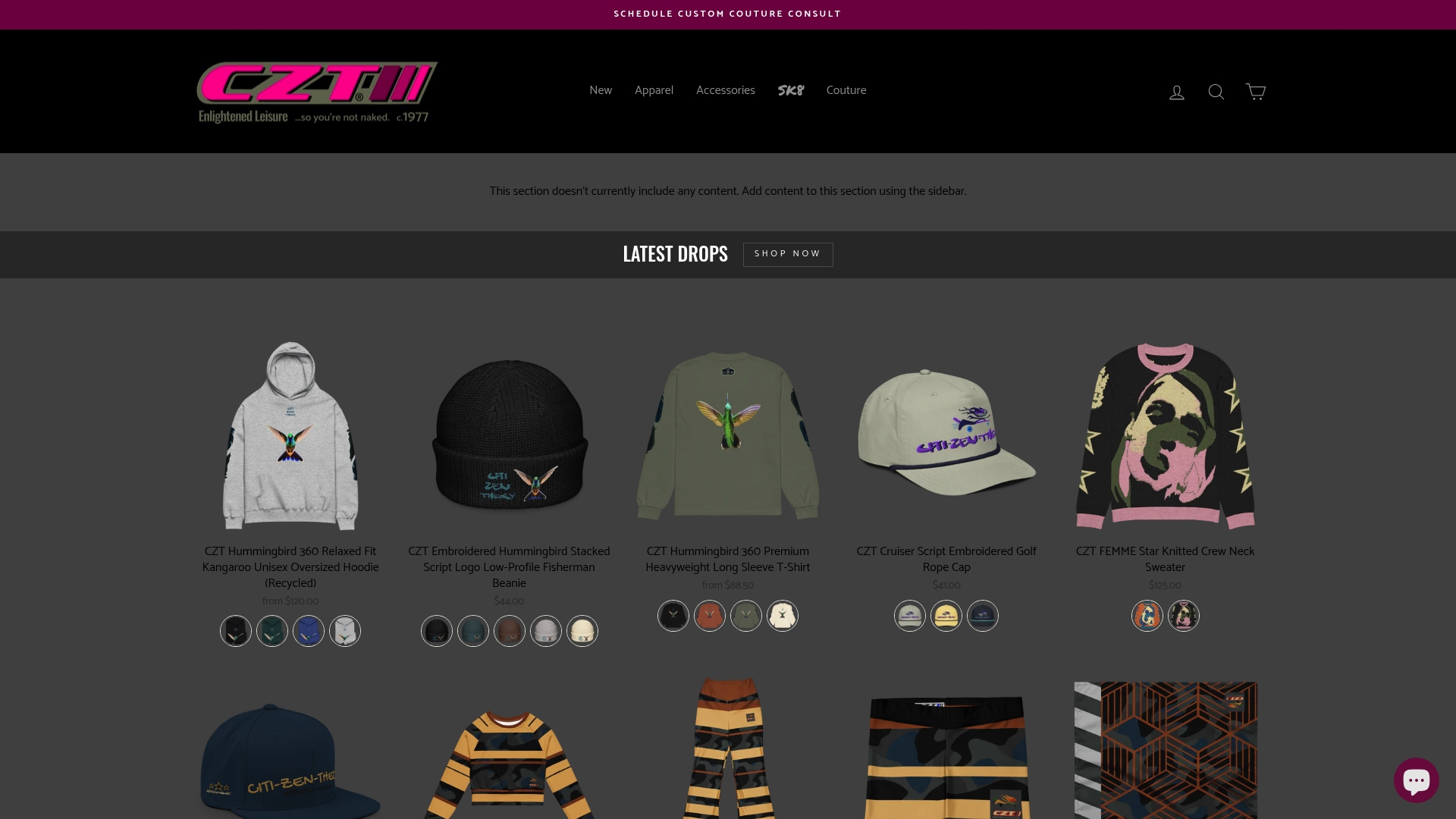
From the embroidered oversized tee with its artisan hand-finished detailing to the vintage-style zip-up hoodie built for the skate-conscious and the eco-conscious alike, each piece in the Czt catalog carries the mark of intentional making. The SK8 Logo Premium Tee is the place to start if you want to understand what sustainable streetwear looks like when it is done without apology. Browse the full collection at czt.rocks and find the piece that speaks to where you stand.
FAQ
What defines upcycled streetwear?
Upcycled streetwear is clothing reconstructed from discarded or post-consumer garments into new, stylish pieces, where the original material’s character, including its wear, fading, or imperfections, becomes a deliberate design feature rather than a flaw.
How is upcycling different from recycling in fashion?
Recycling breaks materials down to their raw state before reuse, while upcycling preserves and transforms the existing garment structure, producing a higher-value piece without the energy cost of reprocessing fibers.
What materials are most common in upcycled streetwear designs?
B-grade post-consumer denim, deadstock cotton, and reclaimed leather are the most frequently used materials, selected for their structural integrity and the visual character their prior use has given them.
Are upcycled streetwear pieces more expensive than standard streetwear?
Yes, typically. Jackalo’s upcycled denim pieces retail between $119 and $145, reflecting the labor-intensive process of pattern adaptation, hand-finishing, and working with irregular reclaimed materials that cannot be cut at industrial scale.
How can I tell if a brand’s upcycling claims are genuine?
Look for brands that name specific material sources, such as a textile recovery partner or a deadstock supplier, and that show visible evidence of handwork in their pieces. Blockchain authentication, as used by Miu Miu for its recycled leather goods, represents the most verifiable standard currently available.
Recommended
- CZT SK8 Brick Wall Bandana and Shawl Recycled - Stylish & Eco-Friendly – CZT [CITI-ZEN-THEORY]
- CZT Stacked-Script Embroidered Oversized S/S Faded Tee - Stylish & Comfortable – CZT [CITI-ZEN-THEORY]
- CZT Banner Logo Embroidered Ribbed Beanie - Eco-Friendly & Stylish – CZT [CITI-ZEN-THEORY]
- CZT OG Dapper Duffel - Bold Botanic Camo & Graffiti Prints | Shop Now – CZT [CITI-ZEN-THEORY]