![CZT [CITI-ZEN-THEORY]](http://czt.rocks/cdn/shop/files/CZT_-_Brand_PINK_Label_1_330x.png?v=1774104725)
![CZT [CITI-ZEN-THEORY]](http://czt.rocks/cdn/shop/t/61/assets/CZT-Fast-Logo---Blue-Grey_330x.png?v=98224836737033641471695502660)
![CZT [CITI-ZEN-THEORY]](http://czt.rocks/cdn/shop/files/CZT_-_Brand_PINK_Label_1_170x.png?v=1774104725)
![CZT [CITI-ZEN-THEORY]](http://czt.rocks/cdn/shop/t/61/assets/CZT-Fast-Logo---Blue-Grey_170x.png?v=98224836737033641471695502660)
Wearable Art Fashion Explained for Style Enthusiasts
Wearable art fashion is defined as the creation of clothing and accessories designed as one-of-a-kind conceptual art pieces intended to be worn, not mass-produced garments made for everyday utility. The term emerged circa 1975 to distinguish body-worn art from performance art and body art, and it has grown into a full creative discipline that sits at the crossroads of fine art, craft, and personal expression. For artists, fashion enthusiasts, and eco-conscious consumers, understanding what is wearable art fashion explained means grasping how a garment can carry a message, provoke thought, and challenge the very idea of what clothing is for. Czt has long drawn from this tradition, weaving artistic composition and subcultural energy into pieces that go far beyond the ordinary.
What is wearable art fashion explained: definition and core concept
Wearable art is a creative discipline where clothing or jewelry move beyond utility to serve as conceptual art intended to be worn, often made from unusual materials and produced in extremely limited editions. The industry term for this practice is “wearable art” or “art-to-wear,” and both phrases carry the same essential meaning. The wearable art fashion meaning centers on one core question: does this piece exist primarily to express an artistic idea, or does it exist to clothe a body? When the answer is the former, you are looking at wearable art.
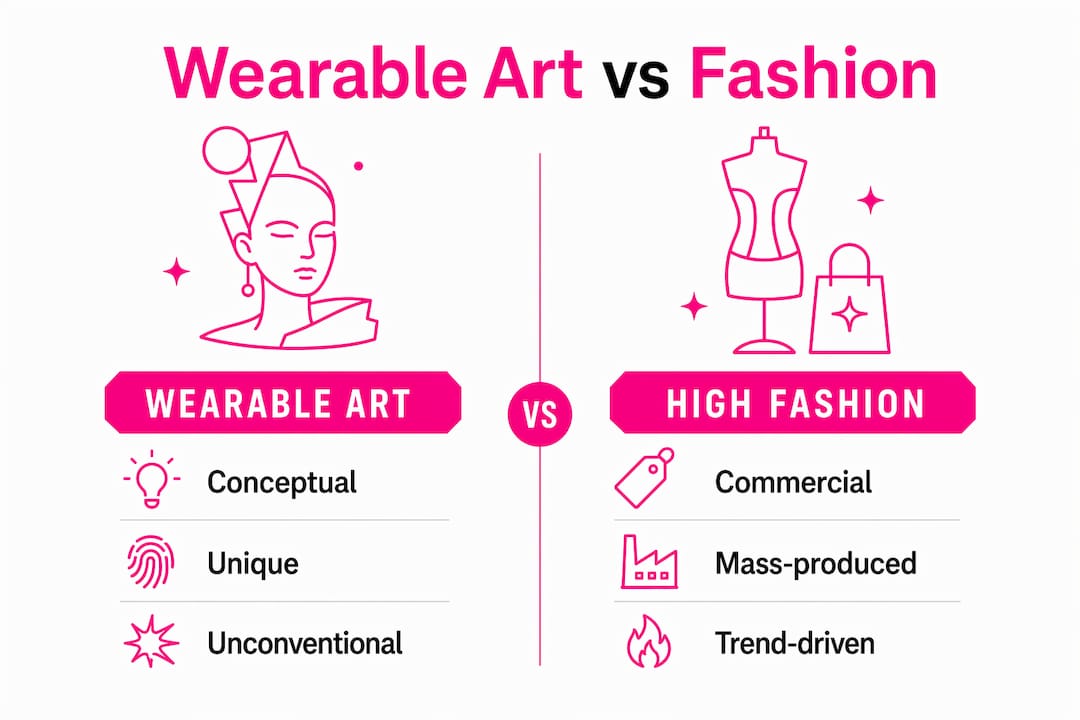
The concept of wearable art separates itself from high fashion in a specific way. High fashion, even at its most theatrical, still operates within commercial systems, seasonal trends, and the expectation of wearability. Wearable art prioritizes concept-driven creation, asking what artistic statement is expressed through the piece rather than whether it fits a trend cycle. That distinction is not subtle. It is the entire foundation of the discipline.
Many people confuse high fashion with wearable art, but the latter is defined by its conceptual intent and unconventional materials rather than trend-driven aesthetics. A couture gown from a major fashion house is exquisitely made, but it is still designed to be sold and worn in social contexts. A wearable art piece may be constructed from industrial waste, paper, or reclaimed metal, and it may be completely impractical to wear for more than a few hours. That impracticality is often the point.
How did wearable art fashion develop historically?
The wearable art movement did not appear suddenly. Its roots run deep through several overlapping artistic and cultural traditions, each one adding a new layer to what the discipline became.
- Arts and Crafts Movement (1850s onward): The original rejection of industrial mass production. Artisans like William Morris argued that handcrafted objects carried moral and aesthetic value that factory goods could not replicate. This philosophy seeded the idea that a made object, including clothing, could be art.
- Jewelry as art (1930s–1960s): Artists including Alexander Calder began creating sculptural jewelry that functioned as wearable fine art. These pieces were not decorative accessories. They were compositions worn on the body, made from unexpected materials like wire and found objects.
- Fiber and feminist art (1960s–1970s): The modern movement grew from 1850s Arts and Crafts traditions and linked strongly to fiber arts and feminist art starting in the 1960s. Artists reclaimed textile work, long dismissed as domestic craft, and elevated it to gallery-worthy expression. The political dimension was deliberate.
- Craftivism and subcultures (1970s): Punk, skateboarding, and street culture introduced a harder, more confrontational aesthetic. Youth frolicking dangerously to the soundtrack of hardcore music wore their identities on their bodies. Customized jackets, hand-painted shoes, and graffiti-covered gear became a form of wearable protest.
- Technology and new materials (1990s–present): Digital fabrication tools like laser cutting and 3D printing entered the studio. Artists gained access to materials and precision that earlier generations could not have imagined, and the definition of wearable art expanded again.
Each of these phases built on the last. The result is a discipline that carries the weight of over 150 years of artistic rebellion against the ordinary.
What makes wearable art different in materials and technique?
True wearable art pieces are typically one-of-a-kind or produced in very limited runs, deliberately sacrificing comfort or durability to prioritize artistic impact over function. That sacrifice is not a flaw. It is a feature. The artist chooses impact over longevity, and that choice communicates something.
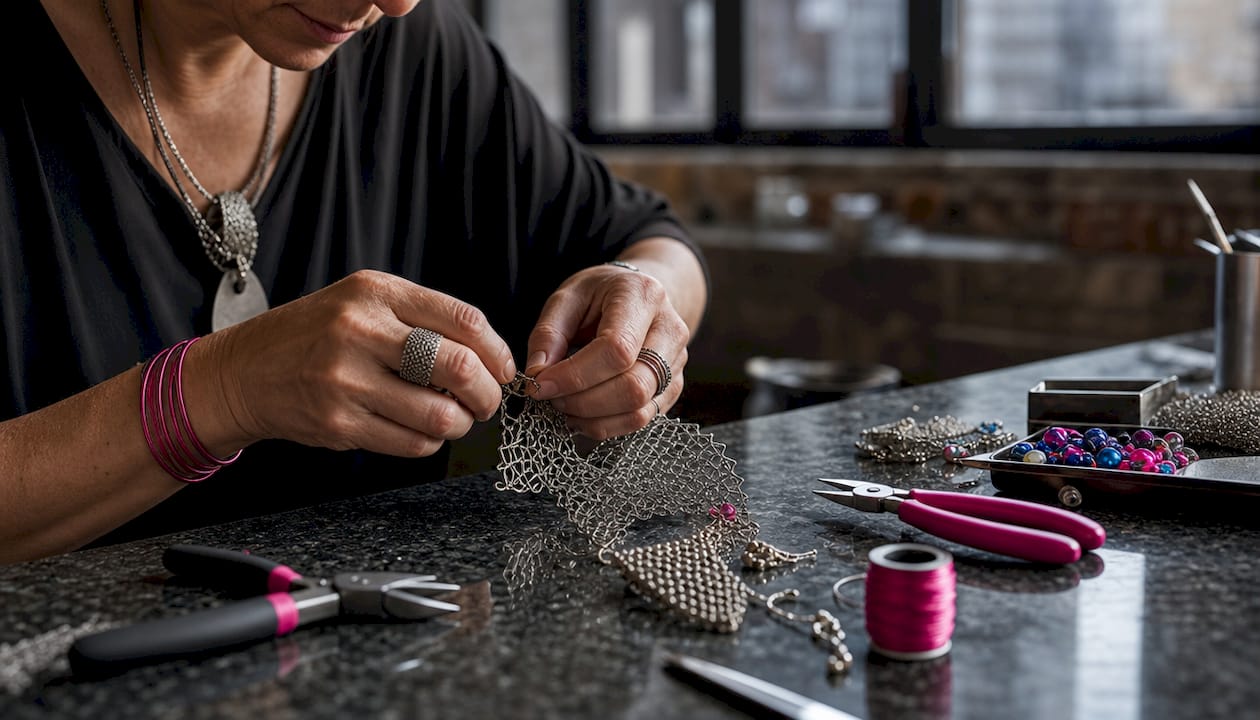
The materials used in wearable art are often the message themselves. Recycled industrial waste, raw metals, paper, found objects, and rare organic fibers all carry cultural and environmental weight. When an artist constructs a garment from discarded factory scraps, the viewer cannot ignore the commentary on consumption. The material is not neutral.
Artists use diverse techniques from crochet and knitting to laser cutting and 3D printing to realize concepts in wearable art, emphasizing craftsmanship and experimental approaches. These techniques reflect freedom from commercial constraints and encourage genuine innovation. A piece built through hand-crochet over 200 hours carries a different message than one cut by a laser, but both are valid expressions within the discipline.
| Feature | Wearable art | Conventional fashion |
|---|---|---|
| Production volume | One-of-a-kind or very limited | Mass or large-scale production |
| Primary intent | Conceptual or emotional expression | Utility, trend, commercial appeal |
| Material choices | Unconventional, recycled, experimental | Standard textiles and commercial fabrics |
| Comfort priority | Secondary to artistic impact | Central to design |
| Techniques | Crochet, 3D printing, laser cutting, sculpture | Industrial sewing, pattern cutting |
Pro Tip: When evaluating a piece as wearable art, ask one question first: what is the artist trying to say? If you cannot identify a clear conceptual or emotional intent, you are likely looking at fashion, not art.
How does wearable art connect to sustainability?
Wearable art functions as a tool for social and environmental commentary through the use of rescued or rare organic materials, and it actively influences sustainable fashion sectors. The connection between wearable art and sustainability is not accidental. It is structural.
- Rescued and recycled materials as medium. Artists who build from discarded industrial fragments or reclaimed textiles are not just being resourceful. They are making the environmental cost of production visible. The garment itself becomes an argument against waste.
- Prototyping green aesthetics. Works constructed entirely from rescued fragments prototype aesthetic directions that later influence commercial green fashion. What begins as an art statement in a gallery can become the inspiration for an eco-conscious collection years later. Czt’s own Botanic Camo collection reflects this lineage, drawing on the visual language of nature and recycled material culture.
- Fashion as political sculpture. Wearable art has long served as a vehicle for social commentary, from feminist fiber art in the 1970s to contemporary pieces addressing climate change. The body becomes a platform. The garment becomes a sign. Understanding sustainable fashion benefits deepens appreciation for why material choices in wearable art carry so much weight.
- Challenging the fast fashion cycle. By producing one-of-a-kind pieces that resist mass replication, wearable artists implicitly critique the disposability of fast fashion. Each piece is made to be meaningful, not to be replaced next season. Exploring recycled materials in fashion reveals how this philosophy translates into real design practice.
The eco-conscious consumer who gravitates toward wearable art is responding to something real. These pieces carry a different relationship to the earth and to labor than anything produced at scale.
How do you identify, appreciate, and wear wearable art?
Intent is the key differentiator between wearable art and fashion. A piece may look unusual or theatrical, but that alone does not make it wearable art. The question is always whether the creator set out to express an idea or to sell a garment.
- Look for conceptual clarity. Authentic wearable art has a legible artistic intent. The artist can articulate what the piece is about, and that meaning is embedded in the materials, form, and construction.
- Evaluate the materials deliberately. Unconventional choices, recycled components, or rare organic fibers signal that the maker was thinking beyond the commercial. Exploring natural fibers in sustainable fashion gives useful context for reading material choices in wearable art.
- Assess the production context. Was this made in a studio by an individual artist, or in a factory by a team following a brief? The former points toward wearable art. The latter points toward fashion, even high fashion.
- Consider how it makes you feel. Wearable art democratizes the art experience by bringing it off walls and into everyday interaction. If a piece provokes a strong emotional or intellectual response, it is doing what art does. That response is the measure.
- Wear it with intention. Wearable art transforms personal expression and identity. When you wear a piece with genuine artistic intent, you become part of the composition. You are not just dressed. You are making a statement.
For aspiring creators, the entry point is not technical skill alone. It is the willingness to ask what you want to say, and then find the materials and techniques that say it most honestly.
Key Takeaways
Wearable art is defined by conceptual intent and unconventional materials, not by aesthetic complexity or price, making it a distinct discipline from fashion at every level of production.
| Point | Details |
|---|---|
| Definition is intent-based | Wearable art exists to express an idea, not to clothe or sell. |
| Historical roots run deep | The movement draws from Arts and Crafts, feminist fiber art, and subculture traditions since the 1850s. |
| Materials carry the message | Recycled, industrial, and organic materials are chosen for what they communicate, not just how they look. |
| Sustainability is structural | Wearable art prototypes green aesthetics and challenges fast fashion through one-of-a-kind production. |
| Appreciation requires active reading | Identifying wearable art means evaluating artist intent, material choices, and emotional impact together. |
Why I believe wearable art is the most honest form of fashion
We built Czt from a place of deep appreciation for what clothing can carry. Growing up around skateboard culture, graffiti, and the kind of youth that frolicked dangerously to the soundtrack of a city that did not always welcome them, we understood early that what you wear is a declaration. It is not decoration. It is position.
What I find most compelling about wearable art right now is the way it is forcing a reckoning with sustainability that commercial fashion keeps trying to avoid. The boundary between fashion and art is increasingly porous, and that porousness is where the most honest work lives. An outfit that provokes a visceral response fulfills the primary purpose of art. That is not a metaphor. That is a standard.
The challenge facing wearable artists today is real. Galleries still struggle to contextualize body-worn work. Collectors are uncertain how to acquire and preserve pieces not designed for longevity. And the commercial fashion industry continues to absorb the visual language of wearable art without crediting its origins. These are not small problems.
The future I see is one where wearable art becomes more interactive and more democratic. Digital fabrication tools are lowering the barrier to entry. Social media is giving artists direct access to audiences without gallery gatekeepers. And consumers, especially eco-conscious ones, are increasingly literate about what their clothing communicates. That literacy is the opening wearable art has always needed.
— Czt
Czt and the art of wearing something that means something
At Czt, we have always believed that a garment should carry more than a body. It should carry a point of view.
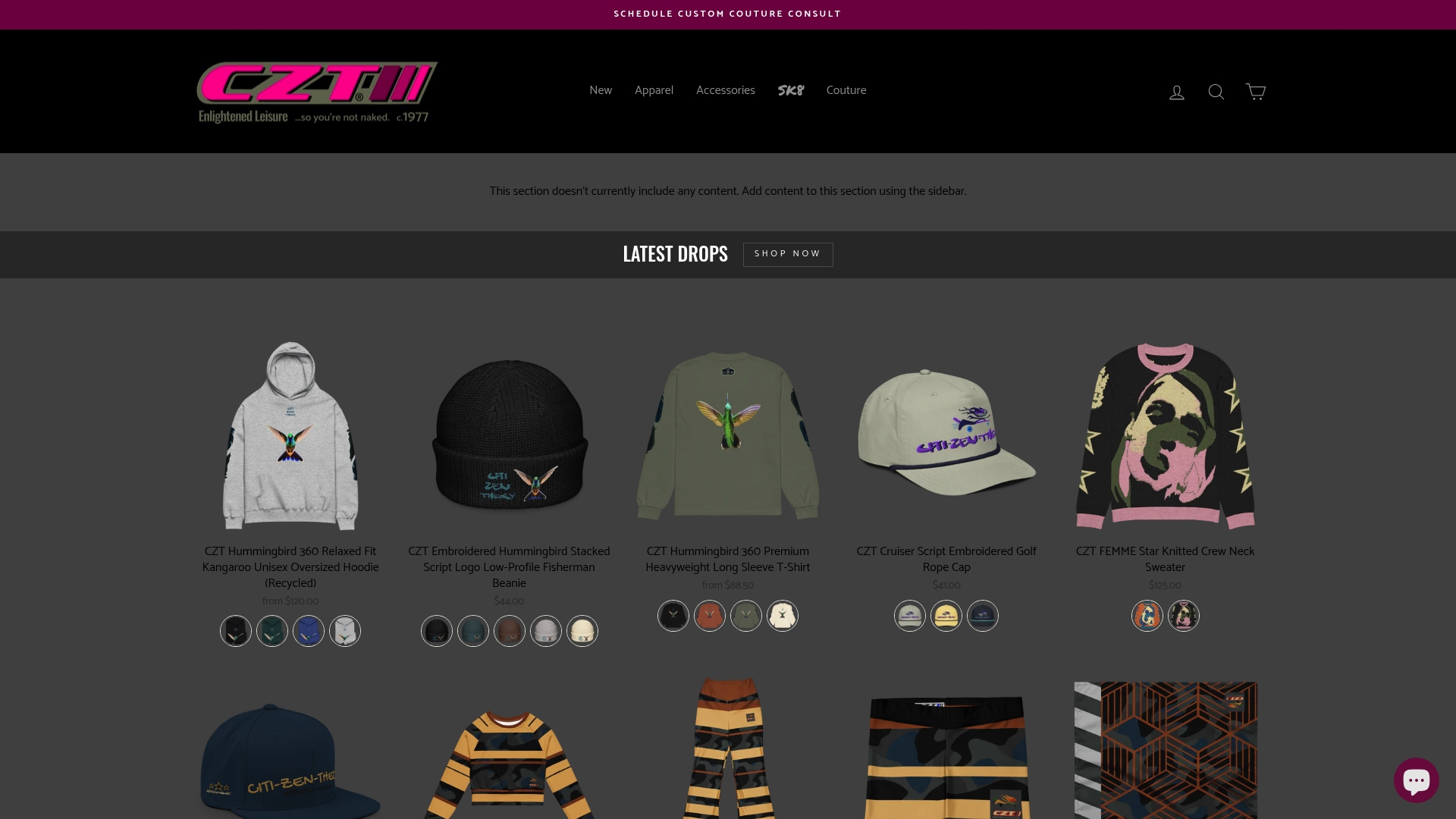
Our Botanic Camo collection is built from recycled materials and designed with the visual and conceptual rigor of wearable art, not as a trend exercise but as a genuine expression of what sustainable streetwear can be. Every piece we make through our custom couture design services starts with the same question wearable artists ask: what does this piece say? If you are ready to wear something that says something real, Czt is where that conversation starts.
FAQ
What is the definition of wearable art?
Wearable art is a creative discipline where clothing or jewelry serve as conceptual art intended to be worn, typically made from unconventional materials in one-of-a-kind or very limited editions rather than for commercial production.
How is wearable art different from high fashion?
High fashion operates within commercial systems and trend cycles, while wearable art prioritizes conceptual or emotional expression over utility, comfort, or commercial appeal, often using recycled or experimental materials.
Does wearable art have real value?
Wearable art carries both cultural and monetary value. Pieces are typically one-of-a-kind, made with significant craft investment, and function as social or environmental commentary, which gives them lasting significance beyond seasonal trends.
What materials are used in wearable art fashion?
Wearable artists use recycled industrial waste, metals, paper, rare organic fibers, and found objects, alongside techniques like crochet, knitting, laser cutting, and 3D printing to realize their concepts.
How do I start wearing or collecting wearable art?
Start by evaluating artist intent and material choices rather than aesthetics alone. Seek pieces where the creator can articulate a clear conceptual message, and look for work produced in limited runs by individual artists rather than commercial studios.
Recommended
- The Role of Social Media in Custom Fashion Today – CZT [CITI-ZEN-THEORY]
- What Is Custom Couture Streetwear: A Style Guide – CZT [CITI-ZEN-THEORY]
- Examples of One-of-a-Kind Apparel Designs to Inspire You – CZT [CITI-ZEN-THEORY]
- Personalized Streetwear Looks: 9 Bold Style Examples – CZT [CITI-ZEN-THEORY]