![CZT [CITI-ZEN-THEORY]](http://czt.rocks/cdn/shop/files/CZT_-_Brand_PINK_Label_1_330x.png?v=1774104725)
![CZT [CITI-ZEN-THEORY]](http://czt.rocks/cdn/shop/t/61/assets/CZT-Fast-Logo---Blue-Grey_330x.png?v=98224836737033641471695502660)
![CZT [CITI-ZEN-THEORY]](http://czt.rocks/cdn/shop/files/CZT_-_Brand_PINK_Label_1_170x.png?v=1774104725)
![CZT [CITI-ZEN-THEORY]](http://czt.rocks/cdn/shop/t/61/assets/CZT-Fast-Logo---Blue-Grey_170x.png?v=98224836737033641471695502660)
What Is Custom Couture Streetwear: A Style Guide
Custom couture streetwear is defined as the art of constructing urban casual garments through bespoke tailoring, premium materials, and handcrafted detail work that transforms everyday street style into wearable luxury. This category sits at the intersection of two worlds that once seemed incompatible: the rigorous craft tradition of haute couture and the raw, subcultural energy of streetwear. Understanding what is custom couture streetwear means recognizing that it is neither a mass-produced hoodie nor a runway gown. It is something more personal, more deliberate, and far more expressive than either tradition alone.
What is custom couture streetwear, and how does it differ from traditional couture?
Custom couture streetwear is a fusion of luxury craftsmanship and urban aesthetics, using premium fabrics and bespoke details to elevate casual garments. That definition matters because it draws a clear boundary between three distinct categories that shoppers often confuse.
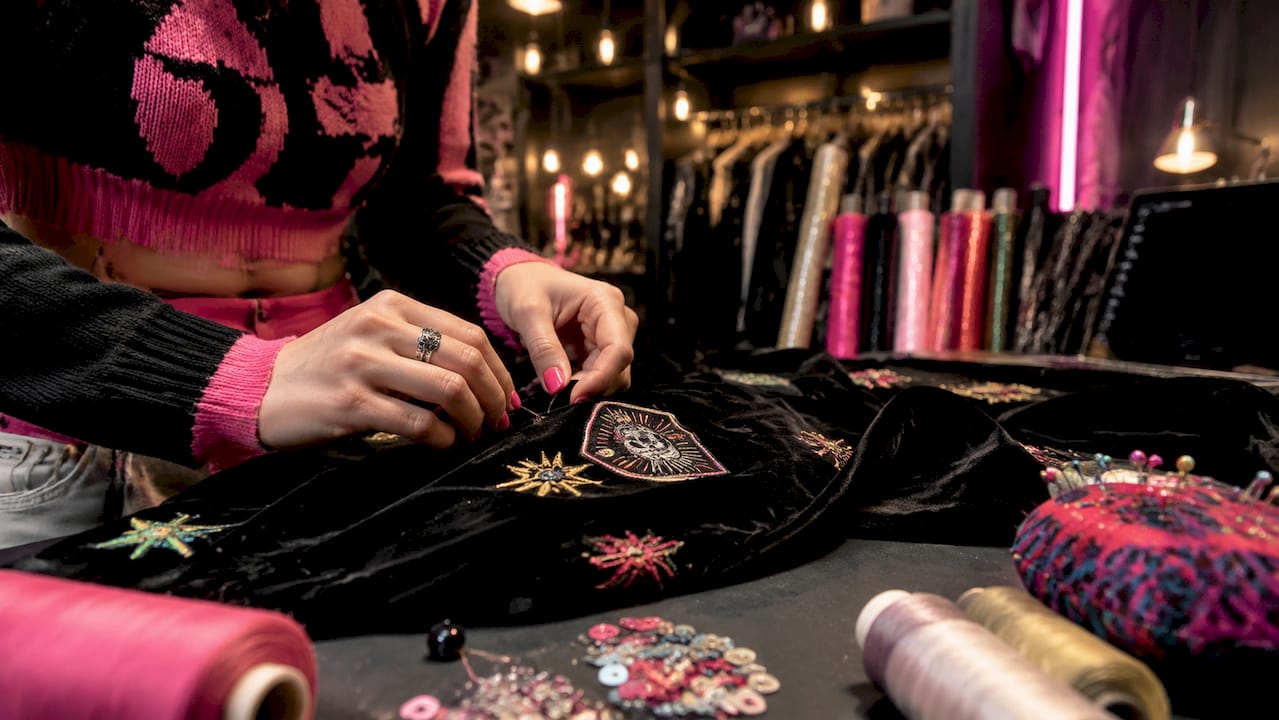
Traditional couture, as defined by the Chambre Syndicale de la Haute Couture in Paris, refers to made-to-measure garments constructed entirely by hand for a specific client, using the finest available materials. Mass-market streetwear sits at the opposite end: screen-printed blanks, standardized sizing, and production runs in the thousands. Custom couture streetwear occupies its own lane between these two poles.
The line between couture and streetwear is increasingly blurred, with designers sharing elements like utility details and tailoring to adapt trends rapidly. That blurring is not accidental. It reflects a genuine cultural appetite for garments that carry the soul of the streets but the construction standards of an atelier.
| Category | Construction | Materials | Production | Purpose |
|---|---|---|---|---|
| Traditional couture | Fully hand-sewn, multiple fittings | Silk, organza, rare textiles | One-of-a-kind per client | Formal occasions, runway |
| Custom couture streetwear | Cut-and-sewn individually, bespoke | Technical textiles, cashmere blends, recycled fabrics | Limited or one-of-a-kind | Daily wear, self-expression |
| Mass-market streetwear | Altered blanks, machine production | Cotton basics, polyester | Mass runs, standardized sizing | Casual, trend-driven |
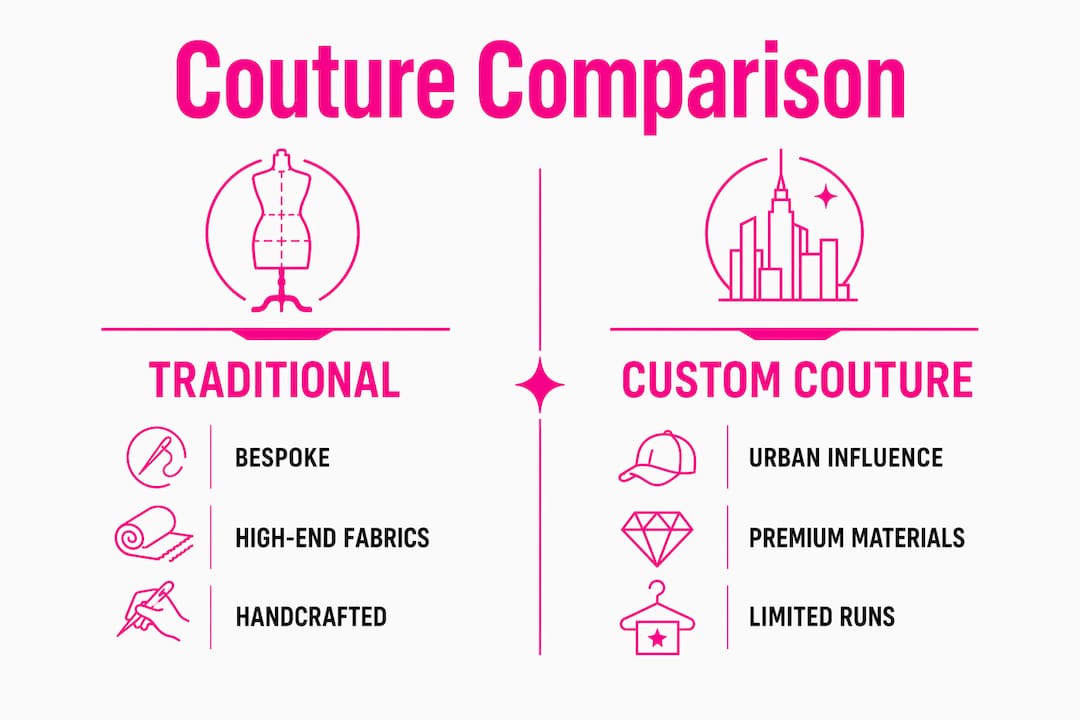
The key distinction in custom couture streetwear is intentionality. Every seam, every pocket placement, every fabric choice reflects a deliberate artistic decision rather than a cost calculation.
Key features that separate custom couture streetwear from both categories above:
- Garments are cut and sewn from scratch, not altered from blanks
- Clients participate in the design process through consultations
- Fabrics are selected for both performance and aesthetic composition
- Production is limited, often to a single piece or a very small run
- Relaxed silhouettes are designed, not the result of poor sizing
How is custom couture streetwear made?
The bespoke custom couture process usually takes 4–6 weeks and involves private consultations, sketching, fabric curation, and multiple fittings for a perfect fit. That timeline reflects the depth of craft involved, not inefficiency.
The creation process follows a clear sequence:
- Consultation. The client and designer discuss aesthetic vision, lifestyle needs, and intended use. This conversation shapes every decision that follows. A skateboarder’s jacket demands different construction than a collector’s statement piece.
- Sketching and design. The designer translates the consultation into technical sketches, noting silhouette, proportion, pocket placement, and surface detail. This stage is where the composition of the garment takes shape as a visual and structural idea.
- Fabric selection. Bespoke couture involves meticulous fabric choice, structural fitting, and hand embellishment applied with artistic intent. Fabrics range from cashmere blends to technical textiles engineered for movement and durability.
- Pattern making and cutting. Unlike altering a blank, cut-and-sew construction requires precise patterning, hand-sewing, and iterative fittings to achieve balance between relaxed style and couture quality.
- Fittings. Multiple fittings refine the garment’s fit and drape. Many ateliers now offer remote or digital fittings, making the process accessible beyond a single city or studio.
- Hand finishing. Embroidery, custom hardware, and surface treatments are applied by hand. Some pieces integrate wearable tech like NFC chips for authentication, or surface treatments that shift with light and movement.
Pro Tip: Sizing in custom streetwear follows atelier-specific guides, not standard retail charts. A relaxed, oversized silhouette is an intentional design choice. Ordering based on your usual size will likely result in a fit that misses the garment’s intended composition entirely.
Understanding the custom fit process before your first consultation saves time and produces a far more satisfying result.
What style elements and materials define couture clothing in streetwear?
Couture garments, including custom streetwear, typically feature fine fabrics, hand finishes, and limited production to ensure uniqueness. The materials and design details are where custom couture streetwear becomes visually and physically distinct from anything you find on a rack.
Premium fabrics used in this category include cashmere blends for outerwear, technical textiles engineered for stretch and breathability, recycled performance fabrics that carry both environmental and aesthetic value, and heavyweight organic cotton treated for texture and depth. The choice of fabric is never decorative alone. It determines how the garment moves, ages, and feels against the body over years of wear.
Design trends in custom couture streetwear reflect a deliberate aesthetic philosophy:
- Relaxed silhouettes with structural tailoring. Oversized proportions are balanced by precise shoulder seams and intentional drape.
- Cargo and utility details. Pockets, straps, and hardware serve both function and visual composition.
- Limited-edition prints and surface work. Graffiti-inspired graphics, botanical patterns, and hand-painted elements appear as one-of-a-kind surface treatments.
- Hand embroidery and custom hardware. Zippers, buttons, and closures are often sourced or fabricated specifically for a piece.
- Deliberate design imperfections. Custom couture pieces often include intentional imperfections as hallmarks of handcrafted authenticity. These are not flaws. They are signatures.
Explore one-of-a-kind apparel designs that demonstrate how cargo pockets, oversized fits, and premium materials combine into a coherent aesthetic language.
Why does custom couture streetwear matter culturally?
Custom couture streetwear is a status symbol favoring personal expression and craftsmanship over traditional luxury branding. That shift in what constitutes status is significant. A generation of fashion enthusiasts has grown skeptical of logos as proxies for quality. They want the garment itself to carry meaning.
The cultural weight of custom couture streetwear comes from its roots. Streetwear was born in the skate parks and graffiti-covered walls of cities like Los Angeles and New York, where youth frolicking dangerously to the soundtrack of hardcore music needed clothing that moved with them and said something about who they were. Couture, meanwhile, carried the weight of European craft tradition and the idea that a garment could be a work of art. The fusion of these two traditions produces something that honors both origins.
“Custom couture streetwear’s ethos emphasizes intentional living and expressing daily identity through unique, handcrafted apparel.”
The fluid exchange between runway couture and streetwear accelerates fashion innovation and broadens access to high craftsmanship. That exchange moves in both directions. Streetwear’s utility details and subcultural references appear on couture runways. Couture’s construction standards and material quality filter down into bespoke streetwear ateliers.
Custom couture streetwear also carries a growing environmental dimension. When garments are made individually, with intention and quality, they are built to last. That philosophy directly counters the disposability of fast fashion. Brands like Czt have built their entire identity around this principle, using recycled materials and custom design services to produce pieces that are both aesthetically intriguing and responsible in their production.
Statement pieces worn by creatives carry identity, emotion, and intent in ways that mass-produced garments simply cannot replicate. Custom couture streetwear is the most direct expression of that truth.
Key Takeaways
Custom couture streetwear is the most personal form of fashion available today, combining bespoke construction, premium materials, and urban aesthetics into garments built for real life and real identity.
| Point | Details |
|---|---|
| Core definition | Custom couture streetwear fuses luxury tailoring with urban casual style through bespoke, handcrafted construction. |
| Production process | The bespoke process takes 4–6 weeks and includes consultation, pattern making, fittings, and hand finishing. |
| Material distinction | Premium fabrics like cashmere blends and technical textiles separate custom couture from mass-market streetwear. |
| Cultural significance | It prioritizes personal expression and craftsmanship over logo-driven status, reflecting a shift in modern luxury values. |
| Authenticity markers | Intentional imperfections and limited production runs are features, not flaws, in custom couture streetwear. |
Czt’s perspective on where this category is heading
We have watched this category grow from a niche conversation among hardcore collectors into something that resonates with skaters, artists, eco-conscious families, and anyone who has grown tired of wearing the same garment as ten thousand other people. What strikes us most is not the growth itself but the quality of the appreciation driving it.
People are asking better questions now. They want to know what a fabric is made from, who constructed the piece, and whether the relaxed fit they are looking at was designed that way or just happened by accident. That shift in curiosity is the most exciting development we have seen in streetwear culture in years.
The challenge for this category is holding the line between accessibility and exclusivity without betraying either. Custom couture streetwear should not become so rarefied that it loses its street-level soul. At Czt, we believe the answer lies in materials and process, not price alone. When you use recycled fabrics, build each piece with genuine craft, and invite the customer into the design conversation, you create something that is both attainable and genuinely rare.
The future of bespoke streetwear options belongs to brands willing to treat sustainability and artistry as the same conversation, not competing priorities.
— Czt
Discover Czt’s custom couture pieces
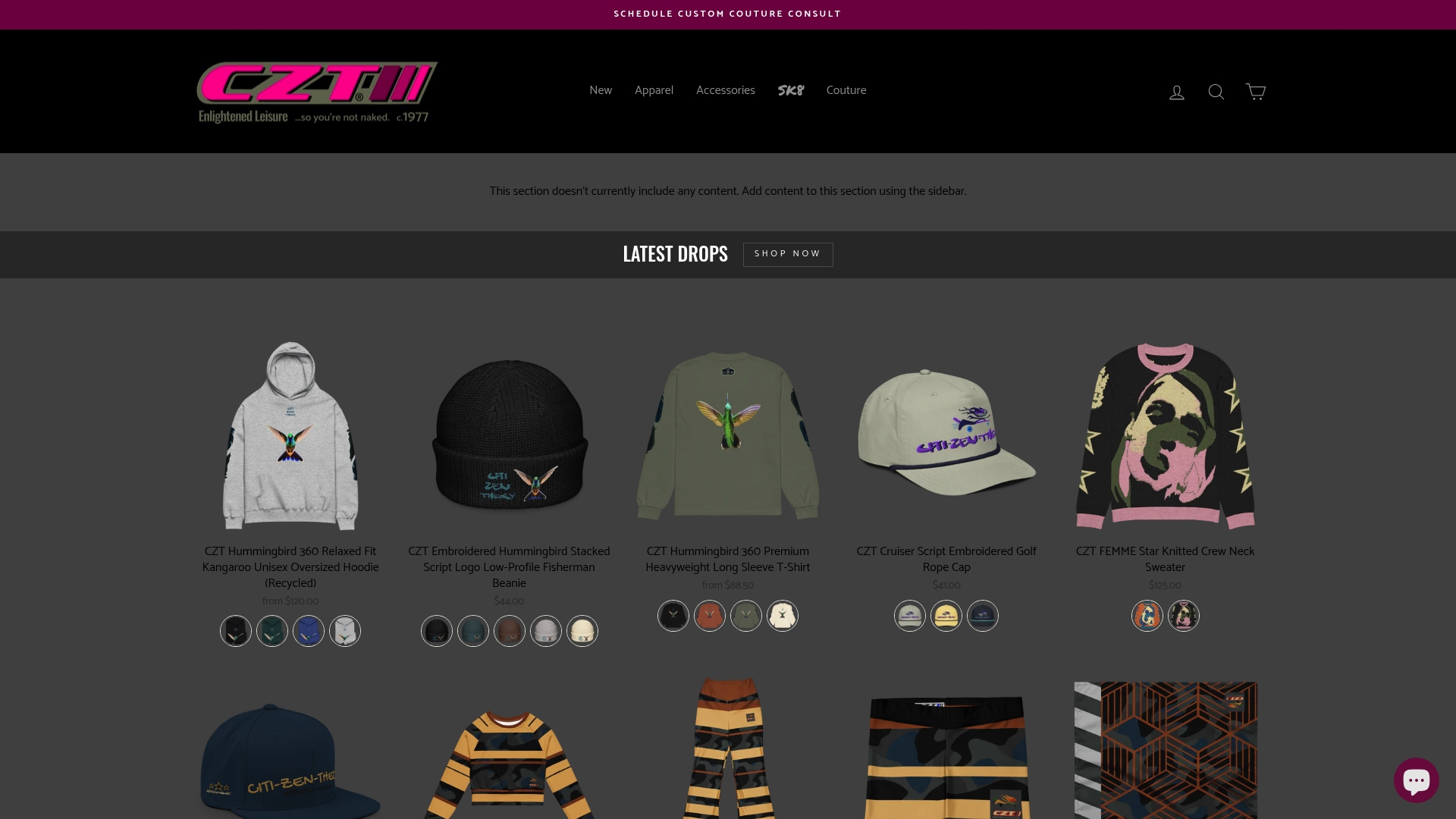
Czt brings the principles of custom couture streetwear to life through pieces built on recycled materials, deliberate design, and a commitment to individual expression. The Botanic Camo collection reflects exactly the kind of limited-edition surface work and premium construction that defines this category. If you are ready to wear something made with genuine craft and environmental intention, explore the Cztini Bikini Bottom and the Cosmic Bandeau Top as starting points for understanding what Czt’s design philosophy looks and feels like in practice. Custom design consultations are available for those ready to build something entirely their own.
FAQ
What is custom couture streetwear in simple terms?
Custom couture streetwear is a garment category that applies luxury tailoring techniques and premium materials to urban casual clothing, producing pieces made individually for a specific client or in very limited quantities.
How long does it take to make a custom couture streetwear piece?
The bespoke process typically takes 4–6 weeks, covering consultation, sketching, fabric selection, pattern making, and multiple fittings before the finished garment is delivered.
Is custom couture streetwear the same as bespoke streetwear?
The terms are closely related. Bespoke streetwear refers to any garment made to a client’s specific measurements and design preferences. Custom couture streetwear adds the dimension of couture-level craftsmanship, including hand finishing and premium fabric selection.
Why do custom couture streetwear pieces have intentional imperfections?
Deliberate design imperfections are hallmarks of handcrafted authenticity. They signal that a human being, not a machine, constructed the piece, and they make each garment genuinely one of a kind.
How does custom couture streetwear differ from fast fashion streetwear?
Fast fashion streetwear uses altered blanks, standardized sizing, and mass production runs. Custom couture streetwear is cut and sewn from scratch, uses premium or recycled fabrics, and is produced in limited quantities with direct client involvement in the design process.
Recommended
- Examples of One-of-a-Kind Apparel Designs to Inspire You – CZT [CITI-ZEN-THEORY]
- Why Customization Reduces Fashion Waste Effectively – CZT [CITI-ZEN-THEORY]
- Why Sustainable Custom Fashion Matters for Real Change – CZT [CITI-ZEN-THEORY]
- Examples of Upcycled Streetwear Designs That Inspire – CZT [CITI-ZEN-THEORY]