![CZT [CITI-ZEN-THEORY]](http://czt.rocks/cdn/shop/files/CZT_-_Brand_PINK_Label_1_330x.png?v=1774104725)
![CZT [CITI-ZEN-THEORY]](http://czt.rocks/cdn/shop/t/61/assets/CZT-Fast-Logo---Blue-Grey_330x.png?v=98224836737033641471695502660)
![CZT [CITI-ZEN-THEORY]](http://czt.rocks/cdn/shop/files/CZT_-_Brand_PINK_Label_1_170x.png?v=1774104725)
![CZT [CITI-ZEN-THEORY]](http://czt.rocks/cdn/shop/t/61/assets/CZT-Fast-Logo---Blue-Grey_170x.png?v=98224836737033641471695502660)
Recycled Materials in Fashion: Benefits and Impact
Recycled materials in fashion are defined as post-consumer or post-industrial waste fibers transformed into new textile products, reducing resource extraction and pollution across the supply chain. The role of recycled materials in fashion has moved from niche experiment to industry imperative, with brands like Patagonia, Adidas, and Stella McCartney building entire collections around recovered fibers. Recycled polyester blends made from PET bottles and textile waste demonstrably reduce carbon emissions, water consumption, and eutrophication compared to virgin polyester. Initiatives like the 2025 Recycled Polyester Challenge push brands to source 45–100% recycled inputs, signaling that sustainable fashion materials are no longer optional. The industry is at an inflection point, and understanding what recycled fabrics actually deliver, and where they fall short, is the foundation of any honest conversation about fashion industry sustainability.
What are the most common recycled fabrics in sustainable fashion?
Recycled polyester is the dominant sustainable fashion material today, accounting for the vast majority of recycled fiber used in apparel. Most recycled polyester comes from PET bottles rather than textile-to-textile recycling, meaning true circularity within the fashion system remains elusive. Textile-to-textile recycling represents less than 1% of recycled polyester supply, which exposes a deep structural gap between marketing claims and material reality.
Recycled cotton is the second major player. Brands blend mechanically shredded cotton waste with virgin fibers to produce garments that use significantly less water than conventional cotton cultivation. The tradeoff is fiber length: mechanical recycling shortens cotton strands, which reduces tensile strength and often requires blending to maintain wearability.
Novel feedstocks are entering the picture as well. Wheat straw pulp can produce lyocell fabric comparable in quality to wood-pulp versions, offering an agricultural residue fiber that reduces pressure on forests. Pilot projects are still small-scale, but the composition of tomorrow’s eco-friendly clothing options will likely draw from agricultural byproducts as much as from plastic bottles.
The table below compares the environmental profile of common recycled fabrics against their virgin counterparts.
| Fabric | Source material | Key environmental benefit | Notable limitation |
|---|---|---|---|
| Recycled polyester | PET bottles, textile waste | Lower carbon and water footprint | Sheds 55% more microfibers |
| Recycled cotton | Post-industrial cotton scraps | Reduced water and pesticide use | Shorter fiber length, weaker yarn |
| Recycled nylon | Fishing nets, carpet waste | Diverts ocean and landfill waste | Energy-intensive processing |
| Wheat straw lyocell | Agricultural residue | Reduces forest fiber dependence | Still in pilot-scale production |
Pro Tip: When shopping for recycled polyester garments, look for brands that specify the percentage of textile-to-textile recycled content versus PET bottle content. A higher textile-to-textile ratio signals a more genuinely circular product.
The impact of recycled fabrics is real, but it is not uniform across fiber types. Each material carries its own environmental tradeoffs, and informed consumers benefit from reading beyond the word “recycled” on a label.
What challenges and limitations affect recycled materials in fashion?
The benefits of recycled fashion are genuine, but the path from waste to wearable garment is technically demanding and infrastructure-dependent. Three categories of challenge define the current ceiling on recycled material adoption.
Fiber degradation and microfiber shedding
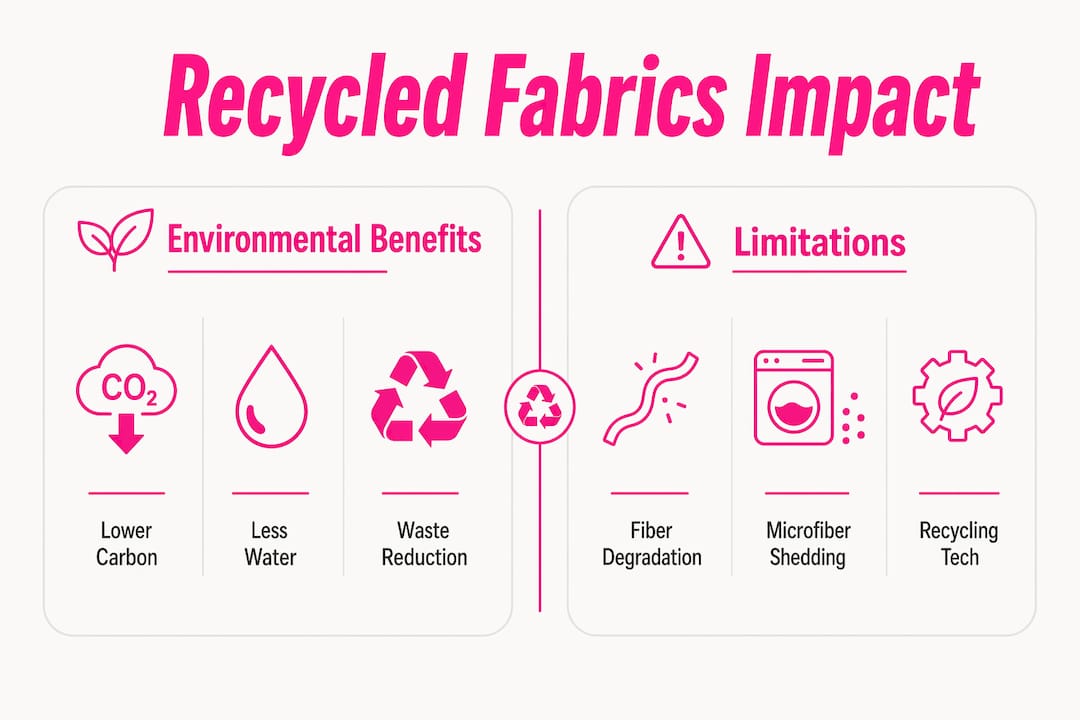
Mechanical recycling, the dominant method today, physically shreds and re-spins fibers. This process degrades fiber quality, producing shorter, more brittle strands. Recycled polyester sheds 55% more microfibers than virgin polyester during consumer laundry. Those microfibers enter waterways and accumulate in marine ecosystems, creating a pollution problem that partially offsets the carbon savings.
Sorting and blended fiber complexity
- Approximately 90% of textile waste is technically recyclable, yet industrial infrastructure to sort and process complex fiber blends remains severely limited.
- Most garments combine polyester, cotton, elastane, and finishing chemicals in ways that current sorting technology cannot efficiently separate.
- Much recycled textile waste is downcycled into insulation or industrial rags rather than new apparel-grade fiber.
- Chemical recycling can dissolve blended fibers into their molecular components, but it is energy-intensive and not yet at commercial scale.
Infrastructure and regulatory gaps
The EU is actively legislating extended producer responsibility for textiles, which is creating new collection mandates. However, scaling textile-to-textile recycling requires brand demand and investment that has not yet materialized at the volume needed. Regulatory pressure is necessary but not sufficient without corresponding industry commitment.
Pro Tip: If you care about longevity, choose recycled polyester garments with a tighter weave construction. Tighter weaves physically trap more fibers during washing and reduce microfiber release into your laundry water.
Performance differences between recycled and virgin fibers are real, though they vary by application. For low-stress uses like casual streetwear, the gap is minimal. For high-performance athletic wear, fiber quality matters more, and brands must be transparent about where they source their recycled inputs.
How do recycling and upcycling differ and complement each other?
Recycling and upcycling are distinct strategies that address fashion waste from opposite directions, and understanding both is necessary for anyone serious about sustainable custom fashion.
Recycling is an industrial process. It breaks down used materials into raw fiber or polymer, which then re-enters the manufacturing supply chain. The original garment ceases to exist. The recovered material becomes a commodity input, indistinguishable from other recycled stock.
Upcycling is a design act. It preserves the identity and physical integrity of the original material, transforming it into something of higher perceived value without breaking it down chemically or mechanically. A denim jacket reconstructed into a vest, or deadstock fabric reimagined as a limited-edition piece, carries the history of its source material forward.
Recycling and upcycling are complementary, not competing. Recycling offers scale. Upcycling offers emotional durability and cultural resonance. The most sophisticated sustainable brands combine both. Here is how the two strategies work together in practice:
- Design for disassembly. Brands design garments with mono-material construction so that pieces can be upcycled first, then recycled at end of life when upcycling is no longer viable.
- Deadstock integration. Leftover fabric from production runs gets upcycled into limited pieces, while off-cuts too small for garments enter mechanical recycling streams.
- Consumer take-back programs. Brands collect worn garments, assess condition, and route pieces toward repair and upcycling before defaulting to fiber recycling.
- Hybrid collections. Some brands produce lines where each piece contains both recycled fiber content and upcycled design elements, layering environmental and cultural value simultaneously.
Upcycled streetwear designs demonstrate that this hybrid model is not theoretical. It is already producing aesthetically compelling work that resonates with consumers who want their clothing to carry meaning beyond its material composition.
What innovations are shaping the future of recycled materials in fashion?
The next phase of recycled material trends in clothing is defined by verification, traceability, and genuinely circular fiber systems. Several developments are converging to push the field forward.
- DNA fingerprinting and Digital Product Passports. Verification technologies like DNA fingerprinting authenticate recycled content at the fiber level, making greenwashing claims detectable and legally defensible. Digital Product Passports, now being piloted across the EU, attach material provenance data to individual garments so consumers and regulators can verify claims independently.
- Chemical recycling at scale. Unlike mechanical recycling, chemical processes dissolve blended fibers into their base polymers, enabling true textile-to-textile circularity. Companies are investing in pilot plants, though commercial scale remains 3–5 years away for most fiber types.
- Agricultural residue fibers. Wheat straw lyocell and similar agricultural byproduct fibers reduce the fashion industry’s dependence on both petroleum-based synthetics and forest-derived cellulosics. These feedstocks are abundant, low-cost, and do not compete with food production.
- Brand demand as the critical variable. EU textile recyclers are regaining momentum, but infrastructure investment only follows when brands commit to purchasing recycled output at volume. Consumer pressure on brands to publish verified recycled content percentages is the most direct lever available to individuals.
- Label literacy for consumers. Understanding the difference between “contains recycled content” and “made from textile-to-textile recycled fiber” is the foundation of informed purchasing. Resources like eco-friendly sourcing guides help consumers decode what labels actually mean.
The recycled material trends in clothing point toward a future where provenance is verifiable, fiber circularity is genuine, and consumer choices carry real accountability. Getting there requires investment from brands, infrastructure from governments, and discernment from the people wearing the clothes.
Key takeaways
Recycled materials reduce fashion’s environmental footprint, but their full potential depends on verified sourcing, infrastructure investment, and the integration of both recycling and upcycling strategies.
| Point | Details |
|---|---|
| Recycled polyester dominates but has limits | Most recycled polyester comes from PET bottles, not textile-to-textile recycling, limiting true circularity. |
| Microfiber shedding is a real tradeoff | Recycled polyester sheds 55% more microfibers than virgin fiber, requiring consumer awareness and tighter weave choices. |
| 90% of textile waste is recyclable in theory | Infrastructure and blended fiber complexity prevent most textile waste from reaching apparel-grade recycling streams. |
| Upcycling adds what recycling cannot | Upcycling preserves cultural and emotional value, complementing industrial recycling’s scale advantages. |
| Verification is the next frontier | DNA fingerprinting and Digital Product Passports are becoming the standard for authenticating recycled content claims. |
Czt’s perspective on recycled materials and what they actually demand
We have spent years working with recycled fabrics across our collections, from the Botanic Camo pieces to our performance-driven swimwear, and the honest truth is that recycled materials are necessary but not sufficient on their own. The word “recycled” on a label is a starting point, not a destination. What matters is the composition of that recycled content, the traceability of its source, and whether the design itself is built to last long enough to justify the material’s recovery.
What we have found is that the most meaningful work happens when recycling and design intention operate together. A garment made from recycled polyester that falls apart after ten washes has not served the environment. A piece built with care, from verified recycled inputs, and designed with the kind of emotional weight that makes someone want to keep it for years, that is where the real impact lives. The culture we come from, skateboarding, street art, youth moving through cities with purpose, taught us that what you wear carries meaning. That meaning is part of sustainability too.
The infrastructure gap is real and frustrating. Recycled fabric clothing will not reach its potential until brands commit to purchasing textile-to-textile recycled fiber at volume, not just sourcing PET bottle polyester and calling it circular. We are committed to that longer arc, even when it is harder and more expensive. The culture deserves nothing less.
— Czt
Wear the change: Czt’s recycled fashion collection

Czt builds its collections around the same principles this article explores: verified recycled materials, performance-driven construction, and design that carries cultural weight. The CZT Tribal Basketball Jersey is made from recycled fabric and built for the kind of movement that defines street culture, without compromising on environmental accountability. For warm-weather wear, the CZTini Bikini recycled swimwear demonstrates that eco-friendly clothing options can be aesthetically bold and performance-ready. Every piece in the Czt lineup is an argument that sustainability and style are not opposing forces. They are the same composition, expressed through craft.
FAQ
What is the role of recycled materials in fashion?
Recycled materials in fashion transform post-consumer and post-industrial waste into new textile products, reducing carbon emissions, water use, and landfill volume. Their role is to close the loop between garment end-of-life and new production, advancing circular economy goals across the industry.
Are recycled fabrics actually better for the environment?
Recycled polyester blends reduce carbon emissions and water consumption compared to virgin polyester, making them a measurably better choice. However, recycled polyester sheds more microfibers during washing, so the environmental benefit depends on fiber type, construction quality, and garment longevity.
What is the difference between recycled and upcycled clothing?
Recycling breaks down used materials into raw fiber for re-manufacturing, while upcycling redesigns existing materials into higher-value pieces without breaking them down. Both strategies reduce waste, but upcycling preserves the original material’s identity and adds cultural value that recycling cannot replicate.
How can I verify that a garment actually contains recycled content?
Look for certifications like the Global Recycled Standard (GRS) and ask brands whether their recycled polyester is textile-to-textile or PET bottle sourced. Emerging technologies like Digital Product Passports will make fiber-level verification accessible to consumers directly through product labels.
Why is textile-to-textile recycling so rare in fashion today?
Textile-to-textile recycling accounts for less than 1% of recycled polyester in fashion because blended fiber garments are difficult to sort and process, and brand demand for recycled textile output has not yet scaled enough to justify major infrastructure investment.
Recommended
- Recycled Fabric Clothing Explained for Eco-Conscious Style – CZT [CITI-ZEN-THEORY]
- Why Sustainable Custom Fashion Matters for Real Change – CZT [CITI-ZEN-THEORY]
- Examples of Upcycled Streetwear Designs That Inspire – CZT [CITI-ZEN-THEORY]
- Why Customization Reduces Fashion Waste Effectively – CZT [CITI-ZEN-THEORY]