![CZT [CITI-ZEN-THEORY]](http://czt.rocks/cdn/shop/files/CZT_-_Brand_PINK_Label_1_330x.png?v=1774104725)
![CZT [CITI-ZEN-THEORY]](http://czt.rocks/cdn/shop/t/61/assets/CZT-Fast-Logo---Blue-Grey_330x.png?v=98224836737033641471695502660)
![CZT [CITI-ZEN-THEORY]](http://czt.rocks/cdn/shop/files/CZT_-_Brand_PINK_Label_1_170x.png?v=1774104725)
![CZT [CITI-ZEN-THEORY]](http://czt.rocks/cdn/shop/t/61/assets/CZT-Fast-Logo---Blue-Grey_170x.png?v=98224836737033641471695502660)
Commission Made-to-Order Streetwear in 6–12 Weeks: What Buyers Ask
Made-to-order streetwear is bespoke, sustainably produced clothing and custom couture made only after a customer commissions it, not pulled from a warehouse shelf built on speculation. It cuts overproduction, fits your actual body instead of a size chart’s fiction, and tends to stay in rotation longer because you had a hand in making it. Eco-conscious buyers, skateboarders who need gear that survives a season of slide marks, and families tired of fast-fashion kids’ clothes falling apart all benefit here.
TL;DR:
- Custom-made streetwear involves longer lead times, typically six to twelve weeks for simple projects and up to twelve months for full couture builds.
- Producing garments after order placement reduces waste, with fabrics undyed or uncut until needed, delaying and often preventing unnecessary disposal.
- Design involvement at the start increases attachment, extending the garment’s lifespan and willingness to pay more, as supported by recent supply chain research.
- Material choices like recycled fibers or vegetable-tanned leather significantly impact durability and aging over time, affecting the garment’s longevity.
- Proper fitting, measured before production, is crucial, as it minimizes alterations and waste, promoting sustainability through lasting, well-constructed clothing.
Table of Contents
- What Made-to-Order Streetwear Actually Means
- Why Made-to-Order Cuts Waste and Extends a Garment’s Life
- How the Made-to-Order Process Works, Step by Step
- What You Can Customize (and How Each Choice Holds Up)
- What to Expect on Timeline and Cost
- How to Commission a Custom Couture Streetwear Piece
- Caring for Made-to-Order Pieces So They Actually Last
- What Sustainable, Custom-First Streetwear Should Actually Look Like
- Why Made-to-Order Streetwear Matters More Than the Discourse Around It Suggests
- Start Your Made-to-Order Piece With Czt
- Sources
What Made-to-Order Streetwear Actually Means
Made-to-order streetwear is garments and accessories produced after a specific customer places an order, built around that person’s measurements, material preferences, and design input rather than pulled from mass-produced stock sitting in a distribution center. This is not the print-on-demand or private-label manufacturing model that resellers use to slap a logo on a blank hoodie. That’s a supply chain trick for brands. What we’re talking about here is a design relationship between you and the maker.
It sits on a spectrum. Made-to-measure takes an existing pattern and adjusts it to your body. Full couture builds an entirely new pattern from your measurements and vision, with multiple fittings along the way. Made-to-order streetwear usually lives between the two, offering:
- Fit adjustments beyond standard sizing
- Material and colorway selection
- Graphic, print, or embroidery customization
- In some cases, full custom couture builds for one-of-one pieces
If you want a deeper look at how personalization choices actually get made, CZT’s breakdown of customization basics walks through the configurator-style decisions most brands offer.
Why Made-to-Order Cuts Waste and Extends a Garment’s Life
A 2023 supply chain study found that customers who get involved at the design stage, rather than just picking finishes late in the process, report longer anticipated time-to-disposal for the item and are willing to pay more for it. That’s not a marketing claim. It’s published research on mass customization showing that when you help shape a piece from the start, you form an attachment to it that a rack purchase rarely produces.
The production side reinforces this. Made-to-order removes the guesswork of forecasting demand, so brands aren’t manufacturing thousands of units hoping enough sell. On-demand manufacturing means:
- No speculative inventory sitting in warehouses or eventually landfills
- Freedom to invest in durable, higher-quality materials instead of racing to the cheapest input
- Less impulse buying, since longer lead times naturally filter out casual purchases
The practical takeaway: if you designed it, chose the fabric, or waited three weeks for it to arrive, you’re a lot less likely to toss it after two wears.
How the Made-to-Order Process Works, Step by Step
Here’s what actually happens between clicking “order” and pulling on the finished piece:
- Design intake. You work through a configurator, a sketch deck, or a one-on-one consultation, choosing fit, fabric, colorway, and graphics.
- Order confirmation triggers production. Nothing gets cut or printed until your order is placed and paid for.
- Small-batch manufacturing begins. Digital cutting systems trace your specifications with minimal fabric waste, and direct-to-garment (DTG) printing handles custom graphics without the setup waste of traditional screen printing.
- Quality checks and fittings. Standard made-to-order pieces get inspected before shipping; couture commissions often include an in-person or virtual fitting.
- Delivery. Your piece ships once it clears final inspection, not before.
This workflow is why made-to-order takes longer than grabbing a hoodie off a shelf. That wait is the tradeoff for something built specifically for you, produced in small batches instead of by the container-load. Fabric that isn’t cut until someone commits to it is fabric that never becomes waste.
What You Can Customize (and How Each Choice Holds Up)
Every decision you make during design intake affects how the finished piece performs over years, not just how it looks on day one.
Materials set the baseline for durability:
- Recycled fibers and natural fibers each bring different strength and breathability tradeoffs
- Vegetable-tanned leather ages into a piece that looks better over time, unlike synthetic alternatives that crack
Construction details matter especially if you’re skating in it or dressing a kid who treats knees like brake pads: reinforced seams at stress points and hardware rated for repeated wear will outlast standard stitching by a wide margin.
Decoration technique affects both looks and lifespan. DTG printing gives you detailed, full-color graphics but can fade faster under heavy abrasion than screen printing, and embroidery outlasts both when it comes to repeated washing.
Pro Tip: If durability matters more than the exact graphic, ask whether your design can be embroidered instead of printed. It costs a little more upfront but survives skate slides and washing machines far better.
What to Expect on Timeline and Cost
Made-to-order pieces typically ship in a matter of weeks, not months, since they follow an established pattern with your customizations layered in. Full couture commissions run longer: simple custom projects often take six to twelve weeks, while complex couture builds with multiple fittings can stretch three to twelve months, a timeline borrowed from the bridal industry but equally true of one-of-one streetwear.
Cost climbs with three main factors:
- Material choice (recycled synthetic blends cost less than vegetable-tanned leather)
- Design involvement (a configurator swap costs far less than a from-scratch sketch)
- Fitting complexity (one fitting versus three or four adds both time and labor cost)
If your main goal is a better fit rather than a wholly original design, made-to-measure alterations on an existing pattern usually deliver better value than a full custom build.
How to Commission a Custom Couture Streetwear Piece
Walking into a design consultation prepared saves everyone time and gets you closer to the piece you actually pictured.
- Bring reference material. A mood board, photos of garments you like, or fabric swatches give a designer a starting language.
- Set a budget and timeline upfront. Vague expectations lead to redesigns that cost you more later.
- Get professionally measured. Standard size labels miss the details that matter for a true bespoke fit, including uneven shoulder heights, posture, and asymmetric hip measurements that shift how a pattern is cut.
- Ask about deliverables. A designer should walk you through sketches, a prototype stage, and a fittings schedule before any fabric gets cut.
Pro Tip: Ask your designer directly how many fittings are included in the price. Commissions that skip prototype fittings tend to need more alterations after delivery, which costs you time and, sometimes, money.
Caring for Made-to-Order Pieces So They Actually Last
The sustainability math on made-to-order only pays off if the garment survives long enough to matter. Wash recycled synthetic blends on cold and air dry when possible. Vegetable-tanned leather needs occasional conditioning, not machine washing, ever. Store embroidered or heavily decorated pieces folded rather than hung to avoid stretching at the seams.
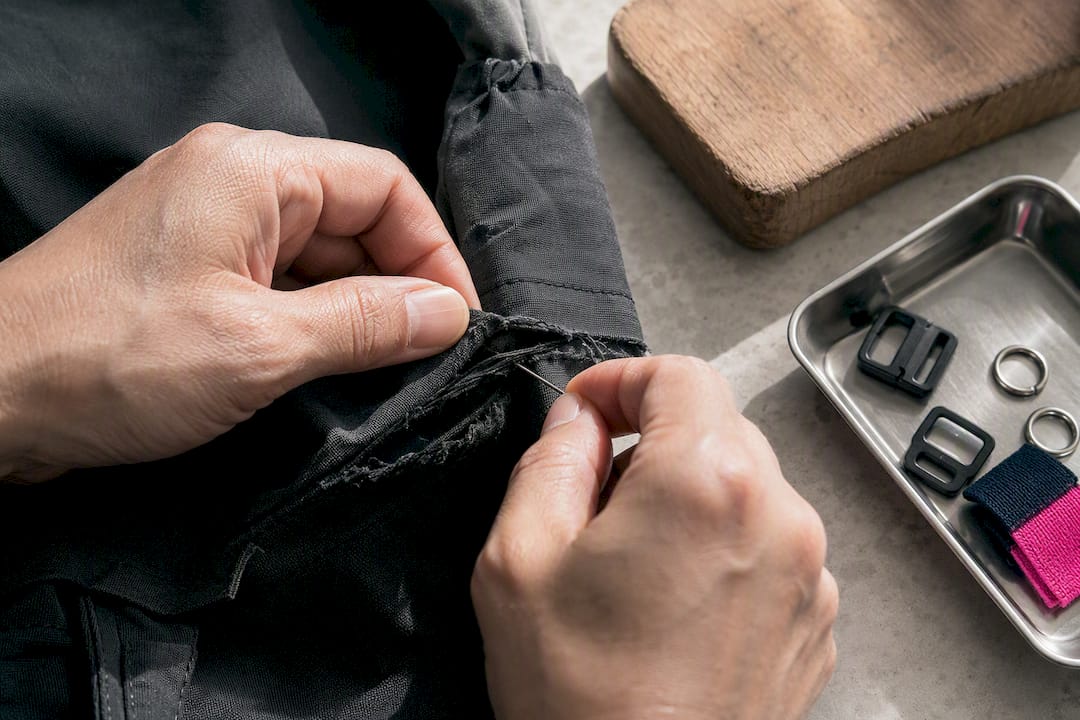
When something tears, a local tailor can usually patch a seam or replace hardware for less than a replacement would cost. For pieces that no longer fit, resale platforms, donation, and textile-recycling programs keep the material out of a landfill even after your ownership ends.
What Sustainable, Custom-First Streetwear Should Actually Look Like
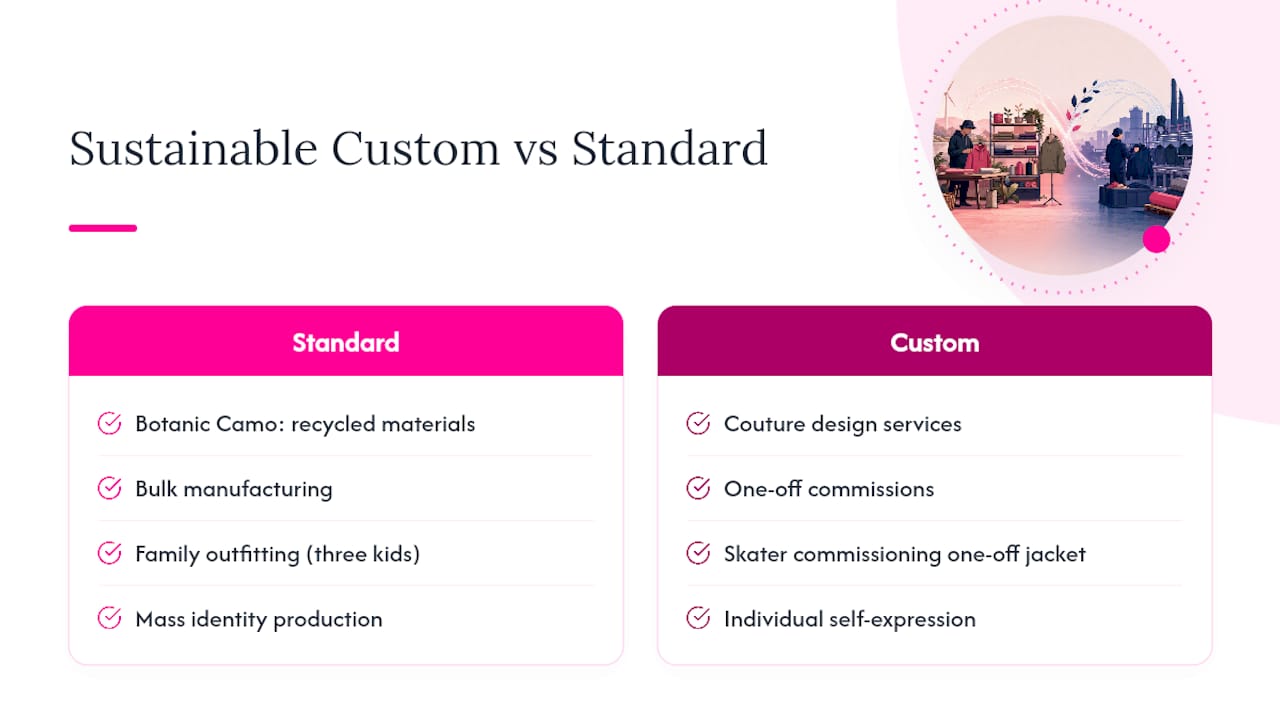
We built Czt around a simple frustration: streetwear culture has always prized individuality, from the hand-painted denim jackets of the early scenes to the DIY patch-and-pin aesthetic that turned skate parks into open-air galleries, yet most of the industry still manufactures identity in bulk. Our Botanic Camo collection uses recycled materials specifically because we think sustainability and self-expression should never be a tradeoff you’re forced to make. Custom couture design services exist alongside our standard product line so a family outfitting three kids for the school year and a skater commissioning a one-off jacket both have a path that fits.
We’ve written more on how personalization choices actually get made in our piece on types of custom clothing personalization, and on the design inspiration side, our roundup of personalized streetwear looks shows what customers have actually built with us.
Why Made-to-Order Streetwear Matters More Than the Discourse Around It Suggests
Here’s what most coverage of sustainable fashion gets backward: it treats made-to-order as a slower, pricier version of fast fashion’s convenience, a compromise eco-conscious shoppers accept out of guilt. That framing misses the actual mechanism. The research on design-stage involvement doesn’t just say custom clothes last longer because they’re better made. It says people keep them longer because they participated in making them. That’s a behavioral shift, not a manufacturing upgrade.
The conventional wisdom also treats lead time as a cost. We’d argue it’s closer to a filter. A three-week wait quietly removes the impulse-buy dynamic that fills closets with clothes worn twice, then forgotten. That’s not a flaw in the made-to-order model. It’s the entire point, and it’s why we’d rather compete on design relationships than shelf turnover.
— CZT
Start Your Made-to-Order Piece With Czt
If you’ve read this far, you already know the tradeoff: a few extra weeks of waiting in exchange for something that fits your body, your values, and your closet for years instead of months. We build standard made-to-order streetwear from recycled materials, alongside full custom couture consultations for customers seeking durable, personalized clothing options.
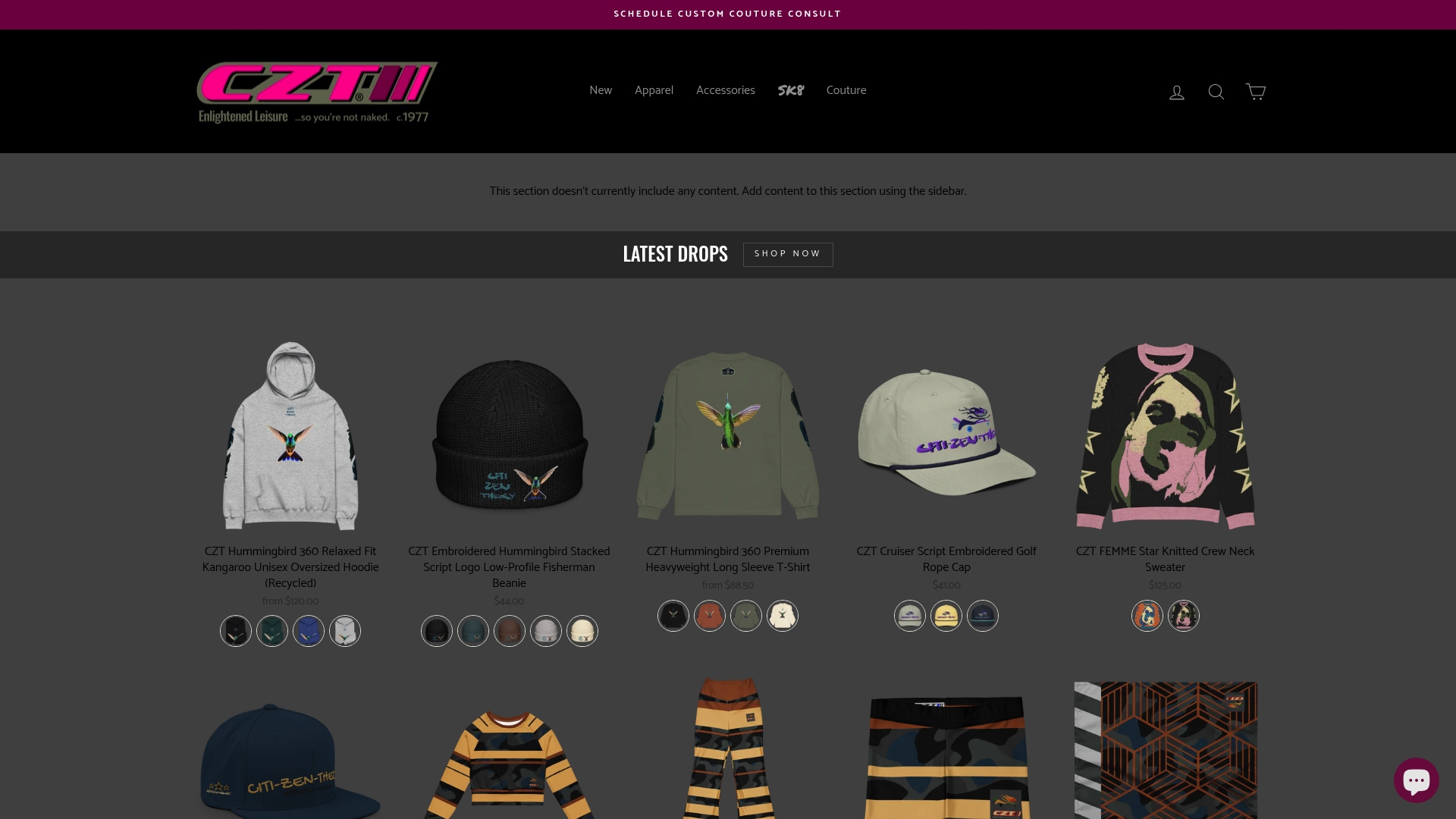
Ready to see what fits your vision? Start your custom order and tell us what you’re picturing. Bring your measurements, a rough budget, and a few reference images, and our team will walk you through material options, timeline, and what a fitting schedule looks like for your specific piece.
Sources
- Can mass customization slow fast fashion down? The impact on time‐to‐disposal and willingness‐to‐pay (2023)
- On-demand apparel manufacturing (NetSuite, 2025)
- Why made-to-order is the sustainable answer to fashion’s overproduction problem (BG Fashion article)
- How to commission a custom wedding dress (Prism News)