![CZT [CITI-ZEN-THEORY]](http://czt.rocks/cdn/shop/files/CZT_-_Brand_PINK_Label_1_330x.png?v=1774104725)
![CZT [CITI-ZEN-THEORY]](http://czt.rocks/cdn/shop/t/61/assets/CZT-Fast-Logo---Blue-Grey_330x.png?v=98224836737033641471695502660)
![CZT [CITI-ZEN-THEORY]](http://czt.rocks/cdn/shop/files/CZT_-_Brand_PINK_Label_1_170x.png?v=1774104725)
![CZT [CITI-ZEN-THEORY]](http://czt.rocks/cdn/shop/t/61/assets/CZT-Fast-Logo---Blue-Grey_170x.png?v=98224836737033641471695502660)
How Color Customization Works for Sustainable Streetwear
Color customization at Czt is a customer-driven process that begins at order or consultation and finishes only after sampling and approval. It is not an instant color swap. Expect a standard made-to-order piece to move faster than a custom couture commission, which typically runs 8 to 12 weeks from first sketch to delivery.
- A deposit usually locks in your consultation slot and gets credited toward your final piece.
- Fabric type and dye method set the outer limits of what a color can actually look like on your garment.
- Czt builds each piece through a pull system, meaning nothing gets cut until your order exists.
Key Takeaways
Color customization succeeds when fabric choice, dye method, and sample approval happen in the right order, with the customer signing off at each critical checkpoint.
| Point | Details |
|---|---|
| Timeline varies by commitment level | Couture runs roughly 8 to 12 weeks; standard made-to-order moves faster if fabric is in stock. |
| Fabric dictates color limits | Fiber type and dye method determine how vibrant and durable a chosen color can actually be. |
| Sample before you commit | Lab dips confirm color, PP samples confirm the full look; approve only after wash tests. |
| Prep drives consultation quality | Swatches, mood boards, and a budget range make your first meeting far more productive. |
| Czt runs on a pull system | Garments get made after your order, using recycled materials to cut waste and overproduction. |
Table of Contents
- How Color Customization Works: From Order to Finished Garment
- How Fabric and Dye Method Shape Your Final Color
- What Should You Bring to a Color Consultation?
- Do Digital Previews Replace Physical Swatches?
- How Sampling and Approval Protect Your Color
- How Long Does Custom Color Take, and What Drives Cost?
- Why Made-to-Order Color Customization Cuts Waste
- What to Expect from Czt’s Color Process
- Why Precision and Patience Matter More Than Speed
- Ready to Design Your Color?
- Sources
How Color Customization Works: From Order to Finished Garment
Every custom piece moves through the same backbone, whether you are ordering a made-to-order hoodie or commissioning a full couture look.
- Order or booking. You select a base style through the configurator or book a consultation for couture work.
- Consultation and design brief. You and your designer translate your vision into fabric, color, and finish decisions.
- Fabric and color selection. This is where fiber type gets matched to your desired shade and durability needs.
- Lab dip or digital proof. A small dyed swatch or rendered preview confirms the color direction before cutting begins.
- Sampling. A proto or pre-production (PP) sample gets built so you can see color, fit, and finish together.
- Production. Once you approve the sample, the run begins.
- Finishing and quality control. Wash tests, seam checks, and color comparisons against the approved PP sample happen here.
- Delivery. Your finished, color-accurate garment ships.
Your action points sit at steps 2, 3, and 5. Everything else is production work happening on Czt’s end. When you review a sample, check these specifically:
- Does the lab dip match under more than one light source?
- Has the PP sample survived a wash test without shifting color?
- Does the fit match your brief now that the fabric has color and finish applied?
How Fabric and Dye Method Shape Your Final Color
The color you picture and the color that survives production depend on what the fabric is made of and how the dye gets applied. Cotton and other natural fibers absorb dye deeply, which is why they tend to hold richer, more saturated tones over time. Synthetics and blends behave differently. Some resist dye penetration, others take pigment unevenly, and fiber composition changes how vibrant and colorfast the final result will be.
Different application methods carry their own trade-offs:
- Reactive and pigment dyeing bonds color into the fiber for strong wash durability, best on natural fibers.
- Direct-to-garment (DTG) printing handles fine detail and gradients well but sits on the surface rather than in the fiber.
- Dye sublimation works beautifully on polyester and synthetic blends, producing vivid, all-over color that will not crack.
- Screen printing delivers bold, flat color at scale but limits how many shades you can layer.
Post-production finishes complicate things further. An acid wash, distressing, or enzyme treatment applied after dyeing can noticeably shift the final shade, since these treatments affect color reflection and handfeel together, and getting the order of operations wrong means redoing work.
Pro Tip: Always test your exact finish on the actual fabric weight and artwork before locking in a color decision. A wash effect that looks perfect on a sample swatch can behave completely differently on a heavier hoodie fleece.
What Should You Bring to a Color Consultation?
Your consultation works best as a working session, not a presentation. Bring the raw material that lets your designer translate your idea into something buildable:
- Fabric swatches or reference materials, including any sentimental fabric you want evaluated.
- A mood board or reference photos, ideally shot in natural daylight.
- Pantone references if you have them, though they are not required.
- A clear budget range and examples of finishes you like (distressed, matte, glossy).
Ask your consultant how the fabric will behave after washing, how durable the finish will be, and whether the color you want is achievable on the material you are considering. Most consultations finalize your fabric and base color direction on the spot, while finishing details and exact dye matches often get confirmed after a lab dip. Since designers often have better fabric access through mill relationships than individual buyers do, it is worth trusting their sourcing suggestions over hunting for fabric yourself.
Do Digital Previews Replace Physical Swatches?
Not entirely, but they get you most of the way there before anything gets cut. A solid configurator gives you live color swatches, visual previews, and sometimes an AR try-on so you can see a colorway on a garment silhouette before committing. Digital prototyping and simulation software let designers validate color and pattern placement without producing physical samples, which shortens the design cycle considerably.
That said, some decisions still need fabric in hand:
- Digital cutting reduces material waste during production once your design is locked.
- DTG and dye sublimation each have a real color range and resolution ceiling worth seeing on fabric, not a screen.
- Lab dips remain the only reliable way to confirm a genuinely custom dye match.
A digital preview is trustworthy for silhouette, layout, and general color family. It is not the final word once fabric texture, finish, and lighting enter the picture. If you are working with custom artwork, understanding how prints interact with base color before finalizing your palette prevents most surprises at the sample stage.
How Sampling and Approval Protect Your Color
Three sample types carry three different jobs. A lab dip confirms fabric color match. A proto or first sample confirms construction and fit. A PP sample is your pre-production benchmark, and every unit in the full run gets checked against it for color, fit, and finishing.
When you review any sample, run it through this checklist:
- View the swatch under both daylight and incandescent light. Color that looks perfect under one can shift noticeably under the other.
- Request a wash test before final approval, especially on distressed or acid-washed finishes.
- Confirm the finish behaves the way you expect once applied to the actual garment, not just the swatch.
- Sign off formally. This locks the standard the entire production run gets measured against.
Pro Tip: Approve color on the PP sample only after wash and finish tests are complete. Signing off too early is the single most common reason customers get surprised by their finished garment.
How Long Does Custom Color Take, and What Drives Cost?
Couture commissions run roughly 8 to 12 weeks from consultation to delivery. Standard made-to-order pieces move faster, largely dictated by fabric availability rather than design complexity.
Where the time actually accumulates:
- In-stock mill fabric can ship in 7 to 14 days; custom-milled fabric adds another 4 to 8 weeks.
- Each lab dip round takes about 7 to 10 days, and multiple rounds are common for exact custom matches.
- Choosing a color from existing mill inventory instead of a custom dye match can save several weeks outright.
Cost climbs with specialty finishes, added lab dip rounds, small-run setup fees, and rush requests. It drops when you work within existing mill colorways instead of chasing a brand new custom shade.
Why Made-to-Order Color Customization Cuts Waste
Custom color at Czt runs on a pull system: nothing gets dyed, cut, or sewn until your order triggers it. That single shift changes the waste math of the entire industry. Made-to-order production minimizes unsold inventory and reduces the volume of textile waste that mass manufacturing generates by guessing at demand months in advance.
What that means for you as a customer:
- No overstock sitting in a warehouse gets built in your size and color, only to go unsold.
- Garments built to order tend to be constructed with more care, since there is no incentive to cut corners for volume.
- Recycled materials, including the fibers behind Czt’s Botanic Camo collection, get selected deliberately rather than sourced for whatever is cheapest that quarter.
Making a garment only after you commit to it is a fundamentally different economics than stocking shelves and hoping. Read more on how customization reduces fashion waste.
What to Expect from Czt’s Color Process
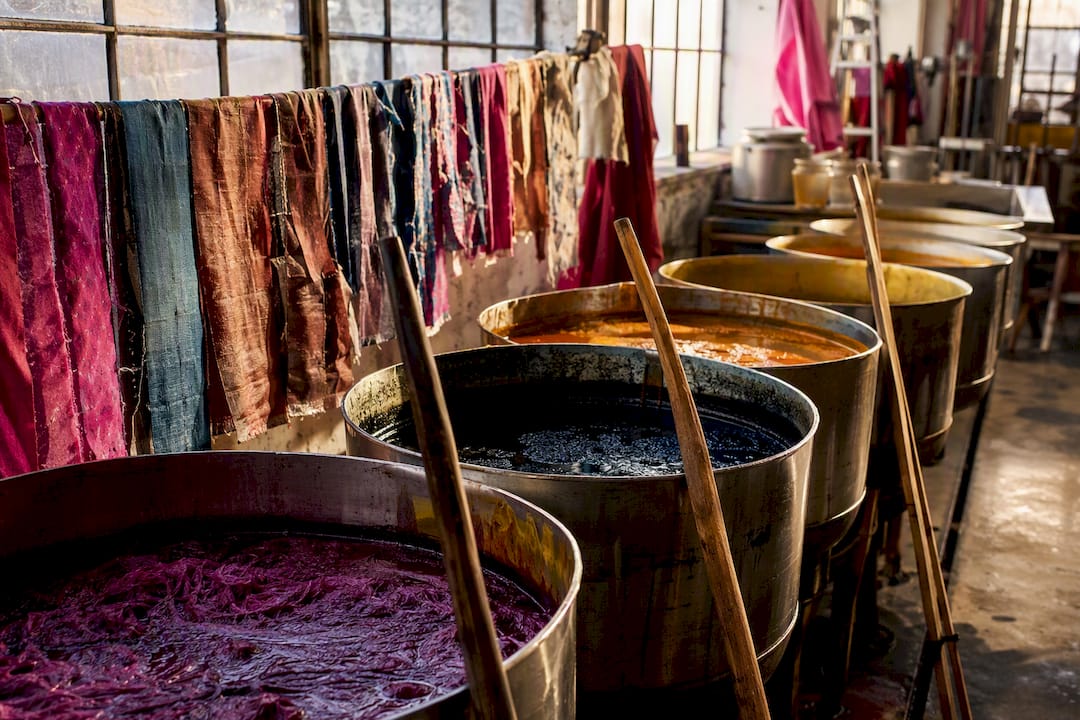
Booking with Czt starts the same way any consultation should: you reserve a slot, sometimes with a small deposit credited toward your final piece, and walk through your color and fabric goals with a real person. From there you will move through the configurator for base options, a swatch and PP sample workflow for anything custom, and a final sign-off before production runs.
A few things worth knowing going in:
- Recycled materials sit at the center of pieces like the Botanic Camo line, not as an afterthought.
- Custom couture services extend well past color, covering fit, print placement, and finish together.
- Czt’s blog covers both personalization options and broader sustainability commitments if you want more detail before booking.
Why Precision and Patience Matter More Than Speed
We built Czt around the idea that color is not decoration bolted onto a garment. It is part of the garment’s structure, tied to the fiber, the dye, and every finish layered on after. Rushing that process produces pieces that fade wrong or feel wrong. We would rather ask you to wait an extra lab dip round than hand you a color that does not hold. That patience is also why made-to-order and recycled materials sit at the center of everything we build.
Ready to Design Your Color?
Czt is the alternative to guessing at off-the-rack color options: you work directly with a designer, see real swatches under real light, and approve every shade before a single unit gets cut. That is a fundamentally different experience than picking from whatever colorway a mass retailer happened to stock this season.
Before you book, gather what your consultation will actually use: fabric swatches or reference images, a rough mood board, and a budget range you are comfortable naming out loud. Then head to the Czt custom couture page to book your consultation or start a made-to-order piece through the configurator. Bring your color idea. We will help you figure out whether it needs a lab dip, a different fiber, or just the right finish to make it work.
Sources
- On-Demand Apparel Manufacturing: What It Is and How It Works | NetSuite
- Couture Commissions Process — Fashionide
- Custom Clothing Manufacturing Process Explained — 2026 Guide from Design to Delivery
- Why Made-To-Order Fashion is Sustainable — SonFrē
Recommended
- Why Customization Reduces Fashion Waste Effectively – CZT [CITI-ZEN-THEORY]
- Color Palette Streetwear: Ready-to-Use Palettes and Rules – CZT [CITI-ZEN-THEORY]
- Material Innovation in Streetwear: Style Meets Ethics – CZT [CITI-ZEN-THEORY]
- Best Custom Embroidery Clothing for Sustainable Couture – CZT [CITI-ZEN-THEORY]