![CZT [CITI-ZEN-THEORY]](http://czt.rocks/cdn/shop/files/CZT_-_Brand_PINK_Label_1_330x.png?v=1774104725)
![CZT [CITI-ZEN-THEORY]](http://czt.rocks/cdn/shop/t/61/assets/CZT-Fast-Logo---Blue-Grey_330x.png?v=98224836737033641471695502660)
![CZT [CITI-ZEN-THEORY]](http://czt.rocks/cdn/shop/files/CZT_-_Brand_PINK_Label_1_170x.png?v=1774104725)
![CZT [CITI-ZEN-THEORY]](http://czt.rocks/cdn/shop/t/61/assets/CZT-Fast-Logo---Blue-Grey_170x.png?v=98224836737033641471695502660)
What Custom Clothing Really Costs in 2026
A small-batch run of custom streetwear, a few pieces of tees or hoodies made from recycled or organic fabric, typically lands within a moderate price range per unit once you factor in materials, labor, and setup. A one-off bespoke couture commission, the kind that starts with a sketch and ends with a fitting, usually runs significantly higher depending on construction complexity. Three levers decide where you land in each range:
- Fabric choice — organic, recycled, or certified materials cost more than conventional blends
- Construction complexity — every seam, closure, and finish adds labor time
- Order size — spreading development costs across more units drops the per-piece price fast
Fabric and construction complexity remain the two biggest swing factors in what any U.S. shop quotes you, according to MakersRow’s breakdown of apparel manufacturing costs. Czt builds its custom couture program around this exact math, sourcing recycled materials domestically so eco-conscious buyers get a transparent, U.S.-made alternative to guessing what a factory quote actually means.
Key Takeaways
Custom clothing cost in the U.S. depends most on fabric choice, construction complexity, and order size, with development costs quietly shaping the per-unit price until spread across enough units.
| Point | Details |
|---|---|
| Price bands vary widely | Small-batch streetwear runs typically cost tens of dollars per unit; bespoke couture commissions run substantially higher depending on complexity. |
| Order size drives savings | Spreading a $1,500 development cost across 500 units instead of 100 cuts the per-unit add from $15 to $3. |
| Fabric isn’t the biggest lever | Organic and recycled fabrics add a real premium, but complexity and order size usually move price more. |
| U.S. production costs more, buys more | A domestic premium of 2 to 3x landed cost often pays for itself through speed and IP protection above $45 retail. |
| Czt offers a direct sustainable path | Czt’s custom couture service sources recycled materials domestically and walks buyers through tech packs, sampling, and finishing. |
Table of Contents
- How Is Custom Clothing Cost Broken Down?
- How Does Order Size Change Your Per-Unit Cost?
- Do Sustainable Fabrics Actually Cost More?
- Why Does Making Clothing in the U.S. Cost More?
- How Do You Turn a Quote Into a Retail Price?
- What Should You Expect From Samples and Timelines?
- What Does the Real Cost Story Actually Teach Us?
- Ready to Commission a Custom Couture Piece?
- Frequently Asked Questions
- Sources
How Is Custom Clothing Cost Broken Down?
A manufacturer’s quote is really six line items stacked on top of each other, and reading it correctly means knowing what each one represents.
Materials come first. Fabric cost is yardage per garment multiplied by cost per yard, plus a waste allowance (usually 10 to 15 percent for pattern efficiency). A hoodie needing 2.5 yards of organic French terry at a premium cost per yard runs a significant amount in fabric alone before waste. Recycled and certified fibers push that number higher, since specialty and certified fabrics are consistently the largest single driver of U.S. garment cost according to MakersRow.
Trims and packaging add up in small increments that surprise first-time commissioners: a woven label runs $0.15 to $0.40, a hangtag $0.10 to $0.30, recycled poly bags another few cents each. None of it looks big alone. All of it together can add $1 to $3 per unit.
Labor ties directly to operation count, the number of distinct sewing steps a garment requires. A basic tee needs 8 to 12 operations; technical outerwear with lining and bonded seams can require 30 to 40 or more, placing it in a different cost tier entirely according to ClothingManufacturerLtd’s operation-count analysis.
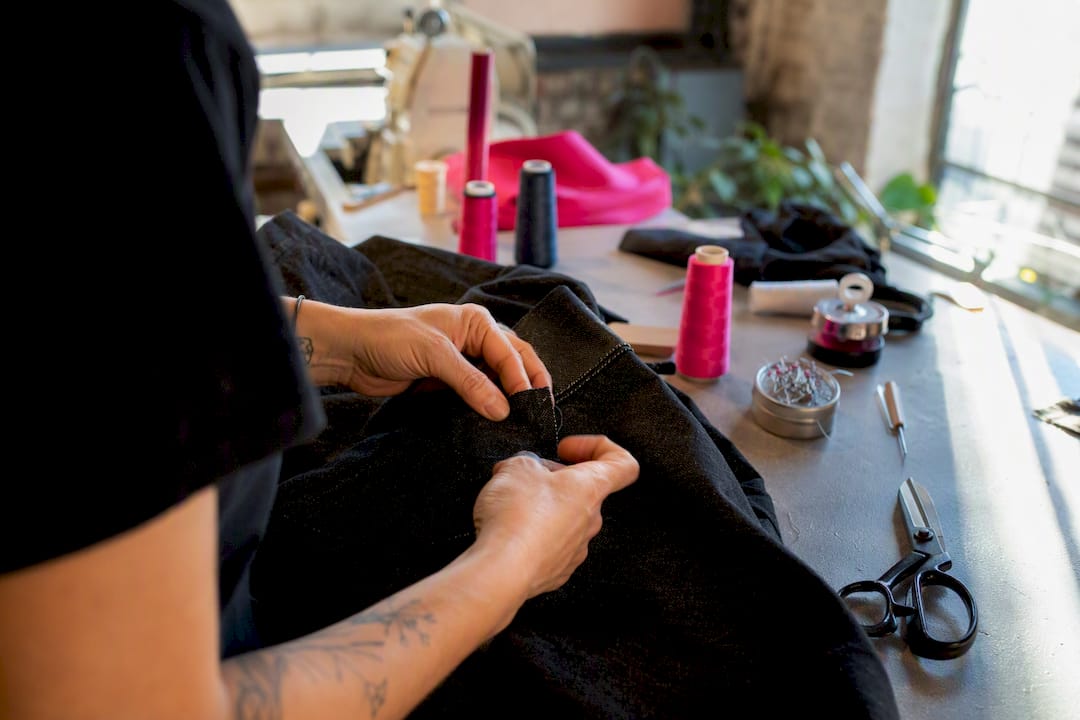
Development covers your tech pack, pattern, and samples, often the most underestimated cost of the entire project according to Arcus Apparel Group’s budgeting guide. A tech pack may cost several hundred dollars, patterning can be in the low thousands, and each sample typically costs from tens to several hundred dollars. This money gets spent once, then divided across your run.
Overhead, QC, and freight round things out, typically adding 10 to 20 percent to the base garment cost depending on shipping distance and inspection requirements.
How Does Order Size Change Your Per-Unit Cost?
Development costs don’t scale with quantity, they get divided by it, which means your order size is the single biggest lever you control after fabric choice.
Take a $1,500 development budget (tech pack, pattern, three sample rounds). Spread across 100 units, that’s $15 added to every piece. Spread across 500 units, it drops to $3. The garment itself doesn’t change. Only the math does.
- Confirm your shop’s MOQ first. U.S. small-batch sustainable manufacturers, particularly in Los Angeles, commonly accept minimums of 50 to 150 units for simple garments, well below the 500 to 1,000 unit minimums typical offshore, according to Plucky Reach’s sustainable manufacturing guide.
- Test demand with a pre-order or limited drop before committing to a larger run.
- Consider a deadstock run under 200 units if you want to lower material cost without gambling on unsold inventory.
- Scale up only once a design has proven repeat demand, since larger runs reward you exponentially on the development line but punish you if the design flops.
Pro Tip: Run your numbers at two quantities before you commit, the MOQ your shop quotes and double that. If the per-unit drop between them is dramatic, you’re paying mostly for setup, not fabric, and a slightly bigger first order might be the smarter bet.
Do Sustainable Fabrics Actually Cost More?
Yes, but not uniformly, and the gap is smaller for some materials than the eco-conscious buyer usually expects.
Organic cotton typically runs 20 to 50 percent above conventional cotton depending on certification and supplier. Recycled polyester generally costs similar to virgin polyester, occasionally cheaper, though sourcing consistency can be more variable at small volumes. Tencel and other lyocell blends carry a premium similar to organic cotton because of the closed-loop production process. Deadstock, leftover fabric rescued from other brands’ overruns, is often the cheapest material option and can meaningfully lower cost for runs under roughly 200 units, though it introduces “shade bundling,” the labor of sorting and matching dye lots, that adds hidden time to cutting and sewing.
- GOTS or OEKO-TEX certification adds a documented premium to the fabric line, usually reflected as a cost-per-yard increase rather than a flat fee
- Water-based screen printing costs more per unit than plastisol ink but avoids the phthalates and PVC in conventional prints
- Embroidery carries a higher per-unit cost than screen print but lasts through more wash cycles, which matters for skatewear built to take abuse
- DTF (direct-to-film) transfers land in the middle: faster setup, moderate cost, less durable than embroidery
The fabric premium is real, but it’s the smallest of the three major levers most buyers worry about. Order size and construction complexity usually move your final number more than the fiber choice itself, a fact worth sitting with before you assume “sustainable” automatically means “expensive.” Czt’s organic cotton sourcing reflects exactly this balance, prioritizing fabrics that hold up structurally without pricing out the audience the brand serves.
Why Does Making Clothing in the U.S. Cost More?
Direct labor is the biggest reason, and it’s not a small gap. U.S. cut-and-sew production commonly runs two to three times the landed cost of comparable Asian manufacturing for basic categories, according to OneAim Apparel’s cost comparison. Mexico, operating under USMCA, narrows that gap considerably while still offering faster turnaround than overseas production.
That premium buys three things offshore production doesn’t:
- Speed. Domestic reorders can typically turn around in a few weeks, faster than the longer periods common for overseas production including shipping and customs delays.
- IP protection. Your pattern and design stay closer to home, reducing the risk of knockoffs appearing before your own drop ships.
- Verified labor practices. Domestic sustainable manufacturing tends to strengthen customer trust and retention among buyers who care where their clothes come from, a real advantage for brands built around transparency.
The premium makes the most sense at specific price points. A modest U.S. surcharge, often in the $4 to $5 range per tee, tends to pay for itself when retail price sits above $45 and reorder cycles run under six weeks, since speed protects limited drops from selling out before restock arrives. Below that retail threshold, or on a one-time run with no reorder plan, offshore production may make more financial sense.
How Do You Turn a Quote Into a Retail Price?
Landed cost per unit equals your cost of goods sold (fabric, trim, labor) plus freight, duty, and receiving, plus your allocated development cost divided across the run. A hoodie with $22 in COGS, $2 in freight and receiving, and $8 in allocated development lands at $32 per unit before you set a retail price.
- Apply a 4.5x to 5x markup on landed cost for ethically produced, small-batch garments, a range that reflects the premium sustainable inputs actually carry, according to Plucky Reach’s markup guidance. That $32 hoodie retails between $144 and $160.
- Build in a 5 to 10 percent contingency buffer for the overruns that hit almost every first production run, fabric shortages, a failed QC batch, a shipping delay.
- Confirm four things on any quote before signing off: fabric composition and yardage, total operation count, sample rounds included, and whether freight and duty are itemized or bundled.
Pro Tip: Ask your manufacturer for a bill-of-materials breakdown, not just a total price. If they can’t itemize fabric, trim, and labor separately, you have no way to know which line item to negotiate.
What Should You Expect From Samples and Timelines?
Budget for three sample rounds, not one. The first confirms fit, the second confirms construction and finish, the third confirms production-ready specs before you commit to a full run. Skipping rounds to save money is the most common reason sample costs balloon, since a vague tech pack forces extra revisions later, according to Arcus Apparel Group.
- Each sample typically costs $75 to $500 depending on complexity
- First production runs in the U.S. often ship in four to eight weeks; offshore runs commonly take three to four months including shipping
- Rush fees apply when you compress that timeline, and QC failures that require rework add both time and cost
- Deadstock runs may carry a shade-bundling fee if your fabric comes from multiple dye lots
Technical pieces, swimwear, structured jackets, anything with bonding or lamination, often need an extra sample round beyond the standard three. A partner guide on ordering custom swimwear walks through why technical garments front-load more development cost than simpler streetwear.
What Does the Real Cost Story Actually Teach Us?
The conventional advice on custom clothing pricing treats fabric as the villain, as if switching to organic cotton is what blows up your budget. That’s not what the numbers show. Order size and construction complexity move the needle further than fiber choice ever does, and the buyers who get burned aren’t the ones who chose recycled polyester over virgin poly. They’re the ones who skipped development budgeting entirely and got hit with sample-round overruns they never planned for.
If there’s one thing worth prioritizing above all else, it’s asking for a bill-of-materials breakdown before you sign anything. A vague total price hides which lever you actually control. Fabric is often the smallest one. Order size and operation count usually decide whether your project stays affordable or spirals.
Domestic production earns its premium when speed and verification matter to your business model, not as a blanket rule for every commission. That distinction gets lost in most pricing guides, and it’s the one eco-conscious buyers most need to hear clearly.
Ready to Commission a Custom Couture Piece?
Czt builds its custom couture program around the same transparency this whole cost breakdown is meant to teach you to look for. Every commission starts with a tech pack consultation, moves through sustainable material sourcing, including recycled fibers from the Botanic Camo collection, and runs through full sampling and finishing before production begins.
What’s included isn’t a mystery quote with hidden line items. It’s a guided process: design consultation, sourcing recommendations built around recycled and certified materials, sample rounds to confirm fit and finish, and a finished piece made domestically with verified labor practices. If you’ve read this far and you’re weighing whether a commissioned piece makes sense for your budget, the fastest way to find out is to start a custom couture consultation and get a real quote instead of a guess.
Frequently Asked Questions
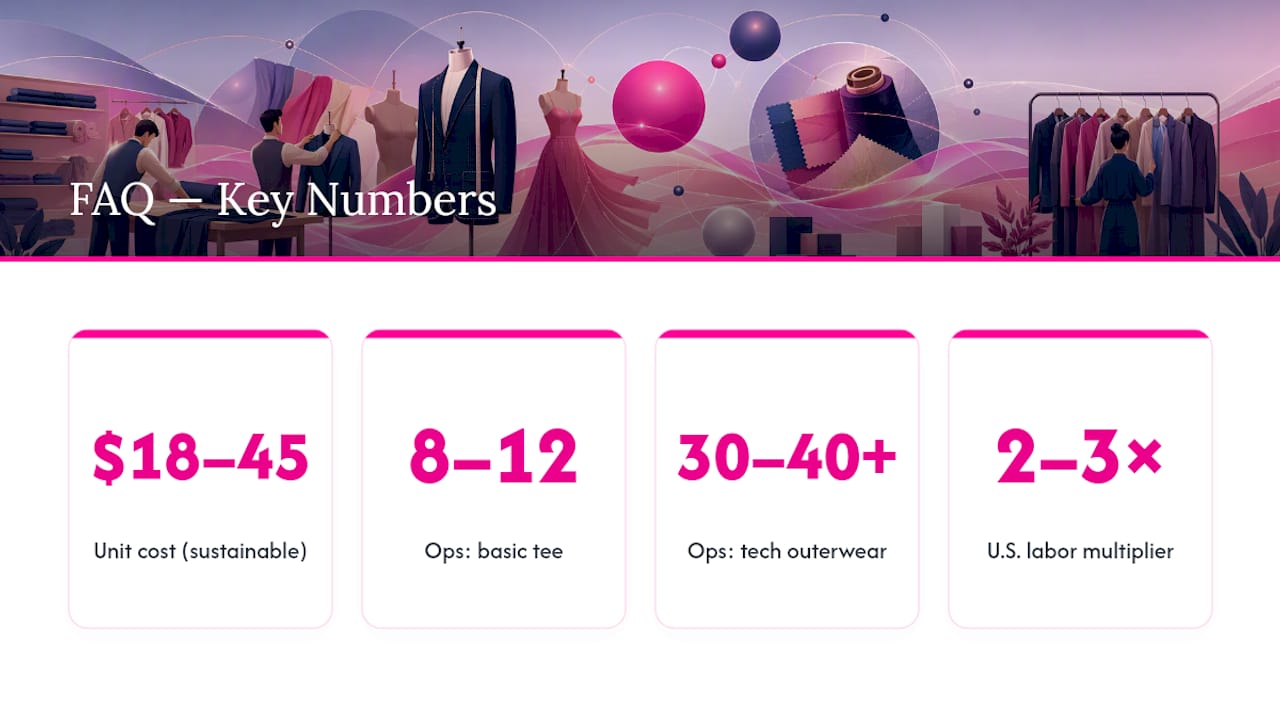
How much does custom clothing cost for a small streetwear brand? Expect $18 to $45 per unit for simple garments like tees and hoodies made from sustainable fabric, assuming an order size of 50 to 150 units and standard construction.
What’s the biggest factor in bespoke clothing cost? Construction complexity, measured in operation count, tends to move price more than fabric choice. A basic tee needs 8 to 12 operations; technical outerwear can need 30 to 40 or more.
Why is custom apparel pricing higher for U.S.-made pieces? Direct labor accounts for most of the difference, with U.S. cut-and-sew production often running two to three times the landed cost of overseas manufacturing for basic items.
How do I keep custom garment costs down without sacrificing sustainability? Focus on order size and operation count before cutting fabric quality. A well-built tech pack that avoids extra sample rounds saves more money than switching to a cheaper fiber.
What should a price of custom uniforms or team orders include? Confirm fabric composition, trim costs, total operation count, and whether freight and duty are itemized separately, since bundled quotes hide which line item is driving your price.
Sources
- Apparel manufacturing cost USA: what to expect — MakersRow
- Made in USA vs Offshore: Real Cost Comparison (2026) — OneAim Apparel
- Sustainable apparel manufacturer Los Angeles — Plucky Reach
- Custom clothing design costs: budgeting for your first line — Arcus Apparel Group
- Luxury streetwear manufacturing guide 2026 — ClothingManufacturerLtd
Recommended
- Why Custom Clothing Beats Mass Production in 2026 – CZT [CITI-ZEN-THEORY]
- Budget Custom Clothing Design Project: 2026 Guide – CZT [CITI-ZEN-THEORY]
- Best Custom Embroidery Clothing for Sustainable Couture – CZT [CITI-ZEN-THEORY]
- Top 10 Streetwear Trends 2026 | How CZT Fits In | Fashion Guide – CZT [CITI-ZEN-THEORY]