![CZT [CITI-ZEN-THEORY]](http://czt.rocks/cdn/shop/files/CZT_-_Brand_PINK_Label_1_330x.png?v=1774104725)
![CZT [CITI-ZEN-THEORY]](http://czt.rocks/cdn/shop/t/61/assets/CZT-Fast-Logo---Blue-Grey_330x.png?v=98224836737033641471695502660)
![CZT [CITI-ZEN-THEORY]](http://czt.rocks/cdn/shop/files/CZT_-_Brand_PINK_Label_1_170x.png?v=1774104725)
![CZT [CITI-ZEN-THEORY]](http://czt.rocks/cdn/shop/t/61/assets/CZT-Fast-Logo---Blue-Grey_170x.png?v=98224836737033641471695502660)
Color Palette Streetwear: Ready-to-Use Palettes and Rules
Five palettes, three rules, and you’re ready to build a streetwear look or drop that holds together with the kind of compositional confidence that separates a considered collection from a random assortment of pieces. Here they are, distilled for immediate use:
- Midnight Monochrome: #1A1A2E (deep navy base) / #16213E (support) / #E94560 (neon red accent). Wear the base as outerwear and bottoms; let the accent live on a graphic tee or cap.
- Earth Bloc: #3B2F2F (dark brown base) / #7B6354 (warm tan support) / #C9A84C (amber accent). Ground a fall capsule in the base; the amber reads beautifully on embroidered patches or woven labels.
- Teal Forward: #2F6364 (teal base) / #4A4A4A (charcoal support) / #FF6B6B (coral accent). The teal anchors outerwear; charcoal handles mid-layers; coral pops on sneaker colorways or lace detailing.
- Fuchsia Charge: #1C1C1C (black base) / #3D3D3D (graphite support) / #FF00A8 (electric fuchsia accent). A high-contrast composition built for graphic-heavy drops and night-culture aesthetics.
- Sage & Concrete: #6B7C6E (sage base) / #B0A99F (concrete support) / #2C2C2C (charcoal anchor). Calm, seasonless, and deeply wearable for eco-conscious or skate-adjacent lines.
Three rules govern all of them. Second, temperature dominance: keep warm and cool tones from competing for authority; one temperature leads, the other supports. Third, the neutral bridge: at least one neutral (black, white, concrete, charcoal) sits between any two saturated colors so the eye has somewhere to rest.
Key Takeaways
A locked, tested palette of 3–5 colors with documented hex and CMYK values is the single most effective system for building cohesive streetwear drops and outfits.
| Point | Details |
|---|---|
| Use the 60-30-10 rule | Assign 60% to outerwear/pants, 30% to mid-layer/tee, 10% to accessories and graphic accents. |
| Keep palettes to 3–5 colors | Document hex and CMYK values for every color to maintain consistency across digital and physical production. |
| Match undertones deliberately | Blue-grey and green-grey fight even when both read as neutral; test all colors under the same lighting before locking a palette. |
| Follow 2026 trend signals | Transformative Teal (#2F6364) and Electric Fuchsia are the headline base and accent colors for SS26 streetwear. |
| Czt applies palettes in production | Czt tests recycled-material swatches against hex specs before locking any palette, ensuring color accuracy on sustainable substrates. |
Table of Contents
- What do the best streetwear color palettes look like?
- Color rules every streetwear look needs
- How do you apply a streetwear palette to an actual outfit?
- What color trends are shaping streetwear in 2026?
- Where can you build, test, and save streetwear palettes?
- How does Czt choose and apply palettes for sustainable drops?
- Why palette thinking turns streetwear into a repeatable system
- Czt: sustainable streetwear built around intentional color
- Sources
What do the best streetwear color palettes look like?
The palettes below are production-ready starting points, each with a name, hex codes, and a scenario that tells you exactly when to reach for it. Keeping a brand palette to 3–5 colors, with documented hex and CMYK values, is the professional standard for consistent reproduction across digital mockups and physical garments.
| Palette Name | Base | Support | Accent | Best For |
|---|---|---|---|---|
| Midnight Monochrome | #1A1A2E | #16213E | #E94560 | Night drops, graphic-heavy collections |
| Earth Bloc | #3B2F2F | #7B6354 | #C9A84C | Fall/winter capsules, heritage aesthetics |
| Teal Forward | #2F6364 | #4A4A4A | #FF6B6B | SS26 collections, gender-neutral lines |
| Fuchsia Charge | #1C1C1C | #3D3D3D | #FF00A8 | Club-culture, youth-forward drops |
| Sage & Concrete | #6B7C6E | #B0A99F | #2C2C2C | Eco-conscious, skate-adjacent, family lines |
Each palette is a compositional argument, not just a color list. Earth Bloc speaks to a generation that grew up watching graffiti murals age into something richer and more textured than the original spray. Teal Forward, grounded in the 2026 Transformative Teal trend signal, carries a seasonless authority that works equally well on a heavyweight fleece or a lightweight tech shell.
For curated visual examples across dozens of streetwear-tagged palettes, Octet Design Labs offers mood-board-ready references that translate well to both print and digital production.
Color rules every streetwear look needs
The 60-30-10 rule is the single most transferable tool from interior design to fashion, and streetwear is where it earns its keep most visibly. This proportion framework, alongside undertone matching and complementary strategies, is what makes an outfit read as intentional rather than assembled.
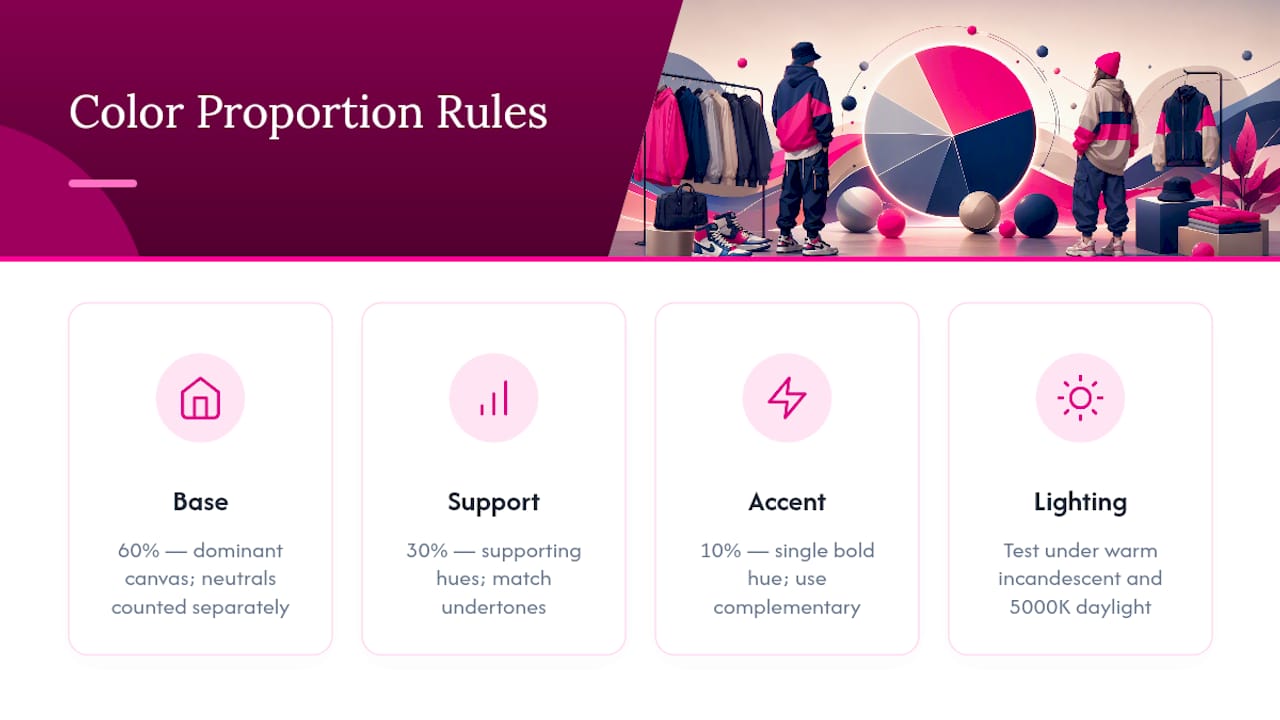
The 3-color rule is related but distinct. It says count your neutrals separately from your accent. Black, white, and grey are not “colors” in this system; they are the canvas. So a black pant, a white tee, and a single red cap is technically a one-color outfit with a neutral canvas, not a three-color one. That distinction matters when you’re building a drop and want to know how many true hues are competing for attention.
Undertone matching is where most people quietly lose the plot. Not all greys are the same temperature. A blue-grey and a green-grey will fight each other even when both read as “neutral” in isolation. The same tension exists between a warm cream and a cool off-white. When you’re building a palette, pull every color into the same lighting condition before you commit.
Pro Tip: Test your palette under both warm incandescent light and cool daylight (or a 5000K bulb). Colors that look harmonious in a studio can shift dramatically under retail fluorescents or outdoor photography conditions.
How do you apply a streetwear palette to an actual outfit?
Placement is everything. The support color takes the mid-layer or the primary top.
Texture reinforces palette choices in ways that pure color cannot. A matte black fleece and a glossy black nylon shell are technically the same hex, but they read as two distinct surfaces, which adds depth without adding a new color. Pairing a knit beanie in your support color against a canvas outerwear piece in your base color creates a tactile contrast that makes the palette feel considered rather than flat.
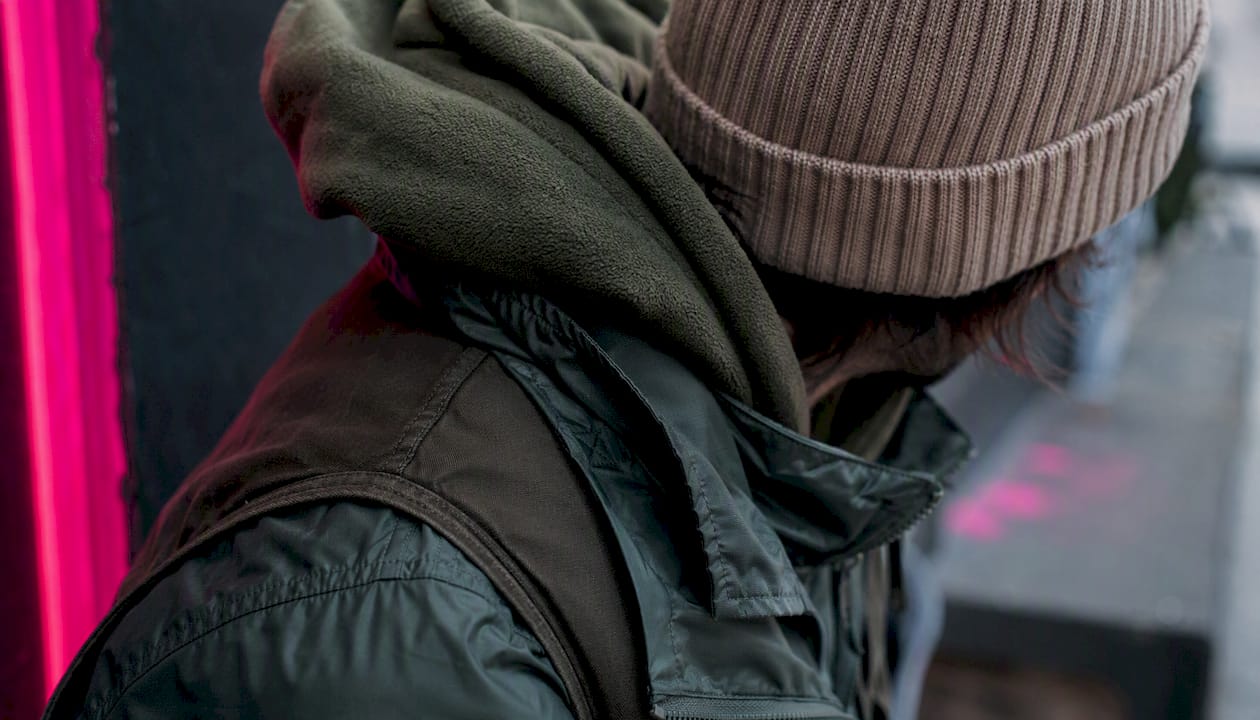
The accent color belongs on a focal piece: the sneaker colorway, a single embroidered patch, the inner lining visible when a collar folds down. Placing it on a sock and a hat and a graphic simultaneously dilutes its power. Choose one focal point per outfit and let the accent do its work there. For personalized streetwear looks that demonstrate how custom briefs shape these placement decisions, Czt’s own style examples are worth studying closely.
What color trends are shaping streetwear in 2026?
Three signals are worth building around right now. Transformative Teal (#2F6364) has emerged as a foundational base color for 2026, described as seasonless and versatile enough to anchor both technical outerwear and casual fleece. Electric Fuchsia is its high-contrast counterpart, a vivid accent that reads as both nostalgic and forward-looking, particularly in youth-forward and club-adjacent aesthetics. Amber Haze and Blue Aura round out the SS26 supporting palette for brands that want to stay current without committing to a single dominant hue.
- Deep teal as a base: works across genders, seasons, and silhouettes; pairs naturally with charcoal and coral.
- Electric fuchsia as accent: highest impact in graphic-heavy drops; use sparingly against dark neutrals.
- Earth-led neutrals for fall/winter: warm browns, amber, and sage carry the season without trend fatigue.
Seasonal adjustment is simpler than most guides suggest. A spring/summer palette takes the same base and support colors but swaps the accent for something lighter or more saturated: coral instead of burgundy, lime instead of olive. A fall/winter palette deepens every value by one step and introduces texture-forward materials that shift how the color reads. For guidance on building a seasonal wardrobe around these shifts, the principle holds across categories.
Where can you build, test, and save streetwear palettes?
Pinterest remains the fastest way to capture visual inspiration at scale. Search a mood (“concrete brutalism streetwear” or “earth-tone skate capsule”) and you’ll surface hundreds of outfit references that reveal how real palettes perform on real garments. The limitation is production fidelity: a Pinterest image is a JPEG, not a color spec. Extract the hex from any image using a browser color-picker extension or a tool like Adobe Color, then verify the value against your material swatches before committing.
Color-Hex (color-hex.com) lets you enter any hex code and immediately see its complementary, analogous, and triadic relationships, along with CMYK and RGB conversions. That cross-format data is what you need when you move from a digital mockup to a physical garment, since screen colors and dye colors behave differently.
The practical workflow: capture inspiration on Pinterest, extract hex codes with a color picker, verify relationships on Color-Hex, test on a digital mockup, then order physical swatches before finalizing production specs. Some palette-builder tools require account creation and store user data, so review their privacy terms before uploading proprietary design files.
How does Czt choose and apply palettes for sustainable drops?
Czt’s palette selection process begins with an audience brief, moves through material testing, and locks the palette only after physical swatches confirm that the chosen colors reproduce accurately on recycled substrates. That last step is non-negotiable: as Czt’s material innovation work documents, recycled fabrics absorb dye differently than virgin materials, which means a hex code that looks correct on screen can shift by a full value step on a recycled cotton-poly blend.
For the Botanic Camo collection, the palette workflow looked like this:
- Audience brief: eco-conscious consumers and skate-adjacent youth; palette must read as natural and performance-driven simultaneously.
- Material test: recycled cotton and post-consumer polyester swatches dyed in candidate colors; digital hex compared against physical result under 5000K lighting.
- Palette lock: three to five colors confirmed with both hex and CMYK values documented in a style guide.
Sample hexes from a Czt sustainable drop: #3B4A3F (deep forest base), #6B7C6E (sage support), #C9A84C (amber accent), #2C2C2C (charcoal anchor). These four colors work across outerwear, tees, accessories, and home goods without requiring a new palette for each category. Designers sourcing recycled fabrics for upcycled pieces can replicate this workflow directly.
Why palette thinking turns streetwear into a repeatable system
We’ve come to believe, through years of composition work and collection building, that a locked palette is one of the most underappreciated tools in a streetwear designer’s practice. The decision fatigue that comes from choosing colors drop by drop, outfit by outfit, is real and cumulative. A palette of three to five colors, documented and tested, removes that fatigue entirely. Every new piece has a home in the system before it’s even designed.
There’s a resale dimension to this that rarely gets discussed. Collectors and resellers gravitate toward brands with visual coherence because cohesive drops photograph better, style together more easily, and tell a cleaner story on a rack or a grid. A palette system is, quietly, a brand-equity decision as much as an aesthetic one.
Czt: sustainable streetwear built around intentional color
Czt designs and produces sustainable streetwear, skate apparel, accessories, home goods, and pet items from recycled materials, with a fully custom couture design service for those who want to build their own palette-driven pieces from the ground up.
For the reader coming from this article, Czt offers something the generic palette generator cannot: physical production on recycled substrates, with a team that has already done the material-testing work described above. The Botanic Camo collection is a live example of a locked palette applied across a full product range. If you’re ready to move from palette inspiration to a garment you can actually wear or commission, Czt and explore the custom couture service for a personalized design engagement.
Sources
- Streetwear Color Theory: Cohesive Outfit Palettes
- WGSN 2026 Color Trends for Streetwear Brands & Designers
- Streetwear Color Palette Generator – 46+ Streetwear Color Palettes
Recommended
- Personalized Streetwear Looks: 9 Bold Style Examples – CZT [CITI-ZEN-THEORY]
- Best Stencil-Inspired Sustainable Streetwear Alternatives – CZT [CITI-ZEN-THEORY]
- How to Mix Sustainable Pieces Into Stylish Outfits – CZT [CITI-ZEN-THEORY]
- Top 10 r4clothing.com Alternatives for Eco Streetwear – CZT [CITI-ZEN-THEORY]