![CZT [CITI-ZEN-THEORY]](http://czt.rocks/cdn/shop/files/CZT_-_Brand_PINK_Label_1_330x.png?v=1774104725)
![CZT [CITI-ZEN-THEORY]](http://czt.rocks/cdn/shop/t/61/assets/CZT-Fast-Logo---Blue-Grey_330x.png?v=98224836737033641471695502660)
![CZT [CITI-ZEN-THEORY]](http://czt.rocks/cdn/shop/files/CZT_-_Brand_PINK_Label_1_170x.png?v=1774104725)
![CZT [CITI-ZEN-THEORY]](http://czt.rocks/cdn/shop/t/61/assets/CZT-Fast-Logo---Blue-Grey_170x.png?v=98224836737033641471695502660)
Why Personalized Fashion Is a Growing Trend in 2026
Personalized fashion is defined as made-to-measure, uniquely designed apparel that reflects individual identity rather than mass-market taste, and its popularity is surging across the global market. The growth of personalized style is no accident. AI design tools, shifting consumer values among Gen Z, and a collective rejection of fast fashion’s disposable culture have all converged to make custom clothing one of the most significant forces reshaping how people dress. This is not a passing moment. It is a permanent recalibration of what consumers expect from the clothes they wear and the brands they trust.
Why personalized fashion is a growing trend: the driving forces
Three forces are accelerating the growth of personalized style faster than any single trend has in the past decade. Technology, identity, and sustainability have fused into a single consumer demand that brands can no longer ignore.
Technology has made customization accessible. AI design tools have removed the barrier of cost and complexity that once made bespoke clothing a luxury reserved for the wealthy. Brands using these tools have seen sales exceed goals by over 150%, with personalized products making up 15% of units and 11% of revenue in early 2026. That number tells a clear story: consumers are not just curious about customization. They are buying it.

Identity is the second engine. Gen Z consumers see personalization as a creative rebellion against algorithmic fast fashion. Where mass production offers sameness, custom clothing offers authorship. Young consumers focus on garment details, silhouette choices, and fabric selections as acts of self-definition. This is not vanity. It is a deeply cultural response to a world where algorithms increasingly dictate what people see, wear, and desire.
Sustainability is the third pillar. Personalized items tend to stay in wardrobes 50% longer than mass-produced alternatives. Longer garment lifespan means fewer purchases, less textile waste, and a smaller environmental footprint. For eco-conscious consumers, custom clothing is not just a style choice. It is an ethical one.
- Custom garments are produced on demand, eliminating overstock and unsold inventory waste.
- Made-to-measure pieces fit the wearer’s body precisely, reducing the likelihood of abandonment in the wardrobe.
- High-quality bespoke tailoring includes generous seam allowances, enabling alterations as the wearer’s body or style evolves.
- AI-powered customization tools attract new buyer segments, including first-time custom clothing shoppers.
Pro Tip: If you are new to custom clothing, start with a single statement piece rather than a full wardrobe overhaul. One well-fitted garment will teach you more about your personal style than a dozen off-the-rack purchases.
How does personalized fashion influence consumer behavior?
Personalization changes the relationship between a consumer and a garment at a fundamental level. When you participate in designing something, you invest emotionally in it. That investment translates directly into loyalty, repeat purchases, and a higher perceived value for the product.
Trust is the critical variable. Research confirms that trust in e-commerce vendors is crucial for participation in customization. Consumers who trust a brand’s platform are more likely to engage with customization tools, share their measurements, and return for future orders. That trust enhances three distinct values: utilitarian value (the garment fits and functions well), uniqueness value (it is unlike anything else available), and self-expressiveness value (it reflects who the wearer is).
A march 2026 survey of 375 fashion shoppers found that consumers actively weigh personalization benefits against privacy concerns and interface complexity. This is a nuanced finding. It means that even motivated consumers can be deterred by a clunky ordering experience or a brand that asks for too much personal data without explanation. Brands that simplify the customization process and communicate clearly about data use will capture the most loyal customers.
- Consumers who co-create a garment report stronger emotional attachment to it than those who purchase off-the-rack.
- AI-powered customization tools, when introduced on lower-priced items, increase overall cart sizes and attract new buyer segments.
- Repeat purchase rates rise when customization platforms deliver on their promise of fit and uniqueness.
- Complexity in the ordering interface is the single biggest deterrent to first-time custom clothing buyers.
Understanding how personalization grows brands in fashion and beauty sectors reveals a consistent pattern: the brands that win are those that make the experience feel effortless, not technical.
What challenges and misconceptions exist around personalized fashion?
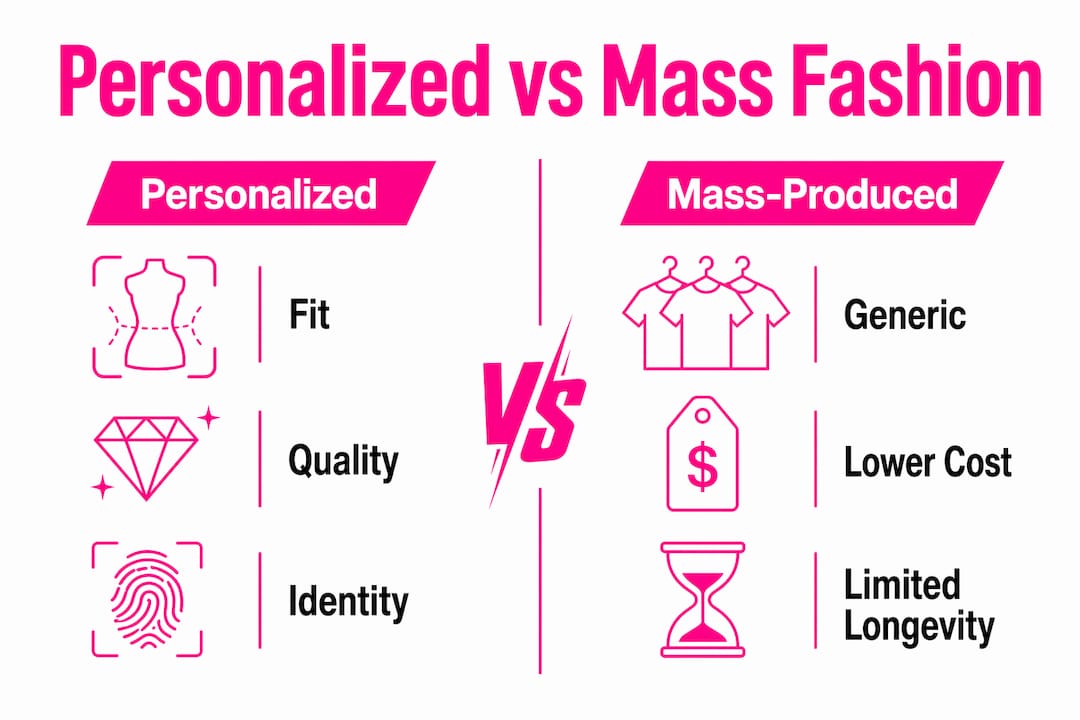
Custom clothing carries real constraints that consumers often underestimate. Understanding them upfront leads to a far better experience and a garment you will actually love.
The most fundamental reality of made-to-order fashion is that no finished goods sit in a warehouse waiting to ship. Every garment is produced specifically for each order, which means accurate measurements are not optional. They are the foundation of the entire process. A measurement error at the start creates a problem that is difficult and costly to correct later, because post-production adjustments on custom garments are far more limited than alterations on off-the-rack clothing.
Approval delays also affect timelines and costs. When a consumer requests changes mid-production, the entire workflow shifts. Lead times extend. Material costs can increase. This is not a flaw in the system. It is the nature of craftsmanship at this level. The made-to-order approach requires consumers to adjust expectations for production timelines and decision clarity before placing an order.
- Measurements must be taken carefully and, ideally, by a professional or with detailed brand guidance.
- Design decisions should be finalized before production begins, not revised mid-process.
- Lead times for custom garments are longer than standard retail. Plan accordingly for events or seasonal needs.
- Scaling personalized fashion presents real operational challenges for brands, including capacity constraints and complex order fulfillment logistics.
Pro Tip: Before ordering any custom garment, read the brand’s measurement guide thoroughly and take your measurements twice. A two-minute investment in accuracy saves weeks of frustration.
What practical benefits do consumers gain from personalized fashion?
The case for personalized fashion is not built on sentiment alone. It rests on concrete, measurable advantages that mass production simply cannot replicate.
A perfect fit is the most immediate benefit. When a garment is built around your specific body, comfort and confidence follow naturally. Off-the-rack sizing is designed for a statistical average, which means most people wear clothes that fit adequately but not ideally. Custom clothing eliminates that compromise entirely. You can learn how to specify fit preferences to get the exact silhouette you want, from shoulder width to hem length.
The quality argument is equally strong. Custom garments use better materials, more careful construction, and techniques like generous seam allowances that allow the piece to evolve with you over time. This is what makes bespoke clothing a sustainable lifelong investment rather than a seasonal purchase. The cost per wear of a well-made custom piece is almost always lower than that of a cheaper garment replaced every year.
| Benefit | Personalized fashion | Mass-produced fashion |
|---|---|---|
| Fit accuracy | Built to your exact measurements | Designed for statistical averages |
| Garment lifespan | Stays in wardrobe ~50% longer | Replaced more frequently |
| Alteration flexibility | Generous seam allowances allow changes | Limited alteration options |
| Environmental impact | Reduced waste, no overstock | Significant overstock and textile waste |
| Style uniqueness | One-of-a-kind composition | Widely replicated designs |
The cultural dimension matters too. Wearing something you helped design is a different experience from wearing something pulled from a rack. It carries a story, a set of choices, and a reflection of who you are. For consumers who value one-of-a-kind apparel, that distinction is the entire point.
Key Takeaways
Personalized fashion is growing because it delivers what mass production cannot: fit, longevity, identity, and a meaningful relationship between the consumer and the garment.
| Point | Details |
|---|---|
| Technology drives access | AI design tools have pushed custom clothing beyond luxury, making it available to everyday consumers. |
| Trust enables participation | Consumers engage with customization platforms only when they trust the brand’s process and data practices. |
| Longevity supports sustainability | Personalized garments stay in wardrobes ~50% longer, directly reducing fashion waste. |
| Accuracy is non-negotiable | Made-to-order garments require precise measurements upfront, as post-production adjustments are limited. |
| Identity fuels demand | Gen Z treats custom clothing as creative rebellion, making personalization a cultural force, not just a preference. |
Personalization is not a trend. It is a reckoning.
We have watched the fashion world cycle through trends with the speed and indifference of a conveyor belt. At Czt, we have always believed that the most powerful garment is the one that could only belong to you. Not because it carries a logo, but because it carries a decision, a composition, a deliberate act of self-definition.
What strikes me most about the current moment is how Gen Z has reframed the entire conversation. These are not consumers passively accepting what the algorithm serves them. They are creators who happen to wear their work. They study garment construction, obsess over fabric weight, and treat a custom silhouette the way a graffiti artist treats a wall: as a canvas that demands intention.
The mindset shift required to embrace made-to-order clothing is real. You have to slow down. You have to make decisions before the garment exists. That discomfort is actually the point. It forces a clarity about what you want that fast fashion never demands. And when the piece arrives, that clarity is woven into every seam.
My honest advice: approach personalization as a practice, not a transaction. The first custom piece teaches you something. The second teaches you more. Over time, you build a wardrobe that is genuinely yours, and that is a form of creative freedom that no algorithm can replicate.
— Czt
Czt’s approach to custom fashion and sustainable style
Czt was built on the belief that streetwear can be both artistically compelling and ethically grounded. The Botanic Camo collection, crafted from recycled materials, reflects that philosophy in every thread.
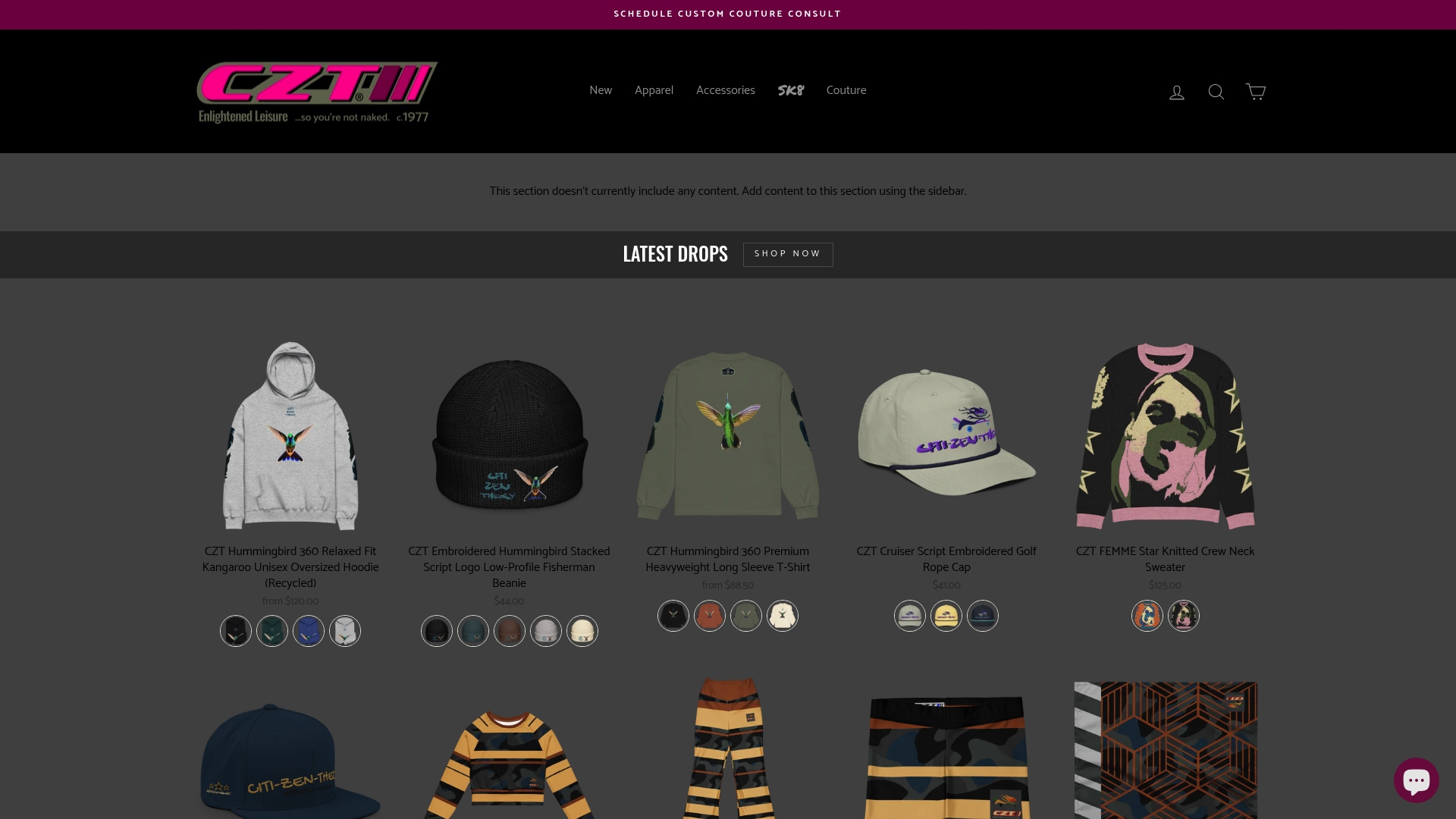
For consumers ready to move beyond mass production, Czt offers custom couture design services that put creative control directly in your hands. Whether you are drawn to the cultural roots of skateboard culture, the precision of made-to-measure construction, or the satisfaction of wearing something that carries your aesthetic fingerprint, Czt’s approach makes that possible. Explore the custom streetwear style guide to understand how personalization works in practice, and see how sustainability and individuality can coexist in a single garment.
FAQ
What is personalized fashion, exactly?
Personalized fashion refers to made-to-measure or custom-designed clothing built around an individual’s specific measurements, style preferences, and identity. It stands in direct contrast to mass-produced, standardized sizing.
Why is personalized fashion growing so fast right now?
AI design tools have made customization accessible and affordable, while Gen Z consumers actively reject algorithmic fast fashion in favor of creative self-expression. Sustainability concerns have also pushed consumers toward longer-lasting custom garments.
How long do personalized garments last compared to mass-produced ones?
Personalized items tend to stay in wardrobes 50% longer than mass-produced alternatives, largely because they fit better and are constructed with higher-quality materials and techniques.
What is the biggest challenge with ordering custom clothing?
Accurate measurements are the most critical factor. Made-to-order garments are produced with no existing inventory, so errors in measurement are difficult and costly to correct after production begins.
Does personalized fashion cost more than regular clothing?
Custom garments typically carry a higher upfront cost, but the cost per wear is often lower because the pieces last significantly longer and are less likely to be discarded due to poor fit or generic design.
Recommended
- Personalized Streetwear Looks: 9 Bold Style Examples – CZT [CITI-ZEN-THEORY]
- Why Custom Clothing Beats Mass Production in 2026 – CZT [CITI-ZEN-THEORY]
- Top 10 Streetwear Trends 2026 | How CZT Fits In | Fashion Guide – CZT [CITI-ZEN-THEORY]
- Why Customization Reduces Fashion Waste Effectively – CZT [CITI-ZEN-THEORY]