![CZT [CITI-ZEN-THEORY]](http://czt.rocks/cdn/shop/files/CZT_-_Brand_PINK_Label_1_330x.png?v=1774104725)
![CZT [CITI-ZEN-THEORY]](http://czt.rocks/cdn/shop/t/61/assets/CZT-Fast-Logo---Blue-Grey_330x.png?v=98224836737033641471695502660)
![CZT [CITI-ZEN-THEORY]](http://czt.rocks/cdn/shop/files/CZT_-_Brand_PINK_Label_1_170x.png?v=1774104725)
![CZT [CITI-ZEN-THEORY]](http://czt.rocks/cdn/shop/t/61/assets/CZT-Fast-Logo---Blue-Grey_170x.png?v=98224836737033641471695502660)
What Is Technical Skate Apparel: A 2026 Guide
What is technical skate apparel, and why does it matter?
Technical skate apparel is performance-focused clothing engineered specifically for the physical demands of skateboarding, where every fall, grind, and kickflip tests fabric at its limits. Unlike generic streetwear, skateboard technical wear integrates moisture-wicking fabrics, reinforced abrasion zones, and construction methods that protect the body while preserving the full range of motion a skater needs. The result is clothing that lives at the intersection of craft and culture, where performance-driven design meets the raw aesthetic of skate life.
What separates technical skate clothing from ordinary athletic wear is its dual allegiance: it must hold up against concrete and still look like it belongs on the street. That tension between function and identity is what makes this category genuinely compelling.
Core features of technical skate apparel:
- Moisture-wicking, quick-drying fabrics that manage sweat during intense sessions
- Reinforced panels in high-abrasion zones like knees, seat, and inner thighs
- DWR (Durable Water Repellent) finishes on outerwear for weather resistance
- Gusseted construction at the crotch and underarm for unrestricted movement
- Stretch-integrated materials such as cotton-spandex blends for flexibility
- No-sew or heat-fused seam technologies that resist ripping on rough surfaces
- Adjustable waistbands and hem drawcords for a customized, secure fit
What types of technical skate clothing are available, and what are they made of?
The three foundational categories of high-performance skate clothing are shirts, sweatshirts, and pants, each engineered with distinct material logic.
Shirts in technical skatewear prioritize breathability and durability in equal measure. Cotton blends with a small percentage of spandex offer the stretch needed for crouching and popping tricks, while technical fabrics with moisture-wicking properties keep the body regulated during long sessions. Ripstop weaves appear in more performance-oriented shirts, offering tear resistance without adding bulk.
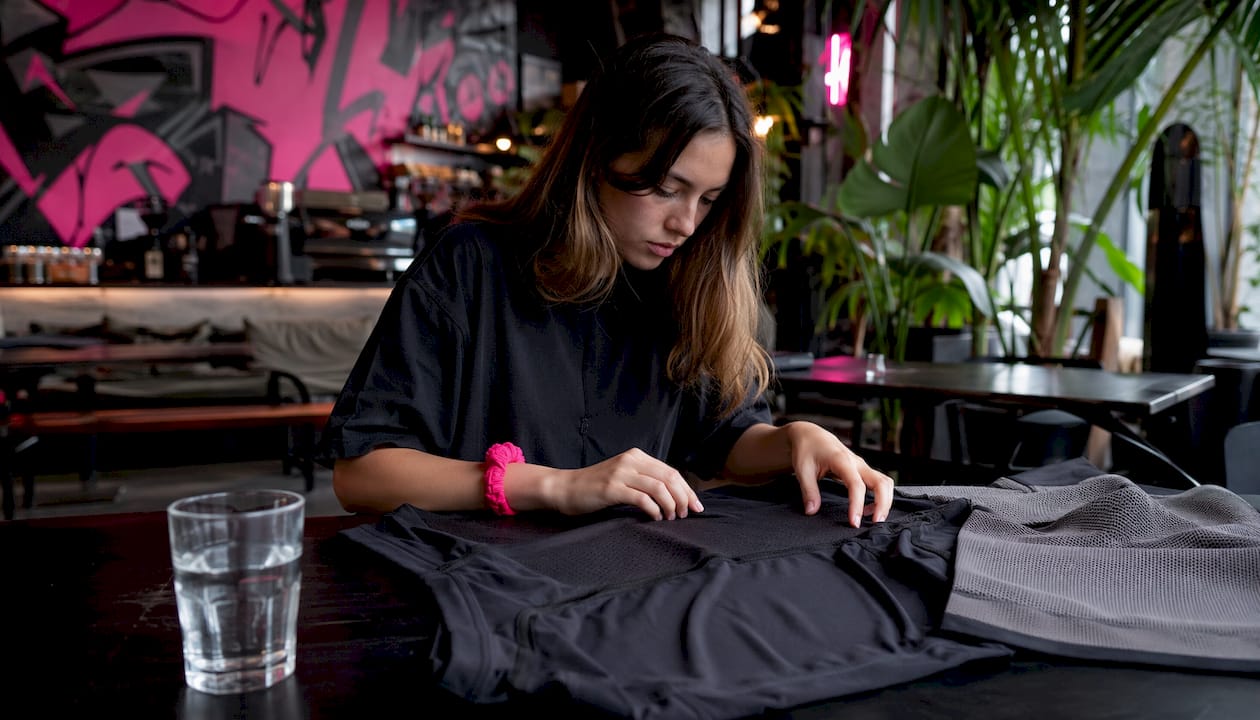
Sweatshirts and hoodies carry the heaviest weather-management responsibility. Many feature Storm Cotton or similar treated fabrics that repel light rain while remaining breathable. DWR finishes on hoodies and jackets protect skaters from the elements without the stiffness of a waterproof shell. Gusseted underarms allow the arms to swing freely without pulling the hem up.
Pants are where material science arguably matters most. Key options and their materials include:
- Heavyweight denim up to 14.75oz rigid denim, offering serious abrasion resistance with a classic silhouette
- Ripstop fabric, used in chore coats and technical pants for tear resistance under repeated stress
- Cotton-spandex blends, balancing comfort and stretch for skaters who prioritize mobility
- Twill lining inside outerwear pieces for added warmth and durability
- Double-knee construction, reinforcing the area most likely to contact pavement
Pro Tip: When assessing pants for skating, press your thumb firmly into the knee fabric. If it thins noticeably under pressure, the weave density is too low for regular street skating.
How do you choose technical skate apparel for comfort, durability, and performance?
Choosing the right skateboard technical wear comes down to three intersecting priorities: how it fits, how long it lasts, and how well it moves with you.

Comfort and fit are the starting point. A skater crouching into an ollie needs fabric that moves with the body rather than pulling against it. Look for gusseted construction at stress points, and favor a relaxed or tailored-relaxed fit over anything too baggy or too slim. Adjustable waistbands and hem drawcords let you dial in the fit precisely, which also prevents loose fabric from catching on the board during footwork.
Durability factors to evaluate before buying:
- Reinforced seams or no-sew bonding at high-stress points
- Double-knee or double-seat construction in pants
- Abrasion-resistant fabric weight, particularly in denim or ripstop options
- Quality of stitching at pocket openings, which take repeated stress
Performance considerations round out the decision. Moisture management matters more than most skaters initially expect. Wet fabric from sweat adds weight, reduces comfort, and can affect grip on the board. Water repellency in outerwear extends session time in variable weather. For a deeper look at how layering strategies interact with technical fabrics, the approach changes significantly by season and session intensity.
Skaters assessing apparel should also consider pocket design and placement, since pockets that sit too low or too wide can interfere with board control during certain tricks.
What innovations and sustainability advances define technical skatewear in 2026?
The most consequential shift in technical skate apparel right now is the move away from traditional stitching toward heat-fused construction. Technologies like RapidWeld bond upper panels using heat rather than thread, creating seams that are simultaneously stronger, lighter, and more flexible than conventional stitching. On rough concrete, where traditional seams rip under repeated abrasion, heat-fused bonds hold with a consistency that stitched construction cannot match.
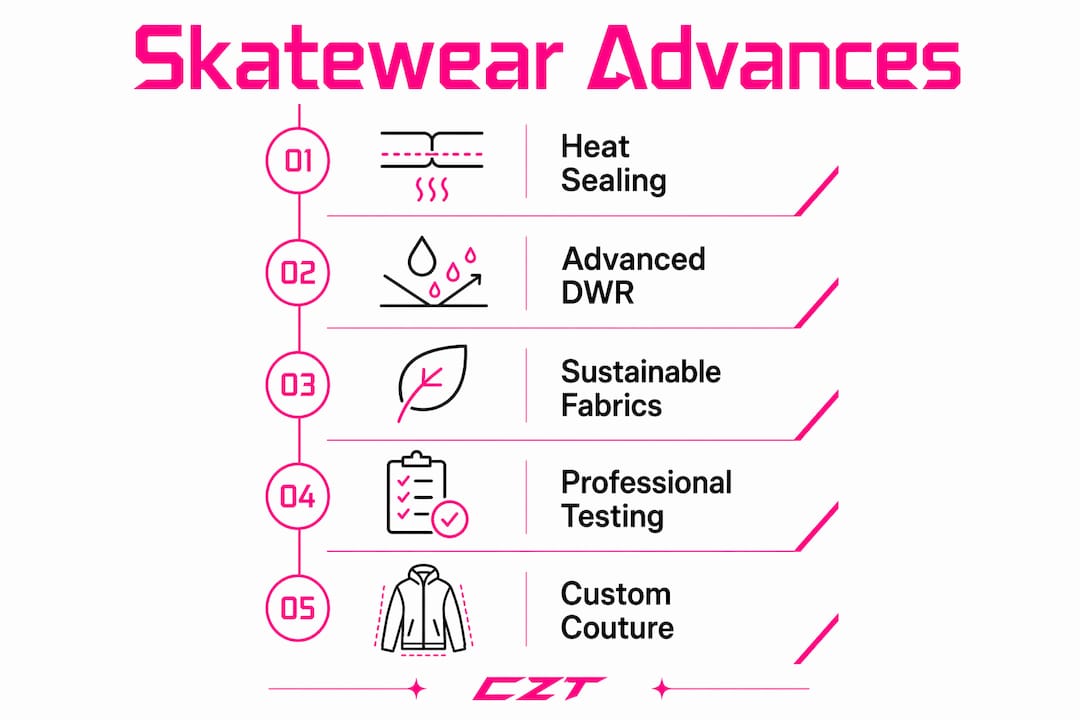
DWR chemistry has also advanced. Modern DWR finishes maintain breathability while offering meaningful protection against light rain, a combination that older waterproofing treatments sacrificed. The finish is now applied to a wider range of garments, including hoodies and chore coats, not just dedicated rain gear.
Sustainability has moved from a brand talking point to a genuine design constraint. Czt builds its recycled materials philosophy directly into performance pieces like the Botanic Camo collection, demonstrating that eco-conscious sourcing and technical durability are not competing values. The brand’s material innovation approach treats recycled fabrics as a design asset rather than a compromise.
Key 2026 innovations in technical skatewear:
- Heat-fused no-sew seam bonding for superior durability and flexibility
- Advanced DWR finishes preserving breathability across outerwear categories
- Recycled and sustainably sourced performance fabrics
- Adjustable waistband systems for fit precision and safety
- Custom couture design services, as offered by Czt, allowing skaters to personalize both function and aesthetic
- Fabric technologies that merge streetwear identity with measurable performance standards
Pro Tip: When a brand offers custom couture options, ask specifically about fabric weight and seam construction choices. Personalization that extends to technical specs, not just graphics, is where real performance customization begins.
Performance skate brands test garments extensively with professional skaters before releasing them, refining durability and fit under actual skating conditions. That process separates apparel built for the culture from apparel merely styled after it.
Which brands are known for technical skate apparel?
The brands that have shaped technical skatewear each bring a distinct design philosophy, and understanding those differences helps you identify what you actually want from your gear.
Vans Pro Skate is arguably the most technically rigorous line in skate apparel. The AVE collection, built around Anthony Van Engelen’s input, features ripstop fabric, DWR-finished chore coats, and heavyweight 14.75oz rigid denim, each piece engineered through wear testing with a professional skater whose style is legendarily hard on gear.
Dickies occupies a different but equally authentic position. Originally a workwear brand, Dickies found its way into skate culture through sheer durability. Double-knee pants, heavyweight duck fabric, and relaxed fits that allow movement without excess bulk made it a natural fit for skaters who needed clothes that could take punishment without a premium price tag.
Carhartt WIP follows a similar logic, translating rugged workwear construction into skatewear that holds up to the wear and tear of daily sessions while maintaining a considered aesthetic. Its canvas and duck fabrics carry genuine abrasion resistance.
Element, founded in 1992 by Johnny Schillereff, built environmental consciousness into its brand identity from the beginning, making it a natural reference point as sustainability becomes central to technical skate apparel design.
Czt approaches technical skatewear from the intersection of sustainability and custom design. By using recycled materials and offering couture personalization, Czt builds pieces that carry both performance credibility and a clear ethical position. The 2026 streetwear trends shaping technical skate fashion reinforce exactly the kind of quality-over-quantity thinking that Czt has built into its design process, where lasting style and technical function are treated as the same goal.
Key Takeaways
Technical skate apparel combines performance-driven fabrics, reinforced construction, and skate culture aesthetics to create clothing that withstands concrete, manages moisture, and moves with the body through every trick.
| Point | Details |
|---|---|
| Performance fabrics are foundational | Moisture-wicking, quick-drying materials and DWR finishes define technical skatewear’s functional core. |
| Material weight shapes durability | Heavyweight denim up to 14.75oz and ripstop fabrics offer the strongest abrasion resistance for street skating. |
| Construction details determine longevity | Gusseted seams, double-knee panels, and heat-fused no-sew bonding extend garment life under real skating conditions. |
| Sustainability and performance coexist | Brands like Czt use recycled materials in performance pieces, proving eco-conscious sourcing does not compromise durability. |
| Fit customization improves safety | Adjustable waistbands and drawcords prevent loose fabric from interfering with footwork and board control. |
Recommended
- Skate Apparel Layering Techniques That Actually Work – CZT [CITI-ZEN-THEORY]
- Layer Streetwear for Cold Weather Skating in Style – CZT [CITI-ZEN-THEORY]
- What Does Moisture-Wicking Mean for Skate Gear? – CZT [CITI-ZEN-THEORY]
- Moisture Wicking Skate Shirts: 9 Performance Benefits – CZT [CITI-ZEN-THEORY]