![CZT [CITI-ZEN-THEORY]](http://czt.rocks/cdn/shop/files/CZT_-_Brand_PINK_Label_1_330x.png?v=1774104725)
![CZT [CITI-ZEN-THEORY]](http://czt.rocks/cdn/shop/t/61/assets/CZT-Fast-Logo---Blue-Grey_330x.png?v=98224836737033641471695502660)
![CZT [CITI-ZEN-THEORY]](http://czt.rocks/cdn/shop/files/CZT_-_Brand_PINK_Label_1_170x.png?v=1774104725)
![CZT [CITI-ZEN-THEORY]](http://czt.rocks/cdn/shop/t/61/assets/CZT-Fast-Logo---Blue-Grey_170x.png?v=98224836737033641471695502660)
How Pockets Improve Skate Functionality and Performance
Pocket design is a direct performance variable in skate apparel, not a secondary detail. Understanding how pockets improve skate functionality means recognizing that where a pocket sits, how it closes, and what it holds all shape whether a skater lands clean or eats concrete. Secure storage prevents valuables from shifting mid-trick, reduces the risk of hard objects bruising the body during falls, and keeps a skater’s attention locked on the board rather than on what might be spilling out of their pants. Czt builds every piece with this philosophy at its core, treating pockets as performance architecture rather than afterthought.
How pockets improve skate functionality through design features
Pocket functionality in skatewear rests on four pillars: closure type, material durability, depth, and placement. Each one affects how a skater moves, how safe they stay, and how long the garment holds up under the punishment of daily sessions.
Closure mechanisms that hold under pressure
Zippered or buttoned pockets are functional necessities in skate apparel, not style choices. A zipper keeps your phone, keys, or wax from launching out mid-kickflip. Buttons offer a lower-profile alternative that still locks contents in place without adding bulk. Open pockets, by contrast, become liabilities the moment you drop into a bowl or catch serious air.
Reinforced construction and durability
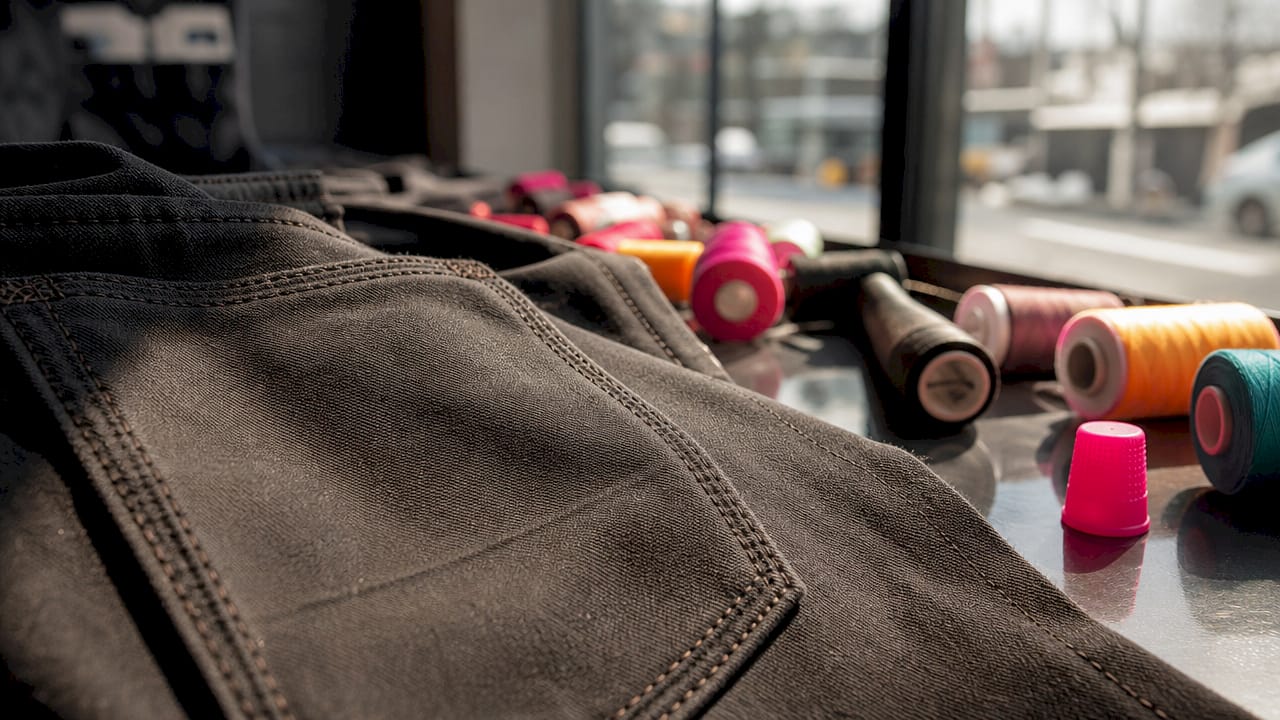
Reinforced pocket stitching using multiple rows of interlocking stitches and bar-tacking at stress points resists the abrasion that skateboarding delivers constantly. Every crouch, every bail, every grind puts lateral stress on pocket seams. Standard garment construction fails at those points within weeks of regular skating. Skate-specific construction treats the pocket mouth and corners as high-stress zones that need structural support, not just decorative thread.
Pro Tip: When evaluating skate pants, pinch the pocket corners and pull firmly. If the fabric puckers or the seam shifts, the construction will not survive a season of serious skating.
Here are the core features that define a functional skate pocket:
- Zippered or buttoned closure to prevent item loss during complex maneuvers
- Bar-tacked seam reinforcement at pocket corners and mouth openings
- Deep pocket depth so items sit below the pocket mouth and cannot slide out
- Smooth interior lining that protects both the item and the skater’s skin during impact
- Low-profile exterior that does not snag on board grip tape or rails
Pocket depth deserves particular attention. Deeper pockets placed closer to the body reduce snagging and prevent valuables from working loose during grinding tricks. A pocket that barely holds a phone upright is a liability. One that swallows it completely, with a closure on top, is a tool.
How do pocket designs enhance safety and reduce injury risks?
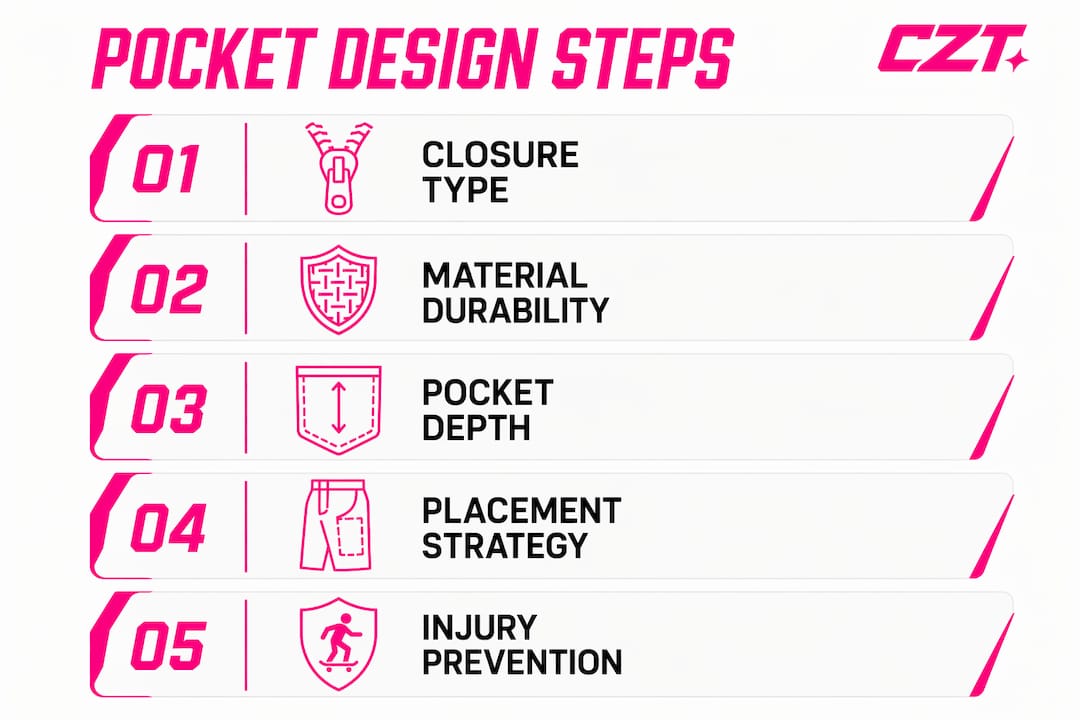
The safety dimension of pocket design is the one most skaters never think about until they get hurt. Pocket reinforcement is not only about preventing tears. It is a key safety feature that stops hard objects inside pockets from causing injury during falls.
Separating hard tools from soft items
Hidden stash pockets that isolate skate tools from softer items like phones prevent bruising during tricks. A skate tool is a metal object with corners. When it shares pocket space with your thigh during a slam, the result is a deep bruise or worse. Pro-grade skate apparel addresses this with dedicated internal compartments that keep hard and soft items physically separated.
“Pocket reinforcement isn’t only to prevent tears. It is a key safety feature preventing hard objects inside pockets from causing injury during falls. Skaters who overlook this detail often discover the cost of it mid-session, not in a gear review.”
This separation principle also applies to keys. A single house key rattling loose in a deep pocket becomes a puncture risk during a hard fall. Organized internal pockets eliminate that variable entirely.
Preventing distraction and maintaining focus
Reliable pocket security enables uninterrupted performance and improves the overall skating experience. The mental cost of worrying about loose items is real. Every second a skater spends thinking about whether their phone is still in their pocket is a second of focus pulled away from the trick at hand. Well-designed pockets remove that cognitive load entirely.
The safety benefits of thoughtful pocket construction include:
- Separated internal compartments that isolate hard tools from soft items
- Secure closures that prevent items from becoming projectiles during falls
- Reinforced pocket walls that absorb impact rather than transferring it to the body
- Reduced bruising risk from hard objects pressing against the leg during slams
- Better mental focus because valuables are genuinely secure, not just probably secure
Choosing durable fashion pieces with these safety features built in is a decision that pays off across an entire season of skating, not just the first session.
Does pocket placement affect mobility and trick execution?
Pocket placement is the design variable that most directly affects how freely a skater can move. A pocket in the wrong position does not just feel awkward. It physically restricts the range of motion needed for clean trick execution.
How strategic placement preserves range of motion
Loose-fitting pants with pockets positioned for mobility enable unhindered execution of complex tricks like ollies and kickflips. The key principle is that pockets must not create pressure points or fabric bunching at the hip flexor, knee, or thigh during deep crouches and explosive upward movements. Back pockets positioned higher on the seat avoid interference during grinding tricks, where the rear of the pants contacts the rail or ledge.
Here is how to evaluate pocket placement before buying skate pants:
- Crouch fully in the fitting room or at home. The pocket mouth should not pull open or create tension across the thigh.
- Simulate a kickflip stance by lifting one knee sharply. Pocket seams should not dig into the hip or restrict the lift.
- Check back pocket height. Pockets sitting too low on the seat will drag across ledges and rails during grinds, wearing through quickly.
- Test side pocket depth by placing your hand flat inside. Your palm should disappear completely without the pocket pulling the fabric sideways.
- Assess cargo pocket positioning. Side cargo pockets should sit mid-thigh or higher, never at the knee, where they interfere with leg articulation.
Pro Tip: Avoid pants where the pocket opening faces forward at an angle. Angled pocket openings create a gap that widens during movement, making item loss far more likely during technical skating.
Skate apparel layering also interacts with pocket placement. When you layer skate apparel for cold sessions, outer layer pockets need to align with inner layer pockets so access stays fast and natural. Misaligned pockets across layers create fumbling moments that break session flow.
How do pockets contribute to style and personalization in skate culture?
Pockets in skatewear carry cultural weight that goes well beyond their utilitarian function. The pocket is a canvas, a surface that skate culture has claimed as a site for self-expression since the earliest days of street skating.
Patches at pockets and knees protect against wear while simultaneously supporting personalization. A patch over a pocket corner is both structural repair and visual statement. It signals that the garment has been lived in, that the skater has put real sessions into it. That authenticity is the currency of skate culture, and pocket design sits right at the center of it.
The aesthetic dimension of pocket design in current skatewear includes several distinct directions:
- Embroidered pocket edges that add visual texture without adding bulk
- Contrast-color pocket lining visible when the pocket is open, creating a subtle detail
- Oversized utility pockets that reference workwear and military aesthetics
- Minimalist hidden pockets that preserve a clean silhouette while maintaining function
- Patch-ready pocket surfaces designed to accept iron-on or sewn reinforcements
The table below shows how different pocket styles balance aesthetic appeal against performance needs:
| Pocket style | Aesthetic appeal | Performance benefit |
|---|---|---|
| Zippered cargo | Utilitarian, workwear-influenced | Maximum security for hard tools |
| Hidden stash pocket | Clean silhouette, minimal visual noise | Separates hard items from soft items |
| Patch-reinforced pocket | Subcultural, personalized | Adds durability at high-wear corners |
| Contrast-lined open pocket | Subtle, artful detail | Easy access, lower security |
| Embroidered utility pocket | Graphic, expressive | Reinforced edges resist abrasion |
Czt’s approach to personalized streetwear treats pocket design as part of the overall composition of a garment, where every element carries both meaning and function. The Botanic Camo collection, built from recycled materials, carries this philosophy into pocket construction as well, using sustainable fabrics that hold reinforcement stitching without adding weight.
Key Takeaways
Pocket design in skate apparel is a performance and safety system, not decoration. Reinforced closures, strategic placement, and separated internal compartments together determine whether a skater can move freely, stay safe, and focus entirely on their craft.
| Point | Details |
|---|---|
| Closure type determines security | Zippered or buttoned pockets prevent item loss during complex tricks and falls. |
| Reinforced seams prevent injury | Bar-tacked stitching stops hard objects from breaking through and bruising the body. |
| Placement preserves mobility | Pockets positioned away from hip flexors and knee joints allow full range of motion. |
| Separated compartments reduce risk | Isolating hard tools from soft items prevents bruising and distraction during sessions. |
| Pockets carry cultural identity | Patch-ready and embroidered pocket surfaces support personalization within skate culture. |
What most skaters get wrong about pocket design
We have watched skaters obsess over deck shape, truck geometry, and wheel durometer while buying pants based entirely on how they look hanging on a rack. That disconnect costs them, sometimes in bruises, sometimes in lost gear, sometimes in a bail that happened because their focus split at the wrong moment.
The detail that most people overlook is the internal separation principle. Casual skaters rarely think about it until a skate tool corner leaves a mark on their thigh after a slam. At Czt, we started paying close attention to this after seeing how pro-grade apparel handled it differently from standard streetwear. The dedicated stash pocket is not a luxury feature. It is the difference between a garment that works as a system and one that just looks the part.
The emerging trend we find genuinely exciting is the integration of material innovation into pocket construction. Recycled technical fabrics now offer abrasion resistance comparable to traditional canvas at a fraction of the environmental cost. That means pocket walls can be both durable and ethically sourced, which matters to the skaters we design for.
Our honest advice: treat pocket design as a primary buying criterion, not a secondary one. Ask whether the pockets close securely. Ask whether hard items are separated from soft ones. Ask whether the placement lets you crouch and kick without restriction. Those three questions will tell you more about a garment’s real performance value than any marketing language ever will.
— Czt
Czt’s approach to functional pocket design in skatewear
Czt builds skate apparel where pocket design is part of the performance architecture from the first sketch. Every piece in the collection addresses the core question of how pockets enhance performance by combining reinforced construction, secure closures, and placement that respects the full range of skating movement.
The Botanic Camo collection uses recycled materials that hold reinforcement stitching with the same integrity as virgin canvas, so sustainability and durability coexist without compromise. Czt’s custom couture design service also lets skaters specify pocket placement, closure type, and lining material, making it possible to build a garment that fits both your skating style and your personal aesthetic. Visit Czt’s full collection to explore skate apparel where every pocket earns its place.
FAQ
What makes a skate pocket different from a regular pocket?
Skate pockets use reinforced seams, secure closures like zippers or buttons, and deeper construction to withstand the physical demands of skating. Standard garment pockets lack the bar-tacking and abrasion-resistant materials that skate-specific design requires.
Do pockets affect skate performance directly?
Yes. Unsecured items shift weight and create distraction during tricks, while poorly placed pockets restrict hip and leg movement. Secure, well-positioned pockets let skaters maintain full focus and range of motion.
Why are internal separated pockets important for safety?
Separated internal pockets isolate hard tools like skate tools and keys from soft items like phones, preventing hard object corners from bruising the body during falls. This is a safety feature, not a convenience feature.
Where should pockets sit on skate pants for best mobility?
Side pockets should sit at or above mid-thigh, and back pockets should sit higher on the seat to avoid contact with rails and ledges during grinds. Pocket placement that avoids the hip flexor zone preserves the full range of motion needed for technical tricks.
Can pocket design support personalization in skate culture?
Patch-ready pocket surfaces and embroidered pocket edges are established methods for personalizing skate apparel. Patches at pocket corners add both structural reinforcement and subcultural identity to a garment.
Recommended
- Skate Apparel Layering Techniques That Actually Work – CZT [CITI-ZEN-THEORY]
- Moisture Wicking Skate Shirts: 9 Performance Benefits – CZT [CITI-ZEN-THEORY]
- Layer Streetwear for Cold Weather Skating in Style – CZT [CITI-ZEN-THEORY]
- Top 4 Funk Machine Skateboards Alternatives 2026 – CZT [CITI-ZEN-THEORY]