![CZT [CITI-ZEN-THEORY]](http://czt.rocks/cdn/shop/files/CZT_-_Brand_PINK_Label_1_330x.png?v=1774104725)
![CZT [CITI-ZEN-THEORY]](http://czt.rocks/cdn/shop/t/61/assets/CZT-Fast-Logo---Blue-Grey_330x.png?v=98224836737033641471695502660)
![CZT [CITI-ZEN-THEORY]](http://czt.rocks/cdn/shop/files/CZT_-_Brand_PINK_Label_1_170x.png?v=1774104725)
![CZT [CITI-ZEN-THEORY]](http://czt.rocks/cdn/shop/t/61/assets/CZT-Fast-Logo---Blue-Grey_170x.png?v=98224836737033641471695502660)
What Does Moisture-Wicking Mean for Skate Gear?
Moisture-wicking is defined as a fabric’s engineered ability to transport sweat away from your skin to the garment’s outer surface, where it evaporates quickly, keeping you dry and composed through every session. Understanding what does moisture-wicking mean in skate gear separates the skaters who stay locked in from those who tap out early because their soaked cotton tee is dragging them down. The mechanism behind this is capillary action, the same physics that pulls water up a paper towel, engineered directly into synthetic fibers like polyester. Branded technologies such as Nike Dri-FIT and Under Armour HeatGear are built on this same capillary principle, differing only in fiber engineering and finishing. The AATCC TM217-2025 standard now tests both vertical and horizontal liquid moisture movement to simulate real wear conditions, which matters deeply for skate apparel that faces pressure, gravity, and relentless sweat.
What does moisture-wicking mean in skate gear: the science explained
Wicking is physics, not marketing. Synthetic fibers like polyester are hydrophobic, meaning they repel water at the fiber core, which forces sweat to travel along the fiber’s outer surface through micro-channels rather than soaking in. Cotton, by contrast, is hydrophilic: it absorbs moisture internally, swells, and holds it against your skin until the fabric is saturated. That is why a cotton tee feels like a wet compress after twenty minutes of hard skating, while a well-engineered polyester shirt stays relatively dry.
Fiber geometry amplifies this effect considerably. Multilobal fiber cross-sections, shaped like stars or grooved channels rather than simple circles, multiply the capillary pathways available for sweat transport. The same engineering principle applied to hockey sock fabrics translates directly to skate apparel: more channels mean faster, more efficient moisture movement across the garment’s surface. This is why two polyester shirts at different price points can feel dramatically different during a session.
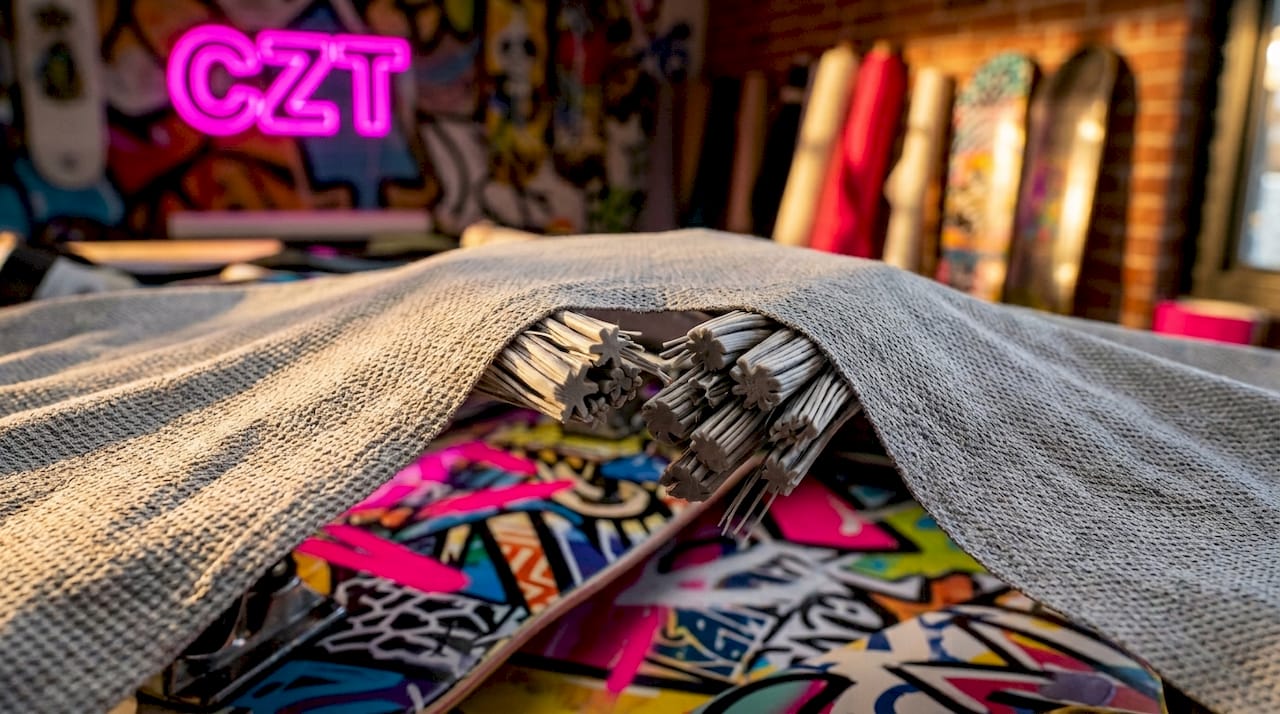
Fabric construction also plays a defining role. A loosely knit, open-weave structure allows air to move through the garment, accelerating evaporation once sweat reaches the outer surface. A dense, tightly woven fabric may wick adequately but trap heat, creating a different kind of discomfort. The AATCC TM217-2025 standard tests both vertical and lateral moisture movement to reflect actual sweat migration patterns during physical activity, recognizing that skating generates pressure from all directions, not just gravity.
| Fabric type | Moisture behavior | Drying speed | Skate suitability |
|---|---|---|---|
| Polyester | Wicks via capillary action | Fast | Excellent |
| Nylon | Wicks, slightly more absorbent | Fast | Very good |
| Cotton | Absorbs internally | Slow | Poor for active use |
| Polyester-spandex blend | Wicks with stretch | Fast | Excellent |
| Merino wool | Absorbs but manages odor | Moderate | Situational |
Pro Tip: Run a simple water-drop test before buying: place a drop of water on the fabric’s inner surface. If it spreads outward within seconds, the wicking is active. If it beads or soaks slowly, the fabric will hold sweat against your skin.
Moisture-wicking versus quick-drying: what’s the difference for skate apparel
These two terms appear side by side on every performance gear tag, yet they describe distinct processes. Wicking moves sweat from your skin to the fabric’s outer surface. Quick-dry describes how fast that moisture then evaporates from the surface into the air. A fabric can wick efficiently but dry slowly if the ambient humidity is high or airflow is limited. Conversely, a fabric can dry fast once wet but fail to pull sweat away from skin in the first place.
The best skate gear combines both functions. Marketing frequently conflates the two terms, labeling fabrics “quick-dry” when they only dry fast after full saturation, not while you are actively sweating. That distinction matters when you are mid-session on a humid summer afternoon and your shirt is already damp. A fabric that wicks actively keeps the moisture moving; one that only dries fast just waits for you to stop sweating.
External conditions impose real limits on both properties. Humidity, airflow, and layering all affect how well evaporation occurs after wicking. On a still, humid day, even the best polyester shirt will feel damper than on a breezy, dry afternoon. This is not a fabric failure. It is physics. Understanding this helps you set realistic expectations and choose gear appropriate to your skating environment.
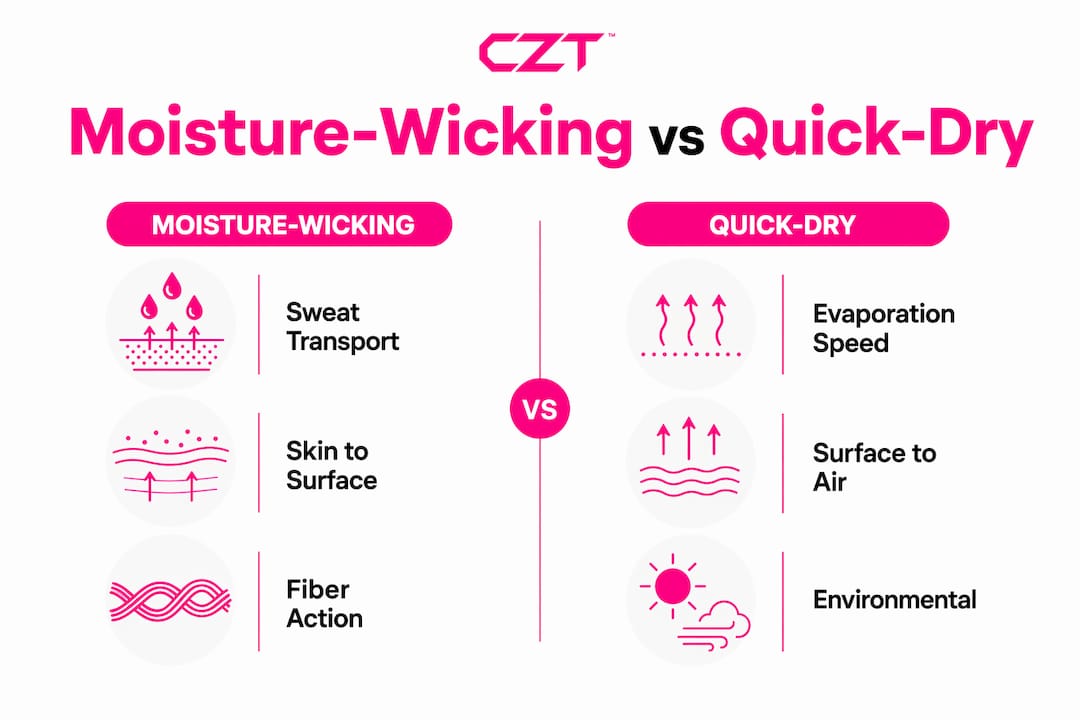
| Property | What it does | When it matters most | Limitation |
|---|---|---|---|
| Moisture-wicking | Transports sweat from skin to surface | During active sweating | Cannot overcome high humidity alone |
| Quick-dry | Evaporates moisture from fabric surface | After wicking or getting wet | Depends on airflow and ambient conditions |
| Both combined | Full moisture management cycle | Intense skating in variable weather | Layering and ventilation still affect results |
Pro Tip: When reading fabric labels, look for both “moisture-wicking” and “quick-dry” claims together. A shirt that only advertises one of the two will likely underperform during a long, sweaty session at the park.
Key fabric types and materials in moisture-wicking skate gear
Polyester is the dominant fiber in performance skate apparel, and for good reason. Its hydrophobic structure and engineered surface channels make it the most reliable wicking material available at scale. Nylon offers similar wicking behavior with slightly greater abrasion resistance, which can be useful in gear that contacts rough surfaces. Both fibers dry significantly faster than cotton and maintain their structure through repeated washing without losing wicking capability when the wicking is fiber-embedded rather than surface-applied.
Polyester-spandex blends have become the standard for performance skate clothing because they combine moisture transport with the stretch needed for trick execution. A four-way stretch polyester-spandex fabric moves with your body during kickflips and grinds while simultaneously managing sweat. Cotton-spandex blends offer stretch but sacrifice wicking entirely, leaving you with a fabric that clings and stays wet.
Surface treatments are where many budget garments cut corners. A fabric can receive a hydrophilic finish that temporarily improves wicking, but surface-applied finishes wash off with repeated laundering, often within twenty to thirty wash cycles. Fiber-engineered wicking, built into the polymer structure of the yarn itself, persists through the garment’s entire lifespan. This distinction is rarely explained on hang tags, which is why understanding it gives you a real purchasing advantage.
Here is a breakdown of common materials and their moisture management profiles:
- Polyester (fiber-engineered): Best overall wicking, fast drying, durable, widely available. The gold standard for skate tees and base layers.
- Nylon: Strong wicking, slightly heavier than polyester, excellent durability. Good for skate shorts and outerwear.
- Polyester-spandex blend: Wicking plus stretch. Ideal for fitted skate shirts and performance layers.
- Merino wool: Absorbs moisture but manages odor naturally. Suitable for cooler sessions but slower to dry.
- Cotton: Absorbs and retains moisture. Comfortable for casual wear but a liability during intense skating.
- Surface-treated synthetics: Initial wicking performance degrades with washing. Acceptable for light use, not for regular skate sessions.
How moisture-wicking impacts skate performance and comfort in real use
The most immediate benefit skaters notice is the absence of that clammy, dragging sensation that cotton creates after the first serious run. A well-wicking fabric keeps the microclimate between your skin and the garment relatively dry, which reduces friction, prevents hot spots, and lowers the risk of skin irritation during extended sessions. Blisters and chafing are not just discomforts. They interrupt your focus and cut sessions short.
Thermal regulation is a secondary but significant benefit. When sweat evaporates from the fabric surface rather than pooling against your skin, it carries heat away from your body more efficiently. This is the same principle behind athletic cooling towels, applied passively through your clothing. For skaters layering gear in transitional weather, a wicking base layer prevents the inner layer from becoming saturated and cold, which is the primary cause of that miserable, chilled-and-sweaty feeling after a hard run.
Effective moisture management does have limits in real-world skating conditions. Thick layered systems, poor ventilation in enclosed skate parks, and very high ambient humidity all reduce how much evaporation can occur. In those conditions, the wicking fabric still performs its core function of moving sweat away from skin, but the outer surface may remain damp. The CZT Full SK8 Trick List Performance Skate T-Shirt addresses this by using engineered synthetic construction that keeps the wicking cycle active even in demanding conditions.
Pro Tip: Avoid cotton base layers entirely when skating in warm weather. Even a thin cotton undershirt beneath a wicking outer layer will trap sweat against your skin and negate the outer fabric’s performance entirely.
Practical gear selection comes down to matching fabric to intensity:
- High-intensity street or park skating: Fiber-engineered polyester or polyester-spandex. No cotton.
- Casual cruising or mild weather: A quality polyester blend still outperforms cotton, but the stakes are lower.
- Layered cold-weather sessions: Wicking base layer in polyester or nylon, insulating mid-layer, breathable outer shell.
- Hot, humid environments: Prioritize open-knit construction and maximum airflow alongside wicking properties.
Key takeaways
Moisture-wicking skate gear works through fiber-engineered capillary action in synthetic materials, and choosing fabrics with embedded wicking over surface treatments is the single most important decision for lasting performance.
| Point | Details |
|---|---|
| Wicking is capillary action | Synthetic fibers like polyester move sweat along micro-channels to the outer surface for evaporation. |
| Wicking and quick-dry are distinct | Wicking transports sweat; quick-dry describes evaporation speed. Best gear combines both. |
| Fiber-embedded wicking lasts longer | Surface treatments wash off within dozens of cycles; engineered fiber wicking persists for the garment’s life. |
| Cotton is a liability for active skating | Cotton absorbs and holds moisture internally, increasing discomfort and skin irritation risk. |
| External conditions affect results | Humidity, layering, and airflow all limit evaporation even when wicking is functioning correctly. |
Why the fabric inside your gear matters more than the logo on it
We have spent years watching skaters obsess over deck graphics, truck brands, and colorways while pulling on a heavy cotton tee without a second thought. The irony is that the fabric touching your skin has more influence over your session quality than almost any other gear decision. When we started building the Czt collection, we made a deliberate choice to treat material science as a design element, not an afterthought.
The misconception we encounter most often in skate shops is that “athletic fabric” is a single category. It is not. There is a profound difference between a polyester shirt with a surface-applied wicking finish and one built from fiber-engineered yarns with genuine capillary architecture. The first feels fine in the store and disappoints within a season of washing. The second performs consistently through the life of the garment. We have seen skaters dismiss wicking fabrics entirely because a cheap surface-treated shirt failed them, not realizing the technology itself was sound but the execution was not.
Fabric care also shapes longevity in ways most guides ignore. Fabric softeners coat fiber surfaces and actively degrade wicking performance by filling the micro-channels that transport sweat. Washing in cold water and air-drying preserves both the fiber structure and any remaining surface treatments. For gear you rely on session after session, that care routine is as important as the initial fabric choice.
Our conviction at Czt is that performance and ethics are not competing values. Recycled polyester, sourced responsibly and engineered with genuine capillary wicking, performs as well as virgin synthetic fiber while carrying a fraction of the environmental weight. That is the composition we build toward, because the culture we come from demands both authenticity and accountability.
— CZT
Gear built to keep you moving: explore Czt’s skate collection
Czt designs skate apparel where material performance and streetwear aesthetics share equal weight. The Full SK8 Trick List Performance Skate T-Shirt is built from engineered synthetic fabric with active moisture transport, constructed to stay dry through the kind of sessions that expose every weakness in lesser gear. The collection extends to the Full SK8 Trick List Bandana, a moisture-aware accessory that complements layered skate setups without sacrificing the subcultural aesthetic that defines the brand. Every piece in the Czt lineup is designed with recycled materials and a commitment to performance that does not compromise on craft. Explore the full collection at czt.rocks and find gear that works as hard as you do.
FAQ
What does moisture-wicking mean in skate gear?
Moisture-wicking means the fabric actively transports sweat away from your skin to the garment’s outer surface using capillary action, where it evaporates quickly. This keeps you drier and more comfortable during intense skating sessions compared to absorbent fabrics like cotton.
How does moisture-wicking work in synthetic fabrics?
Synthetic fibers like polyester use micro-channels on their surface to pull sweat outward through capillary action rather than absorbing it internally. Fiber cross-section geometry, including grooved or star-shaped profiles, increases the number of these channels and improves sweat transport speed.
Is moisture-wicking the same as quick-dry?
No. Wicking moves sweat from skin to fabric surface; quick-dry describes how fast that moisture then evaporates into the air. Most quality skate gear combines both properties, but they are separate functions that depend on different fabric characteristics and environmental conditions.
Why is cotton bad for skating in hot weather?
Cotton absorbs moisture internally and holds it against your skin, creating a clammy, heavy feeling that worsens as sweat accumulates. Cotton holds moisture longer than synthetic alternatives, increasing discomfort and the risk of skin irritation during extended sessions.
Does moisture-wicking wear off over time?
It depends on the fabric construction. Surface-applied wicking finishes degrade with repeated washing, often within a few dozen cycles. Fiber-engineered wicking built into the polymer structure of the yarn itself lasts for the full lifespan of the garment, making it the more reliable choice for regular skate use.