![CZT [CITI-ZEN-THEORY]](http://czt.rocks/cdn/shop/files/CZT_-_Brand_PINK_Label_1_330x.png?v=1774104725)
![CZT [CITI-ZEN-THEORY]](http://czt.rocks/cdn/shop/t/61/assets/CZT-Fast-Logo---Blue-Grey_330x.png?v=98224836737033641471695502660)
![CZT [CITI-ZEN-THEORY]](http://czt.rocks/cdn/shop/files/CZT_-_Brand_PINK_Label_1_170x.png?v=1774104725)
![CZT [CITI-ZEN-THEORY]](http://czt.rocks/cdn/shop/t/61/assets/CZT-Fast-Logo---Blue-Grey_170x.png?v=98224836737033641471695502660)
Moisture Wicking Skate Shirts: 9 Performance Benefits
Moisture-wicking skate shirts are defined as performance garments engineered to pull sweat away from your skin and disperse it across the fabric surface for rapid evaporation, keeping you dry and focused through every session. The benefits of moisture wicking skate shirts go far beyond simple comfort. They stabilize your skin’s microclimate, reduce drag and irritation, and support thermal regulation in ways that standard cotton shirts simply cannot match. Whether you are grinding rails at your local park or pushing through a three-hour session in summer heat, the fabric you wear directly shapes how long you last and how well you perform.
1. Benefits of moisture wicking skate shirts: the dual-stage science
Moisture-wicking fabric operates through a two-stage process: the fabric first pulls sweat away from your skin through capillary action, then spreads that moisture across a wider surface area so it evaporates quickly. This dual action is what keeps your skin dry rather than just moving wetness around. The result is a stable skin microclimate that reduces cling, drag, and the kind of irritation that breaks your concentration mid-trick.
Cotton, by contrast, absorbs moisture and holds it. When you are skating hard, that difference becomes physically noticeable within minutes. The wicking mechanism is not a marketing claim. It is a measurable, engineered property built into the fiber composition and weave of the fabric itself.
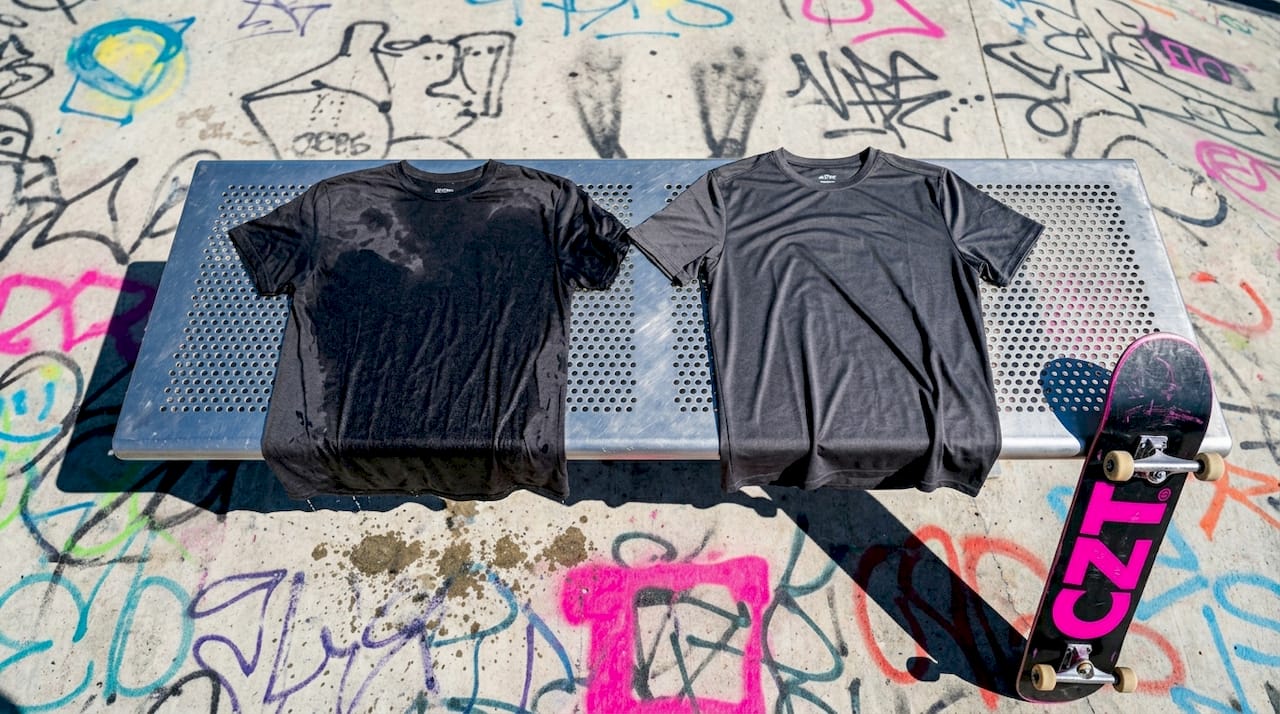
Pro Tip: Look for shirts labeled “quick-dry” alongside “moisture-wicking.” Wicking without breathability traps moisture inside the garment, negating the benefit entirely.
2. Cotton holds far more water than you realize
Cotton can hold up to 27 times its weight in water, which means a soaked cotton shirt becomes a heavy, restrictive second skin during a skate session. That added weight pulls at your shoulders, restricts arm movement, and creates a cold, clammy layer against your body when the temperature drops. Moisture-wicking fabrics, by design, hold a fraction of that moisture and release it into the air instead.
For skateboarders, this matters in a very practical way. A shirt that weighs you down mid-session is not just uncomfortable. It actively changes how your body moves and how long you stay out. Choosing performance fabric over cotton is one of the simplest upgrades you can make to your skate kit.
3. Reduced friction and chafing during repetitive movement
Dry skin experiences 60% less friction than damp skin during repetitive movement, largely because sweat carries salt and other irritants that abrade the skin surface when trapped against it. Moisture-wicking shirts remove those irritants continuously, keeping the skin surface clean and dry throughout your session. For skaters who spend hours repeating the same tricks, that reduction in friction translates directly to less skin irritation and more time on the board.
Chafing is a real performance limiter that most skaters underestimate until they have worn the right shirt. The difference between a dry, smooth fabric surface and a damp, salt-laden cotton shirt becomes obvious after the first hour. Skate shirt performance benefits in this area alone justify the switch.
4. Thermal regulation across weather conditions
“Proper garment breathability is critical alongside wicking for evaporation; both stages must function for true moisture management and thermal regulation. If the shirt traps moisture inside, it saturates and weighs down the wearer, negating wicking benefits.” — 2XU Performance Research
Moisture-wicking shirts regulate body temperature by continuously removing the warm, humid layer of air trapped between your skin and the fabric. This process works in both heat and cold. In summer, it prevents overheating by releasing body heat through evaporation. In cooler conditions, it prevents the chilling effect of a sweat-soaked shirt clinging to your skin during rest periods between runs.
Skaters who session across different environments, from sun-baked concrete plazas to shaded indoor parks, benefit from this thermal adaptability in ways that a single-layer cotton shirt cannot provide. The advantages of skate apparel built around moisture control extend across the full range of conditions you actually skate in.
5. Odor and bacteria control through sweat management
Moisture-wicking apparel reduces bacteria growth by limiting sweat retention on the fabric surface, which directly addresses odor and skin irritation during long sessions. Bacteria thrive in warm, damp environments. A shirt that stays dry removes the conditions bacteria need to multiply. This is not just a hygiene benefit. It extends the wearable life of the shirt between washes and keeps you comfortable during back-to-back sessions.
Some advanced moisture-wicking shirts incorporate antibacterial finishes that work alongside the wicking mechanism. Brands building skate shirts with antibacterial features address both the moisture and the microbial side of sweat management simultaneously. For skaters who session daily or wear their shirts for extended periods, this combination is a meaningful upgrade.
6. Fabric construction and fiber types that define performance
Biomechanical studies confirm that fiber composition and the orientation of fabric layers significantly influence moisture and heat transfer in sportswear. A bamboo viscose outer layer paired with a micro-polyester inner layer, for example, balances moisture vapor permeability with insulation in a way that neither material achieves alone. Layer orientation is not a minor detail. Swapping which side faces the skin changes the entire thermal and moisture performance of the garment.
The three fiber types most relevant to skate shirts are polyester blends, bamboo viscose, and micro-modal. Each brings a different balance of wicking speed, softness, and durability. Polyester blends wick fastest and dry quickest. Bamboo viscose offers natural antibacterial properties and a softer hand feel. Micro-modal sits between the two, offering comfort with reasonable moisture transport.
Pro Tip: When reading a shirt’s fabric label, prioritize shirts where polyester or micro-modal appears first in the blend. The dominant fiber determines the primary performance characteristic.
Fabric weave structure also plays a decisive role, with twill weaves enabling more efficient vertical moisture transport than plain weaves. This means the physical construction of the fabric, not just its fiber content, determines how well it moves sweat from your skin to the air. Moisture management is a system, not a single property.
7. Directional wicking and emerging textile technologies
Advanced textiles now feature unidirectional moisture transport using hydrophilic and hydrophobic layers engineered to drive sweat outward while releasing antibacterial agents. This “liquid diode” effect prevents sweat from lingering at the skin surface, which standard wicking fabrics cannot fully achieve. The technology requires precise fiber architecture, but it represents the direction high-performance skate apparel is moving.
For skaters who want the most from their gear, understanding that not all moisture-wicking shirts are built the same is the first step. A shirt using Janus electrospun textile technology performs measurably differently from a basic polyester blend. The gap between entry-level and performance-grade moisture control in skatewear is wider than most people expect.
8. How moisture control shapes your focus and endurance
Capillary action moves moisture off the skin for fast evaporation, supporting breathable temperature regulation and odor reduction during physical activity. The practical effect for skaters is reduced mid-session distraction. When your shirt is not clinging, chafing, or overheating you, your attention stays on the trick, the line, or the competition run. That cognitive clarity is a real performance variable.
Endurance also improves when your body is not working to compensate for thermal discomfort. Overheating accelerates fatigue. A shirt that keeps your skin microclimate stable lets you session longer before your body starts signaling that it needs a break. The benefits of athletic skate shirts built around moisture control compound over the length of a session in ways that are hard to quantify but easy to feel.
9. How to choose the right moisture-wicking skate shirt
Selecting the right shirt comes down to matching fabric technology to your skating environment and session length. Here is what to prioritize:
- Fiber blend: Polyester-dominant blends for maximum wicking speed; bamboo viscose blends for natural odor resistance and softness
- Weave structure: Twill or knit constructions over plain weaves for better vertical moisture transport
- Fit and mobility: A shirt that restricts arm movement limits vapor flow at the underarm, one of the highest sweat zones on the body
- Antibacterial finish: Look for shirts that combine wicking with an antibacterial treatment, especially for daily wear
- Care instructions: Fabric softeners coat fibers and reduce wicking performance over time. Wash in cold water without softener to preserve the fabric’s moisture transport properties
- Sustainability: Recycled polyester blends offer comparable wicking performance to virgin polyester with a significantly lower environmental footprint, a consideration that matters if you care about where your gear comes from
You can also explore layering techniques for activewear to understand how fabric construction affects breathability when you add a layer over your skate shirt in cooler conditions.
Key takeaways
Moisture-wicking skate shirts outperform cotton in every measurable dimension of comfort, thermal regulation, and endurance by engineering sweat away from the skin rather than absorbing it.
| Point | Details |
|---|---|
| Dual-stage wicking mechanism | Fabric pulls sweat from skin and evaporates it across a wider surface to maintain a dry microclimate. |
| Cotton’s critical limitation | Cotton holds up to 27 times its weight in water, making it heavy and restrictive during active skating. |
| Friction and chafing reduction | Dry skin experiences 60% less friction, allowing longer sessions without skin irritation. |
| Fabric construction matters | Twill weaves and bi-layer fiber orientation determine moisture transport performance, not just fiber type alone. |
| Odor and bacteria control | Limiting sweat retention reduces bacterial growth, extending wearable life and comfort across back-to-back sessions. |
What we have learned wearing these shirts on the board
We have been building skate apparel long enough to know that the conversation around fabric usually gets reduced to “is it comfortable?” That question misses the deeper point. Comfort during a skate session is not a passive state. It is the absence of friction, heat, and distraction, all of which moisture-wicking fabric actively manages rather than simply tolerating.
The skaters we design for are not casual wearers. They are out there for hours, in heat, in concrete parks with no shade, pushing through sessions that demand full physical and mental engagement. We have watched people cut sessions short because their cotton shirt was soaked and cold, or because chafing made movement painful. That is not a minor inconvenience. It is a barrier between a skater and their craft.
What we find, consistently, is that skaters who switch to performance-grade moisture-wicking shirts do not go back. The difference is not subtle after the first real session in summer heat. The shirt stays light, the skin stays dry, and the focus stays on the skating. That is the whole point of getting the fabric right.
We also believe that performance and sustainability are not opposing values. Recycled polyester blends perform at the same level as virgin polyester for moisture transport, and they carry a smaller environmental cost. For a culture built on creativity and independence, choosing gear that reflects those values feels like the natural extension of the ethos.
— CZT
Gear built for the way you actually skate
Czt designs performance skate shirts that take moisture management seriously, using technical fabric construction and recycled materials to deliver comfort that holds up across full sessions. The SK8 Trick List Performance Tee combines moisture-wicking properties with antibacterial features and a fit built for movement, not just aesthetics.
If you are upgrading your skate kit with gear that performs as hard as you do, Czt’s range of skate performance shirts and athletic apparel is built around the same principles covered in this article: dry skin, sustained comfort, and fabric that earns its place in your session.
FAQ
What makes moisture-wicking fabric different from regular cotton?
Moisture-wicking fabric pulls sweat away from the skin and disperses it for rapid evaporation, while cotton absorbs and holds moisture. Cotton can hold up to 27 times its weight in water, making it heavy and restrictive during active skating.
Do moisture-wicking skate shirts actually reduce odor?
Yes. By limiting sweat retention on the fabric surface, moisture-wicking shirts reduce the warm, damp conditions that bacteria need to grow, which directly reduces odor during and after sessions.
What fabric is best for a moisture-wicking skate shirt?
Polyester blends wick fastest and dry quickest, making them the top choice for high-intensity skating. Bamboo viscose blends offer natural antibacterial properties and a softer feel for skaters who prioritize comfort alongside performance.
Does washing affect moisture-wicking performance?
Yes. Fabric softeners coat the fibers and reduce wicking efficiency over time. Washing in cold water without softener preserves the fabric’s moisture transport properties and extends the shirt’s performance life.
Are recycled fabric moisture-wicking shirts as effective as standard ones?
Recycled polyester blends perform comparably to virgin polyester for moisture transport and wicking speed, making them a practical choice for skaters who want performance gear with a lower environmental impact.