![CZT [CITI-ZEN-THEORY]](http://czt.rocks/cdn/shop/files/CZT_-_Brand_PINK_Label_1_330x.png?v=1774104725)
![CZT [CITI-ZEN-THEORY]](http://czt.rocks/cdn/shop/t/61/assets/CZT-Fast-Logo---Blue-Grey_330x.png?v=98224836737033641471695502660)
![CZT [CITI-ZEN-THEORY]](http://czt.rocks/cdn/shop/files/CZT_-_Brand_PINK_Label_1_170x.png?v=1774104725)
![CZT [CITI-ZEN-THEORY]](http://czt.rocks/cdn/shop/t/61/assets/CZT-Fast-Logo---Blue-Grey_170x.png?v=98224836737033641471695502660)
Reduce Textile Waste With a Wardrobe Overhaul in 2026
A wardrobe overhaul that genuinely reduces textile waste is not a purge. It is a deliberate, almost meditative reckoning with every piece you own, asking not “does this spark joy?” but “how many more times will I actually wear this?” The Global Fashion Agenda reports that 92 million tons of textile waste is produced globally every year, a figure that places the fashion industry among the most environmentally costly on earth. The path forward is clear, even if it asks more of us than a single Saturday afternoon.
Here is the core of it:
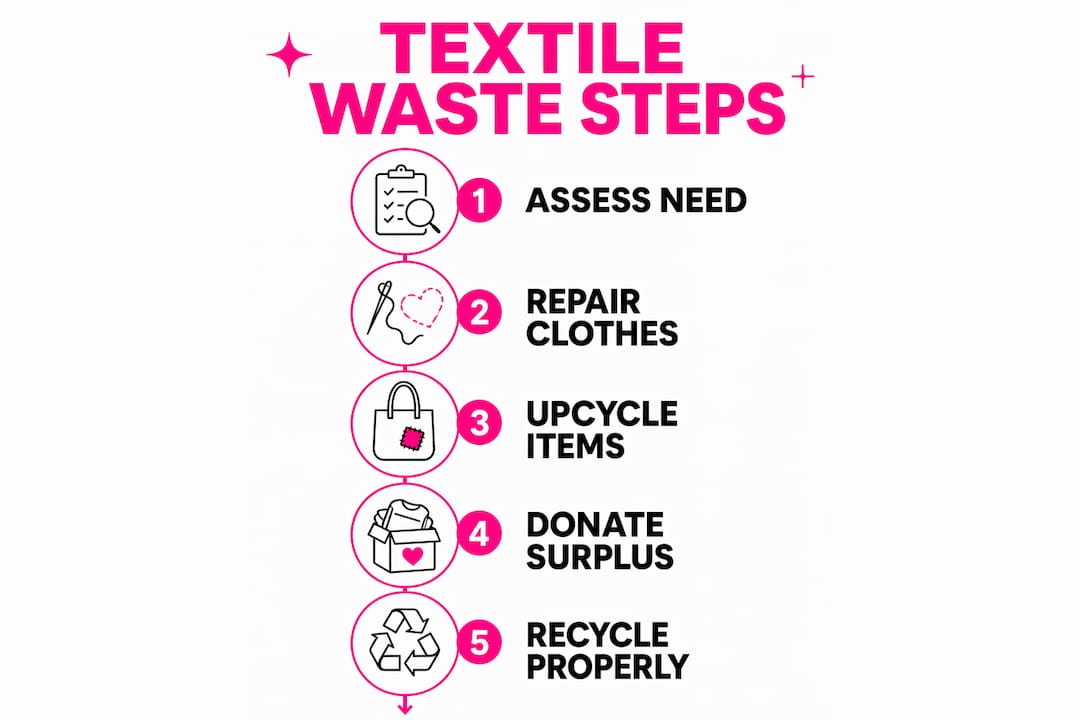
- Audit your closet by sorting everything into keep, repair, donate, or recycle.
- Repair and upcycle before you consider replacing anything.
- Avoid fast fashion and impulsive purchases by planning with intention.
- Donate or recycle responsibly, rather than sending clothes to landfill.
- Support sustainable brands when you do replenish, choosing durability over trend.
1. How avoiding fast fashion and shopping smarter reduce textile waste
Fast fashion’s business model depends on you buying more than you need, faster than you can wear it. Clothing is manufactured with resource-intensive processes, treated with harmful dyes, and built to wear out quickly so you return to the store. The result is a wardrobe full of pieces worn once or twice before they disintegrate or fall out of trend.
Shopping smarter starts with a simple discipline: the two-week pause. Before committing to any purchase, wait two weeks. That cooling-off period cuts impulse buys dramatically, and most trend-driven pieces lose their appeal within that window. If you still want the item after two weeks, it probably has a place in your life.
- Check certifications like GOTS (Global Organic Textile Standard) and Fair Trade before trusting a brand’s sustainability claims.
- Buy secondhand first. Thrift stores, vintage shops, and resale apps keep clothing in circulation and out of landfills.
- Choose timeless over trendy. A well-cut linen shirt worn for a decade outperforms five fast-fashion versions worn twice each.
- Read the label. Natural fiber content matters, but blends with synthetics reduce recyclability, so look for 100% natural where possible.
For special occasions where you want something new and trend-forward, consider renting or borrowing rather than buying. The garment stays in circulation, and you avoid the guilt of a single-wear purchase sitting in your closet for years.
Pro Tip: Build a short “wish list” of specific gaps in your wardrobe before you shop. Buying to fill a real need rather than a momentary impulse is the single most effective filter against waste.
2. How to repair, upcycle, and care for clothes to extend their life
Caring for garments can double or triple their wearable lifespan, which means the most sustainable thing in your closet is already there. Raw material production accounts for 43–50% of a garment’s total environmental footprint, so extending the life of what you already own has a greater impact than buying new “sustainable” pieces.
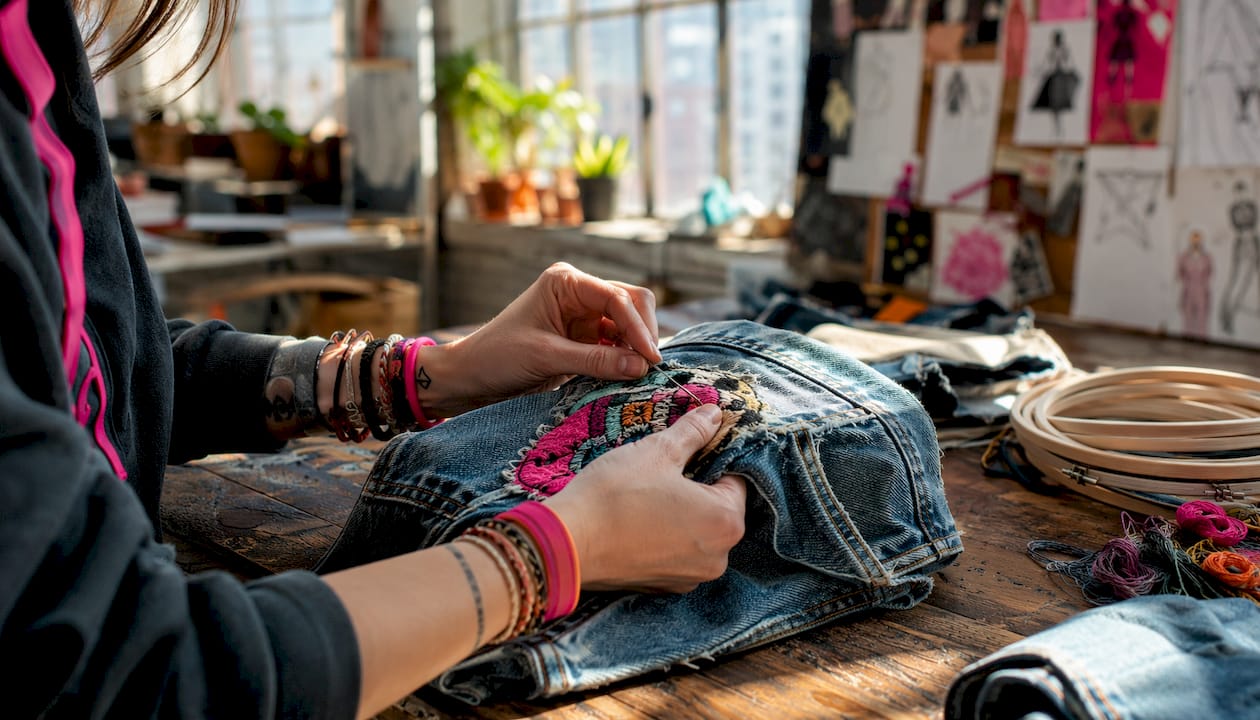
Basic mending is more accessible than most people assume. You do not need a sewing machine. A needle, thread, a few spare buttons, and an iron-on patch kit handle the majority of common repairs: loose buttons, fraying seams, small holes. Oregon State University’s textile expert Pokorny notes that mending can also become a form of personalization, using techniques like sashiko stitching or unique patches to make a piece distinctly yours.
- Wash less frequently and always on cold to prevent fading and fiber breakdown.
- Air dry instead of using a dryer on high heat, which accelerates fabric deterioration.
- Fold heavy knits rather than hanging them to prevent stretching.
- Assemble a mending kit with needles, thread in neutral colors, spare buttons, and iron-on patches.
- Explore upcycling by transforming worn jeans into shorts, or a faded tee into a tote bag, keeping textiles out of the waste stream entirely.
The upcycling process is also one of the most creatively satisfying parts of a wardrobe overhaul. There is something deeply resonant about taking a garment with history and giving it a second composition, a new aesthetic life that carries the weight of where it has been.
3. How to donate, recycle, and responsibly dispose of unwanted clothes
The instinct to donate is good. The execution, however, matters more than most people realize. Research shows that a large proportion of items donated to thrift stores are never sold, ending up in landfills, incinerators, or exported to developing countries where they become someone else’s waste problem. Donating carelessly is not a solution; it is a transfer of guilt.
Before anything leaves your closet, ask honestly whether it is in wearable condition. Clean, intact, and genuinely useful items belong in donation. Damaged pieces need a different path.
- Consignment shops are better suited for higher-quality items that are more likely to sell.
- Clothing swaps with friends or neighbors keep garments in circulation with zero carbon cost.
- Textile recycling programs at retailers and municipal drop-off points accept worn fabrics that cannot be donated.
- Online resale platforms give you control over where a piece lands and often return some of its value.
- Damaged textiles can be repurposed as cleaning rags, stuffing, or craft material before they are discarded entirely.
For responsible recycling options specific to streetwear and performance fabrics, the process differs from standard cotton donation. Knowing where your specific garment type belongs keeps it out of the wrong waste stream.
4. How to choose sustainable and ethical brands when updating your wardrobe
Not every brand that uses the word “sustainable” has earned it. Greenwashing is pervasive, and the gap between marketing language and actual practice can be wide. The criteria that matter are transparency, durability, fair labor, and material integrity.
Certifications provide a starting point. GOTS verifies organic fiber standards and social criteria across the supply chain. Fair Trade certification addresses labor conditions. B Corp status signals broader environmental and social accountability. None of these are perfect, but they are verifiable in a way that a brand’s own marketing copy is not.
- Prioritize durability over novelty. A piece designed to last five years is more sustainable than one designed to last one season.
- Support local and small-scale makers where possible, reducing transport emissions and often improving labor accountability.
- Look for circular fashion programs, where brands take back their own garments for recycling or resale.
- Invest in fewer, better pieces with the explicit intention of wearing them for years, not months.
The sustainable shopping checklist approach, where you evaluate each potential purchase against a fixed set of criteria before buying, is one of the most practical tools for staying consistent. It removes the emotional heat of the moment and replaces it with a framework you built when you were thinking clearly.
5. Wardrobe minimization strategies and what the research actually says
The typical wardrobe now contains an average of 199 major pieces, with a substantial share of those items sitting unworn. That is not a style problem. It is a carbon one, because every garment carries an environmental footprint from fiber production through global transport, whether it is worn or not.
The research is unambiguous: sustainability depends not on how many clothes you own, but on how often you wear each one. The European Union has calculated minimum wear counts needed for different garment types to offset their carbon footprint: shirts need 40 wears, T-shirts 45, pants and dresses 70, jumpers and hoodies 85, and jackets and coats 100 wears. For most people, those numbers are far higher than expected.
Two practical frameworks help bring wardrobe size into alignment with actual wear patterns:
- The 3-3-3 rule: Wear 33 items for 3 months to build styling versatility and identify what you genuinely reach for.
- The 70/30 rule: Keep 70% of your wardrobe as versatile basics and 30% as statement pieces, reducing the risk of trend-driven obsolescence.
- Capsule wardrobe principles: A focused collection of 30–50 versatile pieces enables countless combinations while minimizing unnecessary purchases.
- Retaining over 50% of your existing wardrobe items during an overhaul is a good sustainability baseline, because the most eco-friendly garment is the one you already own.
Wear frequency multiplied by wardrobe volume determines your clothing’s real environmental cost. Owning 23 dresses and wearing one per week means it takes nearly 31 years to reach the 70-wear sustainability threshold for each.
Consumers typically wear only 20–30% of their total wardrobe. That gap between owned and worn is where most textile waste originates, long before a single garment reaches a donation bin.
Key Takeaways
A wardrobe overhaul that genuinely reduces textile waste requires wearing what you own more, repairing before replacing, and choosing quality over volume at every stage.
| Point | Details |
|---|---|
| Wear counts drive sustainability | Shirts need 40 wears, coats need 100 to offset their carbon footprint. |
| Repair extends garment life | Proper care and basic mending can double or triple a garment’s wearable lifespan. |
| Donation has limits | 80–90% of thrift store donations are never sold; consignment and swaps are more effective. |
| Capsule wardrobe reduces waste | A focused collection of 30–50 versatile pieces minimizes unnecessary purchases. |
| Cooling-off period cuts impulse buys | A two-week pause before purchasing prevents single-season trend acquisitions. |
The wardrobe as a living composition, not a collection
There is a tendency, especially among those newly awakened to the weight of fast fashion, to treat a wardrobe overhaul as an act of subtraction. Purge the excess, start clean, feel virtuous. We understand that impulse. But the research, and honestly our own experience building Czt from a deep reverence for craft and subcultural authenticity, tells a different story.
The most powerful shift is not in what you remove. It is in how you relate to what remains. A garment worn 100 times carries a kind of earned dignity that a garment worn twice never will. That coat you bought in 2019 and have worn through three winters is, by any honest environmental accounting, one of the most sustainable pieces you own, regardless of its fiber content or the brand’s certifications.
At Czt, we build from recycled materials not as a marketing gesture but because the culture we come from, the skate parks and street corners and graffiti-covered walls that shaped this brand’s aesthetic DNA, has always understood reuse as creativity. Upcycling is not a compromise. It is a composition. When you take something worn and give it new form, you are participating in the same creative act that defines streetwear at its most authentic.
The mistake most guides make is treating sustainability as a shopping problem, solved by buying better things. Buying better matters. But wearing more, mending with care, and building a wardrobe that reflects who you actually are rather than who you briefly wanted to be, that is where the real environmental leverage lives. Your closet is not a catalog. It is a record of choices, and every time you reach for something you already own, you are writing a better one.