![CZT [CITI-ZEN-THEORY]](http://czt.rocks/cdn/shop/files/CZT_-_Brand_PINK_Label_1_330x.png?v=1774104725)
![CZT [CITI-ZEN-THEORY]](http://czt.rocks/cdn/shop/t/61/assets/CZT-Fast-Logo---Blue-Grey_330x.png?v=98224836737033641471695502660)
![CZT [CITI-ZEN-THEORY]](http://czt.rocks/cdn/shop/files/CZT_-_Brand_PINK_Label_1_170x.png?v=1774104725)
![CZT [CITI-ZEN-THEORY]](http://czt.rocks/cdn/shop/t/61/assets/CZT-Fast-Logo---Blue-Grey_170x.png?v=98224836737033641471695502660)
What Does Post-Consumer Waste Mean in Apparel?
Post-consumer waste in apparel is defined as finished clothing, footwear, and textile accessories discarded by consumers after use, once those items have completed their intended lifecycle. This is the standard industry term, and it sits at the heart of every serious conversation about sustainable apparel practices. Understanding what post-consumer waste means in apparel matters because the scale is staggering. Europe alone generated 13.3 million tonnes of post-consumer textile waste in 2025, yet only about 1.5 million tonnes were collected and sorted for recycling. That gap between what gets discarded and what gets recovered is where the environmental crisis lives, and where the most urgent design and policy decisions are being made right now.
How is post-consumer apparel waste different from pre-consumer waste?
Post-consumer waste and pre-consumer waste share a name but almost nothing else. Pre-consumer waste comes from manufacturing: the fabric offcuts, thread trimmings, and rejected bolts that never reach a store shelf. Because these scraps come from a single material source and carry no contamination from use, they are far easier to sort and recycle into new fibers.
Post-consumer waste is a different composition entirely. A single donated hoodie might contain a cotton shell, a polyester lining, elastane ribbing, metal zippers, plastic buttons, and a chemical softener finish. Each of those components behaves differently in a recycling process. That heterogeneity is the defining challenge of post-consumer textile recycling, and it is why recycling rates remain so low despite growing collection infrastructure.
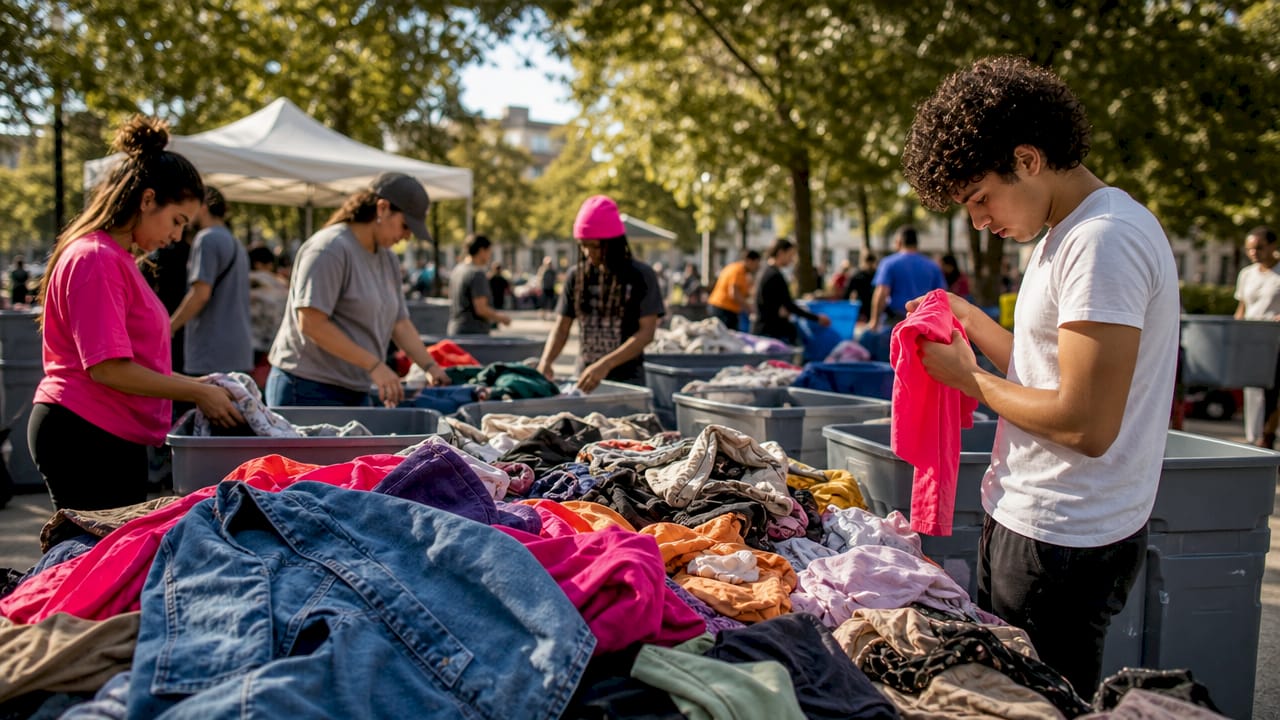
The recyclability gap between the two waste types also shows up in fiber quality. Pre-consumer scraps yield consistent, high-quality recycled fibers because the source material is uniform. Post-consumer garments, worn and washed repeatedly, carry degraded fiber length and mixed material profiles that reduce the quality of any recycled output.
| Characteristic | Pre-consumer waste | Post-consumer waste |
|---|---|---|
| Source | Factory scraps and offcuts | Garments discarded after consumer use |
| Material composition | Homogeneous, single-fiber | Heterogeneous, multi-fiber blends |
| Contamination level | Minimal | High (dyes, finishes, hardware) |
| Recycling difficulty | Lower | Significantly higher |
| Typical recycled output quality | High | Variable to low |
Pro Tip: When you buy apparel labeled “made from recycled content,” check whether the source is pre-consumer or post-consumer. Post-consumer recycled content is the harder and more meaningful achievement, and it signals a brand’s real commitment to closing the loop.
What environmental impact does post-consumer apparel waste have?
The textile industry contributes approximately 10% of global carbon dioxide emissions and 20% of industrial wastewater. Those numbers reflect production, but the waste stream compounds the damage. When garments reach landfill, synthetic fibers like polyester take hundreds of years to break down, leaching chemical dyes and finishing agents into soil and groundwater along the way.
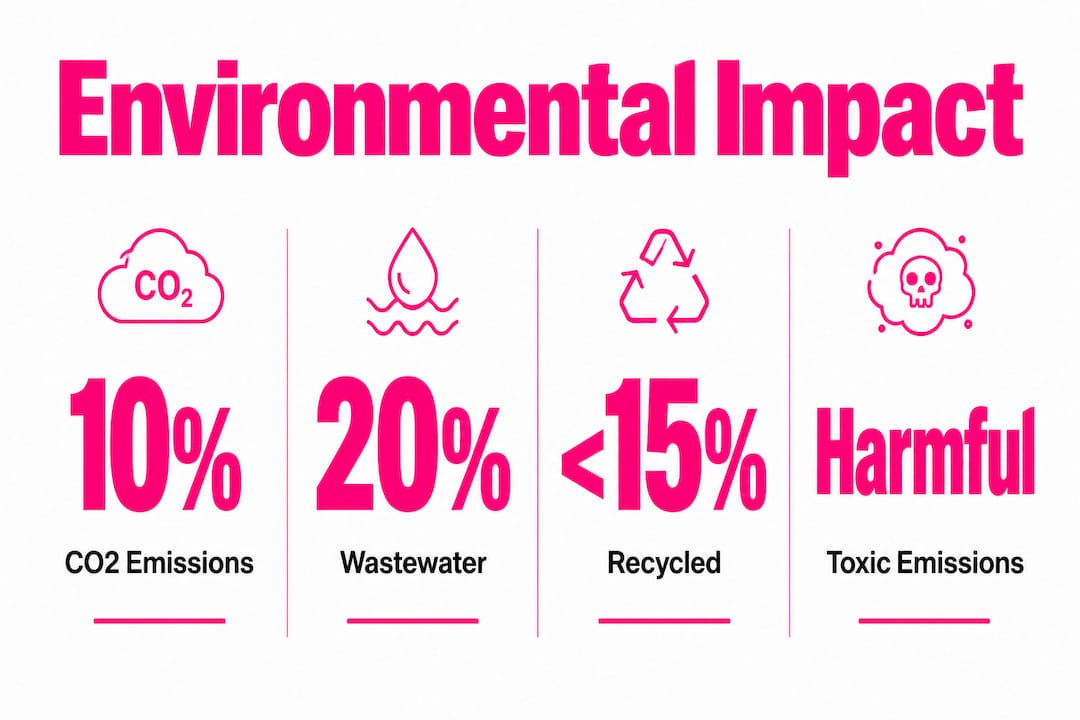
Incineration is the other common disposal route, and it is not a clean solution. Burning blended textiles releases toxic compounds, including those from flame retardants and synthetic dyes, into the atmosphere. The carbon embedded in producing a garment is lost entirely when that garment is burned rather than recycled.
The resource loss is equally significant. Cotton cultivation demands enormous quantities of water and land. Polyester production draws on petroleum. When a garment is landfilled or incinerated rather than recycled, every resource invested in making it disappears from the material economy permanently.
The broader ecosystem consequences include:
- Microplastic pollution: Synthetic textiles shed microplastic particles during washing and decomposition, entering waterways and food chains.
- Soil contamination: Chemical finishes and dyes from decomposing garments alter soil chemistry near landfill sites.
- Water system stress: Textile effluent from production, combined with leachate from textile landfill, stresses freshwater ecosystems.
- Carbon lock-in: Landfilling textiles locks in the embodied carbon of production with no recovery benefit.
What are the main recycling challenges for post-consumer apparel waste?
Sorting is the first and most stubborn obstacle. A garment arriving at a recycling facility carries no label that a machine can easily read to identify fiber content. Blended fabrics, which dominate modern streetwear and performance apparel, confound both manual and automated sorting. Automated sorting systems in Europe now achieve 95% fiber identification accuracy and process 40 items per second. Manual sorting averages 10 items per minute. That gap in throughput explains why automation is not optional for any serious recycling operation.
Once sorted, the choice of recycling method shapes what the recovered fiber can become. The two primary routes are mechanical and chemical recycling, and each carries real tradeoffs.
- Mechanical recycling shreds and re-spins fibers without chemical dissolution. It is cheaper and more widely available, but it degrades fiber length with every cycle, producing shorter, weaker fibers suited only for lower-value applications like insulation or industrial rags.
- Chemical recycling dissolves fibers back to their molecular building blocks, enabling fiber-to-fiber recycling that produces textile-grade output. The process is costly, energy-intensive, and requires pure, uncontaminated feedstock.
- Blended fiber contamination is the critical bottleneck for chemical recycling. Elastane blends, buttons, rivets, and chemical finishes make many post-consumer garments unrecyclable by current chemical processes without expensive pre-processing.
- Collection infrastructure gaps mean that even garments a consumer intends to recycle often end up in general waste. Inconsistent municipal collection programs and limited drop-off points reduce the volume of material that reaches sorting facilities at all.
- Economic viability remains fragile. Scaling sorting and pre-processing requires capital investment that is difficult to justify without guaranteed demand for recycled fiber. Without binding recycled content requirements, brands can simply buy virgin fiber at lower cost.
The consequence of these stacked barriers is that less than 15% of collected post-consumer textiles enter true fiber recycling streams. The majority is downcycled into mattress fill, industrial rags, or similar low-value products. Downcycling represents a material dead-end. It delays landfill by one product cycle but does not return fibers to the apparel supply chain.
Pro Tip: When you donate clothing, choose programs that explicitly state fiber-to-fiber recycling partnerships rather than general charity resale. Most resale-focused donation programs send a significant portion of collected garments to landfill or downcycling when items are unsellable.
How is the fashion industry advancing solutions for post-consumer waste recycling?
The most consequential shift happening right now is the move from voluntary brand commitments to binding policy. The EU’s Extended Producer Responsibility legislation places legal obligations on brands to fund and support textile collection and recycling infrastructure. EU Extended Producer Responsibility legislation drives demand for recycled content in ways that voluntary pledges never could, because it changes the economics for every brand operating in European markets.
Fashion for Good’s Project FAE is one of the most cited collaborative efforts to address the feedstock gap. The project aims to build pre-processing hubs that clean, sort, and prepare post-consumer garments to the quality standards that chemical recyclers require. Without those hubs, even the most advanced recycling technology sits idle for lack of suitable input material.
Several developments are reshaping the path toward closed-loop fashion at industrial scale:
- Binding recycled content targets in procurement and production requirements create guaranteed demand for post-consumer recycled fiber, making investment in sorting infrastructure financially rational.
- Regional sorting hubs concentrate collection volumes to the level needed for automated sorting to operate efficiently, reducing per-unit processing costs.
- Pre-processing standardization establishes quality specifications for post-consumer feedstock, giving chemical recyclers consistent input and reducing rejection rates.
- Cross-industry data sharing on garment composition, enabled by digital product passports, allows sorting systems to identify fiber content without physical testing.
Achieving a circular fashion economy by 2035 will require binding recycled content targets, coordinated infrastructure development, and expanded collection systems working together. No single intervention closes the loop alone. The feedstock gap, the sorting gap, and the demand gap are three separate problems that require three coordinated solutions.
Key Takeaways
Post-consumer waste in apparel is the defining material challenge of sustainable fashion, and solving it requires coordinated action across collection, sorting, recycling technology, and policy.
| Point | Details |
|---|---|
| Post-consumer waste defined | Finished garments discarded after consumer use, distinct from factory scrap pre-consumer waste. |
| Recycling rate is critically low | Only about 13% of post-consumer textiles are collected and sorted for recycling in Europe. |
| Blended fibers are the core barrier | Mixed materials and contaminants make most post-consumer garments incompatible with chemical recycling. |
| Policy drives investment | EU Extended Producer Responsibility legislation creates the demand signal needed to justify sorting infrastructure. |
| Downcycling is not circularity | Fiber-to-fiber recycling is the only route that returns post-consumer material to the apparel supply chain. |
Czt’s perspective on what the recycling conversation gets wrong
The conversation around textile recycling carries a persistent misconception that I find worth naming directly. Most people believe that donating a garment means it gets recycled. The reality is that donated clothing in unsellable condition is largely downcycled or landfilled, not returned to fiber. That gap between consumer intention and material outcome is where so much goodwill gets quietly lost.
At Czt, we think about this constantly. When we design pieces like the Botanic Camo collection using recycled materials, we are not just making a compositional choice. We are making a statement about what the full lifecycle of a garment should look like. The material decisions made at the design stage determine whether a garment can ever re-enter a recycling stream. A heavily blended, chemically finished piece is essentially designed for landfill, regardless of how responsibly its owner tries to dispose of it.
The technology is advancing faster than the infrastructure. Chemical recycling can now produce textile-grade fibers from post-consumer feedstock. Automated sorting can identify fiber composition at speeds no human sorter could match. What lags behind is the collection network, the pre-processing capacity, and the policy framework that makes investment in those systems financially rational. Consumers who understand this can make more informed choices, not just about what they buy, but about how they advocate for the systemic changes that actually move the needle.
The brands and consumers who grasp the full picture of post-consumer textile recycling are the ones who will shape what fashion looks like in 2035. That is not optimism for its own sake. It is a recognition that the culture of a movement determines its infrastructure, and the culture is shifting.
— Czt
Czt and the materials that matter
Czt was built on the conviction that streetwear and responsibility are not opposing forces. Every piece we create reflects a deliberate engagement with where materials come from and where they go.
If you want to go deeper on the materials behind your wardrobe, Czt’s guides on recycled fabric clothing and how to recycle old streetwear responsibly give you the practical knowledge to make every disposal decision count. You can also explore zero-waste fashion principles that align with the same values driving Czt’s design philosophy. The Botanic Camo collection and our custom couture services are where those values take physical form. Visit czt.rocks to see what sustainable streetwear looks like when it is built with intention from the first stitch.
FAQ
What does post-consumer waste mean in apparel?
Post-consumer waste in apparel refers to finished garments and textile accessories discarded by consumers after use, once they have completed their intended lifecycle. It is distinct from pre-consumer waste, which consists of manufacturing scraps that never reached a consumer.
How is post-consumer waste different from pre-consumer waste?
Pre-consumer waste comes from factory production and is relatively uniform and easy to recycle. Post-consumer waste is heterogeneous, containing mixed fibers, dyes, hardware, and chemical finishes that make recycling significantly more complex.
Why is so little post-consumer clothing actually recycled?
Less than 15% of collected post-consumer textiles enter true fiber recycling streams, because blended materials, contamination, and limited pre-processing infrastructure prevent most garments from meeting the input requirements of chemical recycling processes.
What is fiber-to-fiber recycling and why does it matter?
Fiber-to-fiber recycling dissolves or mechanically processes post-consumer textiles back into fibers suitable for new apparel production. It is the only recycling method that genuinely returns post-consumer material to the clothing supply chain rather than downcycling it into lower-value products.
How can I reduce my personal contribution to post-consumer textile waste?
Choose garments made from single-fiber or clearly labeled recycled materials, which are easier to recycle at end of life. Direct worn clothing to programs with explicit fiber-to-fiber recycling partnerships rather than general donation bins.
Recommended
- Recycled Fabric Clothing Explained for Eco-Conscious Style – CZT [CITI-ZEN-THEORY]
- Recycled Materials in Fashion: Benefits and Impact – CZT [CITI-ZEN-THEORY]
- Recycled Material Clothing Care Tips That Last – CZT [CITI-ZEN-THEORY]
- How to Recycle Old Streetwear Responsibly in 2026 – CZT [CITI-ZEN-THEORY]