![CZT [CITI-ZEN-THEORY]](http://czt.rocks/cdn/shop/files/CZT_-_Brand_PINK_Label_1_330x.png?v=1774104725)
![CZT [CITI-ZEN-THEORY]](http://czt.rocks/cdn/shop/t/61/assets/CZT-Fast-Logo---Blue-Grey_330x.png?v=98224836737033641471695502660)
![CZT [CITI-ZEN-THEORY]](http://czt.rocks/cdn/shop/files/CZT_-_Brand_PINK_Label_1_170x.png?v=1774104725)
![CZT [CITI-ZEN-THEORY]](http://czt.rocks/cdn/shop/t/61/assets/CZT-Fast-Logo---Blue-Grey_170x.png?v=98224836737033641471695502660)
How to Recycle Old Streetwear Responsibly in 2026
Responsible streetwear recycling is defined as donating wearable garments to verified charities and routing damaged or worn-out textiles through specialized recycling programs to keep them out of landfills. The culture we grew up in, skating concrete, layering graphics, wearing pieces until they told a story, demands that we treat those garments with the same intention we brought to wearing them. To recycle old streetwear responsibly, you need two things: a clear sorting system and the right programs, such as the Trashie Take Back Bag or verified charity thrift stores, to match each garment to its best end-of-life path. Getting this wrong means your favorite hoodie ends up in a landfill anyway, which defeats the entire purpose.
What determines if streetwear should be donated or recycled?
The hierarchy of disposal is the governing principle of responsible fashion recycling: wear it, repair it, donate it, then recycle it as a last resort. Recycling is energy-intensive and can release microplastics into the environment. Donation, by contrast, extends a garment’s life directly and generates zero processing emissions.
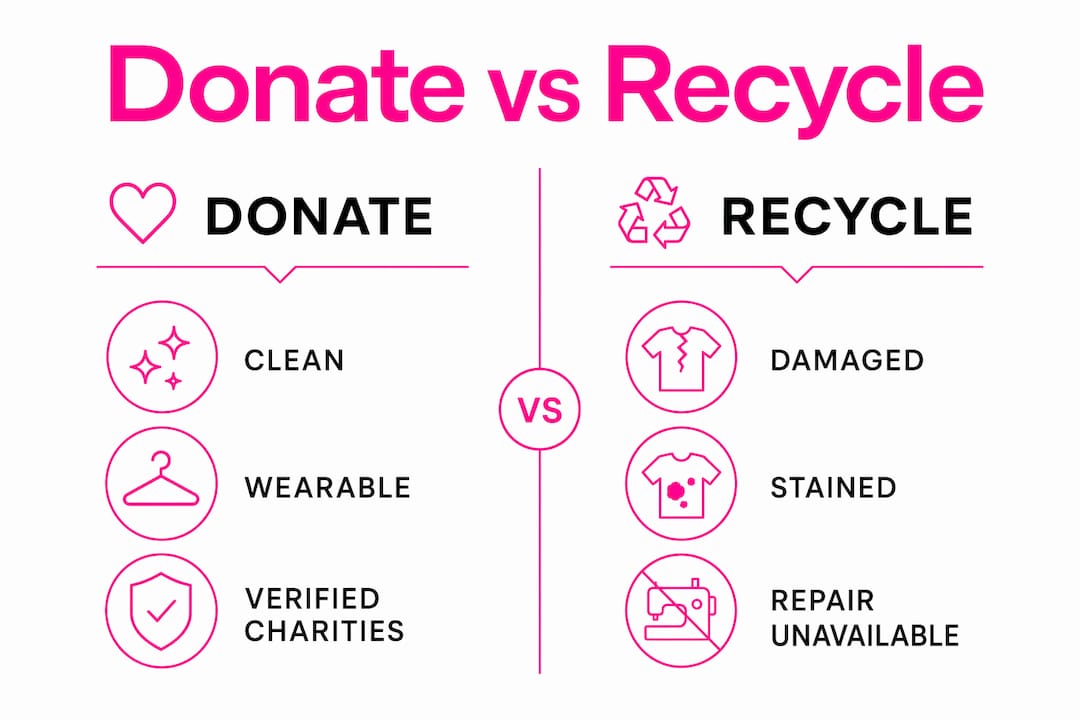
Donation is the right call when a piece is:
- Clean and free of persistent odors
- Structurally intact with no major tears or broken hardware
- Gently worn with no heavy staining across primary panels
- Still wearable by another person without alteration
Recycling becomes the correct path when a piece is stained beyond recovery, stretched out of shape, torn at seams, or degraded in ways that make it unwearable. Charity thrift stores primarily accept gently worn clothing. Heavily damaged or stained garments get disposed of at the charity’s cost, which means donating damaged pieces actually burdens the organizations you are trying to support.
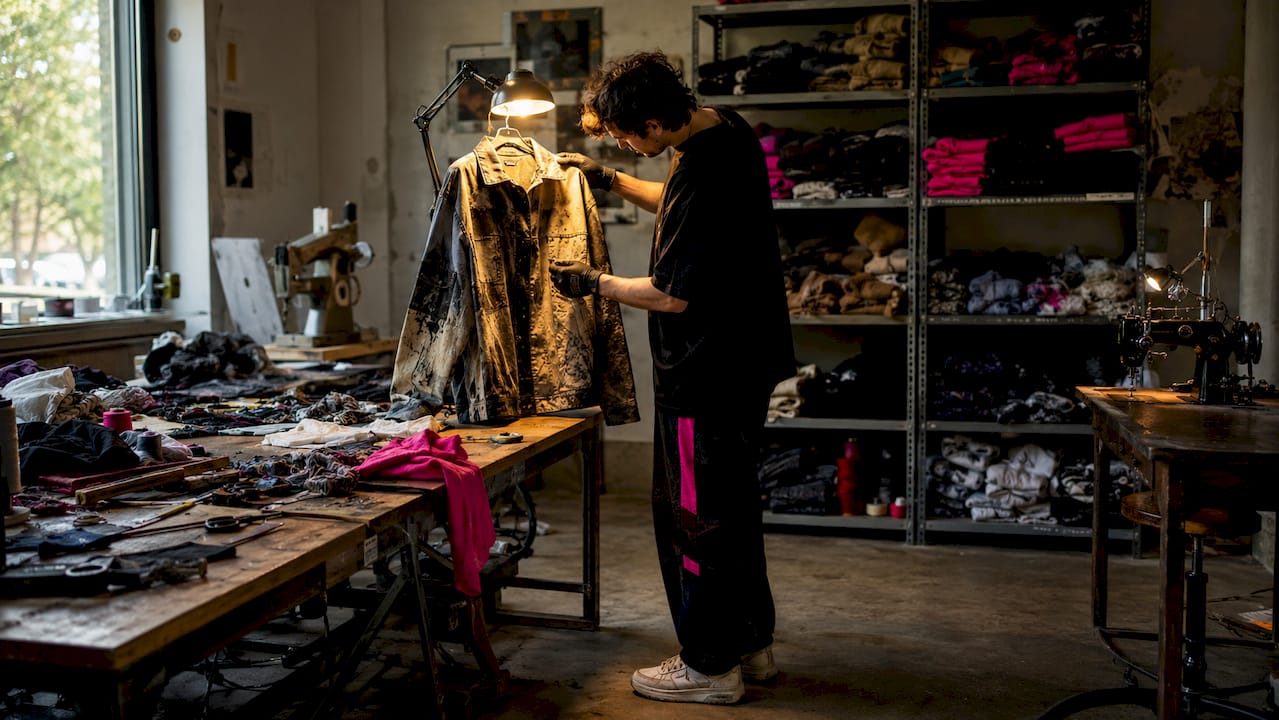
Before you move anything to the recycle pile, consider repair. Patching and visible mending techniques can revive streetwear and reduce demand for new production entirely. A ripped knee on a pair of cargo pants is not a death sentence. A well-placed patch, chosen for its aesthetic contrast, can transform a worn piece into something that feels intentional and alive again.
Pro Tip: Sort your streetwear into three physical piles before you do anything else: donate, repair, and recycle. Mixing categories is where most people lose time and send good pieces to the wrong destination.
What are the best recycling programs for old streetwear?
Mail-in textile recycling programs are the most accessible option for eco-friendly streetwear disposal, especially for pieces that no local drop-off will accept.
-
Trashie Take Back Bag. The Trashie Take Back Bag accepts up to 15 pounds of textiles in any condition, including denim, sweaters, shoes, and underwear, with prepaid shipping included. You fill the bag, drop it at a shipping location, and earn TrashieCash rewards redeemable at partner brands. This is the most frictionless option for recycling damaged streetwear at scale.
-
Retold Recycling. Retold operates a similar mail-in model, accepting mixed textiles and diverting them from landfill through sorting partnerships. It is a strong option for households with high-volume textile turnover.
-
Retail take-back programs. Brands including Patagonia and The North Face run in-store take-back initiatives for their own garments. These programs vary by location, so check directly with the retailer before making a trip.
-
Municipal textile recycling. Many cities now operate textile drop-off bins through waste management departments. These are free and require no packaging, though accepted materials vary by municipality.
| Option | Accepted items | Ease of use | Rewards or benefits |
|---|---|---|---|
| Trashie Take Back Bag | Any condition, up to 15 lbs | Very easy, prepaid shipping | TrashieCash at partner brands |
| Retold Recycling | Mixed textiles, any condition | Easy, mail-in | Landfill diversion confirmation |
| Retail take-back programs | Brand-specific garments | Moderate, in-store only | Varies by brand |
| Municipal textile bins | Clean textiles, varies by city | Easy, local drop-off | Free, no packaging needed |
One critical note on donation bins: many donation bins are operated by for-profit textile graders, not charities. These companies sort and resell or export clothing rather than distribute it to people in need. Always deliver directly to a verified 501©(3) charity or use a confirmed recycling program to ensure your pieces are handled responsibly.
Pro Tip: When using a mail-in service like Trashie, consolidate multiple rounds of sorting into one bag. Shipping one 15-pound bag is more efficient than sending three smaller packages across different weeks.
How to prepare and sort streetwear for donation and recycling
Preparation is where responsible textile disposal either succeeds or fails. Contamination from damp or moldy clothing can ruin entire recycling batches, forcing processors to send everything to landfill. One wet hoodie in a bag of otherwise recyclable textiles can negate the effort of every other piece in that batch.
Follow this sorting process before any drop-off or mailing:
-
Wash everything. Clean all garments before sorting. This applies to both donation and recycling. Odors and stains that might be acceptable to a recycler can still contaminate other items in transit.
-
Dry completely. Every piece must be bone dry before it goes into a bag or bin. Even slight moisture creates mold risk during shipping or storage.
-
Assess each piece individually. Hold each garment up and ask: Can another person wear this today? If yes, it goes to donation. If no, it goes to recycling.
-
Separate by destination. Use clearly labeled bags or bins. One for verified charity donation, one for mail-in recycling, one for items that need repair before a decision is made.
-
Remove non-textile components where possible. Metal buckles, thick rubber soles, and non-fabric accessories can complicate textile processing. Remove them if they detach easily.
Common mistakes to avoid:
- Sending damp or unwashed items to any program
- Donating heavily stained pieces to charity thrift stores, which lack recycling infrastructure and will discard them at their own cost
- Mixing shoes with delicate knits in a recycling bag without separation
- Assuming all donation bins serve charitable organizations
The sorting step takes twenty minutes for a full wardrobe clear-out. That twenty minutes determines whether your effort actually keeps textiles out of landfill or simply relocates the problem.
How does recycling affect streetwear fabrics, and what innovations are changing it?
Mechanical recycling is the dominant method for processing old textiles. It works by shredding garments into fiber, which is then re-spun into new yarn. The problem is that mechanical recycling shortens fiber length, which weakens the resulting fabric. A recycled-only cotton garment will feel noticeably softer and less durable than its virgin-fiber counterpart.
The solution gaining traction in sustainable streetwear is blending. Son of a Tailor’s Re-Spun capsule uses 50% recycled Supima cotton blended with virgin organic cotton. That blend preserves the durability and hand-feel of the garment while still diverting significant textile waste from landfill. This is the model that recycled fabric clothing in streetwear is moving toward.
Chemical recycling is the more promising long-term technology. It breaks fibers down to a molecular level and rebuilds them, preserving fiber length and quality. Chemical recycling is not yet widely available at consumer scale, but brands and researchers are investing in it heavily as the next phase of sustainable textile processing.
Microplastics are a real concern in this space. Synthetic streetwear fabrics, including polyester and nylon, shed microplastic particles during washing and recycling. Choosing natural fiber blends where possible, and using a microplastic-catching laundry bag for synthetics, reduces this impact meaningfully.
“The future of sustainable streetwear is not just about what we make. It is about what we do with what we have already made.”
The best practice for consumers is to buy fewer, better pieces, wear them longer, repair them when possible, and route them through verified recycling programs when their life is genuinely over. That cycle, repeated across a community of conscious wearers, creates real change at the material level.
Key takeaways
Responsible streetwear recycling requires sorting garments by condition, routing wearable pieces to verified charities, and using specialized programs like Trashie for damaged textiles to prevent landfill waste.
| Point | Details |
|---|---|
| Follow the disposal hierarchy | Wear, repair, donate, then recycle. Recycling is the last resort, not the default. |
| Match condition to destination | Donate clean, wearable pieces. Recycle stained, torn, or degraded garments through programs like Trashie. |
| Prepare textiles before drop-off | Wash and fully dry every item. Damp clothing contaminates entire recycling batches. |
| Use verified charities only | Avoid anonymous donation bins. Deliver directly to registered 501©(3) organizations. |
| Understand fabric recycling limits | Mechanical recycling weakens fibers. Blended recycled fabrics offer better durability and sustainability. |
Czt’s perspective on closing the textile loop
We have watched this culture generate extraordinary creativity and, alongside it, extraordinary waste. The same energy that drives someone to hunt for a rare graphic tee or build a capsule wardrobe around a single colorway can be redirected toward how those pieces leave the world. That redirection is not a sacrifice. It is an extension of the same care and attention that defined acquiring them.
The most common misconception we encounter is that donation is always the responsible choice. It is not, when the piece is genuinely unwearable. Sending a destroyed garment to a thrift store does not help anyone. It creates processing costs for organizations that are already stretched thin. The more honest and effective act is to route that piece to a textile recycler and let it become something new.
What gives us real hope is the growing accessibility of programs that make eco-friendly streetwear disposal practical rather than aspirational. Mail-in services, retail take-backs, and municipal bins are removing the friction that once made responsible disposal feel like extra work. The infrastructure is catching up to the intention. Our role, as people who care about this culture and this planet, is to use it. You can find more inspiration for what comes next in upcycled streetwear designs that show how old pieces become new art.
— Czt
Build a wardrobe that starts and ends responsibly
Czt designs streetwear with recycled materials at its core, from the Botanic Camo collection to accessories built for longevity. If you are clearing out old pieces and thinking about what replaces them, the answer should be something made to last and made with intention.
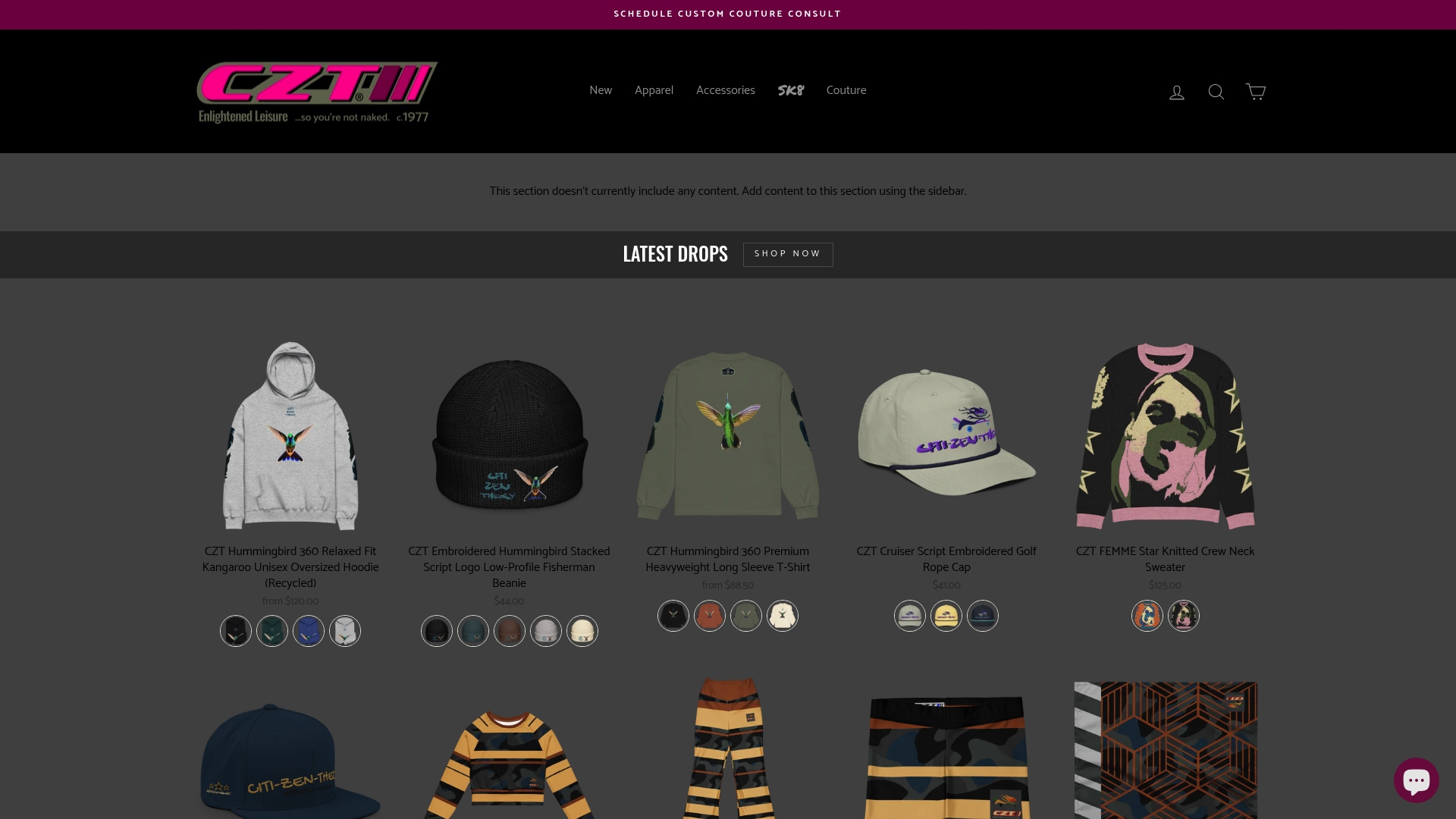
The Czt SK8 Trick List Bandana is crafted from recycled fabric and carries the visual language of skate culture into a piece you will actually wear for years. For warmer months, the recycled bikini top and recycled bikini bottom bring the same commitment to sustainable materials into swimwear. Every piece Czt makes is designed to reduce the cycle of waste, not add to it.
FAQ
What is the best way to recycle old streetwear?
The best approach is to donate clean, wearable pieces to verified charities and use a mail-in service like the Trashie Take Back Bag for damaged or unwearable textiles. Always wash and dry items fully before sending them to any program.
Should I donate or recycle worn streetwear?
Donate if the piece is clean and wearable by someone else. Recycle if it is stained, torn, or structurally degraded. Sending damaged clothing to charity thrift stores burdens those organizations because they discard unusable items at their own cost.
How do I avoid contaminating a textile recycling batch?
Ensure every item is completely dry and free of mold before placing it in a recycling bag or bin. Even one damp garment can force processors to discard an entire batch in landfill.
Does recycling streetwear damage the fabric quality?
Mechanical recycling shortens fiber length, which weakens the resulting material. Brands like Son of a Tailor address this by blending recycled fibers with virgin fibers to maintain durability in new garments.
Are donation bins on street corners safe to use?
Many street-corner donation bins are operated by for-profit textile graders, not charities. Deliver clothing directly to a verified 501©(3) organization to ensure your donation reaches people who need it rather than entering a commercial resale pipeline.
Recommended
- Examples of Upcycled Streetwear Designs That Inspire – CZT [CITI-ZEN-THEORY]
- How to Source Eco-Friendly Streetwear Pieces Globally – CZT [CITI-ZEN-THEORY]
- Material Innovation in Streetwear: Style Meets Ethics – CZT [CITI-ZEN-THEORY]
- Why Customization Reduces Fashion Waste Effectively – CZT [CITI-ZEN-THEORY]