![CZT [CITI-ZEN-THEORY]](http://czt.rocks/cdn/shop/files/CZT_-_Brand_PINK_Label_1_330x.png?v=1774104725)
![CZT [CITI-ZEN-THEORY]](http://czt.rocks/cdn/shop/t/61/assets/CZT-Fast-Logo---Blue-Grey_330x.png?v=98224836737033641471695502660)
![CZT [CITI-ZEN-THEORY]](http://czt.rocks/cdn/shop/files/CZT_-_Brand_PINK_Label_1_170x.png?v=1774104725)
![CZT [CITI-ZEN-THEORY]](http://czt.rocks/cdn/shop/t/61/assets/CZT-Fast-Logo---Blue-Grey_170x.png?v=98224836737033641471695502660)
Why Longevity Defines Sustainable Clothing in 2026
Longevity in clothing is defined as the duration a garment remains functional, desirable, and actively worn, making it the primary driver of true sustainability in fashion. The concept of garment life extension, what the Ellen MacArthur Foundation and Woolmark both recognize as the foundation of circular fashion, cuts deeper than any bio-based fiber or recycled label. Research from 2026 confirms that wearing a garment twice as long halves its lifetime carbon, water, and waste footprints. That single fact reframes why longevity defines sustainable clothing more powerfully than any material innovation alone. The cost-per-wear model, championed by researchers at Lenzing™ Modal and lifecycle analysts worldwide, makes the economic case equally clear.
Why longevity defines sustainable clothing’s environmental impact
The production phase of a garment is the most resource-intensive stage in its entire lifecycle. Every time you extend a garment’s active life, you delay or eliminate the need for that production phase to repeat itself. That is the core logic behind why sustainable fashion longevity is not a soft ideal but a measurable, quantifiable outcome.
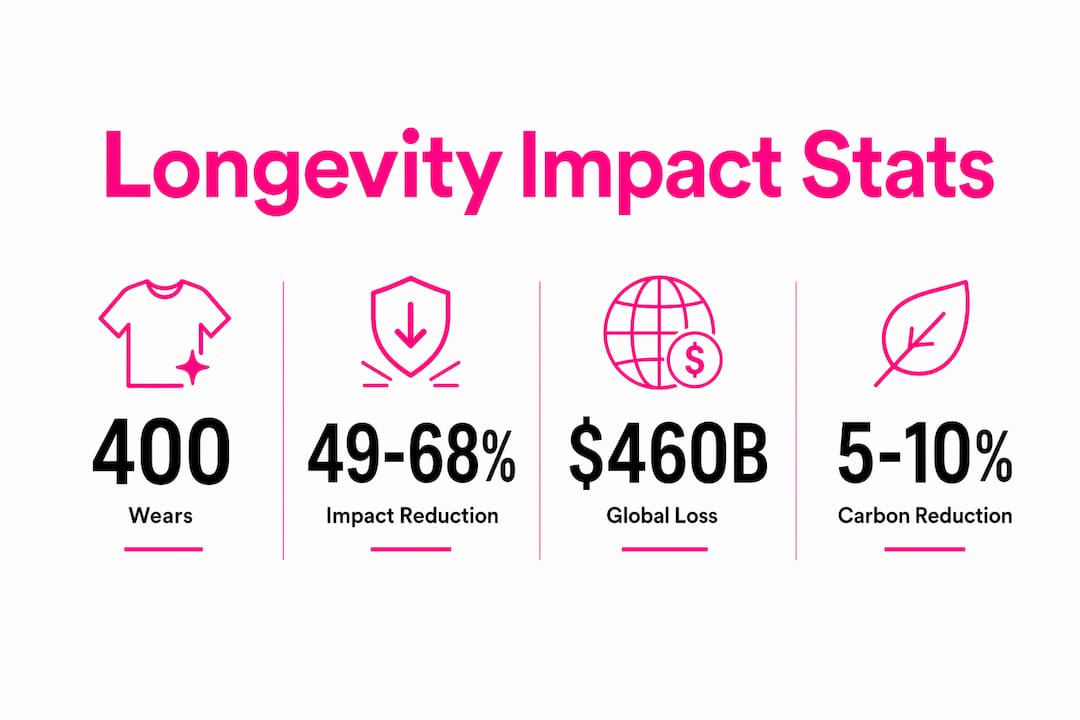
The numbers are striking. Increasing total garment wears to 400 reduces environmental impact by 49–68%, while adding just three months of use cuts carbon, water, and waste footprints by 5–10%. Those figures mean that a single behavioral shift, wearing what you already own longer, delivers environmental returns that no new fabric technology has yet matched.
| Wear Frequency | Environmental Impact Reduction |
|---|---|
| Add 3 months of use | 5–10% reduction in carbon, water, and waste |
| Double the garment’s lifespan | ~50% reduction in lifetime footprint |
| Reach 400 total wears | 49–68% reduction in total environmental impact |
Fast fashion operates on the opposite logic. Garments designed for two or three seasons generate continuous production demand, which means continuous resource extraction, water use, and carbon output. Woolmark’s durability research confirms that the production phase, not the washing or transport phase, carries the heaviest environmental load. Extending use avoids that load entirely.
Pro Tip: Before buying anything new, calculate how many times you realistically expect to wear it. If the number is under 30, reconsider the purchase. That mental check alone shifts your wardrobe toward genuine sustainability.
The importance of longevity in fashion becomes even clearer when you compare lifecycle assessments across garment categories. A durable denim jacket worn 200 times generates a fraction of the per-wear emissions of a trend-driven polyester top worn five times, even if the polyester top was made from recycled bottles. The material story matters far less than the usage story.
Is durable clothing actually more economical?
Global consumers lose up to $460 billion annually by discarding wearable clothing before it reaches the end of its functional life. That figure represents a staggering collective waste, one driven largely by the habit of evaluating clothing by sticker price rather than long-term value.
The cost-per-wear model corrects that habit. The formula is straightforward: divide the purchase price by the number of times you wear the item. A $200 jacket worn 100 times costs $2.00 per wear. A $40 jacket worn eight times costs $5.00 per wear. The benefits of durable clothing become financially undeniable when you run those numbers honestly.
Here is how to evaluate durability before you buy:
- Check seam construction. Double-stitched or flat-felled seams signal garments built to last through repeated washing and movement.
- Assess fabric weight and weave. Tightly woven, heavier fabrics in natural or blended fibers generally outlast loosely woven, lightweight synthetics.
- Examine hardware. Metal zippers, reinforced buttonholes, and bar-tacked stress points indicate a manufacturer who planned for longevity.
- Research the brand’s repair policy. Brands that offer repair services or replacement parts signal confidence in their product’s lifespan.
- Read care label complexity. Garments with simple, standard care instructions are easier to maintain correctly, which extends their life.
The affordability objection is real but often overstated. A $120 organic cotton sweatshirt from a brand committed to sustainable custom fashion will outlast three $40 fast fashion equivalents in both physical integrity and emotional relevance. The upfront cost feels higher. The lifetime cost is lower.
Pro Tip: Track your cost-per-wear for one month by logging what you actually reach for in your closet. Most people discover that 20% of their wardrobe accounts for 80% of their wears, which tells you exactly where to invest next.
Physical vs. emotional durability: what design gets right
Durability in clothing has two distinct dimensions, and most sustainability conversations address only one of them. Physical durability refers to fabric strength, construction quality, and resistance to wear and tear. Emotional durability refers to the user’s attachment to a garment, the personal narratives and aesthetic connections that prevent premature disposal.
Both matter equally. A garment built from the strongest organic cotton will still end up in a donation bin if the wearer stops connecting with it. Emotional durability researchers, including those cited by Alcimed, confirm that users keep clothing they form strong personal connections with, which is why design decisions that invite attachment are as important as material choices.
| Durability Type | What It Means | Design Strategies |
|---|---|---|
| Physical Durability | Fabric and construction withstand repeated use | Heavy weave, reinforced seams, quality hardware |
| Emotional Durability | User maintains attachment and avoids disposal | Heritage silhouettes, personal customization, versatile styling |
The CFDA’s industry insights on extending fashion’s life point to specific design strategies that serve both dimensions. Heritage silhouettes and seam allowances for future alterations give garments a second life through tailoring rather than disposal. Versatile pieces that function across multiple contexts, from a skate session to a family gathering, maintain relevance across seasons and life stages.
Designing for circularity takes this further. Garments built for repair, resale, and eventual recycling extend their useful lifecycle far beyond a single owner. The Traceability Hub’s circular design research shows that foresight in material choices and construction techniques directly supports consumer upkeep and resale value. That is how long-lasting clothing and sustainability become genuinely inseparable.
The mistakes to avoid are equally instructive. Chasing fleeting micro-trends produces garments that feel dated within a season, regardless of their physical construction quality. Neglecting maintenance instructions accelerates physical degradation. And designing without one-of-a-kind aesthetic depth produces pieces that feel interchangeable and disposable, even when they are technically well-made.
How can you extend the life of your clothing?
How longevity impacts clothing sustainability depends significantly on what happens after purchase. The care and maintenance phase is where most garment lifespans are either protected or destroyed, and the habits involved are simpler than most people assume.
- Wash less frequently. Laundry practices like washing less often and using gentle cycles preserve fabric integrity across hundreds of wears. Most garments worn for a few hours do not need a full wash cycle.
- Air dry whenever possible. Tumble dryers degrade elastic fibers, shrink natural fabrics, and accelerate pilling. Air drying on a flat surface or hanger extends garment life measurably.
- Learn basic repair skills. Replacing a button, reinforcing a seam, or patching a small tear takes under 15 minutes and can add years to a garment’s life. Organizations like the Repair Café network offer free community repair sessions in cities across the United States.
- Store clothing correctly. Heavy knits stored on hangers stretch out of shape. Leather and structured pieces stored in plastic suffocate. Proper storage is a form of maintenance that most wardrobes neglect.
- Cultivate emotional connection deliberately. Wear a piece in a new way, style it with something unexpected, or recall the memory attached to it before deciding to discard it. Emotional re-engagement is a documented strategy for preventing premature disposal.
- Invest in versatile pieces over trend-specific ones. A garment that works across three or four different contexts in your life will accumulate wears far faster than one designed for a single occasion.
Quality clothing reduces waste most effectively when consumers treat their wardrobes as long-term investments rather than rotating inventories. That mindset shift is the practical foundation of how longevity impacts clothing sustainability at the individual level.
Key takeaways
Longevity is the single most powerful lever consumers and designers hold for reducing fashion’s environmental and economic footprint.
| Point | Details |
|---|---|
| Wear frequency drives impact | Reaching 400 wears reduces environmental impact by up to 68%, more than any material swap. |
| Cost-per-wear reframes value | Dividing price by wears reveals that durable clothing is almost always more economical long-term. |
| Emotional durability matters | Garments users connect with personally are kept longer, making design attachment a sustainability tool. |
| Care habits are sustainability acts | Washing less, air drying, and repairing clothing directly extends lifespan and reduces footprint. |
| Circular design multiplies impact | Garments built for repair, resale, and recycling serve multiple owners and lifecycles. |
The disconnect nobody talks about
We have spent years at Czt watching the sustainable fashion conversation circle around materials. Organic cotton versus recycled polyester. Bio-based dyes versus conventional chemistry. These are real considerations, and we respect the researchers advancing them. But the conversation consistently misses the variable that matters most: how long the garment actually stays in use.
Consumers often misinterpret “sustainable” as a marketing label rather than a measure of utility and repeated use across seasons. We see this in our own community. Someone buys a piece made from recycled materials, feels good about the purchase, and then replaces it after two seasons because the design felt dated or the construction failed. The environmental math on that transaction is worse than buying one well-made piece and wearing it for five years.
What excites us about the emotional durability research is that it validates something we have always believed about streetwear culture. The pieces that survive in skate communities, the worn-in hoodies, the faded tees with stories attached, are not kept because they are pristine. They are kept because they carry meaning. That is emotional durability in its purest form, and it is something design can intentionally cultivate rather than leave to chance.
The common myths about sustainable clothing often center on what a garment is made of. The truth centers on how long it is loved. If the industry adopted longevity as its primary sustainability metric, the entire production calculus would shift. Fewer pieces. Better made. Designed to be worn, repaired, and passed on.
— Czt
Build your wardrobe around pieces that last
At Czt, we design with longevity as a core principle, not an afterthought. Our pieces are built from recycled and organic materials chosen for their physical durability, and styled with the kind of timeless streetwear composition that earns emotional attachment across seasons and subcultures.
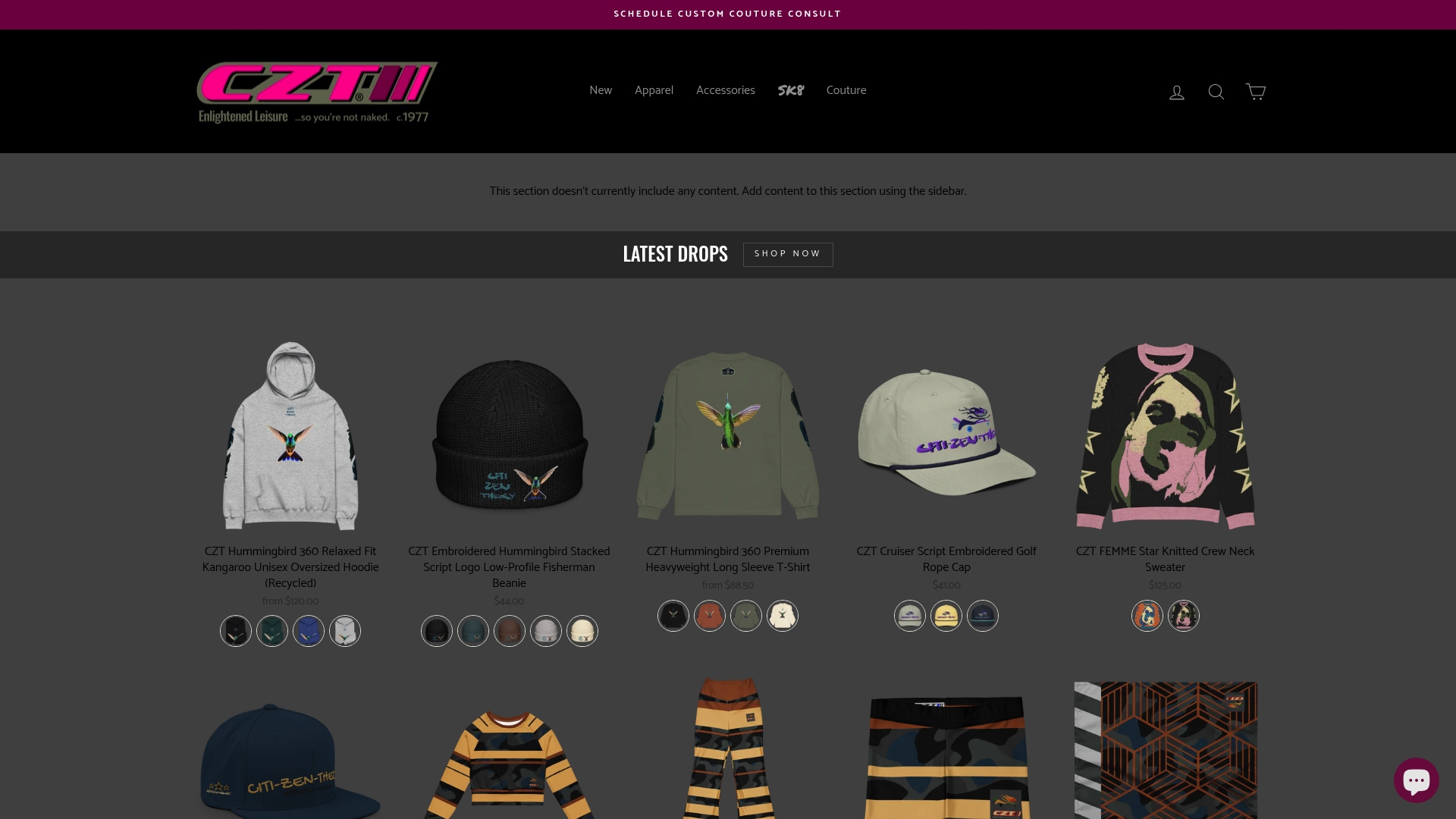
Our organic oversized sweatshirts are crafted to accumulate wears, not collect dust. From the Botanic Camo collection to our custom couture offerings, every piece is designed to stay relevant, stay functional, and stay in your rotation for years. If you are ready to invest in clothing that earns its place in your wardrobe through genuine durability, explore what Czt has built for you.
FAQ
What does longevity mean in sustainable fashion?
Longevity in sustainable fashion refers to how long a garment remains functional and actively worn. Research confirms that doubling a garment’s lifespan halves its lifetime carbon, water, and waste footprints.
How does wearing clothes longer reduce environmental impact?
Extending total garment wears to 400 reduces environmental impact by 49–68%, because it avoids the resource-intensive production phase that would otherwise repeat with each replacement purchase.
What is the cost-per-wear model?
Cost-per-wear divides a garment’s purchase price by the number of times it is worn. This model shows that durable, higher-priced clothing is often more economical than cheaper fast fashion worn only a few times.
What is emotional durability in clothing?
Emotional durability describes the personal attachment a user forms with a garment, which prevents premature disposal. Garments with strong design identity, heritage silhouettes, or personal customization tend to be kept and worn far longer.
How can i make my clothes last longer?
Wash less frequently, air dry, learn basic repairs, and store garments correctly. These care habits directly preserve fabric quality and extend the active lifespan of your wardrobe.
Recommended
- Why Customization Reduces Fashion Waste Effectively – CZT [CITI-ZEN-THEORY]
- Why Sustainable Custom Fashion Matters for Real Change – CZT [CITI-ZEN-THEORY]
- How to Source Eco-Friendly Streetwear Pieces Globally – CZT [CITI-ZEN-THEORY]
- Recycled Fabric Clothing Explained for Eco-Conscious Style – CZT [CITI-ZEN-THEORY]