![CZT [CITI-ZEN-THEORY]](http://czt.rocks/cdn/shop/files/CZT_-_Brand_PINK_Label_1_330x.png?v=1774104725)
![CZT [CITI-ZEN-THEORY]](http://czt.rocks/cdn/shop/t/61/assets/CZT-Fast-Logo---Blue-Grey_330x.png?v=98224836737033641471695502660)
![CZT [CITI-ZEN-THEORY]](http://czt.rocks/cdn/shop/files/CZT_-_Brand_PINK_Label_1_170x.png?v=1774104725)
![CZT [CITI-ZEN-THEORY]](http://czt.rocks/cdn/shop/t/61/assets/CZT-Fast-Logo---Blue-Grey_170x.png?v=98224836737033641471695502660)
How Recycled Fibers Work in Kids' Clothing
Recycled fibers in kids’ clothing are defined as textile materials created by processing post-consumer or post-industrial waste, such as plastic bottles and old garments, into new yarn and fabric. Understanding how recycled fibers work in kids’ clothing matters because the process is more nuanced than a simple bottle-to-shirt story. Recycled polyester, known industrially as rPET, and fiber-to-fiber recycling are the two dominant methods shaping sustainable clothing for children today. The environmental gains are real, but they depend on manufacturing quality, fabric composition, and even how you wash the garment. This guide walks you through every stage, from factory floor to laundry room.
How is recycled fabric made for kids’ clothing?
The manufacturing process for recycled kids’ fabric begins with collection and sorting of raw materials. Plastic bottles gathered near coastlines and textile waste from factory offcuts are the two most common feedstocks. Sorting quality at this stage determines the ceiling for everything that follows.
The cleaned materials are then shredded or melted down into a raw polymer form. For rPET, the plastic is melted into resin pellets. One technical challenge here is that polymer viscosity degrades during recycling, which can weaken the resulting fiber. Manufacturers address this by applying viscosity enhancement steps to restore the material to a quality suitable for spinning, balancing recycled content with real performance.
From the resin, fibers are formed through a process called extrusion. The molten polymer is pushed through tiny nozzles called spinnerets, drawn into thin strands, and then textured to give the fiber grip and softness. This is the same fundamental technology used for virgin polyester, adapted for a recycled feedstock.
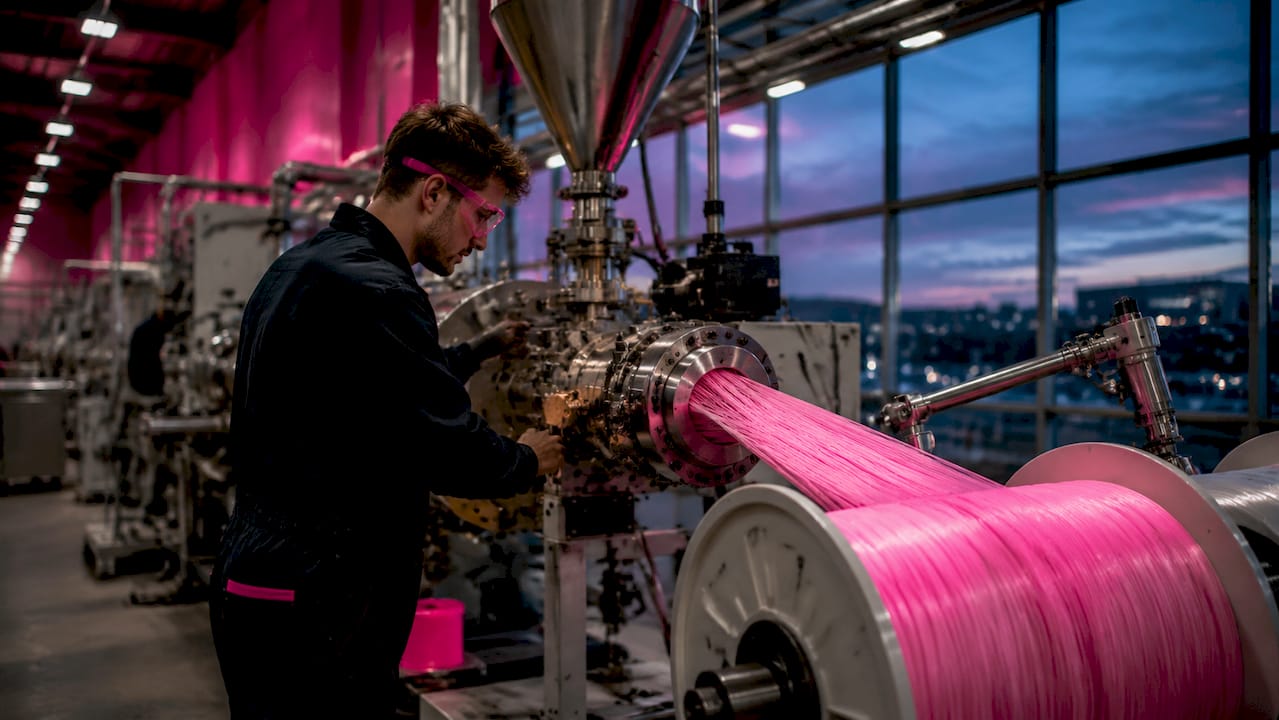
The fibers are then blended with other materials and knitted or woven into fabric. For kids’ swimwear, for example, rPET is blended with elastane for stretch and then finished with UV and chlorine resistance treatments. That finishing stage is what makes a recycled fabric genuinely performance-driven for active children, not just environmentally credentialed.
Here is the full manufacturing sequence in order:
- Collection of plastic bottles or textile waste, often near coastlines or from factory floors
- Sorting and cleaning to remove contaminants and separate material types
- Shredding or melting into raw polymer or resin pellets
- Viscosity reinforcement to restore fiber-spinning quality lost during recycling
- Extrusion through spinnerets to form raw fiber strands
- Drawing and texturing to add softness and structural integrity
- Blending with elastane or other fibers for stretch and durability
- Knitting or weaving into fabric panels
- Finishing treatments for UV resistance, chlorine resistance, or softness
Pro Tip: When shopping for recycled fiber swimwear for kids, look for brands that specify both the rPET percentage and the finishing treatments applied. UV and chlorine resistance are not automatic in recycled fabric and must be added deliberately during manufacturing.
What are the environmental benefits and challenges of recycled fibers?
Recycled polyester carries genuine environmental advantages over virgin polyester. Life cycle assessments show that recycled polyester reduces water use by around two-thirds compared to virgin fiber production, with improvements across carbon emissions and chemical toxicity as well. That is a meaningful reduction, especially when you consider how many garments a growing child goes through each year.
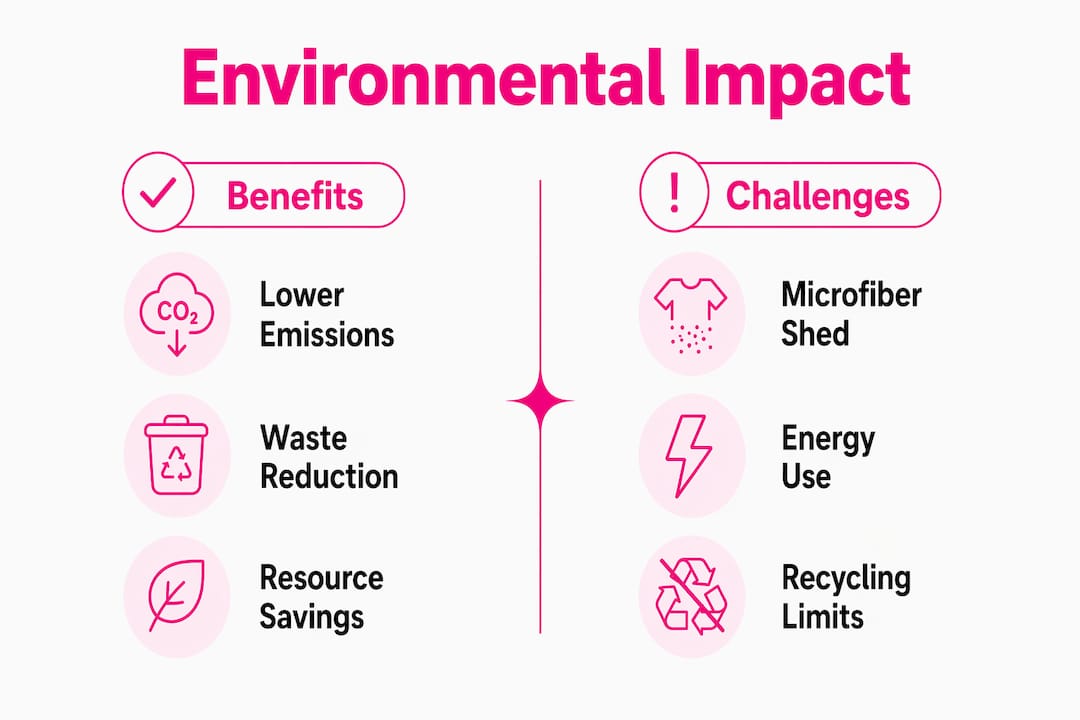
The gains are not unconditional, though. The same life cycle data shows that real-world environmental outcomes depend heavily on sorting quality, the rate of rejected materials, and transportation distances in the supply chain. A recycled fiber garment made from poorly sorted feedstock, shipped across multiple continents, can underperform a locally produced virgin fiber alternative.
The challenges are worth understanding clearly:
- Blend contamination. Approximately 60% of global garments contain fiber blends, and even 2–5% elastane content makes a garment extremely difficult to recycle fiber-to-fiber. Current commercial processes cannot handle elastane contamination effectively.
- Fiber quality degradation. Polymer chains shorten during each recycling cycle, reducing fiber strength. Repeated recycling degrades quality progressively, which limits how many times a fiber can be meaningfully reclaimed.
- Feedstock bottlenecks. Sorting quality and contamination remain the biggest operational barriers to scaling fiber-to-fiber recycling, outweighing advances in equipment or chemical processes.
- Microfiber shedding. Recycled polyester fleece releases microplastics during washing, which enter water systems. This is a real environmental cost that sits on the use-phase side of the life cycle, not the production side.
The honest picture is that recycled fibers in fashion represent a meaningful step forward, not a complete solution. Parents who understand these trade-offs are better positioned to make choices that actually reduce environmental impact rather than simply feeling good about a label.
How does laundering affect recycled fiber kids’ clothing?
Washing is where the environmental story of recycled fiber garments gets complicated. Research measuring microfiber shedding shows that recycled PET fleece sheds 485 ± 42 mg/kg during initial washes, compared to 295 ± 25 mg/kg for virgin PET fleece. That is a significant difference in the first few wash cycles. The good news is that shedding stabilizes after approximately the third wash as loose surface fibers are removed.
Fabric structure plays a large role in how much fiber is released. Fleece fabrics shed more than tightly knit or woven constructions because their open, brushed surface holds more loose fibers. Detergent presence and water temperature also modulate fiber release profiles substantially, with harsher conditions accelerating shedding.
Parents can take practical steps to reduce microfiber pollution from their kids’ recycled garments:
- Wash on cold. Lower temperatures reduce fiber stress and slow degradation of the fabric structure.
- Use a gentle cycle. Mechanical agitation is the primary driver of fiber release. A shorter, gentler cycle cuts shedding meaningfully.
- Wash less frequently. Kids’ outerwear and swimwear often do not need washing after every single wear. Spot cleaning extends garment life and reduces cumulative shedding.
- Use a microfiber-catching laundry bag. Products like the Guppyfriend washing bag capture shed fibers before they reach the drain. This is one of the most direct interventions available to parents right now.
- Air dry when possible. Tumble drying adds mechanical stress that accelerates fiber breakdown over a garment’s lifetime.
Pro Tip: The first three washes of a new recycled polyester fleece garment release the most microfibers. Washing new items separately and using a microfiber filter bag during those initial washes captures the highest-shedding phase before it enters your water system.
Durability is also a laundering consideration. Recycled fiber garments that are cared for properly last longer, which extends the environmental benefit of the recycled content. A garment worn for three years has a far better life cycle profile than one replaced after one season.
What should parents consider when choosing sustainable recycled fiber kids’ clothes?
Choosing eco-friendly kids’ clothing made from recycled fibers requires looking past the marketing claim on the hangtag. Fiber content and fabric composition are the starting point. A garment labeled “recycled” may contain only a small percentage of recycled material blended with virgin fibers or elastane. Reading the full composition label tells you what you are actually buying.
Durability and comfort matter as much as environmental credentials, especially for children. Kids’ clothing takes serious physical punishment. A recycled fiber garment that pills, loses shape, or fails after one season is not a sustainable choice regardless of its feedstock. Look for tightly constructed fabrics, reinforced seams, and finishing treatments appropriate for the intended use.
| Factor | What to look for | Why it matters |
|---|---|---|
| Fiber content | rPET percentage clearly stated | Higher recycled content means greater environmental benefit |
| Blend composition | Minimal or no elastane for recyclability | Elastane contamination blocks end-of-life recycling |
| Construction | Tight knit or woven structure | Reduces microfiber shedding during washing |
| Finishing treatments | UV, chlorine, or water resistance | Extends garment life and performance for active kids |
| Brand transparency | Published supply chain or material sourcing info | Indicates genuine commitment beyond label claims |
Design and construction also affect whether a garment can be recycled at the end of its life. A pure rPET piece is far more recyclable than a blended garment. Brands that publish their material sourcing practices and supply chain information give parents a clearer basis for trust than those relying on broad sustainability language alone.
The availability of genuinely recycled fiber kids’ clothing has grown considerably. Brands working with rPET swimwear, outerwear, and activewear now offer real options at multiple price points. The key is knowing what questions to ask before you buy.
Key Takeaways
Recycled fibers in kids’ clothing deliver real environmental benefits, but the full impact depends on manufacturing quality, fabric composition, laundering practices, and end-of-life recyclability.
| Point | Details |
|---|---|
| Manufacturing process | rPET is made by melting and extruding recycled plastic into fiber, then knitting it into fabric with performance finishes. |
| Environmental gains | Recycled polyester reduces water use by around two-thirds versus virgin polyester, but gains depend on sorting quality. |
| Blend challenge | Garments with even 2–5% elastane are very difficult to recycle fiber-to-fiber at end of life. |
| Laundering impact | Recycled PET fleece sheds more microfibers in early washes; cold, gentle cycles and microfiber bags reduce this significantly. |
| Buying smart | Check fiber content labels, construction quality, and brand transparency rather than relying on broad sustainability claims. |
Czt’s perspective on recycled fibers and kids’ fashion
We have spent years watching the conversation around sustainable kids’ clothing oscillate between breathless optimism and cynical dismissal. Neither position serves parents well. The truth we have come to through our own work with recycled materials is more textured than either camp admits.
What strikes us most is how much the environmental story of a recycled fiber garment lives in the details of its composition and construction, not just its origin story. A bottle-to-swimwear narrative is compelling, and it is genuinely meaningful. But a garment blended with elastane for stretch, washed weekly on hot, and discarded after one summer carries a very different life cycle profile than that origin story suggests. The technical barriers in fiber recycling are real, and they demand honesty from brands and parents alike.
We also believe the next meaningful shift will come not from recycling technology alone but from design decisions made at the beginning of a garment’s life. Pure fiber compositions, durable construction, and honest material transparency are the levers that actually move the needle. At Czt, the work we do with recycled materials in fashion is grounded in that conviction. We are not interested in sustainability as a marketing posture. We are interested in it as a craft discipline, the same way we approach composition, color, and construction in everything we make.
— Czt
Recycled fiber swimwear for kids, made with intention
Czt brings that same craft discipline to its recycled fiber swimwear for children. The Czt Cosmic Bandeau Bikini Top is made from rPET with performance finishing for UV and chlorine resistance, designed for kids who are genuinely frolicking in the water, not posing beside it.
The Czt Cosmic Bandeau Bikini Top and the Czt DNC String Bikini Bottom are both built from recycled textiles with the durability and aesthetic composition that defines everything Czt makes. These are pieces that carry a real environmental story in their construction, not just their label. Parents who want swimwear that performs as well as it is made can browse the full range at Czt.
FAQ
What are recycled fibers in kids’ clothing?
Recycled fibers in kids’ clothing are materials made from post-consumer or post-industrial waste, most commonly plastic bottles processed into rPET yarn. They are used to make fabrics for swimwear, outerwear, and activewear.
Is recycled polyester safe for children’s skin?
Recycled polyester (rPET) goes through cleaning and processing steps that remove contaminants before fiber spinning, making it comparable in safety to virgin polyester for skin contact. Parents with children who have sensitive skin should look for garments with soft finishing treatments and test for individual reactions as they would with any new fabric.
Does recycled kids’ clothing shed microplastics?
Yes. Recycled PET fleece sheds more microfibers in early wash cycles than virgin PET, with shedding stabilizing after approximately the third wash. Using a microfiber-catching laundry bag and washing on cold reduces the amount released into water systems.
Can recycled fiber kids’ clothes be recycled again?
Pure rPET garments can re-enter recycling streams, but garments blended with elastane or spandex are very difficult to recycle fiber-to-fiber. Checking the full fiber composition label before purchase tells you whether a garment has a realistic end-of-life recycling path.
How do I know if a kids’ clothing brand is genuinely sustainable?
Look for brands that publish specific fiber content percentages, supply chain sourcing information, and finishing treatment details rather than broad sustainability language. Transparency about material composition and manufacturing process is the clearest indicator of genuine commitment.
Recommended
- Recycled Fabric Clothing Explained for Eco-Conscious Style – CZT [CITI-ZEN-THEORY]
- Recycled Materials in Fashion: Benefits and Impact – CZT [CITI-ZEN-THEORY]
- Playful Design in Kids Apparel: What Parents Should Know – CZT [CITI-ZEN-THEORY]
- Stretch Fabric for Active Children: A Parent’s Guide – CZT [CITI-ZEN-THEORY]