![CZT [CITI-ZEN-THEORY]](http://czt.rocks/cdn/shop/files/CZT_-_Brand_PINK_Label_1_330x.png?v=1774104725)
![CZT [CITI-ZEN-THEORY]](http://czt.rocks/cdn/shop/t/61/assets/CZT-Fast-Logo---Blue-Grey_330x.png?v=98224836737033641471695502660)
![CZT [CITI-ZEN-THEORY]](http://czt.rocks/cdn/shop/files/CZT_-_Brand_PINK_Label_1_170x.png?v=1774104725)
![CZT [CITI-ZEN-THEORY]](http://czt.rocks/cdn/shop/t/61/assets/CZT-Fast-Logo---Blue-Grey_170x.png?v=98224836737033641471695502660)
Stretch Fabric for Active Children: A Parent's Guide
Stretch fabric in children’s activewear is defined as any textile construction that returns to its original shape after being pulled, twisted, or compressed during physical activity. The role of stretch fabric for active children goes far beyond simple comfort. It directly determines whether a garment supports or restricts a child’s natural movement, survives the punishment of daily play, and adapts to the rapid growth that makes kids’ clothing such a costly and frustrating investment for parents. Understanding what stretch fabric actually does, and which compositions deliver it best, is the foundation of every smart activewear purchase you will make.
How does stretch fabric improve mobility and performance for active children?
Stretch fabric allows uninhibited movement in every direction without pulling or tearing at seams, which is the single most important performance feature in children’s activewear. When a child climbs a jungle gym, sprints across a soccer field, or drops into a deep squat on a skateboard, the garment must follow the body rather than fight it. Fabrics without adequate stretch create resistance at the shoulders, knees, and hips, which fatigues children faster and increases the risk of seam failure.
Four-way stretch is the industry standard term for fabrics that extend both horizontally and vertically. This construction matters because children do not move in one plane. They lunge, twist, cartwheel, and collapse onto the ground in ways that stress every axis of a garment simultaneously. A fabric with only two-way stretch, meaning it stretches across the body but not lengthwise, will bind at the crotch during a high kick or restrict the shoulder during a throw.
The elasticity in performance fabric for kids also protects the garment’s construction. Moisture-wicking and reinforced stitching at stress points prevent the seam damage that rigid fabrics suffer when a child moves aggressively. This means the garment holds its shape through hundreds of washes and thousands of movements, which is a practical return on your investment as a parent.
- Four-way stretch prevents binding at shoulders, knees, and hips during complex movements
- Elastic recovery keeps seams intact and fabric taut after repeated stretching
- Reinforced construction at stress points extends garment life through intense activity
- Fabric flexibility supports muscle activation by allowing full range of motion
Pro Tip: When testing a garment in-store, stretch the fabric in all four directions and release it. If it snaps back immediately and evenly, the spandex content is sufficient. If it sags or takes several seconds to recover, the fabric will deform quickly under a child’s daily activity load.
What fabric compositions are best for children’s stretch clothing?
Optimal performance fabric for active children uses 90 to 95 percent synthetic fibers, typically polyester or nylon, combined with 5 to 10 percent spandex to deliver four-way stretch, moisture-wicking, and durability in a single construction. This ratio is the industry standard because it balances the structural strength of polyester with the elastic recovery of spandex. Higher spandex percentages are reserved for specialized athletic compression garments, not everyday kids’ activewear.
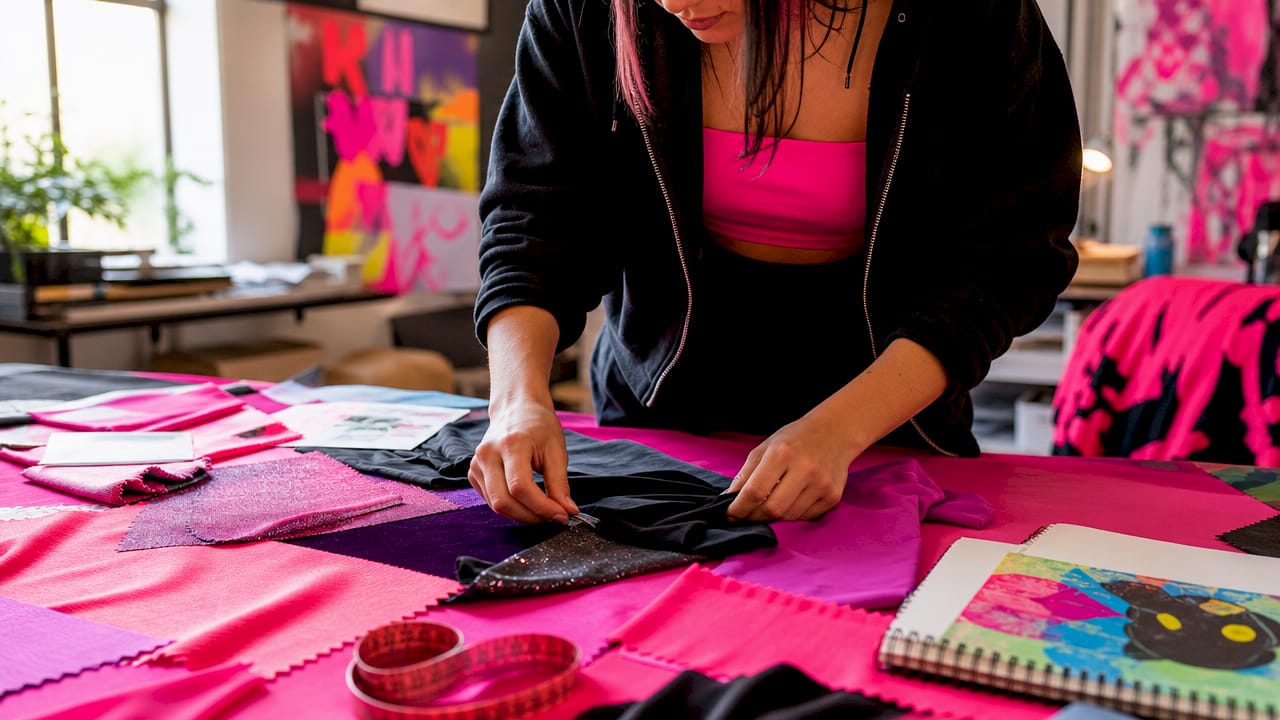
Knitted fabrics provide natural multi-directional flexibility that reduces fabric rips during activities like climbing and crawling, making them a strong alternative to purely synthetic constructions. The difference between knit stretch and synthetic stretch is meaningful. Knit stretch comes from the interlocking loop structure of the fabric itself, which gives it a soft, breathable quality. Synthetic stretch comes from spandex fibers woven into the base material, which adds snap-back power and moisture management but can feel less forgiving against sensitive skin.
Natural cotton knit stretch is breathable and hypoallergenic, making it the preferred choice for babies with sensitive skin or eczema compared to synthetic stretch fabrics. For older, more active children engaged in high-intensity sports, synthetic blends outperform cotton because they manage sweat more effectively and maintain their shape under repeated stress. The right composition depends on your child’s activity level and skin sensitivity.
| Fabric type | Best for | Stretch source | Key benefit |
|---|---|---|---|
| Polyester/nylon with 5-10% spandex | High-intensity sports, outdoor play | Synthetic spandex | Four-way stretch, moisture-wicking, durable |
| Cotton knit | Sensitive skin, casual active play | Knit loop construction | Hypoallergenic, breathable, soft |
| Nylon/spandex blend | Swimming, gymnastics, dance | Synthetic spandex | Chlorine resistance, close fit, recovery |
| Organic cotton knit | Infants, toddlers, eczema-prone skin | Knit loop construction | Chemical-free, gentle, natural breathability |
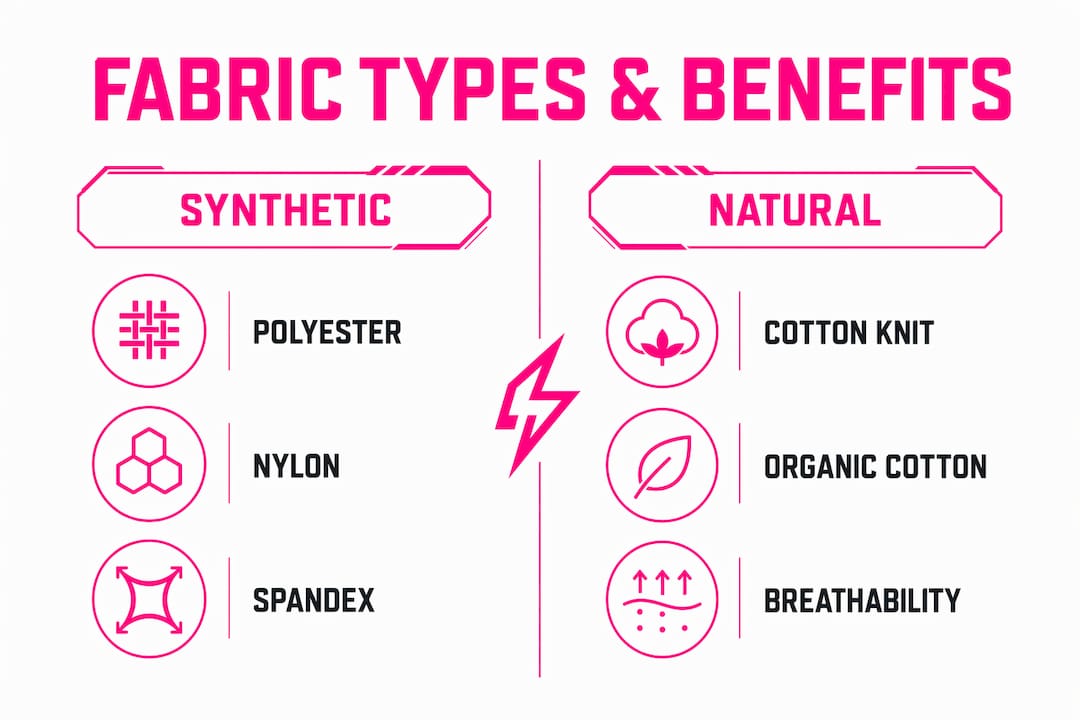
The fiber ratio matters as much as the fiber type. Adding 5 to 10 percent spandex to nylon or polyester creates functional four-way stretch that maintains shape and durability through the kind of daily abuse that children deliver to their clothing. Going below 5 percent spandex produces a fabric that stretches but recovers slowly, leading to the baggy knees and sagging waistbands that parents recognize as signs of a garment past its useful life.
How does stretch fabric support children’s growth and garment longevity?
Stretch fabric extends garment life by adapting to a child’s body as it grows, which is one of the most underappreciated stretch fabric benefits for kids from a financial standpoint. High-stretch fabrics for baby pajamas can extend the garment’s wearable life by 30 to 50 percent compared to rigid fabrics. For parents navigating growth spurts that can add an inch of height in a matter of weeks, this is not a minor detail. It is the difference between replacing a garment every six weeks and getting three to four months of use from the same piece.
The mechanism is straightforward. A rigid woven fabric has a fixed dimension. Once a child’s torso or legs exceed that dimension, the garment becomes unwearable. A stretch fabric, by contrast, has a range of comfortable fit rather than a single fixed size. Stretchy clothing accommodates growth spurts, preventing early garment discard and extending usability significantly across the size range.
Stretch recovery is the other side of this equation. A fabric that stretches but does not recover will sag and deform after a few washes, losing both its aesthetic appeal and its functional fit. This is why the spandex content and knit construction matter so much for longevity. Garments that maintain their shape through repeated washing and wearing are the ones that actually deliver the extended lifespan that stretch fabric promises.
- Baby pajamas and infant bodysuits benefit most from stretch recovery, since frequent diaper changes stress the fabric repeatedly
- Athletic leggings and joggers for school-age children hold their waistband shape longer when spandex content meets the 5 to 10 percent standard
- Stretch denim and hybrid fabrics for active casual wear extend wearability across multiple size transitions
- Garments with reinforced knit construction at the knees and seat resist the specific stress points that active children wear through first
How do stretch fabrics provide comfort and moisture management during play?
Moisture management in activewear uses capillary action to pull sweat away from skin, keeping children dry and preventing the discomfort that builds during intense play or cooldowns after exercise. This is the technical distinction between activewear and casual wear. A cotton T-shirt absorbs sweat and holds it against the skin, which creates chilling during rest periods and irritation during sustained activity. A performance fabric for kids moves that moisture outward to the fabric surface, where it evaporates.
Knitted fabrics’ looped construction ensures breathability and softness, maintaining comfort for active children during long wear times. The airflow created by the knit structure works alongside moisture-wicking to regulate temperature, which matters enormously for children who do not self-regulate their activity intensity the way adults do. A child who is overheating will not slow down voluntarily. The fabric has to do the thermal work.
Comfort also affects endurance and focus. A child distracted by a waistband digging into their hip or a seam rubbing against their ankle will disengage from physical activity faster than one wearing a garment that disappears into the background. The flexibility of active children’s clothing is not just about movement range. It is about removing every friction point that pulls a child’s attention away from play.
- Choose fabrics with moisture-wicking properties for any activity lasting more than 20 minutes, including recess, team sports, and outdoor play
- Prioritize knit constructions for breathability during warm-weather activities or indoor gym sessions
- Check fabric weight: lighter knits work for high-intensity activity, while mid-weight stretch fabrics suit cooler conditions and longer outdoor sessions
- Inspect seam placement before purchasing, since flatlock seams lie flat against the skin and eliminate the chafing that raised seams create during repetitive movement
Pro Tip: For children with sensitive skin, look for garments labeled “moisture-wicking cotton” or “organic cotton jersey.” These combine the breathability and hypoallergenic properties of natural fiber with enough knit stretch to support active movement, without the synthetic polymers that can trigger irritation.
Key takeaways
Stretch fabric is the defining performance feature in children’s activewear because it enables freedom of movement, accommodates growth, manages moisture, and extends garment life through elastic recovery.
| Point | Details |
|---|---|
| Four-way stretch is the standard | Fabrics stretching in all directions prevent binding and seam failure during complex children’s movements. |
| Spandex ratio determines recovery | The 5 to 10 percent spandex blend maintains shape through repeated washing and active wear. |
| Stretch extends garment life | High-stretch fabrics can extend wearable life by 30 to 50 percent by adapting to growth spurts. |
| Fabric type matches activity | Synthetic blends suit high-intensity sports; cotton knit suits sensitive skin and casual active play. |
| Moisture management is built-in | Performance knits use capillary action to move sweat away from skin, keeping children dry and focused. |
What we have learned building stretch fabric into performance design
There is a tendency among parents to treat stretch as a bonus feature rather than a baseline requirement, and we have seen the consequences of that thinking in garments that fail within a season. At Czt, we approach fabric composition the way a composer approaches a score: every element must serve the whole, and nothing is incidental. The snap-back quality of a fabric is as important as its initial stretch, because a garment that sags after three washes has already failed the child wearing it.
What we find most parents overlook is the relationship between fabric weight and activity type. A lightweight stretch knit that performs beautifully on a summer soccer field will feel inadequate during a cold-weather skate session, not because the stretch fails, but because the thermal properties were never designed for that context. Matching fabric weight to the specific activity your child engages in most is the single most practical decision you can make when selecting activewear.
Care practices also determine how long stretch fabric performs. Washing in cold water and air-drying preserves spandex elasticity far longer than hot machine drying, which degrades the elastic fibers over time. We have seen garments that should last two years reduced to shapeless fabric in six months purely through heat exposure in the dryer. The fabric is only as good as the care it receives, and that is a variable entirely within your control as a parent.
— Czt
Explore performance stretch activewear for active kids at Czt
At Czt, we design activewear that takes the role of stretch fabric seriously, building pieces that move with children rather than against them, using fabric compositions that hold their shape through growth spurts, heavy play, and repeated washing.
Our recycled performance jersey is built with the moisture-wicking and stretch recovery properties that active children demand, using eco-conscious materials that align with the values of families who want responsible clothing without sacrificing performance. For parents who want flexible, durable, and aesthetically considered activewear that grows with their child, our collections are designed with exactly that balance in mind. Explore the full range at Czt and find pieces built to keep up with the kids who wear them.
FAQ
What is the role of stretch fabric in active children’s clothing?
Stretch fabric in children’s activewear provides freedom of movement in all directions, prevents seam failure during vigorous activity, and accommodates growth to extend garment life. It is the primary performance feature that separates activewear from standard children’s clothing.
How much spandex should kids’ activewear contain?
The industry standard for children’s performance fabric is 5 to 10 percent spandex blended with polyester or nylon. This ratio delivers four-way stretch and elastic recovery without the stiffness of lower-spandex fabrics or the specialized compression of higher-spandex athletic garments.
Is cotton or synthetic fabric better for active children?
Synthetic blends with spandex are better for high-intensity sports because they wick moisture and recover shape faster. Cotton knit is better for children with sensitive skin or eczema, offering natural breathability and hypoallergenic properties during lower-intensity active play.
How does stretch fabric help clothing last longer?
High-stretch fabrics extend wearable life by 30 to 50 percent by adapting to growth spurts rather than becoming too small, and by recovering their original shape after washing rather than sagging or deforming with repeated use.
What is four-way stretch and why does it matter for kids?
Four-way stretch means a fabric extends both horizontally and vertically, covering every direction of movement a child makes. It matters because children move in complex, multi-directional patterns during play and sports, and a fabric that only stretches one way will bind and restrict natural motion.
Recommended
- CZT Active Endurance Sports Bra for High-Performance Athletes - Shop Now – CZT [CITI-ZEN-THEORY]
- CZT Active Endurance High-Waisted Pocket Capri Leggings for Ultimate Comfort – CZT [CITI-ZEN-THEORY]
- Recycled Fabric Clothing Explained for Eco-Conscious Style – CZT [CITI-ZEN-THEORY]
- CZT x KP - Movin’ the Mountains - Active Endurance Performance Bra – CZT [CITI-ZEN-THEORY]