![CZT [CITI-ZEN-THEORY]](http://czt.rocks/cdn/shop/files/CZT_-_Brand_PINK_Label_1_330x.png?v=1774104725)
![CZT [CITI-ZEN-THEORY]](http://czt.rocks/cdn/shop/t/61/assets/CZT-Fast-Logo---Blue-Grey_330x.png?v=98224836737033641471695502660)
![CZT [CITI-ZEN-THEORY]](http://czt.rocks/cdn/shop/files/CZT_-_Brand_PINK_Label_1_170x.png?v=1774104725)
![CZT [CITI-ZEN-THEORY]](http://czt.rocks/cdn/shop/t/61/assets/CZT-Fast-Logo---Blue-Grey_170x.png?v=98224836737033641471695502660)
Recycled Fabric Clothing Explained for Eco-Conscious Style
Recycled fabric clothing is defined as apparel produced from yarn spun out of recovered pre-consumer and post-consumer textile waste, transforming discarded materials into wearable, performance-driven pieces. The industry term for this category is recycled textiles, and understanding how it works separates genuine sustainability from marketing noise. The scale of the problem these fabrics address is staggering: only 14.7% of textile waste in the US gets recycled, out of 17.03 million tons generated annually. That figure means the vast majority of discarded clothing ends up in landfills, making recycled fabric clothing explained through both its promise and its very real technical limits one of the most worthwhile conversations in sustainable fashion today.
What types of recycled fabrics are used in clothing?
Recycled textiles span a wider range of fiber types than most shoppers realize, each with distinct source materials, processing requirements, and performance characteristics. The most commercially prevalent is recycled polyester, commonly called rPET. Recycled polyester is produced from post-consumer plastic bottles and textile scraps, and it now forms the backbone of GRS-certified recycled apparel from brands ranging from Patagonia to Nike. It retains most of the durability and moisture-wicking properties of virgin polyester, which is why it dominates athletic and streetwear applications.
Recycled cotton presents a more complicated picture. Mechanical recycling shortens the staple fiber length significantly, which weakens the resulting yarn. This is why recycled cotton blends typically require 70 to 80% virgin material to maintain the strength and quality consumers expect. The tradeoff is real but not disqualifying. Even a 20 to 30% recycled cotton content reduces water consumption and diverts waste from landfill.

Recycled nylon, often sourced from fishing nets, industrial waste, and carpet scraps under brand names like Econyl, offers near-virgin quality output because nylon’s polymer structure tolerates chemical recycling well. Recycled wool is recovered from post-consumer garments and industrial off-cuts, then re-spun into yarn for knitwear and outerwear. Blended recycled fabrics, combining rPET with recycled cotton or wool, are increasingly common in streetwear and casual apparel, offering a balance of softness, durability, and reduced environmental footprint.
| Fiber type | Primary source | Typical application | Key limitation |
|---|---|---|---|
| Recycled polyester (rPET) | Plastic bottles, textile scraps | Activewear, streetwear, outerwear | Microfiber shedding in wash |
| Recycled cotton | Post-consumer garments, factory off-cuts | T-shirts, denim, casual wear | Shortened fiber requires virgin blending |
| Recycled nylon (Econyl) | Fishing nets, carpet, industrial waste | Swimwear, performance gear | Higher processing cost |
| Recycled wool | Used garments, industrial off-cuts | Knitwear, coats, accessories | Color sorting complexity |
| Recycled blends | Mixed post-consumer and industrial waste | Hoodies, caps, casual tops | Variable recycled content percentage |
How does the textile recycling process work?
The textile recycling process divides into two fundamentally different approaches: mechanical recycling and chemical recycling. Each produces a different quality of output, and each carries its own set of trade-offs that any informed consumer of sustainable clothing should understand.
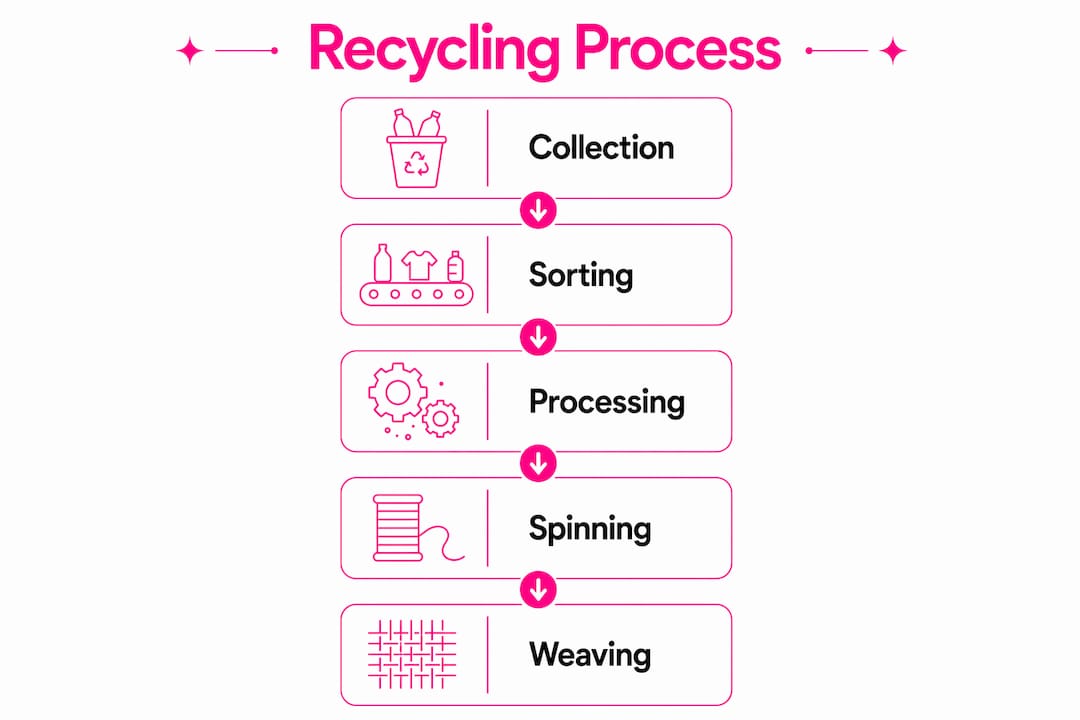
Mechanical recycling follows a physical sequence that preserves fiber properties without chemical intervention. The mechanical recycling process for cotton involves these core steps:
- Sorting by color and fiber composition to reduce the need for re-dyeing and to separate incompatible materials.
- Hardware removal, stripping buttons, zippers, and rivets that would damage machinery or contaminate the output fiber.
- Shredding and garnetting, where fabric is torn apart into loose fiber using spiked rollers, breaking the textile structure down to raw fiber.
- Carding, which aligns the loose fibers into a consistent web in preparation for spinning.
- Spinning, where fibers are twisted into yarn. Because mechanical recycling breaks down longer cotton fibers, spinners must adjust twist levels and blend ratios to compensate for reduced yarn strength.
Chemical recycling takes a different path, dissolving the textile polymer and reconstituting it into new fiber. The output can approach virgin quality, which is the technology’s great promise. However, chemical recycling works best with clean, homogeneous industrial scrap rather than the mixed, contaminated post-consumer waste that makes up most household textile discards. Sorting mixed consumer waste for chemical processes is complex and energy-intensive, which limits its current scale.
The practical consequence of both methods is that blending recycled yarns with virgin cotton or polyester at ratios of 30 to 50% recycled fiber is often necessary to maintain the durability and wearability consumers expect. This is not a failure of the technology. It is an honest acknowledgment of where fiber science currently stands.
Pro Tip: When evaluating recycled garments, ask about the recycled content percentage rather than accepting “made with recycled materials” at face value. A hoodie with 20% rPET and 80% virgin polyester is meaningfully different from one with 70% rPET, and the label should tell you which you are holding.
What environmental benefits and challenges come with recycled fabric clothing?
Recycled fabric clothing delivers measurable environmental gains across water use, carbon emissions, and landfill diversion. Using rPET instead of virgin polyester reduces energy consumption substantially, and diverting cotton waste from landfill conserves the enormous water inputs that growing new cotton demands. These are not marginal improvements. They represent a genuine reduction in the resource intensity of apparel production.
The environmental picture becomes more complicated once you look past fiber production to the full supply chain. Textile processing stages such as dyeing and finishing account for approximately 53% of fashion’s greenhouse gas emissions and involve high water and chemical usage. This means that even a garment made from 100% recycled fiber carries a significant environmental cost if its dyeing and finishing processes are not managed responsibly. The fiber origin is only part of the story.
Wet processing, including dyeing and finishing, often causes the majority of environmental impacts in textile supply chains, even for recycled fabrics. Choosing recycled fiber is necessary but not sufficient for genuinely sustainable clothing.
Microfiber pollution is a specific concern with recycled polyester. Synthetic fabrics shed microscopic plastic fibers during washing, and these microfibers pass through wastewater treatment systems into waterways. This challenge applies equally to virgin and recycled polyester, though it does not negate the carbon and resource savings of using rPET.
The industry is responding with real technical progress. Closed-loop dyeing systems and advanced wastewater treatment plants, including jet and beam dyeing technologies, reduce water and chemical pollution in fabric finishing. Brands investing in these processes, alongside recycled fiber sourcing, represent a more complete approach to sustainability. The environmental benefits of recycled textiles are real and worth pursuing, provided consumers and brands hold the full supply chain to account, not just the fiber origin. You can learn more about how printing sustainability intersects with fabric finishing choices for small brands navigating these trade-offs.
How can you identify truly recycled fabric clothing?
Identifying genuinely recycled fabric clothing requires looking past marketing language to certifications, documentation, and supply chain transparency. The most rigorous standard in the market is the Global Recycled Standard, or GRS. GRS certification requires a minimum of 20% recycled content in a product, combined with strict chain-of-custody auditing that verifies the recycled material claim at every stage of production, from fiber to finished garment. It also sets social and environmental requirements for manufacturing facilities.
The GRS sits alongside simpler standards that consumers should understand:
- Recycled Claim Standard (RCS) verifies recycled content only, without the broader social and environmental requirements of GRS. It is a content verification tool, not a full sustainability certification.
- OEKO-TEX RECYCLED certifies that recycled content claims are accurate and that the finished product meets chemical safety thresholds, but it does not audit the full supply chain for environmental practices.
- Bluesign focuses on responsible chemical use in textile processing and is often paired with GRS for a more complete picture of a garment’s environmental credentials.
Chain-of-custody documentation is the backbone of any credible recycled content claim. Without it, a brand’s assertion that a garment contains recycled fiber is unverifiable. When shopping, look for the GRS logo on the hangtag or product page, and check whether the brand publishes its supplier list or third-party audit results. Brands that do this work are not hiding behind vague sustainability language.
Pro Tip: Red flags to watch for include phrases like “eco-friendly materials” with no certification named, recycled content percentages below 20% presented as a headline sustainability claim, and brands that cannot name their fiber supplier or certifying body when asked directly.
Understanding bespoke craftsmanship and how fiber sourcing affects garment quality also helps you ask better questions when evaluating whether a recycled fabric piece is worth the investment.
Key takeaways
Recycled fabric clothing reduces environmental impact at the fiber stage, but full sustainability requires certified processing, transparent supply chains, and honest recycled content percentages.
| Point | Details |
|---|---|
| Recycled fiber types vary widely | rPET, recycled cotton, nylon, and wool each have distinct sources, quality levels, and blending requirements. |
| Mechanical vs. chemical recycling | Mechanical recycling is widely used but degrades fiber length; chemical recycling offers higher quality but works best with clean industrial waste. |
| Processing still matters | Dyeing and finishing account for roughly 53% of fashion’s GHG emissions, even for recycled fabric garments. |
| GRS is the gold standard | GRS certification requires 20% minimum recycled content and full chain-of-custody auditing across the supply chain. |
| Blending is not a flaw | Recycled yarns blended with 30 to 50% virgin fiber maintain durability and are still meaningfully more sustainable than all-virgin alternatives. |
Where we stand on recycled fabric: a perspective from Czt
We have spent years watching the recycled fabric conversation oscillate between breathless optimism and cynical dismissal, and we think both miss the point. The truth we have lived building Czt is that recycled textiles are genuinely worth pursuing, but they demand intellectual honesty about what they can and cannot do right now.
True circular textile-to-textile recycling remains largely in a demonstration phase, working best with uniform industrial waste rather than the chaotic mix of post-consumer clothing most of us discard. That is not a reason to abandon recycled fabrics. It is a reason to stop treating them as a complete solution and start treating them as one part of a larger compositional shift in how fashion operates.
What excites us most is not the fiber technology itself, though chemical recycling’s trajectory is genuinely promising. It is the cultural shift we see in our community, skaters, artists, families, people who grew up with a hardcore appreciation for making things last, who are now asking the same questions about their clothing that they have always asked about their boards and their craft. That instinct, to understand what something is made of and whether it was made with care, is the foundation that recycled fashion needs to stand on.
The systemic change that matters most is not just recycling more. It is producing less, designing for longevity, and building supply chains that can be audited and trusted. We are committed to that at Czt, and we think the most aesthetically intriguing and culturally resonant streetwear of the next decade will be made by brands who hold that same standard.
— CZT
Wear the change: explore Czt’s recycled fabric collections
At Czt, the commitment to recycled materials is not a footnote. It is woven into the composition of every piece we design, from the Botanic Camo collection to our core streetwear staples built for the culture and the pavement.
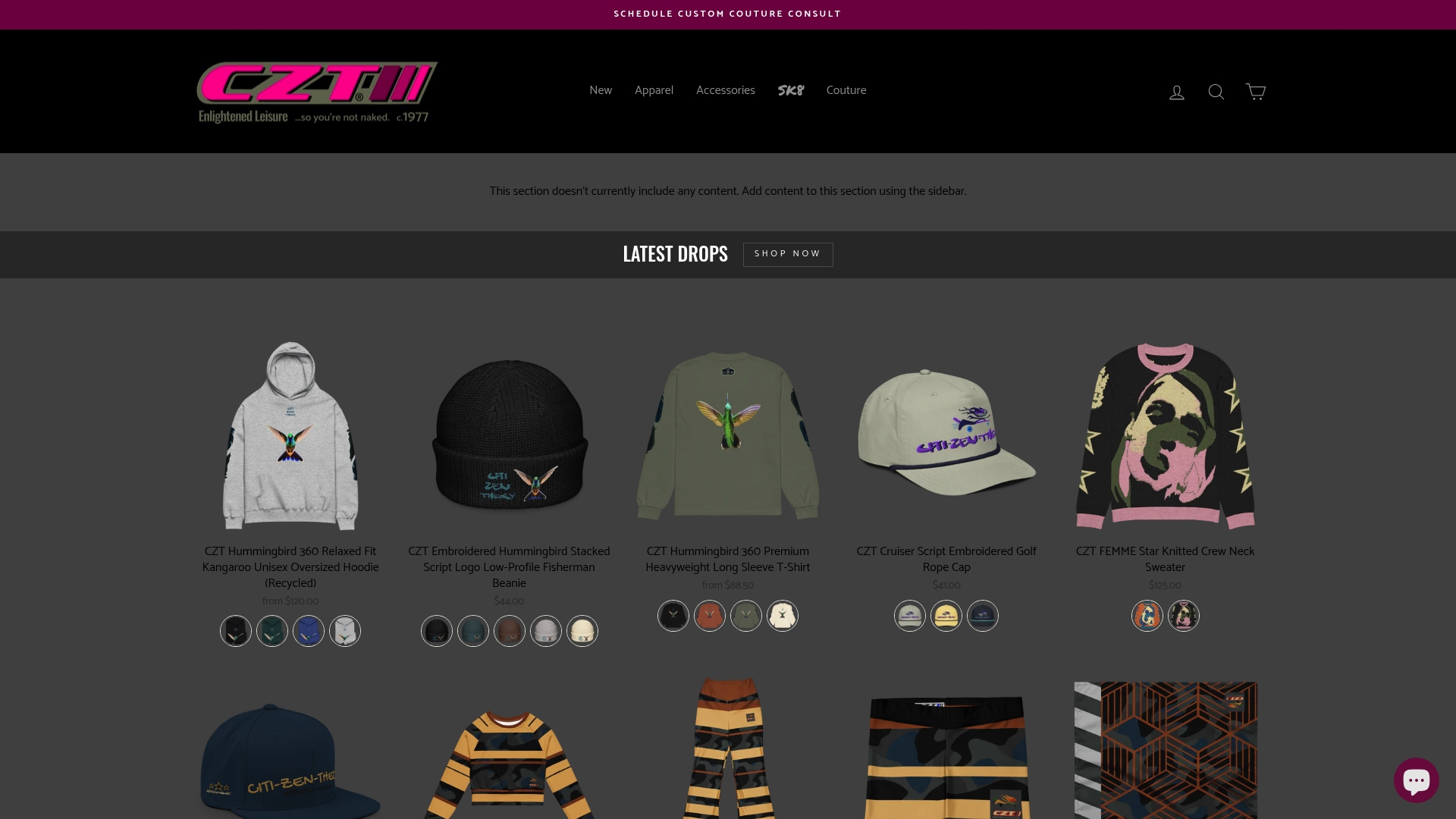
The CZT SK8 Logo Premium HVW8 Tee is a direct expression of that philosophy: performance-driven construction, aesthetically intriguing design, and a production ethos that takes the full supply chain seriously. For those who want the same commitment in a layering piece, the CZT SK8 Embroidered Zip-Up Hoodie brings that same dedication to eco-conscious craft in a cozy, unisex silhouette. Style and responsibility are not opposing forces. At Czt, they are the same sentence.
FAQ
What is recycled fabric clothing?
Recycled fabric clothing is apparel made from yarn produced by processing recovered pre-consumer or post-consumer textile waste, including plastic bottles, discarded garments, and industrial off-cuts. The goal is to reduce landfill waste and lower the resource demands of producing new fiber.
How is recycled fabric made from plastic bottles?
Plastic bottles are shredded into flakes, melted, and extruded into polyester filament yarn, a process that produces rPET fiber with performance characteristics close to virgin polyester. This is one of the most commercially scaled forms of recycled textile production available today.
Does recycled fabric clothing perform as well as virgin fabric?
Recycled polyester and recycled nylon perform comparably to their virgin counterparts in most applications. Recycled cotton requires blending with virgin fiber at ratios of 70 to 80% virgin content to maintain strength, due to fiber shortening during mechanical recycling.
How do I know if a garment is truly made from recycled fabric?
Look for Global Recycled Standard (GRS) certification on the product label or brand website, which requires a minimum of 20% recycled content and full chain-of-custody documentation. Brands that publish supplier lists and third-party audit results offer the strongest verification.
Is recycled fabric clothing fully sustainable?
Recycled fabric clothing reduces environmental impact at the fiber stage, but dyeing and finishing processes still carry significant environmental costs, accounting for roughly 53% of fashion’s greenhouse gas emissions. Full sustainability requires both recycled fiber sourcing and responsible processing practices throughout the supply chain.
Recommended
- CZT x KP - CHROMESTHETIC JAZZ Mesh B-Ball Shorts | Recycled & Eco-Friendly – CZT [CITI-ZEN-THEORY]
- CZT x KP - ELEPHANTS Athletic Shorts | Recycled Women’s Activewear – CZT [CITI-ZEN-THEORY]
- CZT SK8 Brick Wall Bandana and Shawl Recycled - Stylish & Eco-Friendly – CZT [CITI-ZEN-THEORY]
- CZT Banner Logo Embroidered Ribbed Beanie - Eco-Friendly & Stylish – CZT [CITI-ZEN-THEORY]