![CZT [CITI-ZEN-THEORY]](http://czt.rocks/cdn/shop/files/CZT_-_Brand_PINK_Label_1_330x.png?v=1774104725)
![CZT [CITI-ZEN-THEORY]](http://czt.rocks/cdn/shop/t/61/assets/CZT-Fast-Logo---Blue-Grey_330x.png?v=98224836737033641471695502660)
![CZT [CITI-ZEN-THEORY]](http://czt.rocks/cdn/shop/files/CZT_-_Brand_PINK_Label_1_170x.png?v=1774104725)
![CZT [CITI-ZEN-THEORY]](http://czt.rocks/cdn/shop/t/61/assets/CZT-Fast-Logo---Blue-Grey_170x.png?v=98224836737033641471695502660)
How Compostable Packaging Works in Apparel
Compostable packaging is defined as plant-based material certified to biodegrade fully within industrial or home composting environments, leaving no toxic residue. In apparel, this means the polybags, mailers, and garment sleeves wrapping your clothing are made from materials like polylactic acid (PLA), polybutylene adipate terephthalate (PBAT), or starch blends rather than petroleum-based plastics. Understanding how compostable packaging works in apparel matters because certified compostable packaging breaks down within 90–180 days, compared to conventional plastic that persists in landfills for 400–1,000 years. The industry standards governing these claims, primarily ASTM D6400 in the United States and EN 13432 in Europe, set the scientific bar for what “compostable” actually means.
How compostable packaging works in apparel: materials and mechanics
The core of compostable apparel packaging lies in its feedstock. Rather than crude oil, manufacturers derive these films from corn starch, sugarcane, cassava, or cellulose. The three most common material families are PLA, PBAT, and starch blends, each with distinct performance profiles.
- PLA (polylactic acid): Derived from fermented plant sugars, PLA is rigid and clear. It works well for hang tags, rigid inserts, and some film applications, but requires industrial composting temperatures of 55–60°C to break down efficiently.
- PBAT (polybutylene adipate terephthalate): A flexible bioplastic often blended with PLA or starch to improve tear resistance and seal strength. PBAT improves the physical performance of compostable films without sacrificing biodegradability.
- Starch blends: Made from potato, corn, or tapioca starch, these are the most widely home-compostable option. They are softer and more moisture-sensitive than PLA but biodegrade at ambient temperatures.
Film formulation is where material science meets real-world performance. A compostable garment bag is not simply a thinner version of a plastic bag. Manufacturers engineer specific resin ratios, film thicknesses, and additive packages to balance strength with compostability. The inks, adhesives, and labels applied to the finished bag must also be compostable. A bag printed with conventional solvent-based inks can fail certification even if the base film is fully compliant.
One distinction that trips up many eco-conscious consumers is the difference between “plant-based” and “compostable.” Plant-based describes the feedstock origin. Compostable describes the end-of-life behavior. A material can be plant-based but not compostable, and vice versa. Always look for the certification mark, not just the marketing language.
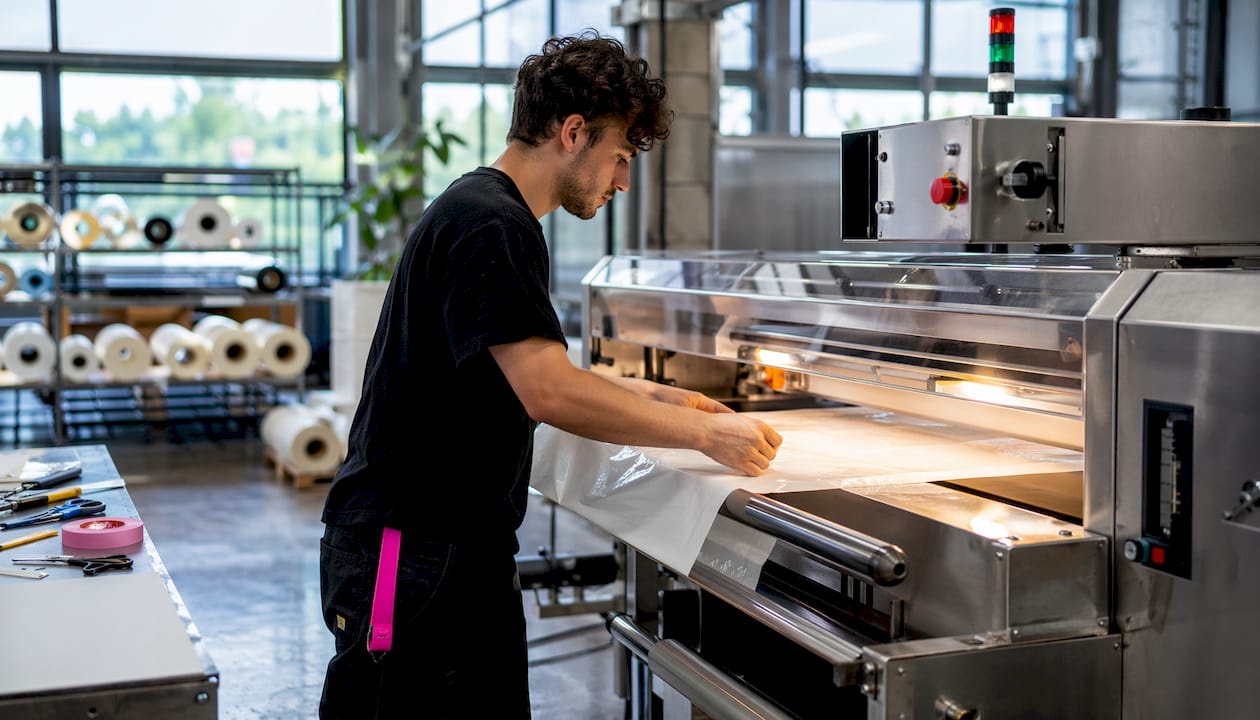
Pro Tip: Ask your packaging supplier for the full bill of materials, including inks and adhesives, before accepting any compostability claim. The finished product, not just the base film, must carry the certification.
What certifications define compostable apparel packaging?
Certification is the only reliable way to distinguish genuine compostable packaging from greenwashing. The major standards in 2026 are ASTM D6400 (United States), EN 13432 (Europe), AS4736 (Australia, industrial), and AS5810 (Australia, home composting). Each standard specifies disintegration rates, ecotoxicity limits, and heavy metal thresholds that finished products must meet.
| Standard | Region | Composting type | Key requirement |
|---|---|---|---|
| ASTM D6400 | United States | Industrial | 90% disintegration in 180 days at 58°C |
| EN 13432 | Europe | Industrial | 90% disintegration in 12 weeks at 58°C |
| AS4736 | Australia | Industrial | Equivalent to EN 13432 conditions |
| AS5810 | Australia | Home | Disintegration at ambient temperatures |
Certification applies to finished products, meaning the printed, sealed, labeled bag in its final form must pass testing. A brand cannot certify the raw film and assume the printed version complies. This is a critical point that many fashion labels miss when sourcing packaging.
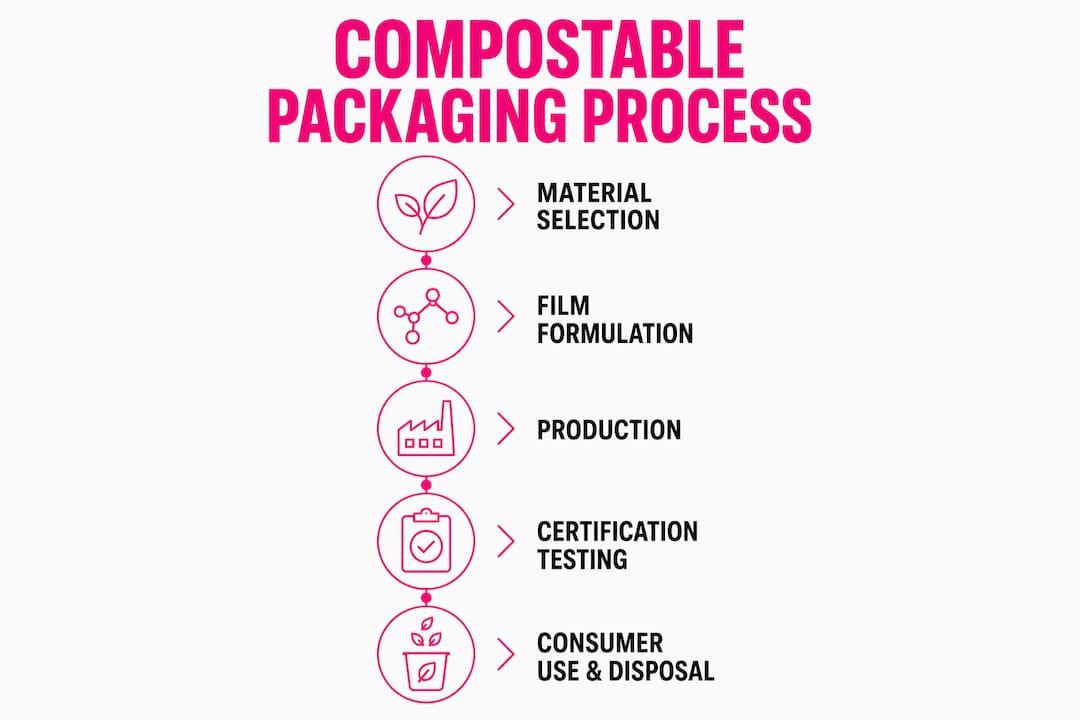
Regulatory pressure is intensifying. Several regions now mandate traceability via QR codes or barcodes on compostable packaging, starting in 2025, so consumers and composting facilities can verify claims at the point of disposal. This traceability requirement reflects a broader shift: governments are treating compostability claims as regulated speech, not marketing copy.
The distinction between industrial and home compostability standards carries real consequences for consumers. Industrial composting requires sustained temperatures of 55–60°C, which only municipal or commercial facilities can achieve. Home composting occurs at ambient temperatures and works well for starch-based films but struggles with pure PLA. If your packaging carries only an industrial certification, it will not break down in a backyard compost bin.
How durable is compostable packaging for apparel shipping?
Durability is the question that stops most apparel brands from committing to compostable packaging. The honest answer is that properly specified compostable bags perform comparably to conventional polybags for standard apparel shipping conditions.
Compostable garment bags require engineered thickness of 35–50 microns, proper sealing, and correct packing methods to survive transit without failure. Most failures in the field trace back to under-specification, poor seal control, or overpacking rather than any inherent fragility in the material. A bag specified at 30 microns for a heavy denim jacket will fail. The same bag at 50 microns with a heat-sealed closure will not.
Technical testing protocols validate performance before bags reach your fulfillment center. Drop tests, compression simulations, and vibration testing replicate the mechanical stress of a parcel moving through a carrier network. Brands that skip this validation and source purely on price tend to experience the failures that give compostable packaging a bad reputation.
- Drop testing: Simulates the impact of a parcel falling from conveyor height. Bags must maintain seal integrity after repeated drops.
- Compression testing: Replicates stacking pressure in transit vehicles and warehouses.
- Seal strength testing: Measures the force required to open a sealed edge, verifying that heat-seal parameters are correctly set.
- Vibration simulation: Models the continuous movement of parcels in transit, which causes abrasion and fatigue in thin films.
Storage conditions add another variable. Compostable packaging has a finite shelf life and can begin degrading in warm, humid warehouse environments before it ever reaches a consumer. Suppliers should provide specific storage guidance, typically cool and dry conditions below 25°C, and brands should factor lead times carefully to avoid holding large inventories of compostable packaging for extended periods.
Pro Tip: Order compostable packaging in quantities that align with your fulfillment cycle, not your annual forecast. Excess stock stored in warm warehouses degrades before use, which wastes both money and the environmental benefit.
What are the real sustainability benefits and limits of compostable packaging in fashion?
The environmental case for compostable packaging in apparel is genuine but requires honest framing. Plant-based compostable packaging reduces greenhouse gas emissions by 30–50% compared to virgin plastics when managed correctly through composting infrastructure. That qualifier, “when managed correctly,” carries enormous weight.
Compostable packaging also addresses one of the most persistent problems with conventional plastic. Compostable packaging breaks down biologically instead of fragmenting into microplastics, reducing the long-term chemical load in soil and water. Microplastic contamination from fashion packaging is a documented and growing problem. Compostable materials eliminate that specific failure mode entirely.
The infrastructure gap is the most significant limitation. Only 38% of the U.S. population has access to curbside organics collection that accepts compostable packaging. That means the majority of compostable apparel packaging, if disposed of in a standard trash bin, ends up in a landfill where anaerobic conditions slow or prevent proper breakdown. The environmental benefit depends entirely on the disposal pathway.
Composting should be understood as a last-resort sustainability tool, applied after reuse and recycling have been exhausted. It does not reduce the demand for new materials or offset the energy used in production. Brands that position compostable packaging as a complete sustainability solution are overstating the case. The real value lies in eliminating microplastic pollution and reducing emissions within a well-managed end-of-life system.
Consumer education is therefore not optional. Brands using compostable packaging carry a responsibility to label clearly, explain disposal requirements, and ideally support take-back or drop-off programs that connect consumers to composting infrastructure. This connects naturally to regenerative fashion principles, where biological nutrient design and responsible end-of-life management work together rather than in isolation. For eco-conscious consumers building a sustainable luxury wardrobe, understanding these disposal pathways is as important as understanding the materials themselves.
Key Takeaways
Compostable apparel packaging delivers real environmental benefits only when certified materials meet verified composting infrastructure at the end of a product’s life.
| Point | Details |
|---|---|
| Certification is non-negotiable | ASTM D6400 and EN 13432 must apply to the finished, printed product, not just the raw film. |
| Material choice determines compostability type | PLA requires industrial composting; starch blends can break down at home. |
| Durability depends on specification | Films at 35–50 microns with proper sealing perform comparably to conventional polybags. |
| Infrastructure limits real-world impact | Only 38% of U.S. consumers have access to composting that accepts packaging. |
| Consumer education closes the loop | Clear labeling and take-back programs are required for compostable packaging to deliver its environmental promise. |
Czt’s perspective on compostable packaging and what it actually demands
We have spent years watching the conversation around sustainable packaging oscillate between breathless optimism and cynical dismissal. Neither position serves the eco-conscious consumer or the brands genuinely trying to do better. What we have come to understand, through the work of building Czt around recycled materials and responsible design, is that compostable packaging is a serious commitment, not a marketing shortcut.
The certification process alone reveals how much rigor is required. Testing finished assemblies, validating inks, specifying correct film thickness, managing warehouse storage conditions: these are not tasks that a brand can delegate to a supplier and forget. They require ongoing attention and supply chain accountability. We have seen brands launch compostable packaging with genuine enthusiasm, only to discover that their printed bags failed certification because of an incompatible adhesive. That kind of failure is avoidable, but only through discipline.
The infrastructure gap is the part of this conversation that deserves more honesty. Compostable packaging does not solve the problem if it ends up in a landfill. Brands have a responsibility to close that loop, through consumer education, take-back programs, and advocacy for composting infrastructure investment. At Czt, we see this as part of the same cultural commitment that drives our recycled materials approach to apparel design. The packaging is not separate from the garment. It is part of the same story we tell about what fashion can be.
The future of compostable packaging in apparel is genuinely promising, but it will be built on verified performance and honest communication, not on the word “compostable” printed on a bag.
— Czt
Czt and the craft of sustainable apparel packaging
Czt brings the same creative discipline that defines its Botanic Camo collection to the question of sustainable packaging. Every piece Czt produces reflects a commitment to materials that carry meaning beyond aesthetics, and that commitment extends to how those pieces arrive at your door.
For eco-conscious consumers who want to understand the full picture of sustainable fashion choices, Czt offers resources, collections, and custom couture design services built around recycled and responsibly sourced materials. The packaging is part of the design. Explore Czt’s approach to eco-friendly streetwear and find pieces that reflect both your style and your values.
FAQ
What is compostable packaging in apparel?
Compostable packaging in apparel is plant-based material, typically PLA, PBAT, or starch blends, certified under standards like ASTM D6400 or EN 13432 to biodegrade fully in composting environments without leaving toxic residue.
How long does compostable apparel packaging take to break down?
Certified compostable packaging disintegrates within 90–180 days under industrial composting conditions at 55–60°C. Home-compostable materials break down more slowly at ambient temperatures.
Is compostable packaging strong enough for shipping clothes?
Yes, when correctly specified at 35–50 microns with proper heat sealing, compostable garment bags withstand standard shipping conditions. Most failures result from under-specification or poor seal control, not material weakness.
What is the difference between industrial and home compostable packaging?
Industrial compostable packaging requires sustained high temperatures only available at commercial facilities. Home compostable packaging, typically starch-based and certified under AS5810, breaks down in backyard compost bins at ambient temperatures.
Can I put compostable apparel packaging in my regular trash?
Placing compostable packaging in a landfill negates most of its environmental benefit, since anaerobic landfill conditions prevent proper breakdown. Use curbside organics collection or a composting drop-off facility where available.