![CZT [CITI-ZEN-THEORY]](http://czt.rocks/cdn/shop/files/CZT_-_Brand_PINK_Label_1_330x.png?v=1774104725)
![CZT [CITI-ZEN-THEORY]](http://czt.rocks/cdn/shop/t/61/assets/CZT-Fast-Logo---Blue-Grey_330x.png?v=98224836737033641471695502660)
![CZT [CITI-ZEN-THEORY]](http://czt.rocks/cdn/shop/files/CZT_-_Brand_PINK_Label_1_170x.png?v=1774104725)
![CZT [CITI-ZEN-THEORY]](http://czt.rocks/cdn/shop/t/61/assets/CZT-Fast-Logo---Blue-Grey_170x.png?v=98224836737033641471695502660)
Buy Long-Lasting Children's Streetwear: A Parent's Guide
Long-lasting children’s streetwear is defined as garments built from performance-grade fabric blends, quality construction, and timeless silhouettes that survive active play, repeated washing, and growth spurts without losing their aesthetic integrity. This buy long-lasting children streetwear guide exists because the gap between what looks good on a rack and what holds up through a school year is wider than most parents realize. Choosing durable kids clothing is not just a financial decision. It is a commitment to craft, comfort, and a more considered approach to how we dress the next generation.
What fabric blends make children’s streetwear truly durable?
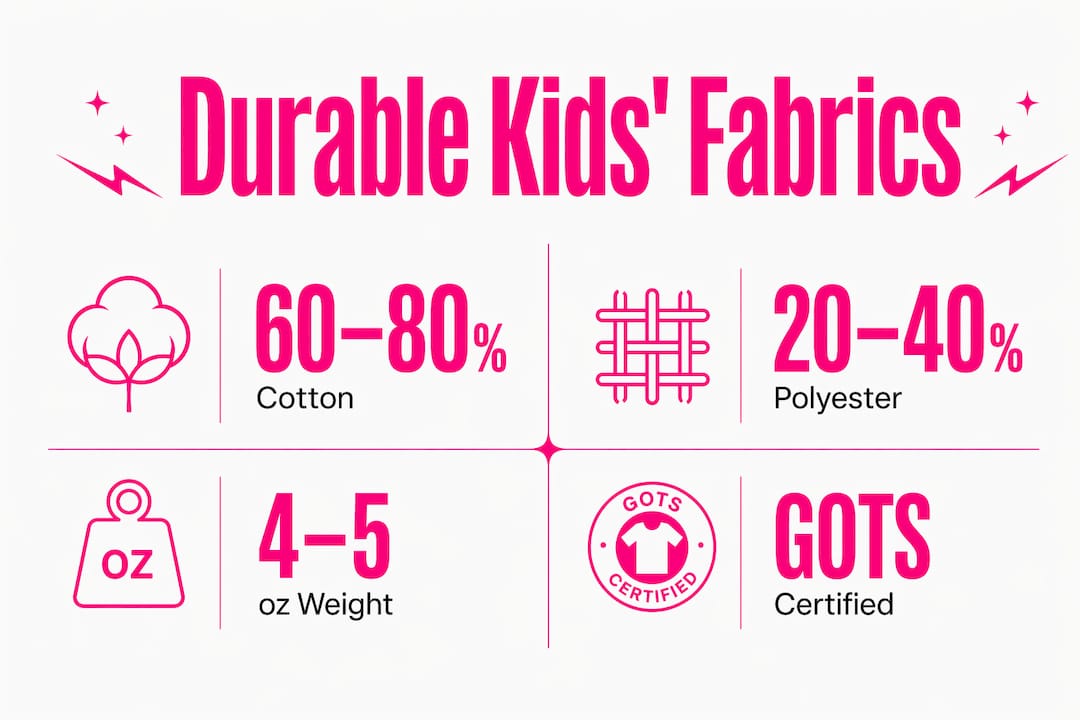
The foundation of any long-lasting kids fashion piece is its fiber composition. Ideal durable streetwear uses a 60–80% cotton and 20–40% synthetic fiber blend, balancing softness with resistance to shrinking and wear. Cotton alone absorbs sweat and breathes well, but it pills and distorts under repeated washing. Polyester adds dimensional stability and abrasion resistance. Together, they produce a garment that feels good against a child’s skin and survives the chaos of daily life.
Fabric weight matters just as much as fiber content. Medium-weight cotton blends, roughly 4–5 oz per square yard, offer the best balance of durability and comfort. Lighter fabrics tear and fade faster. Heavier fabrics restrict movement, which is the last thing a kid frolicking through a skate park needs.
Certifications tell you what the label cannot. GOTS and OEKO-TEX certifications verify that clothing is free from harmful chemicals and safe for sensitive skin. These standards are not marketing language. They represent third-party testing against specific chemical thresholds. For parents buying streetwear for children, these marks are the clearest signal of both safety and manufacturing quality. Czt’s use of recycled materials, including in the Botanic Camo collection, reflects this same commitment to responsible textile sourcing.
Natural and recycled textiles are increasingly common in quality streetwear. Recycled polyester, derived from post-consumer plastic, performs comparably to virgin polyester while reducing environmental impact. Pairing it with organic cotton creates a fabric composition that is both performance-driven and ethically grounded.
| Fabric Type | Durability | Comfort | Best Use |
|---|---|---|---|
| 60–80% cotton / 20–40% polyester | High | High | Hoodies, joggers, tees |
| 100% cotton | Medium | Very high | Casual tees only |
| 100% polyester | Medium | Lower | Activewear shells |
| Recycled polyester blend | High | High | Sustainable streetwear |
Pro Tip: Check the fabric tag before you check the price. A $40 hoodie in a certified cotton-poly blend will outlast a $20 pure-cotton version by at least two wash cycles per month.
How can you spot construction quality that extends a garment’s lifespan?
Fabric composition is only half the story. The way a garment is assembled determines whether it survives a year of active wear or falls apart at the seams after six washes.
- Double-stitched seams at stress points like the crotch, underarms, and pocket openings are the single most reliable indicator of construction quality. A single-stitched seam unravels under repeated tension. Double stitching distributes the stress across two rows of thread.
- Channel-encased elastic bands outlast exposed elastic by a significant margin. Inspect the waistband of any jogger or shorts. If the elastic is sewn directly into the fabric without a fabric channel around it, it will degrade and lose tension faster.
- Branded zippers signal quality hardware. YKK zippers are the industry benchmark. Generic zippers fail at the pull tab or teeth within months of regular use. A YKK zipper on a kids’ hoodie is a small detail that prevents a major frustration.
- Reinforced buttons and snap fasteners resist the pulling force children apply constantly. Look for buttons with a thread shank rather than buttons sewn flat against the fabric.
- Inside seam finishing is the clearest window into a brand’s overall quality standards. Serged or bound interior seams prevent fraying and signal that the manufacturer cared about the parts you cannot see.
- Machine-washable and machine-dryable fabrics are non-negotiable for kids’ clothing. Garments requiring hand washing or line drying will wear out faster in practice because parents simply cannot maintain those care protocols consistently.
Pro Tip: Flip the garment inside out in the store. If the interior seams look clean and finished, the brand invested in quality throughout. If they look raw and fraying, the exterior finish is cosmetic.
What does a versatile, long-lasting kids’ streetwear capsule wardrobe look like?
A capsule wardrobe is the industry term for a small, curated collection of garments that work together across multiple combinations. For children’s streetwear, this approach eliminates the cycle of buying cheap, trend-driven pieces that wear out or fall out of style within a season.
- Start with 12–15 core pieces. A capsule of 12–15 versatile items can generate over 30 distinct outfit combinations. That math matters for parents managing laundry, school dress codes, and weekend activities simultaneously.
- Anchor the palette in neutrals. Black, white, gray, navy, and olive form the backbone. Two or three bold graphic pieces or prints add personality without limiting combinations.
- Choose timeless silhouettes over trend pieces. Oversized hoodies, straight-leg joggers, and classic crew-neck sweatshirts do not expire. A graffiti-print neon windbreaker from a fast-fashion drop will feel dated within one season.
- Invest in high-wear items. Spend more on sneakers and hoodies, which endure the most physical stress. Save on graphic tees and accessories, which rotate faster and carry lower cost-per-wear expectations.
- Size up strategically. Buying one size up and selecting pieces with adjustable cuff hems or drawstring waists extends wearability through growth spurts. A hoodie purchased in a size larger than current fit can deliver two full seasons of wear.
For layering inspiration across different weather conditions, Czt’s guide on cold-weather streetwear layering shows how a small number of pieces can be composed into a wide range of aesthetically intriguing looks.
| Investment Level | Item Type | Reason |
|---|---|---|
| Spend more | Hoodies, sneakers, joggers | High wear frequency, high stress points |
| Spend less | Graphic tees, accessories | Trend-driven, lower durability expectations |
| Spend more | Outerwear | Seasonal protection, visible wear |
| Spend less | Seasonal novelty prints | Short style lifespan |
How should you care for kids’ streetwear to preserve its look and structure?
Care habits determine how long a well-made garment actually lasts. The best fabric blend and construction in the world cannot survive consistently poor washing practices.
- Follow the care label, but favor low-maintenance fabrics from the start. The label tells you the minimum. Your actual practice should be simpler. Cotton-poly blends tolerate machine washing on a normal cycle without drama.
- Use mild detergents. Harsh detergents strip color and degrade elastic fibers over time. A fragrance-free, dye-free detergent preserves both the fabric and the print.
- Skip fabric softener on streetwear. Fabric softener coats synthetic fibers and degrades the elasticity in waistbands and cuffs. It also reduces moisture-wicking performance in active fabrics.
- Wash inside out. Turning garments inside out before washing protects printed graphics and surface texture from abrasion against other clothing.
- Store folded, not hung. Hanging knit fabrics like hoodies and sweatshirts stretches the shoulder seams over time. Folding preserves the garment’s original shape.
For parents choosing stretch fabrics for active children, proper care is especially important because elastane-blend fibers lose their recovery ability when exposed to high heat or harsh chemicals repeatedly.
What mistakes do parents most often make when buying kids’ streetwear?
The most common buying errors are predictable, and each one shortens a garment’s useful life or wastes money on pieces that never fit the wardrobe.
- Buying 100% cotton or 100% polyester. Pure cotton shrinks and distorts. Pure polyester traps heat and feels uncomfortable against skin during active play. Neither extreme performs as well as a blended composition.
- Ignoring construction details. Exposed elastic, single-stitched seams, and generic zippers are visible at purchase. Parents who skip this inspection pay for it within weeks.
- Chasing fast-fashion trends. Affordable fast-fashion streetwear wears out quickly due to fabric abrasion. A $20 piece that lasts one season costs more per wear than a $35 piece that survives multiple kids.
- Buying the wrong size without adjustability. Purchasing the exact current size with no room for growth means the garment is outgrown before it is worn out.
- Skipping certification verification. GOTS and OEKO-TEX marks are not decorative. Skipping this check means accepting unknown chemical treatments on fabric that sits against a child’s skin all day.
“A $35 garment surviving multiple kids costs less per wear than $20 fast fashion.” Timeless, classic streetwear silhouettes encourage style longevity and better value per wear for children.
Key takeaways
Durable children’s streetwear requires the right fabric blend, quality construction, a capsule wardrobe approach, and consistent care to deliver real value across multiple seasons and multiple kids.
| Point | Details |
|---|---|
| Fabric blend is foundational | Choose 60–80% cotton and 20–40% polyester for the best balance of softness and durability. |
| Construction details reveal quality | Look for double-stitched seams, YKK zippers, and channel-encased elastic before buying. |
| Capsule wardrobes reduce waste | Twelve to fifteen versatile pieces create over 30 outfit combinations and lower cost per wear. |
| Care habits extend garment life | Wash inside out with mild detergent, skip fabric softener, and store folded to preserve shape. |
| Certifications protect your child | GOTS and OEKO-TEX marks confirm chemical safety and manufacturing standards. |
Why I believe quality streetwear for kids is worth every dollar
We built Czt from a deep appreciation for the culture that streetwear carries. Youth frolicking dangerously to the soundtrack of skateboard wheels on concrete, graffiti murals as the backdrop, and clothing that had to perform as hard as the kids wearing it. That origin shapes how we think about children’s streetwear today.
What I have observed, after years inside this culture, is that parents often underestimate the cost of buying cheap. The math is simple but easy to ignore at the register. A well-constructed hoodie in a certified cotton-poly blend, sized up one step with adjustable cuffs, can travel from one child to the next with its structure intact. That is not just economy. That is a different philosophy about what clothing is for.
The most aesthetically intriguing pieces in a child’s wardrobe are rarely the trendiest ones. They are the pieces with composition, with weight, with seams that hold their line after a hundred washes. Timeless silhouettes carry a quiet authority that no seasonal graphic can replicate. My honest advice is to spend where the stress is greatest, care for what you buy with intention, and let the wardrobe grow slowly rather than all at once.
— Czt
Czt’s collection for parents who take quality seriously
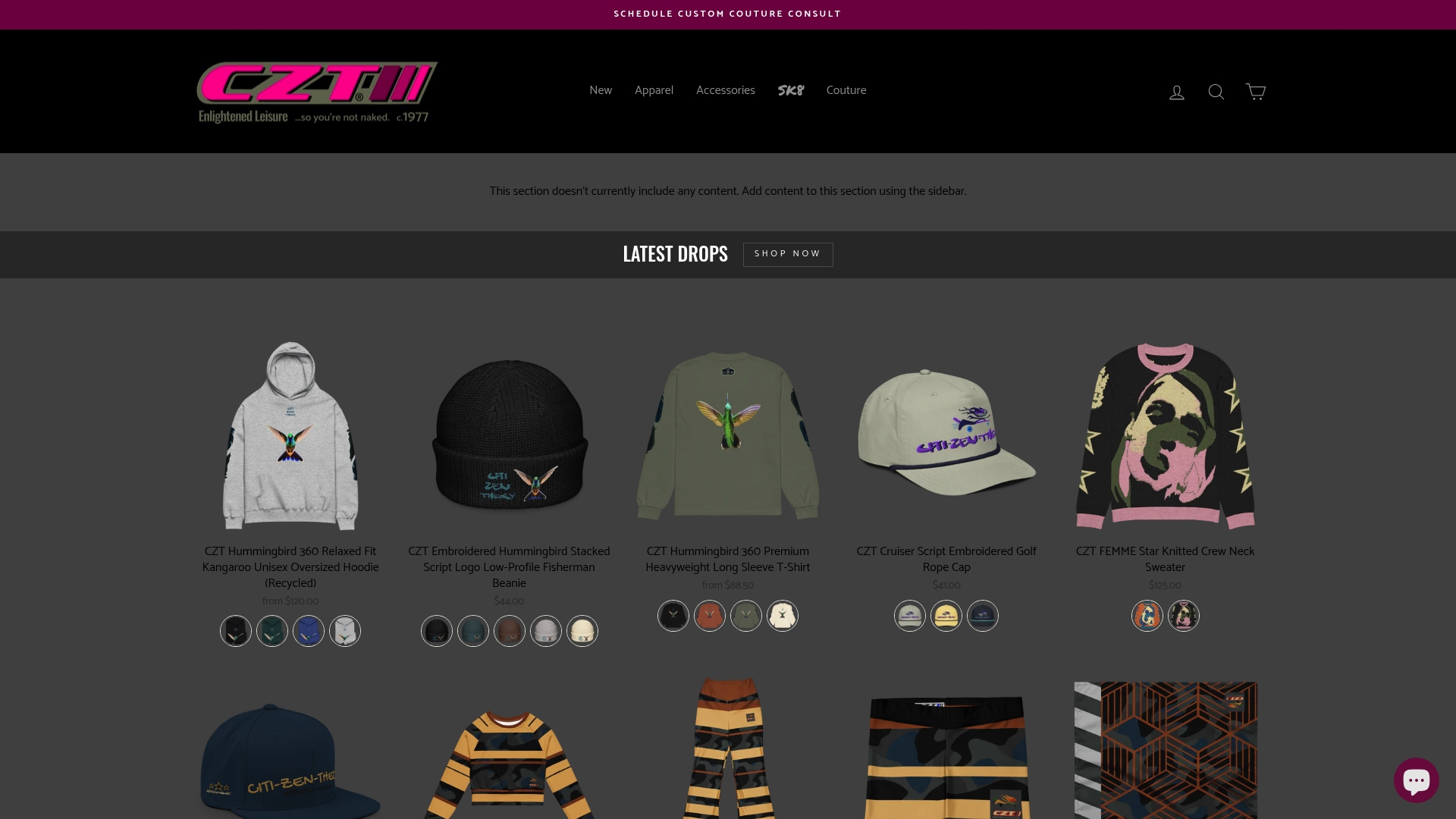
Czt designs streetwear for families who refuse to choose between style and responsibility. Every piece in the collection reflects a commitment to recycled materials, certified fabric compositions, and construction details that hold up through active seasons. The Botanic Camo collection, built from recycled textiles, is a direct expression of that philosophy. Parents looking to build a durable kids’ capsule wardrobe will find pieces designed with longevity in mind, not just the next trend cycle. Czt also offers custom couture design services for families who want to personalize their children’s streetwear experience from the ground up. Browse the full range at czt.rocks and find the pieces worth investing in.
FAQ
What is the best fabric for durable children’s streetwear?
A 60–80% cotton and 20–40% polyester blend is the most durable and comfortable choice for kids’ streetwear. This composition resists shrinking, handles repeated washing, and stays soft against skin.
How many pieces does a kids’ streetwear capsule wardrobe need?
Twelve to fifteen versatile, neutral-toned pieces create over 30 outfit combinations. This size keeps the wardrobe manageable while covering school, play, and casual occasions.
What certifications should I look for when buying children’s streetwear?
GOTS and OEKO-TEX are the two most recognized certifications. Both verify that garments are free from harmful chemicals and meet safety standards for sensitive skin.
How do I make kids’ streetwear last longer through washing?
Wash garments inside out on a normal machine cycle using a mild detergent, and skip fabric softener. Store hoodies and sweatshirts folded rather than hung to preserve seam structure.
Is buying one size up a good strategy for kids’ streetwear?
Buying one size up with adjustable features like drawstring waists or cuff hems extends wearability through growth spurts and can add one to two extra seasons of use per garment.
Recommended
- Playful Design in Kids Apparel: What Parents Should Know – CZT [CITI-ZEN-THEORY]
- How to Source Eco-Friendly Streetwear Pieces Globally – CZT [CITI-ZEN-THEORY]
- Stretch Fabric for Active Children: A Parent’s Guide – CZT [CITI-ZEN-THEORY]
- Personalized Streetwear Looks: 9 Bold Style Examples – CZT [CITI-ZEN-THEORY]