![CZT [CITI-ZEN-THEORY]](http://czt.rocks/cdn/shop/files/CZT_-_Brand_PINK_Label_1_330x.png?v=1774104725)
![CZT [CITI-ZEN-THEORY]](http://czt.rocks/cdn/shop/t/61/assets/CZT-Fast-Logo---Blue-Grey_330x.png?v=98224836737033641471695502660)
![CZT [CITI-ZEN-THEORY]](http://czt.rocks/cdn/shop/files/CZT_-_Brand_PINK_Label_1_170x.png?v=1774104725)
![CZT [CITI-ZEN-THEORY]](http://czt.rocks/cdn/shop/t/61/assets/CZT-Fast-Logo---Blue-Grey_170x.png?v=98224836737033641471695502660)
Winter Streetwear Fabrics for Designers & Buyers
For cold weather streetwear, wool, cashmere, polyester fleece, sherpa, heavyweight cotton and French terry, cotton-poly blends, flannel, corduroy, velvet, faux fur, and nylon or polyester shells make up the core palette worth knowing. Choose fleece or heavyweight cotton for hoodies, wool for structured coats, sherpa for linings and statement outerwear, corduroy or flannel for pants and jackets, and faux fur or velvet for accessories and hats that need to make a visual statement.
- Hoodies: heavyweight cotton fleece or premium French terry
- Coats: wool or wool-blend outer with a sherpa or cashmere-adjacent lining
- Pants: corduroy, heavyweight cotton twill, or cotton-poly blends
- Linings: sherpa or faux fur for bulk-free warmth
- Hats and accessories: faux fur, velvet, or brushed wool
Pro Tip: Check the hangtag or product description for GSM before you buy sight unseen. Anything under 280 GSM will feel closer to a T-shirt than a winter hoodie, while 400–500 GSM sits at the premium heavyweight benchmark that gives a hoodie real structure and drape.
Key Takeaways
The best winter streetwear fabric depends on the garment: fleece and heavyweight cotton for hoodies, wool for coats, sherpa for linings, and recycled blends when sustainability matters as much as warmth.
| Point | Details |
|---|---|
| Match GSM to garment | Aim for 400 to 500 GSM for premium heavyweight hoodies, 220 to 350 GSM for lighter layers. |
| Separate warmth from breathability | High-pile sherpa insulates best but suits linings, not active base layers. |
| Test before you buy | Use the light-through test and a hand-weight check to judge unlabeled fabric. |
| Match care to fiber | Hand wash or dry clean wool, cashmere, and velvet; machine wash fleece and blends cold. |
| Choose sustainable blends deliberately | Look for GOTS or RCS certification, as Czt does with its recycled Botanic Camo pieces. |
Table of Contents
- What Makes a Fabric Warm Enough for Winter Streetwear?
- Which Fabrics Work Best for Winter Streetwear Garments?
- How Do You Match Fabric to Garment Silhouette?
- How Should You Care for Winter Streetwear Fabrics?
- What Sustainable Fabric Options Exist for Winter Streetwear?
- Ready to Build Your Own Winter Streetwear Piece?
- Frequently Asked Questions
- Sources
What Makes a Fabric Warm Enough for Winter Streetwear?
Warmth comes down to trapped air, fiber conductivity, and thickness, not the name printed on the tag. A fabric insulates when its fibers create tiny air pockets that slow heat loss from your body. That’s why a loosely piled sherpa fleece can outperform a tightly woven cotton twill twice its weight. Pile height, knit density, and lining all shift that equation.
GSM (grams per square meter) gives you a shorthand for weight and warmth potential. Streetwear knits and weaves generally run from around 220 GSM on the light end up past 450 GSM for heavyweight hoodie fleece, with French terry typically landing in the 220 to 350 GSM range and brushed fleece climbing to 280 to 450-plus GSM. Higher GSM usually means more warmth and structure, but also more bulk and less breathability.
You do not need a lab to judge a fabric before you buy it. Two quick checks work well:
- Light-through test: hold the fabric up to a window; more light passing through signals a more breathable, open construction, while a fabric that blocks nearly all light usually traps more heat and moisture.
- Hand-weight check: scrunch a handful of the fabric. A dense, springy resistance usually points to a higher GSM than a limp, thin drape.
Pro Tip: For active streetwear, like skate hoodies you’ll actually move in, look for a lower-pile fleece or mid-weight French terry rather than a maximum-GSM option. Warmth that traps sweat defeats its own purpose the second you start moving.
Which Fabrics Work Best for Winter Streetwear Garments?
Every winter streetwear collection draws from a fairly small set of proven textiles, and knowing their trade-offs saves you from guessing at checkout or in the cutting room.
Wool, including Merino, is a natural fiber that regulates temperature and resists odor better than most synthetics. It reads as premium on outer shells, pea coats, and structured jackets, and Merino specifically offers a softer hand that works against skin without itching. Care demands attention: wool typically needs cold hand-washing or dry cleaning, and it can shrink fast in a hot dryer. Best for tailored coats and structured outerwear.
Cashmere delivers unmatched softness and warmth-to-weight ratio, but it pills easily and commands a premium price. It suits scarves, beanies, and lined hoods rather than high-abrasion pieces like pants. Hand wash or dry clean only.
Polyester fleece is the workhorse of winter streetwear: lightweight, breathable, quick-drying, and engineered for active layering. It machine washes easily but pills over time, especially in lower grades. Best for hoodies, joggers, and mid-layers.
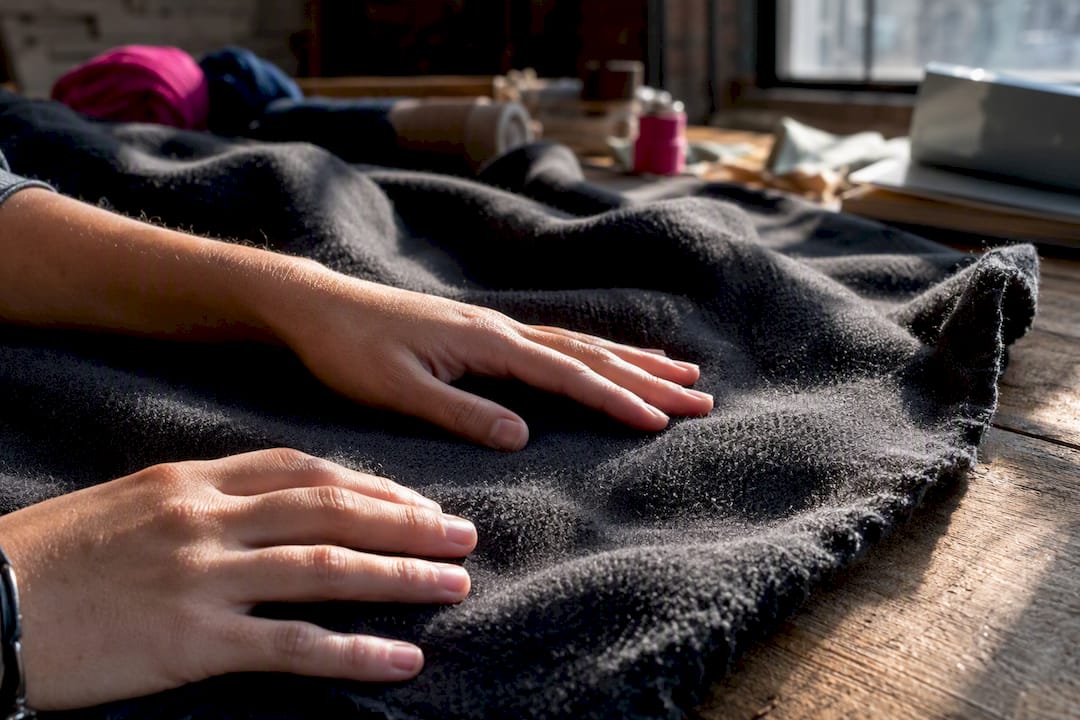
Sherpa, a high-pile synthetic that mimics shearling, traps significantly more heat than standard fleece but sacrifices breathability and adds bulk. It works best in linings, collars, and statement outerwear rather than base layers you’ll sweat in. Wash cold, air dry to prevent matting.
Heavyweight cotton and French terry give hoodies a structured, substantial feel. A 400 to 500 GSM 100% cotton construction produces the luxury hoodie silhouette brands chase for premium drops. Cotton shrinks more than blends and needs cold washing.
Cotton-poly blends balance softness with added durability and lower cost, resisting shrinkage better than pure cotton. Best for everyday hoodies and joggers that need to survive frequent washing.
Flannel and corduroy, both long-favored winter textiles, bring texture and warmth to shirts, jackets, and pants. Corduroy’s vertical ribbing reads as high fashion when paired with wool for a textured, insulated look. Both machine wash on cold, though corduroy can shed fibers early in its life.
Velvet adds a luxe, tactile finish to jackets, hats, and accent pieces, though it shows wear at friction points and usually requires dry cleaning. Faux fur brings volume and drama to hoods, collars, and hats without the ethical weight of the real thing; spot clean and store uncompressed to prevent matting.
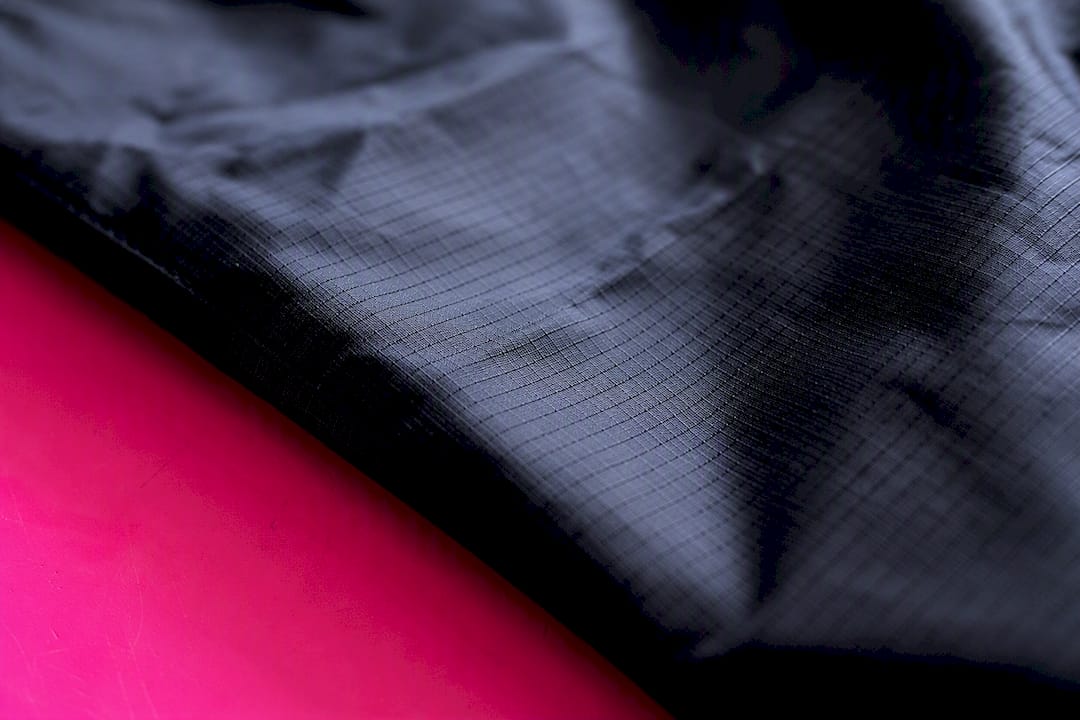
Nylon and polyester shells, including ripstop and duck cloth, form the outer defense layer against wind and moisture. They resist abrasion well and clean up with a quick wipe or cold wash, making them ideal for coat shells and technical outerwear over insulating linings.
How Do You Match Fabric to Garment Silhouette?
Hoodies perform best in heavyweight cotton fleece or premium French terry, since both hold an oversized streetwear silhouette without collapsing after a few washes. Coats call for wool as the outer shell, paired with a sherpa or quilted lining that adds warmth without doubling the garment’s bulk.
Pants do better in corduroy, heavyweight cotton twill, or a cotton-poly blend that can survive repeated wear at the knees and seat. Linings should stay breathable relative to the outer shell. A nylon shell over a sherpa lining traps heat efficiently, while the same shell over polyester fleece stays lighter for transitional days.
Hats and accessories are where texture does the talking: faux fur, velvet, and brushed wool read as statement pieces even in small doses.
- Pair a corduroy outer with a sherpa lining for a textured, high-warmth jacket that still layers under a coat.
- Use wool with cotton-poly accents to keep a coat structured without adding unnecessary weight.
- Reserve high-pile sherpa for outerwear and linings rather than base layers, since dense pile fabrics breathe less than low-pile options.
How Should You Care for Winter Streetwear Fabrics?
Care routines vary more between these fabrics than most shoppers expect, and getting it wrong shortens a garment’s life fast.
- Wash polyester fleece and cotton-poly blends cold, skip the fabric softener, and air dry or tumble on low to avoid melting synthetic fibers.
- Hand wash or dry clean wool, cashmere, and velvet; hot water and high heat are the fastest way to shrink or felt them.
- Wipe down or spot clean nylon and polyester shells rather than machine washing repeatedly, which degrades water-resistant coatings.
- Air dry sherpa and faux fur flat to prevent the high pile from matting.
Durability tracks closely with fiber type: fleece pills with repeated washing, sherpa can flatten under compression, and nylon shells resist abrasion but crack under prolonged UV exposure. Expect entry-level fleece hoodies to run cheap and short-lived, while a well-made wool coat or heavyweight cotton hoodie built above 400 GSM can outlast several seasons of regular wear.
What Sustainable Fabric Options Exist for Winter Streetwear?
Recycled polyester fleece, RCS-certified blends, organic wool, and hemp blends currently offer the strongest combination of warmth and lower environmental impact for winter streetwear. Two certifications are worth learning to spot on a hangtag: GOTS (Global Organic Textile Standard), which verifies organic fiber content and responsible processing, and RCS (Recycled Claim Standard), which verifies the actual recycled content in a fabric batch. Neither certification is a marketing buzzword; both require third-party verification of the supply chain.
If you’re sourcing fabric for a small collection, ask suppliers for fiber-recovery rates and traceability statements before committing to yardage. Pre-consumer recycled content (fabric scraps and manufacturing waste) tends to run more consistent in quality than unsorted post-consumer recycled fiber, which matters if you’re building something meant to last.
Czt built its Botanic Camo collection around recycled materials specifically because sustainable sourcing and street-ready texture aren’t mutually exclusive. A recycled polyester fleece can hold the same hand-feel and drape as virgin fiber when the recovery process is done right.
You can dig deeper into how recycled materials shape modern streetwear design or explore hemp as a sustainable winter fiber if you’re weighing fiber options for a capsule line.
A designer’s view on winter fabric priorities
Czt gravitates toward recycled fleece and heavyweight cotton blends because they hold up under the exact conditions skate and street culture put them through: cold curbs, repeated washing, constant motion. We treat every fabric choice as a design decision first, testing pieces the way they’ll actually get worn rather than the way they photograph on a hanger.
Ready to Build Your Own Winter Streetwear Piece?
Czt’s Botanic Camo collection and custom couture service put these fabric principles into practice: recycled fleece and sustainable blends cut for oversized street silhouettes, with fiber choices that hold their shape through a real winter of wear.

If you already know the fabric you want but not the fit, our custom embroidery and couture services let you commission a piece built around your exact sizing, texture preference, and finish. Not sure where to start? Browse the current winter capsule or book a custom design consultation at Czt and tell us the garment, the climate, and the look you’re after. We’ll match you to the fabric that actually delivers on it.
Frequently Asked Questions
What is the warmest fabric for winter streetwear? Sherpa and heavyweight wool typically provide the most warmth per layer, since both trap significant air within their fiber structure. Sherpa works best in linings and statement outerwear, while wool suits structured coats.
Is fleece or sherpa better for a winter hoodie? Standard fleece breathes better and suits active wear, while sherpa runs warmer but bulkier and fits better as a lining or a heavier statement hoodie you’re not moving hard in.
What GSM should I look for in a winter hoodie? Look for 350 GSM or higher for genuine winter warmth, with 400 to 500 GSM marking the premium heavyweight range favored by streetwear brands.
Are sustainable winter fabrics as warm as conventional ones? Recycled polyester fleece and organic wool perform comparably to virgin fiber versions when the recovery and spinning process is done well, since warmth depends on fiber structure and pile, not whether the fiber started out recycled.
Can I mix textures like corduroy and sherpa in one garment? Yes. A corduroy outer paired with a sherpa lining is a common streetwear combination that adds visual texture on the outside while keeping insulation on the inside, without piling on excess bulk.
Sources
- How to pick the most breathable fabrics | REI Expert Advice
- Fall & Winter Fabrics by the Yard | Mood Fabrics
- Fleece and Sherpa: A Complete Fabric Comparison — Blog | Sohnne®
Recommended
- Material Innovation in Streetwear: Style Meets Ethics – CZT [CITI-ZEN-THEORY]
- Buy Long-Lasting Children’s Streetwear: A Parent’s Guide – CZT [CITI-ZEN-THEORY]
- Hemp Fabric in Streetwear: Style Meets Sustainability – CZT [CITI-ZEN-THEORY]
- Examples of Upcycled Streetwear Designs That Inspire – CZT [CITI-ZEN-THEORY]