![CZT [CITI-ZEN-THEORY]](http://czt.rocks/cdn/shop/files/CZT_-_Brand_PINK_Label_1_330x.png?v=1774104725)
![CZT [CITI-ZEN-THEORY]](http://czt.rocks/cdn/shop/t/61/assets/CZT-Fast-Logo---Blue-Grey_330x.png?v=98224836737033641471695502660)
![CZT [CITI-ZEN-THEORY]](http://czt.rocks/cdn/shop/files/CZT_-_Brand_PINK_Label_1_170x.png?v=1774104725)
![CZT [CITI-ZEN-THEORY]](http://czt.rocks/cdn/shop/t/61/assets/CZT-Fast-Logo---Blue-Grey_170x.png?v=98224836737033641471695502660)
Durable Fabrics for Active Kids: A Sustainable Guide
The best types of durable fabrics for active kids fall into three clear categories: high-performance synthetic blends like polyester-spandex and nylon-spandex, natural antimicrobial fibers like bamboo, and sustainable regenerated materials such as Tencel™ and Modal. Each serves a distinct purpose, and choosing between them comes down to how hard your child plays, how sensitive their skin runs, and how seriously you take the environmental footprint of what they wear.
Here is what the top performers offer at a glance:
- Polyester-spandex blends: moisture-wicking, fast-drying, colorfast, UV-resistant, ideal for high-intensity sports
- Nylon-spandex blends: exceptional abrasion resistance, 4-way stretch, lightweight durability for competitive activity
- Bamboo fiber: natural antimicrobial properties, moisture-wicking, temperature-regulating, skin-gentle
- Tencel™ (Lyocell) and Modal: biodegradable, odor-resistant, breathable, produced through closed-loop processes
- Elastane/Spandex: the stretch-and-recovery backbone of every performance blend
- Certifications to seek: GOTS (Global Organic Textile Standard) and OEKO-TEX Standard 100 for safety and sustainability verification
What types of durable fabrics work best for active kids?
Synthetic blends built around polyester or nylon with elastane are the standard for performance in high-intensity kids’ activewear. Polyester pulls sweat from the skin rapidly and dries fast, while nylon adds tensile strength and a silky surface that resists pilling. Together with elastane, they create a fabric that moves with the body and snaps back without sagging.
The elastane component carries more weight than most parents realize. Even strong fibers like nylon and polyester require 10%–20% elastane for optimal resilience and fit retention after repeated wear and washing. Without it, knees bag out, seams strain, and the garment loses its composition after a season of hard use.
Key performance traits of synthetic blends:
- 4-way stretch: fabric extends in all directions and recovers its original shape
- Moisture management: breathability and quick drying prevent chills and chafing during sustained activity
- Abrasion resistance: nylon outperforms cotton considerably in wear-and-tear scenarios
- Colorfastness: polyester-spandex holds vibrant prints through repeated machine washing
- Fabric weight: mid-weight constructions around 180–220 GSM offer the best balance of support and breathability for sportswear
One honest caveat: conventional polyester sheds microplastic fibers with friction and washing, and many synthetic finishes are not disclosed on care labels. Choosing recycled polyester (rPET) reduces the environmental footprint without sacrificing performance, and it represents a growing preference in eco-conscious kids’ activewear manufacturing.
How do natural and sustainable fibers perform for active children?
Bamboo, Tencel™, and Modal occupy a genuinely different space in the composition of children’s activewear. They are not compromises. They are, for lighter and moderate activity, often the more thoughtful choice, particularly for families who feel the weight of what synthetic production costs the planet.
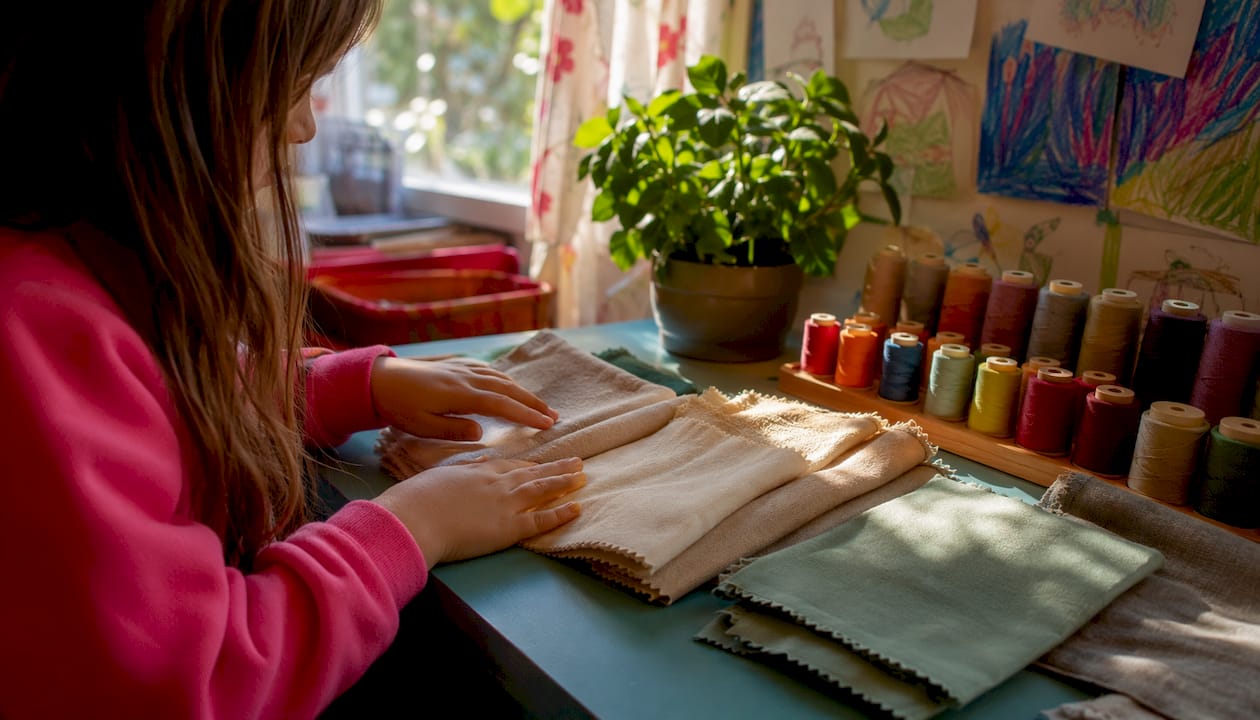
Bamboo fiber’s antimicrobial credentials are lab-confirmed: up to 99.8% bacteria reduction within 24 hours. That matters in activewear, where sweat-soaked fabric against young skin can become a breeding ground for odor and irritation. Bamboo also regulates temperature naturally, wicking moisture while remaining breathable in warm conditions.
Tencel™ (Lyocell) and Modal are regenerated cellulose fibers derived from wood pulp, offering biodegradability alongside moisture-wicking performance that rivals synthetics. A blend of Tencel™ with organic cotton creates a fabric that is supremely soft, odor-resistant, and genuinely eco-friendly, though it trades some abrasion resistance for that softness. Medical textile research consistently recommends natural fibers for children to reduce skin irritation and limit exposure to chemical finishes and microplastic shedding.
Sustainable fiber benefits at a glance:
- Bamboo: natural antimicrobial, moisture-wicking, temperature-regulating, silky hand-feel
- Tencel™ / Modal: biodegradable, closed-loop production, odor-resistant, breathable
- Organic cotton blends: hypoallergenic, free from synthetic pesticides, softens with washing
- rPET: recycled synthetic with performance identical to virgin polyester, lower environmental cost
- Natural fiber advantage: free from microplastic shedding and hidden chemical coatings that sit against children’s permeable skin
Pro Tip: For kids with eczema or contact dermatitis, start with GOTS-certified organic cotton or bamboo jersey and introduce synthetic blends gradually, watching for skin response before committing to a full activewear wardrobe.
Which fabric properties actually determine how long kids’ clothing lasts?
Durability in children’s activewear is not simply about fiber strength. It is about how a fabric behaves across hundreds of wears and washes, how it recovers its shape, and how its construction holds up against the particular violence that active children inflict on their clothing.
Reinforced seams, gussets, and flat-seam construction reduce the friction and abrasion points that cause garments to fail at the knees, underarms, and inner thighs. These design choices extend garment life as meaningfully as fiber selection itself. A tight, smooth knit construction resists abrasion better than a loose or brushed surface, which is why jersey knit and French terry remain the everyday workhorses of quality kidswear.
Critical properties that define longevity:
- Stretch and recovery: elastane provides shape memory, preventing bagginess after repeated movement
- Moisture-wicking: pulls sweat to the fabric surface to evaporate, maintaining comfort and preventing chills
- Breathability: allows heat and vapor to escape, reducing heat buildup against the skin
- Abrasion resistance: tight knit constructions and synthetic filament yarns resist pilling at friction points
- GSM and construction: 160–180 GSM suits activewear and warmer seasons; 220–280 GSM suits cooler-weather pieces
- Care compatibility: machine-washable blends with high synthetic content dry faster and resist wrinkles, reducing wear from laundering
How should eco-conscious parents choose fabrics for kids’ streetwear?
Matching the fabric to the activity is the most practical place to start. High-intensity sports demand synthetic performance blends with strong moisture management; lighter, intermittent play suits natural or regenerated fibers that prioritize skin comfort and breathability. Casual streetwear that crosses both worlds benefits from cotton-polyester blends or Tencel™-organic cotton combinations that balance softness with durability.
For families committed to sustainable kids’ apparel, certifications are the clearest signal of genuine quality. GOTS certification confirms organic fiber sourcing and responsible processing. OEKO-TEX Standard 100 verifies that every component of the finished garment is free from harmful substances. Neither label is marketing language; both require third-party verification.
Practical guidance for selecting and caring for durable, sustainable kids’ clothing:
- Match fiber to intensity: synthetics for vigorous sports, natural or regenerated fibers for moderate and casual activity
- Prioritize certified fabrics: seek GOTS and OEKO-TEX labels to verify safety and sustainability claims
- Choose stretch blends: garments with elastane maintain shape longer, reducing how often you replace them
- Wash with care: cold water, gentle cycles, and air drying preserve stretch, colorfastness, and fiber integrity
- Avoid chemical finishes: stain-resistant and water-repellent coatings often contain PFAS; choose untreated natural fabrics where possible
- Support regenerative sourcing: brands using rPET, organic cotton, or Tencel™ reduce the cumulative environmental cost of your child’s wardrobe
Pro Tip: A fabric that holds its stretch and color through 50+ washes costs less over time than a cheaper garment replaced every season. Look for long-lasting streetwear built from performance blends with at least 10% elastane and OEKO-TEX certification.
Key Takeaways
The most durable and sustainable fabrics for active kids combine elastane-based stretch recovery with either high-performance synthetics or certified natural fibers, matched carefully to activity intensity and skin sensitivity.
| Point | Details |
|---|---|
| Synthetic blends lead for high intensity | Polyester-spandex and nylon-spandex with 10%–20% elastane deliver moisture-wicking, stretch, and abrasion resistance for vigorous sports. |
| Bamboo offers lab-proven antimicrobial performance | Bamboo fiber reduces bacteria by up to 99.8% within 24 hours, making it a strong choice for activewear against sensitive skin. |
| Tencel™ and Modal balance eco and performance | These regenerated cellulose fibers are biodegradable, odor-resistant, and moisture-wicking, ideal for lighter activity and sustainable streetwear. |
| Construction design extends garment life | Reinforced seams, gussets, and flat-seam construction reduce abrasion failure points as effectively as fiber choice alone. |
| Certifications verify safety claims | GOTS and OEKO-TEX Standard 100 are the two certifications that confirm both sustainability and freedom from harmful chemical finishes. |