![CZT [CITI-ZEN-THEORY]](http://czt.rocks/cdn/shop/files/CZT_-_Brand_PINK_Label_1_330x.png?v=1774104725)
![CZT [CITI-ZEN-THEORY]](http://czt.rocks/cdn/shop/t/61/assets/CZT-Fast-Logo---Blue-Grey_330x.png?v=98224836737033641471695502660)
![CZT [CITI-ZEN-THEORY]](http://czt.rocks/cdn/shop/files/CZT_-_Brand_PINK_Label_1_170x.png?v=1774104725)
![CZT [CITI-ZEN-THEORY]](http://czt.rocks/cdn/shop/t/61/assets/CZT-Fast-Logo---Blue-Grey_170x.png?v=98224836737033641471695502660)
59% Less Energy: rPET Fabric Sourcing & Verification for Small Brands
rPET fabric is recycled polyester spun from post-consumer PET plastic, most often water and soda bottles that get shredded, melted, and re-extruded into fiber. It is a genuinely worthwhile sustainable choice, cutting energy use and carbon output compared to virgin polyester, but it carries two honest caveats: it still sheds microplastic fibers in the wash, and once blended with other materials it becomes difficult to recycle again.
TL;DR:
- Most recycled polyester on the market is still mechanically processed, which shortens fiber strength with each cycle and limits circularity.
- Recycling reduces energy use and CO2 emissions significantly, but environmental benefits depend on factors like water use, electricity source, and dyeing methods.
- Verification of recycled content requires certified standards like GRS or RCS, official documentation, and thorough cross-checking of certificates.
- Recycled polyester offers comparable durability and moisture management performance to virgin polyester, but blending with natural fibers complicates recycling at end of life.
- Washing rPET properly by using cold water, full loads, microfiber filters, and air drying helps reduce microfiber microplastic pollution.
Table of Contents
- How Is rPET Made? Mechanical vs. Chemical Recycling
- Does Recycled Polyester Actually Reduce Environmental Impact?
- How Do You Verify Recycled Content Claims?
- Where Is rPET Fabric Used, and How Does It Perform?
- How Do You Source rPET Fabric for a Brand or Small Business?
- What’s the Best Way to Wash rPET to Reduce Microplastic Shedding?
- How Czt Evaluates and Uses rPET in Streetwear
- Our Honest Take: Verification Matters More Than the Fabric Itself
- See Czt’s rPET Collections or Book a Custom Fit
- Sources
How Is rPET Made? Mechanical vs. Chemical Recycling
Every yard of recycled polyester starts as trash with potential. Understanding the two paths that trash can take, mechanical or chemical recycling, tells you almost everything about the quality and circularity of the fabric on your cutting table.
Mechanical recycling is the workhorse of the industry today, and it follows a fairly straightforward sequence:
- Bottles are collected, sorted by resin type, and stripped of caps and labels
- Bales are washed to remove residue, then shredded into flakes
- Flakes are melted and extruded through spinnerets into continuous filament yarn
- Yarn is textured, dyed (or left dope-dyed), and woven or knitted into fabric
Chemical recycling, or depolymerization, breaks PET down to its molecular building blocks rather than just melting it. That process resets the polymer entirely, which matters because mechanical recycling shortens polymer chains with each cycle, gradually degrading fiber strength and limiting how many times a bottle can become a shirt. Chemical recycling avoids that decline and opens the door to true textile-to-textile circularity, where old garments, not just bottles, become new fiber.
Most rPET on the market right now is still mechanically processed. Chemical recycling is scaling, with companies like Loop Industries, Carbios, and Ioniqa pushing closed-loop technology forward, but it remains a smaller slice of total supply.
Does Recycled Polyester Actually Reduce Environmental Impact?
The numbers behind rPET are strong enough to matter, but they come with fine print worth reading before you build a whole collection around the claim.
By the numbers: Mechanically recycled polyester uses roughly 59% less energy and produces 65 to 75% less CO2e per kilogram than virgin polyester in many lifecycle assessments, and it takes about 12 to 15 recycled bottles to produce a kilogram of fiber, depending on bottle weight and resin purity.
That gap exists because rPET skips the crude oil extraction and polymerization stage that virgin polyester requires entirely. But the savings are not automatic. Where the trade-offs show up:
- Recycling still consumes water and energy, and some processes increase water depletion even as they cut carbon
- The electricity grid powering a mill matters enormously; recycled fiber made on a coal-heavy grid loses much of its carbon advantage
- Dyeing choices count too, since dope-dyeing (coloring the polymer before extrusion) uses far less water than conventional piece-dyeing
- Every wash cycle sheds microplastic fibers, a problem documented across synthetic textiles broadly, not unique to recycled polyester but not solved by it either
None of this cancels the benefit. It just means the honest answer to “is rPET sustainable” is “significantly better than virgin polyester, not a free pass.”
How Do You Verify Recycled Content Claims?
“Made from recycled materials” is one of the most abused phrases in apparel, and it usually means nothing enforceable on its own. Verification comes down to two certification systems and a short list of questions.
- Learn the two standards. The Global Recycled Standard (GRS) and Recycled Claim Standard (RCS) both require documented chain-of-custody from the recycled input all the way to the finished fabric, with third-party audits at each transaction point.
- Read label language literally. “Made with recycled polyester” can legally describe a fabric that’s 20% recycled and 80% virgin; a percentage claim, like “100% GRS-certified rPET,” is the only version worth trusting at face value.
- Request the paperwork. Ask suppliers for their current GRS or RCS transaction certificate, a batch or lot ID tied to that certificate, and a mill test report confirming fiber content.
Textile Exchange’s own market reporting tracks how much of global fiber volume now carries these certifications, and the gap between certified and self-declared “recycled” fabric is wider than most buyers assume.
Pro Tip: Never accept a certificate photo alone. Cross-check the certificate number against the issuing body’s public database, since expired or reassigned certificates get recycled almost as often as the bottles do.
Where Is rPET Fabric Used, and How Does It Perform?
rPET was never a compromise fabric. It matches or beats virgin polyester on the metrics that matter for performance apparel and home goods.
- Tensile strength and abrasion resistance hold up close to virgin polyester, making it suitable for activewear, outerwear shells, and bag hardware that takes daily abuse
- Quick-dry and moisture-wicking behavior make it a natural fit for fleece, base layers, and technical linings
- It shows up across automotive interiors, home textiles like curtains and upholstery, and synthetic insulation fill
Compared to natural fiber, polyester generally wins on durability and wrinkle resistance while cotton wins on breathability and biodegradability, which is why the two so often end up blended. That blending is exactly where recyclability breaks down: a cotton-poly blend performs beautifully on the body and terribly at end of life, since separating the two fiber types at scale remains a research problem, not a solved industrial process. Weave and knit structure, plus finishing treatments like DWR coatings, further shift how the fabric drapes, breathes, and eventually breaks down.
How Do You Source rPET Fabric for a Brand or Small Business?
Sourcing rPET fabric splits into three real channels, and each one comes with a different set of trade-offs worth knowing before you request a quote.
- Mill-direct gets you the best pricing and customization at scale, but usually demands minimum order quantities in the thousands of yards and longer lead times
- Distributors and jobbers carry smaller lots from multiple mills, useful for sampling several fabric weights before committing
- Fabric-by-the-yard retailers work best for prototyping, small-batch production, or custom couture pieces where volume is low and speed matters more than unit cost
Whichever channel you choose, ask for the same documents every time: current GRS or RCS certificates, an independent mill test report, and a physical sample you can actually test, not just a swatch card photo. Confirm whether the fabric is dope-dyed (lower water use, limited color range) or piece-dyed (broader color options, higher water footprint) before locking a design.
Pro Tip: Budget for samples and testing as a real line item, not an afterthought. A $40 yard of certified rPET that fails a pilling test after five washes costs more than a $60 yard that passes on the first try.

What’s the Best Way to Wash rPET to Reduce Microplastic Shedding?
Recycled polyester care is nearly identical to standard polyester care, with one extra habit worth building in: reducing what washes down the drain.
- Wash in cold or cool water on a gentle cycle, since heat and agitation are the two biggest drivers of fiber shedding
- Run full loads rather than small ones. Fuller loads reduce friction between garments and cut shedding per wash
- Use a microfiber-capturing laundry bag or an in-drum filter ball, since consumer-side capture measurably reduces fiber release into waterways
- Air dry when possible; the dryer’s heat and tumbling accelerate fiber breakdown even more than washing does
- Repair small tears and reinforce seams early. A garment worn for five years instead of one sheds and pollutes far less per wear, regardless of fabric origin
How Czt Evaluates and Uses rPET in Streetwear
Czt treats rPET the way a good tailor treats any raw material: test it before you trust it. Every fabric batch gets checked for density, finish quality, and traceability documentation before it becomes part of a collection like Botanic Camo. That verification habit, more than any single technical spec, is what separates a fabric with a good story from a fabric that actually holds up on a skateboard deck or a kid’s jacket.
Our Honest Take: Verification Matters More Than the Fabric Itself
The rPET conversation has gotten stuck on a false binary: recycled polyester good, virgin polyester bad. That framing misses where the real risk sits. A fabric certified at 100% GRS content and processed on a renewable-heavy grid delivers a genuinely different environmental outcome than a fabric loosely labeled “recycled” with no batch traceability at all, even though both might sit on the same rack labeled “eco-friendly.”
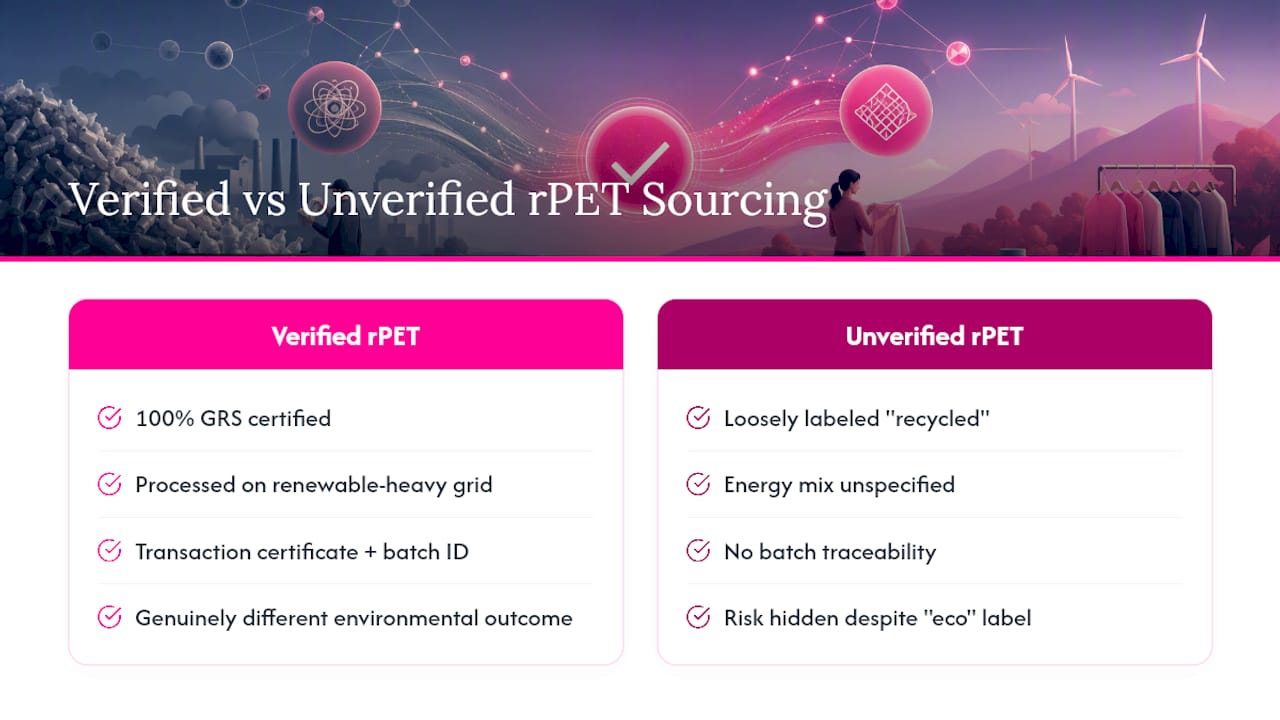
Conventional sourcing advice treats certification as a checkbox. It should be treated as the entire due-diligence process. Ask for the transaction certificate before you ask about price. If a supplier hesitates or can’t produce a batch ID, that hesitation tells you more than any marketing sheet.
The other piece buyers underrate: end-of-life design. A gorgeous rPET fleece blended irreversibly with cotton has quietly built its own landfill future into the seams. Prioritize mono-material construction where performance allows it, and reserve blends for the applications where you genuinely need them.
— CZT
See Czt’s rPET Collections or Book a Custom Fit
Reading about recycled polyester is one thing. Wearing a piece built from it, with the batch traceability and finishing checks already handled, is another. Czt’s Botanic Camo collection and broader streetwear line run on verified rPET fabric, so you get the environmental math above without doing the supplier vetting yourself.
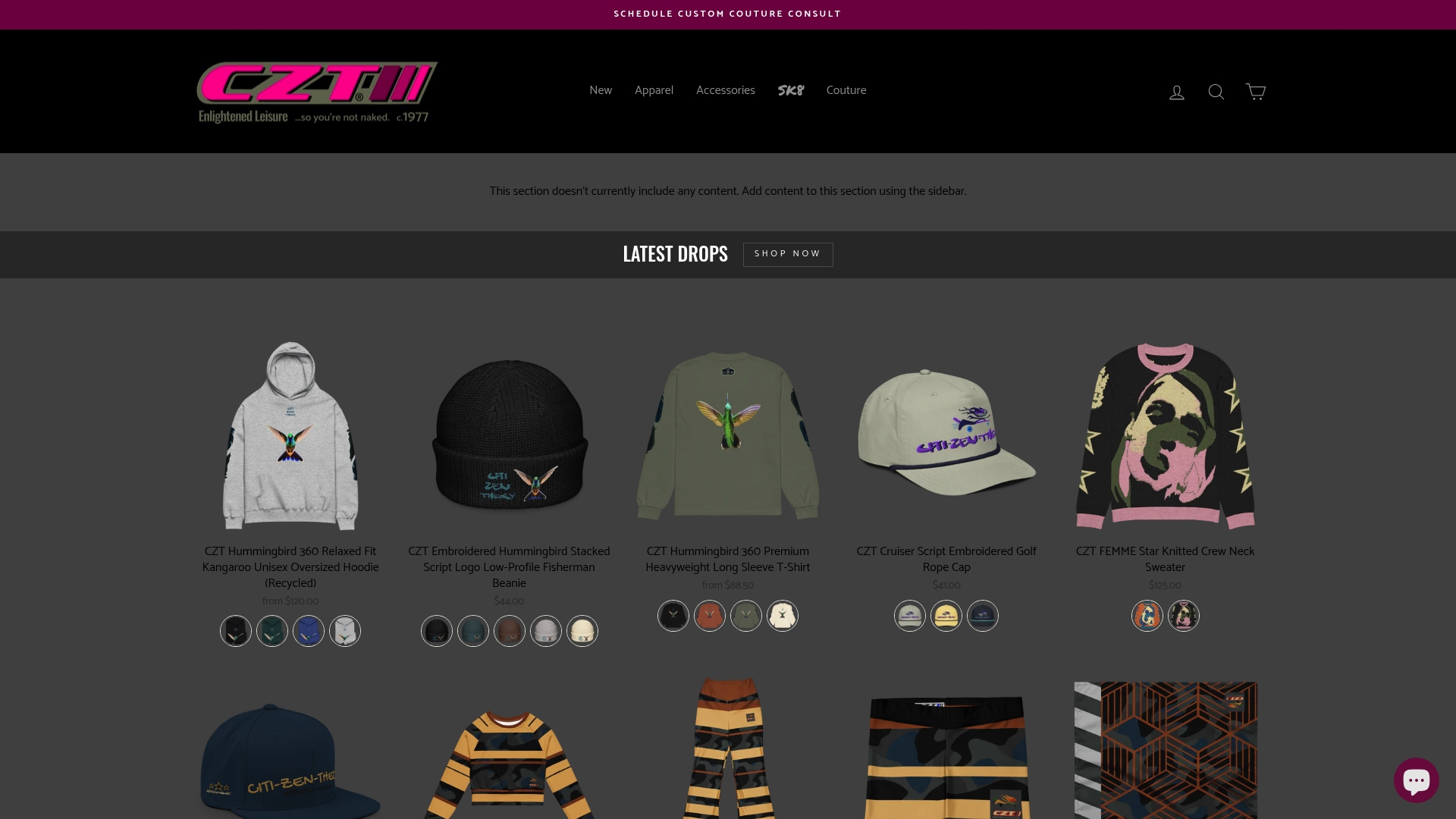
If off-the-rack sizing or prints do not scratch the itch, Czt’s custom couture design service builds one-off pieces from the same recycled material base, tailored to your body and your aesthetic rather than a standard size chart. Browse the recycled materials collection to see current pieces, or head to Czt to start a custom couture consultation and get a quote on your first commissioned piece.
Sources
For deeper verification detail, read Textile Exchange’s Global Recycled Standard documentation and their fiber market report, plus Czt’s own clothing care guide for wash-day specifics.
- PubMed listing for microfiber shedding study
- What Is Recycled Polyester (rPET)? Properties And Environmental Impact - TextileTuts
- Textile Exchange — Global Recycled Standard / Recycled claim info