![CZT [CITI-ZEN-THEORY]](http://czt.rocks/cdn/shop/files/CZT_-_Brand_PINK_Label_1_330x.png?v=1774104725)
![CZT [CITI-ZEN-THEORY]](http://czt.rocks/cdn/shop/t/61/assets/CZT-Fast-Logo---Blue-Grey_330x.png?v=98224836737033641471695502660)
![CZT [CITI-ZEN-THEORY]](http://czt.rocks/cdn/shop/files/CZT_-_Brand_PINK_Label_1_170x.png?v=1774104725)
![CZT [CITI-ZEN-THEORY]](http://czt.rocks/cdn/shop/t/61/assets/CZT-Fast-Logo---Blue-Grey_170x.png?v=98224836737033641471695502660)
5 Recycled Fibers That Decide Blanket Warmth, Care, and Lifespan
The recycled materials that make up most sustainable blankets are rPET (recycled polyester), recycled fleece, recycled wool, recycled cotton, and recycled nylon, sourced respectively from plastic bottles, textile scraps, reclaimed wool garments, and post-consumer cotton waste. The buying rule is simple: match the fiber to how you’ll actually use the blanket, then confirm the recycled content with a real certification instead of taking a label’s word for it.
TL;DR:
- Recycled wool and recycled cotton blankets generally offer higher durability and washability, but recycled wool provides better warmth and breathability.
- Chemically recycled fibers like rPET or blended recycled contents tend to mimic virgin materials more closely in feel and performance than heavily mechanically recycled options.
- The most reliable certifications for verified recycled content are the Global Recycled Standard (GRS) and Recycled Claim Standard (RCS), not just marketing labels.
- For outdoor or travel use, rPET and recycled fleece deliver water resistance and fast drying, while recycled wool and cotton are better suited for everyday bedding.
- Always check construction details, such as reinforced edges and appropriate care instructions, to ensure the recycled blanket will last and suit your needs.
Table of Contents
- The Recycled Blanket Materials Worth Knowing
- How Recycled Fibers Actually Get Made
- Warmth, Wear, and Washing: What to Expect
- How to Verify Recycled Claims Without Getting Greenwashed
- A Quick Checklist for Choosing a Recycled Blanket
- DIY Ideas for Making Your Own Recycled Blanket
- Why Design Choices Matter as Much as the Material
- Explore Sustainable Home Goods and Custom Pieces at Czt
- Sources
- FAQ
The Recycled Blanket Materials Worth Knowing
Every recycled blanket on the market traces back to one of five fiber families, and each one carries its own texture, weight, and personality. Understanding the raw material tells you more about how a blanket will feel and last than almost any marketing copy on the tag.
rPET (recycled polyester) starts life as plastic bottles or industrial polyester scrap, then gets melted down and re-spun into fiber used for both fleece surfaces and puffy synthetic fill. It shows up most often in camp blankets and packable throws because it dries fast and resists moisture.
Recycled fleece is essentially rPET taken a step further, brushed and napped so the surface traps air and reads soft against skin. It’s the workhorse of everyday throws.
Recycled wool comes from reclaimed offcuts and worn garments that get torn back into fiber, carded, and respun into new yarn, a process that keeps much of wool’s natural warmth and breathability intact. It leans toward heavier woven throws and bedding rather than lightweight blankets.
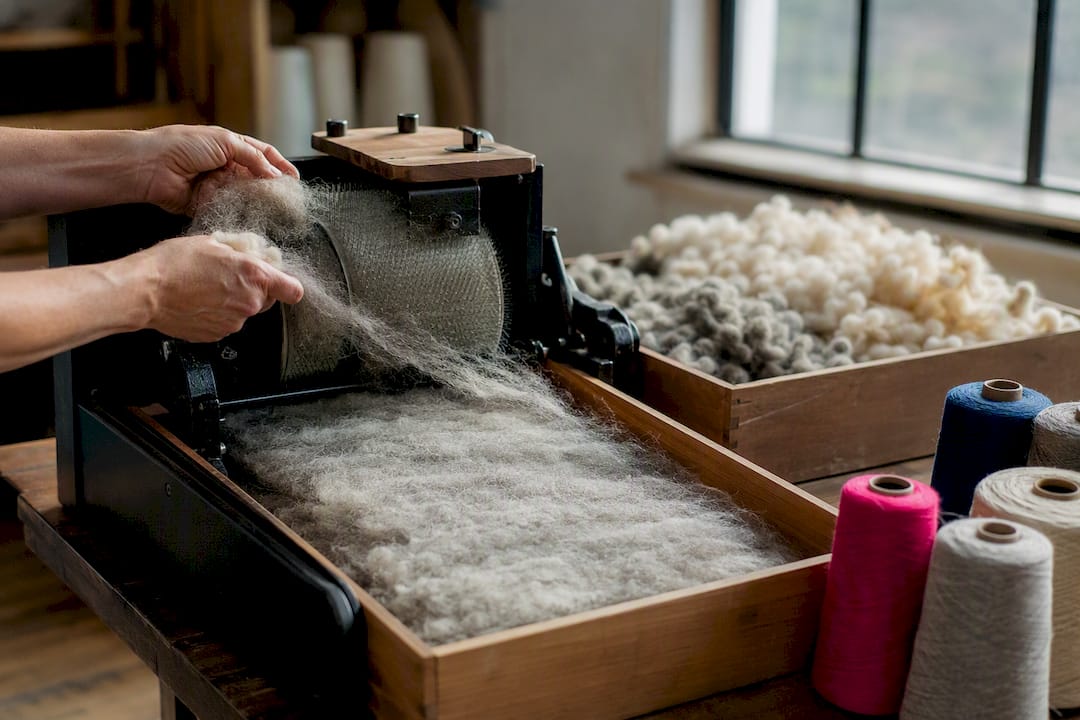
Recycled cotton is usually garment-to-garment: old jeans, shirts, and factory scraps get shredded and rewoven, often blended with viscose or polyester to improve drape since the reclaimed fiber alone tends to be shorter and less elastic than virgin cotton. Recycled cotton blankets suit everyday bedding and kids’ rooms where washability matters more than luxury feel.
Recycled nylon gets pulled from fishing nets, fabric scraps, and industrial nylon waste, then reprocessed into a fiber prized for its strength-to-weight ratio.
- rPET/recycled fleece: durable, machine washable, weak on breathability
- Recycled wool: warm, breathable, needs gentler care
- Recycled cotton: soft, easy to wash, less durable long-term
- Recycled nylon: strong and lightweight, best in blends rather than solo use
How Recycled Fibers Actually Get Made
Two very different processes turn waste into blanket fiber, and knowing which one made your blanket explains a lot about how it will hold up.
- Mechanical recycling starts with sorting and shredding fabric or plastic into raw fiber or flake, then carding and blending it before respinning into new yarn. This is the standard path for recycled wool and recycled cotton.
- Chemical recycling breaks polyester down at the molecular level (depolymerization) and rebuilds it into fresh, longer fiber strands, a process still less common but increasingly used where mechanical methods fall short.
- The rPET bottle-to-fiber process cleans, chips, melts, and extrudes plastic bottles into polyester filament, which is why so many fleece blankets carry a bottle count on the label.
- Practical fallout: mechanical recycling shortens fibers each time it runs, which is why recycled wool and cotton often get blended with longer virgin or reclaimed fibers to hold strength and prevent excess pilling.
The takeaway for shoppers: chemically recycled or blended fibers tend to feel closer to virgin material, while heavily mechanically recycled fiber (especially 100% recycled cotton) trades a bit of durability for a lower environmental footprint.
Warmth, Wear, and Washing: What to Expect
Recycled wool wins on warmth per ounce and breathes better overnight, which matters if you run hot. rPET and recycled fleece trade some breathability for water resistance and quick drying, making them the better call outdoors. Recycled cotton sits in the middle: comfortable and breathable, but the shortest-lived of the group under heavy washing.
- Recycled wool: hand wash or gentle cycle, lay flat to dry, avoid high heat
- rPET/recycled fleece: machine washable, tumble dry low, avoid fabric softener (it coats the fibers and kills loft)
- Recycled cotton: machine washable, but expect more shrinkage and pilling over time than virgin cotton
Pro Tip: Check the seam and edge binding before buying. A recycled blanket with reinforced or bound edges will outlast one with raw, unfinished seams by years, regardless of how good the fiber itself is.
How to Verify Recycled Claims Without Getting Greenwashed
“Recycled” on a tag means almost nothing without third-party proof behind it. The Global Recycled Standard (GRS) audits supply chains and verifies the actual percentage of recycled content in a finished product, which is the single most reliable trust signal in this category. The Recycled Claim Standard (RCS) does a lighter version of the same job, tracking recycled input without GRS’s broader chain-of-custody and social criteria.
Oeko-Tex certification covers a different but related concern: it screens for harmful substances in dyes and finishes, which matters because recycled fiber sometimes carries residue from its previous life as a bottle, garment, or industrial scrap.
One more distinction worth learning: post-consumer recycled content comes from products people actually used and discarded (bottles, old clothes), while post-industrial content comes from factory floor scraps and offcuts that never reached a consumer. Post-consumer sourcing generally diverts more real waste, but both are legitimate.
- Look for a GRS or RCS logo, not just the word “recycled” in the description
- Ask for the specific recycled content percentage, not a vague “made with recycled materials” claim
- Treat unverified vendor claims with skepticism, since self-reported percentages without certification are common in this space
Certification matters because it’s the only real check on greenwashing. Third-party audits, not marketing copy, are what actually confirm a blanket contains the recycled fiber it claims to.
A Quick Checklist for Choosing a Recycled Blanket
Work through these in order before you add anything to your cart:
- Define the use case. Camping and travel favor rPET or recycled fleece; everyday bedding favors recycled cotton or wool blends; gift-worthy luxury throws favor recycled wool.
- Check the recycled content percentage. Anything under 50% recycled should be labeled as a blend, not marketed as a recycled product.
- Look for GRS or RCS certification on the product page or hangtag.
- Read the construction details, including edge finishing, weight (GSM for fleece, ply for wool), and whether the fill is loose or encapsulated.
- Confirm the care instructions match your laundry setup, especially if you don’t own a dryer.
- Check the return policy, since fiber feel is hard to judge from photos alone.
| Use case | Best material match | Why |
|---|---|---|
| Camping/outdoor | rPET or recycled fleece | Water resistant, fast drying, packable |
| Everyday throw | Recycled cotton blend | Soft, machine washable, budget friendly |
| Luxury bed blanket | Recycled wool | Warmest per ounce, breathable overnight |
Ask sellers directly whether their recycled claim is third-party certified. If they can’t answer clearly, that’s the biggest red flag on the entire checklist.
DIY Ideas for Making Your Own Recycled Blanket
You don’t need a sewing machine to make something warm out of what you already own; for authentic textile heritage insights and respectful decoration, consider decorating with African American quilts without flattening their history. A basic no-sew fleece or T-shirt blanket only needs old sweaters, tees, or fleece scraps, fabric scissors, and a flat surface to lay pieces out and knot or braid the edges together, a method laid out step-by-step in DIY blanket tutorials built around repurposed textiles.
- If you want a filled blanket, recycled polyester batting (sold by the yard at most craft stores) makes a safe, machine washable stuffing, but keep it fully encapsulated in fabric so it doesn’t shift or clump after washing
- Source reclaimed fabric from thrift stores, fabric swap groups, or your own closet’s forgotten pile
- Wash any secondhand fabric before cutting, since old dyes and finishes can bleed
- Reinforce stress points (corners, ties) with a double stitch or extra knot so the blanket survives repeated washing
Why Design Choices Matter as Much as the Material
Recycled content is only half the sustainability story. At Czt, we care just as much about whether a piece can be repaired, patched, or handed down instead of replaced. A recycled blanket that falls apart in a year isn’t the win it looks like on the label. Durable construction and honest material sourcing belong together, not apart.
— CZT
Explore Sustainable Home Goods and Custom Pieces at Czt
We offer streetwear, home goods, and pet accessories made from recycled materials, along with custom couture design services for personalized pieces. If the fiber breakdowns above left you wanting a recycled home textile with real design intention behind it, visit Czt to see current recycled material offerings and inquire about a custom couture consultation. This is an option for readers who want their purchase to reflect both craftsmanship and a lower environmental footprint. Browse the current collection or book a design conversation to get started.
Sources
FAQ
Are there blankets actually made from recycled materials?
Yes. rPET fleece blankets made from recycled plastic bottles, recycled wool throws made from reclaimed garments, and recycled cotton blankets made from textile waste are all widely sold, and Czt is one brand building home goods around recycled fiber sourcing.
What materials are commonly used for blankets?
Beyond recycled options, common blanket materials include virgin cotton, wool, acrylic, fleece, and down, but recycled polyester, recycled wool, and recycled cotton now cover most of the sustainable segment of the market.
What were old-fashioned blankets made of?
Historic blankets were typically made from raw wool, cotton, or linen, woven on looms without the synthetic fibers that dominate the market today.
What types of fabric can be recycled?
Cotton, wool, polyester, and nylon can all be mechanically or chemically recycled into new fiber, though each requires different processing and often gets blended with virgin fiber to maintain strength.
How do I know if a recycled blanket claim is trustworthy?
Look for GRS or RCS certification on the product page rather than relying on the word “recycled” alone, since those third-party standards verify the actual recycled content percentage.