![CZT [CITI-ZEN-THEORY]](http://czt.rocks/cdn/shop/files/CZT_-_Brand_PINK_Label_1_330x.png?v=1774104725)
![CZT [CITI-ZEN-THEORY]](http://czt.rocks/cdn/shop/t/61/assets/CZT-Fast-Logo---Blue-Grey_330x.png?v=98224836737033641471695502660)
![CZT [CITI-ZEN-THEORY]](http://czt.rocks/cdn/shop/files/CZT_-_Brand_PINK_Label_1_170x.png?v=1774104725)
![CZT [CITI-ZEN-THEORY]](http://czt.rocks/cdn/shop/t/61/assets/CZT-Fast-Logo---Blue-Grey_170x.png?v=98224836737033641471695502660)
Recycled Polyester: 59% Less Energy for Eco Streetwear Shoppers
Recycled polyester streetwear can be a genuinely responsible choice, but only when the garment carries real certification, holds up under years of wear, and gets washed in ways that limit fiber shedding. The catch worth remembering: even the cleanest rPET hoodie sheds microplastics in the wash. Brands that publish sourcing data and lean on certified fabrics are the ones worth trusting first.
TL;DR:
- Only garments with verified certifications like GRS and OEKO-TEX can be reliably trusted for recycled content and chemical safety.
- Recycled polyester sheds microfibers in washing, so using cold water, full loads, and microfiber-catching devices reduces environmental impact.
- Garments made from high-percentage (80% or more) certified rPET, with durable fabric weights and quality construction, last longer and support true sustainability.
- Mechanical recycling lowers energy use by around 33% to 70% compared to virgin polyester, but does not address fiber shedding or biodegradability issues.
- Choosing durable, certified rPET streetwear over fast-wearing, uncertified options maximizes environmental benefits over the garment’s lifespan.
Table of Contents
- What Recycled Polyester Is and How It’s Made
- The Real Tradeoffs: What rPET Gets Right and What It Doesn’t
- How to Verify Recycled Polyester Claims
- Shopping Recycled Polyester Streetwear: A Fit and Fabric Checklist
- Making It Last: Washing, Repair, and What Happens Next
- Czt’s Approach to Recycled Polyester Streetwear
- The Editorial Take: Certification Beats Vibes Every Time
- Shop Recycled Polyester Streetwear With Verified Sourcing
- Sources
What Recycled Polyester Is and How It’s Made
Recycled polyester, or rPET, starts as something you’d otherwise throw away: post-consumer plastic bottles, mostly, along with a growing share of textile waste pulled from old garments and factory scraps. The plastic gets sorted, cleaned, and turned back into fiber through one of two paths.
Mechanical recycling melts the plastic down and re-extrudes it into new polyester strands. It’s cheaper and more common, though it can shorten fiber length and slightly limit quality over repeated cycles. Chemical recycling breaks the polymer down to its molecular building blocks first, which produces fiber closer in quality to virgin polyester and can handle mixed or dyed feedstock that mechanical processes struggle with.
Neither process alone makes a streetwear-ready fabric. That comes from finishing:
- Brushing raises a soft nap on the fabric surface, which is how rPET becomes fleece.
- Blending rPET with organic cotton or spandex adds stretch and a more natural hand feel.
- Yarn texturizing controls how heavy or lightweight the final knit feels against skin.
The payoff for choosing recycled fiber over virgin plastic is measurable. Comparisons of mechanical recycling against virgin polyester production show energy and emissions reductions in the range of 33% to 70%, depending on the process and feedstock used.
The Real Tradeoffs: What rPET Gets Right and What It Doesn’t
The environmental case for rPET is strong on paper. Diverting bottles and textile waste from landfills, combined with those energy savings over virgin polyester production, is why so many streetwear labels lean on it as a baseline fabric now.
The energy math favors rPET clearly. Mechanical recycling processes cut energy use and greenhouse gas emissions by roughly a third to two thirds compared to virgin polyester, a gap wide enough to matter at scale across an entire product line.
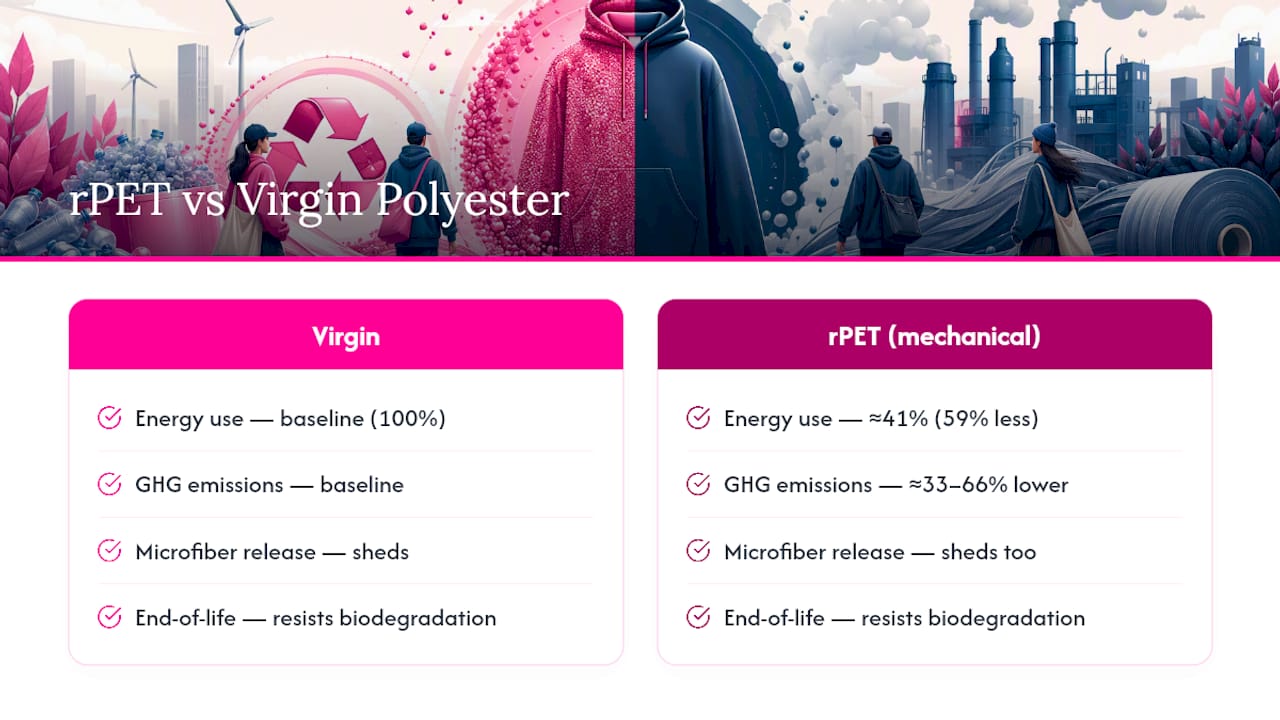
But rPET isn’t a clean win across every metric. It’s still plastic, and every wash cycle releases microscopic synthetic fibers into wastewater. This isn’t unique to recycled polyester. Virgin polyester sheds too. The difference is that rPET doesn’t solve the shedding problem; it just avoids the extraction problem.
Biodegradability is the other limit. Polyester of any origin resists breaking down in landfill or ocean conditions for decades. Natural fibers like organic cotton degrade faster and shed less plastic, which is why some sustainability experts recommend a holistic view that weighs rPET’s waste diversion benefits against organic fiber’s end-of-life advantages, rather than treating one material as universally superior.
The practical takeaway: prioritize garments you’ll actually wear for years, verified by certification, over cheap rPET pieces destined for the donation pile after one season.
How to Verify Recycled Polyester Claims
“Recycled” on a hangtag means almost nothing without a certificate behind it. Two marks do the real verification work in this category, and knowing what each one actually checks changes how you shop.
The Global Recycled Standard (GRS) traces recycled content back through the supply chain, confirming that a garment’s polyester genuinely originated from post-consumer or pre-consumer waste rather than being labeled recycled on marketing copy alone. GRS certification requires documented chain-of-custody records at every processing stage, not just a claim at the point of sale.

OEKO-TEX Standard 100 checks a different thing entirely: it screens the finished fabric for harmful substances, confirming that recycled fiber processing didn’t introduce chemical residues that could contact skin. Fabrics carrying OEKO-TEX certification have been independently tested for exactly this.
Beyond certificates, look for:
- A specific recycled content percentage, not vague language like “made with recycled materials.”
- Published supplier or factory information.
- Impact data the brand shares openly, which Textile Exchange’s guidance on transparency treats as a baseline expectation for credible sustainability claims now.
Pro Tip: If a product page doesn’t list a certificate number or a percentage, assume the “recycled” claim is marketing, not verification. Ask before you buy.
Shopping Recycled Polyester Streetwear: A Fit and Fabric Checklist
Buying rPET streetwear well comes down to matching fabric weight and construction to how hard you’ll actually wear the piece. A lightweight rPET tee and a heavyweight rPET fleece hoodie are built for completely different lifespans.
Run through this before checkout:
- Recycled content percentage. Look for 80% or higher on the label; anything lower signals a blend diluted heavily with virgin fiber.
- Certification. Confirm GRS for content traceability and OEKO-TEX for chemical safety, ideally with a certificate number you can look up.
- Fabric weight and hand feel. Heavier brushed fleece (300 grams per square meter or more) survives skate wear and repeated washing better than thin jersey.
- Blend composition. A small percentage of spandex or organic cotton, often around 5%, adds stretch and comfort without sacrificing much recyclability.
- Seam and hardware quality. Check zippers, snaps, and stitch density in product photos. Loose stitching is the first thing to fail on streetwear.
- Return and repair policy. A brand willing to stand behind repairs signals confidence in its own construction.
For skate-oriented pieces or outerwear, oversized fleece with a brushed interior handles abrasion and cold weather better than lighter knits. For layering pieces worn under jackets, a stretch blend with a bit of spandex moves with you instead of restricting motion. Czt’s recycled fabric explainer breaks down these fabric choices in more depth if you’re deciding between a fleece hoodie and a lighter tee for your first rPET purchase.
Making It Last: Washing, Repair, and What Happens Next
The environmental benefit of any rPET hoodie only shows up if you keep wearing it. A garment tossed after six months erases most of the energy savings gained from choosing recycled fiber in the first place.
Wash smarter to cut fiber loss:
- Use cold water and a gentle cycle, which sheds fewer microfibers than hot, agitated washes.
- Switch to liquid detergent over powder, which can be abrasive on synthetic fibers.
- Wash full loads rather than single items, since less friction from garment-on-garment contact means fewer fibers break loose.
- A mesh laundry bag or a Cora Ball in the wash captures shed microfibers before they reach wastewater.
When something tears or a zipper fails, mending or a local alteration shop usually costs less than replacing the piece, and it keeps the fabric’s embedded energy savings intact. When a garment is truly done, don’t just toss it. Czt’s guide on how to recycle old streetwear responsibly covers take-back programs, textile recycling drop points, and donation practices that actually keep fabric out of landfill.
Pro Tip: Donate only clean, wearable pieces. Stained or torn garments belong in a textile recycling bin, not a donation box, since most charities discard unsellable items anyway.
Czt’s Approach to Recycled Polyester Streetwear
Some brands build collections on the principle that recycled fiber only matters if the garment survives long enough to earn back its environmental cost. That standard can be behind pieces, with custom couture design services offered alongside ready-to-wear drops, so a piece can be made to fit a person and a life, not a season.
Sourcing and verifying rPET fabric properly, rather than buying the cheapest recycled polyester available, cuts energy use by 59% for a small brand operating at our scale. That number isn’t abstract. It’s the difference between recycled fiber as a marketing checkbox and recycled fiber as an actual operating principle.
Durability and transparency aren’t separate goals here. They’re the same goal, worn two different ways.
The Editorial Take: Certification Beats Vibes Every Time
Most advice on sustainable fashion treats “recycled” as the finish line. It isn’t. The research here points somewhere more specific: durability and verified sourcing matter more than the recycled label itself, because a certified rPET hoodie worn for five years does more environmental good than three uncertified ones worn for five months each.
The conventional wisdom oversells biodegradability as the deciding factor, when the honest tradeoff is durability versus end-of-life. Polyester, recycled or not, isn’t going to compost. What it can do is last, and that longevity is where most of its sustainability case actually lives. Shoppers chasing “natural fiber good, synthetic bad” logic miss that a cheap organic cotton tee falling apart in a year has its own hefty footprint.
Prioritize certification first, construction quality second, and marketing copy last. A GRS or OEKO-TEX mark tells you something checkable. A brand’s sustainability paragraph tells you what they want you to feel.
— Czt
Shop Recycled Polyester Streetwear With Verified Sourcing
Some brands match the checklist above directly: certified rPET fabric, brushed fleece and blended pieces built for skate wear and daily rotation, and sourcing data published rather than hinted at. Certain collections illustrate this clearly, and custom couture design services may exist for those wanting pieces fitted to their own body and use case rather than a standard size run.
 Alt text: Model wearing a Czt recycled polyester hoodie from the Botanic Camo collection
If the checklist in this guide is the standard you’re shopping by, start at the Czt storefront and filter by certified rPET pieces, or reach out about a custom couture consultation if you want something built to last beyond one trend cycle.
Sources
- Recycled polyester in textiles — Textileschool
- Textile Exchange — Challenges FAQ & Getting Started (2022)