![CZT [CITI-ZEN-THEORY]](http://czt.rocks/cdn/shop/files/CZT_-_Brand_PINK_Label_1_330x.png?v=1774104725)
![CZT [CITI-ZEN-THEORY]](http://czt.rocks/cdn/shop/t/61/assets/CZT-Fast-Logo---Blue-Grey_330x.png?v=98224836737033641471695502660)
![CZT [CITI-ZEN-THEORY]](http://czt.rocks/cdn/shop/files/CZT_-_Brand_PINK_Label_1_170x.png?v=1774104725)
![CZT [CITI-ZEN-THEORY]](http://czt.rocks/cdn/shop/t/61/assets/CZT-Fast-Logo---Blue-Grey_170x.png?v=98224836737033641471695502660)
Streetwear Shoppers: Use Durability to Judge Ethical Clothing Manufacturing
Ethical clothing manufacturing means finished garments built from recycled materials through fair, sustainable production, not just marketing language stitched onto a hangtag. The one-line verdict: before you buy, check for a stated recycled-content percentage, a real third-party certification, named supplier transparency, and a durability or repair policy. Expect to pay a modest premium for all four, and expect that premium to pay itself back in years of wear.
TL;DR:
- Verify the recycled content percentage with a specific figure and determine whether it is post- or pre-consumer material.
- Look for clearly named certifications like GOTS, GRS, or Fair Trade, and demand evidence such as transaction certificates.
- Check for factory transparency through named partners or published worker condition statements, not vague claims.
- Prioritize durable design features like reinforced seams, fabric weight in GSM, or repair policies to ensure longevity.
- Be cautious of vague language, low prices without certifications, and logos without verification details, signaling possible greenwashing.
Table of Contents
- What Counts as Ethical Clothing Manufacturing
- The 6-Point Checklist For Any Product Page
- What Are the Common Recycled Materials in Streetwear?
- Which Certifications Actually Prove Ethical Production?
- Does Recycled Automatically Mean Lower Quality?
- How Do You Spot Greenwashing on a Product Page?
- How to Compare Two Ethical Options and Choose
- Why Scaling Ethical Production Is Harder Than It Sounds
- What Ethical Manufacturing Looks Like When It Works
- Designing for Longevity Is the Real Ethical Signal
- See How CZT Applies This Checklist to Real Garments
- Sources
What Counts as Ethical Clothing Manufacturing
The garment industry has spent two decades diluting the word “sustainable” until it means almost nothing by itself. For the purposes of this guide, and for your wallet, ethical clothing manufacturing means something specific: a finished, ready-to-wear piece made with documented recycled or regenerated fiber content, produced under labor conditions that meet recognized fair-wage and safety standards, sold with enough transparency that you could verify the claims if you wanted to.
That last part matters more than shoppers usually assume. A brand can use recycled polyester and still hide behind vague language if it will not name where that polyester came from or who sewed the seams. Sustainability-focused shoppers already say they will pay roughly 15% more for sustainable fashion options, but the same research notes they often struggle to tell an authentic claim from a decorated one. This guide exists to close that gap, one product page at a time.
The 6-Point Checklist For Any Product Page
Run this in the time it takes to scroll a product description:
- Recycled percentage and source. Look for an exact figure (“62% recycled cotton”) and whether it’s post-consumer (old clothes, plastic bottles) or pre-consumer (factory scraps). Post-consumer content generally carries a stronger environmental case.
- Certifications with evidence behind them. GRS, a GRS transaction certificate, GOTS, or Fair Trade should be named, not just implied by a green leaf icon.
- Factory transparency. Does the brand name its production partners or publish a worker-conditions statement anywhere?
- Durability signals. Reinforced seams, stated fabric weight (GSM), and any warranty or repair option.
- End-of-life plan. Take-back programs, recyclability claims, and clear washing instructions that actually extend the garment’s life.
- Price context. A garment priced far below category average with none of the above is a signal, not a bargain.
Score each item as present, vague, or absent. Two “absent” answers on a product claiming to be sustainable is enough reason to walk away.
What Are the Common Recycled Materials in Streetwear?
Three fiber families show up constantly in recycled streetwear, and each behaves differently on your body and in the wash.
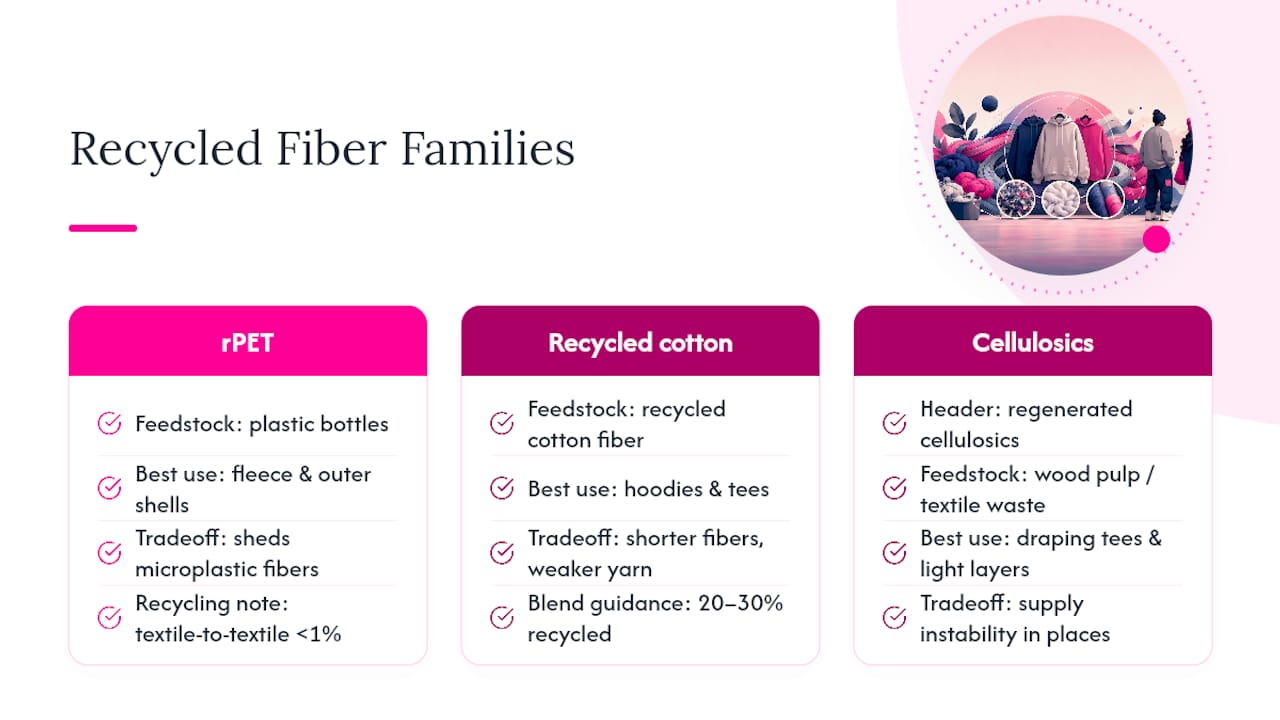
Recycled polyester (rPET) is spun mostly from plastic bottles rather than old clothing. Textile-to-textile recycling remains genuinely rare: under 1% of all textiles globally get recycled back into new fiber, which means most rPET fleece and lining you see started life as a beverage bottle, not a discarded shirt. It saves water and energy compared to virgin polyester, but it sheds microplastic fibers in the wash, so it works best in fleece linings and outer shells rather than next-to-skin base layers.
Recycled cotton usually gets blended with virgin fiber because the recycling process shortens cotton fibers and weakens the yarn. A 20 to 30% recycled-cotton blend in a hoodie holds up fine; a garment claiming 100% recycled cotton with no blend often feels thin and prone to pilling.
Regenerated cellulosics like TENCEL™ lyocell come from wood pulp through a closed-loop chemical process, and increasingly from textile waste, though that textile-to-textile pipeline is still scaling and remains fragile in places, with several recycled-fiber ventures facing supply instability in recent years. It drapes better than cotton and suits tees and lightweight layers.
Pro Tip: Match material to garment function before you match it to your values. rPET fleece for outerwear, recycled cotton blends for hoodies and tees, TENCEL™ for anything meant to drape rather than structure.
Which Certifications Actually Prove Ethical Production?
Certifications are not interchangeable, and treating them as one blanket “sustainable” stamp is where a lot of shoppers get misled. Each one verifies a different piece of the puzzle.
- GOTS (Global Organic Textile Standard) covers organic fiber content through the full supply chain, including some social criteria.
- GRS (Global Recycled Standard) and RCS (Recycled Claim Standard) verify recycled content and chain of custody, meaning they trace the material from source to finished garment.
- Fair Trade Certified focuses on worker livelihoods, wages, and community investment rather than material composition. Together, these labels cover material, social, and chemical claims separately, so a garment can be certified for one dimension and silent on the others.
- OEKO-TEX tests for harmful chemical residues in the finished textile, which matters most for anything worn close to skin.
The strongest evidence beyond any single logo is a transaction certificate tied to that specific product run, not just a brand-wide membership badge. If a product page lacks any of this, save the listing and ask customer service directly for the certificate number.
Does Recycled Automatically Mean Lower Quality?
Not by default, but the perception problem is real and well documented. Research on circular fashion finds that shoppers often assume recycled clothing is lower quality or somehow less clean than virgin-material garments, even when the actual construction is identical or better. Education and clear labeling measurably close that gap in purchase intent.
What actually predicts whether a recycled garment lasts has almost nothing to do with the recycled percentage and everything to do with construction choices you can check yourself.
- Reinforced stitching at stress points (underarms, pocket seams, hood attachments).
- A stated fabric weight in GSM. Anything under 180 GSM in a hoodie will likely feel thin regardless of fiber source.
- A warranty or repair program, which signals the brand expects the garment to be worth fixing.
- Resale value, which tends to track real durability better than marketing copy does.
Pro Tip: Wash recycled synthetic blends in a mesh laundry bag on a cold, gentle cycle. It cuts microfiber shedding and pilling significantly compared to a standard hot wash.
How Do You Spot Greenwashing on a Product Page?
Vague language is the first tell. Words like “eco,” “conscious,” or “clean materials” with no percentage, no certificate, and no factory name attached are decoration, not disclosure.
Watch for these red flags:
- No supplier or factory information anywhere on the site.
- A single “eco capsule” collection sitting inside an otherwise fast-fashion catalog.
- Pricing so low that fair wages and recycled sourcing seem mathematically impossible.
- Certification logos with no license number or verification link.
Green signals run the opposite direction: named factories, published supplier lists, third-party audit summaries, and specific sourcing language such as “post-consumer PET from bottle collection in [region].” Chain-of-custody documentation beats a nice paragraph every time. If a brand’s answers stay vague after a direct question, that hesitation tells you what the product page did not.
How to Compare Two Ethical Options and Choose
Once you have run the checklist on a couple of finalists, ranking them gets simpler than it looks.
- Score each garment on materials, certification strength, transparency, durability signals, and end-of-life policy. Weight certification and transparency highest since they’re hardest to fake.
- Accept a price premium of roughly 10 to 20% over a comparable non-verified item, especially when that premium comes with a warranty or repair option that extends the garment’s working life.
- Prioritize fit and breathability when materials score similarly. A recycled-fiber jacket that fits wrong will get worn less and defeats its own purpose.
- Favor brands offering take-back programs, resale partnerships, or clearly recyclable single-fiber construction. Consumers consistently say they want easier default access to recycling and repair programs, and brands that build that in are signaling long-term intent, not a one-season stunt.
When two items tie on paper, the tiebreaker is usually the repair policy. A brand willing to fix what it made is a brand that expects you to keep wearing it.
Why Scaling Ethical Production Is Harder Than It Sounds
Every brand that wants to grow past a small capsule collection runs into the same wall: recycled-fiber supply is inconsistent. Textile-to-textile recycling infrastructure is still young, and several ventures in that space have faced financial instability even as demand for their output grows. That leaves most “recycled” streetwear leaning on rPET from bottle feedstock, because it’s the most reliably available recycled input at scale, not necessarily the ideal one for every garment.
Certification adds its own friction. Getting a GRS transaction certificate for a specific fabric lot takes time and paperwork that a small or mid-size brand has to absorb before a single unit ships. Fair-wage compliance across a supply chain means auditing factories repeatedly, not once, since conditions can slip between audits. Add rising material costs and the fact that most recycled fibers still cost more than virgin equivalents, and you get the real reason so many “sustainable” lines stay small: scaling ethical production without cutting corners is slower and costlier than scaling a conventional one.
The brands that manage it tend to do one thing consistently: they grow one verified material or supplier relationship at a time instead of promising broad sustainability overnight. A hoodie line built on one well-documented recycled-cotton blend beats a catalog of twelve items each carrying a different, thinly verified claim.
What Ethical Manufacturing Looks Like When It Works
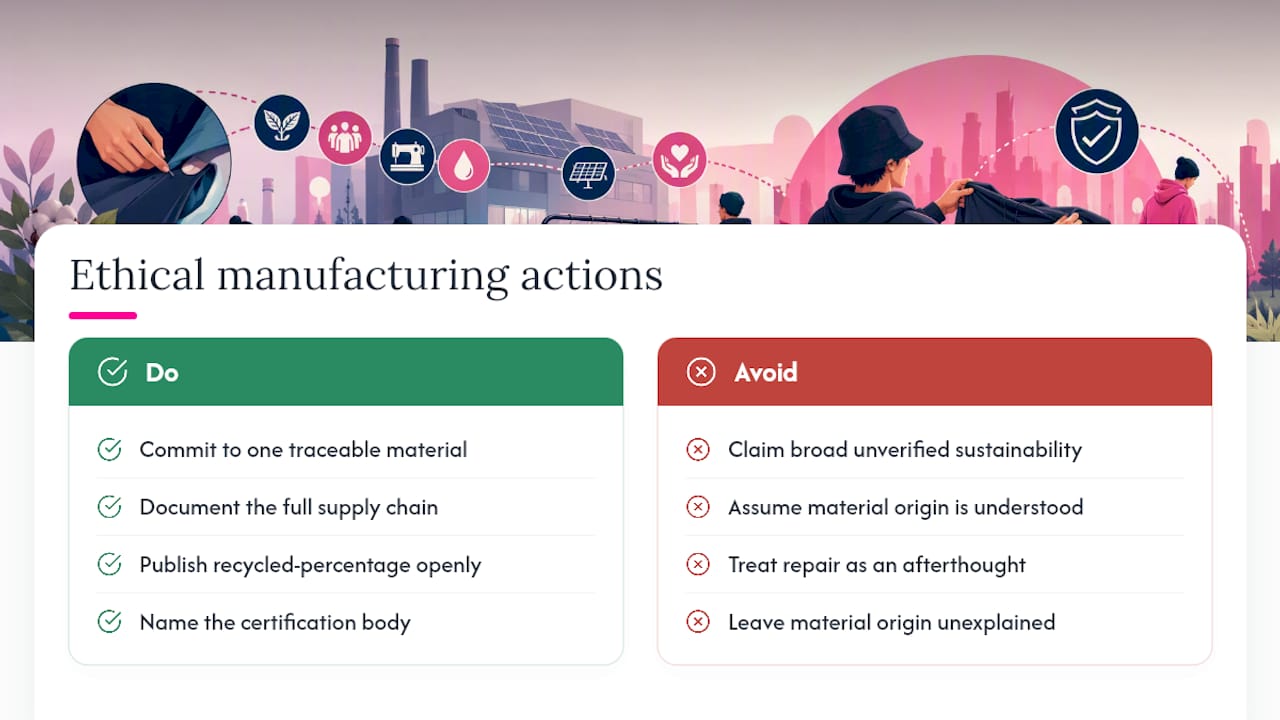
The clearest examples of successful ethical clothing production share a pattern: they narrow their scope instead of trying to be sustainable at everything simultaneously. A brand that commits to one traceable material category, say, ocean-bound plastic converted to rPET fleece, and documents that supply chain thoroughly, tends to earn more shopper trust than a brand claiming broad sustainability credentials across dozens of different materials with none of them fully verified.
Consumer research backs this narrower approach. Studies on circular fashion preferences find that shoppers often favor clearly documented recycled clothing over secondhand or upcycled alternatives, provided the quality and environmental value are communicated plainly rather than assumed. That’s a meaningful finding for streetwear specifically, where secondhand and upcycled pieces have long dominated the sustainable conversation. Shoppers are not rejecting new, recycled-material garments. They’re rejecting garments where nobody bothered to explain the material’s origin.
The common thread across brands that pull this off is patience with documentation. They publish the recycled percentage before anyone asks. They name the certification body. They treat a repair program as core infrastructure, not an afterthought bolted onto customer service. None of that is glamorous, but it is exactly the kind of unglamorous groundwork that lets a shopper trust a hangtag instead of interrogating it.
Designing for Longevity Is the Real Ethical Signal
We built the Botanic Camo collection around a simple premise: recycled material only matters if the garment survives long enough to matter. That means choosing fabric weights and stitching patterns that hold up to skate decks, gravel, and repeated washing, not just sourcing recycled fiber and calling the job finished. Design choices like reinforced seaming and fabric finishing determine whether recycled content ages well or falls apart in a season, and we treat that as inseparable from the sourcing decision itself.
Our custom couture design service extends the same logic to one-off pieces, letting a piece get built to fit and function first, so it gets worn for years rather than seasons. Run any brand, including ours, through the checklist in this piece: recycled percentage, certification, factory transparency, and a real repair path. That standard should hold everywhere you shop.
— CZT
See How CZT Applies This Checklist to Real Garments
CZT builds toward the same standard this guide asks you to check for: named recycled materials, documented recycled content, and construction meant to survive actual skate sessions and everyday wear rather than one photoshoot. The Botanic Camo collection uses recycled fabric with sourcing information available on the product page, and some custom design services mean a piece can get fitted, adjusted, and repaired instead of replaced.
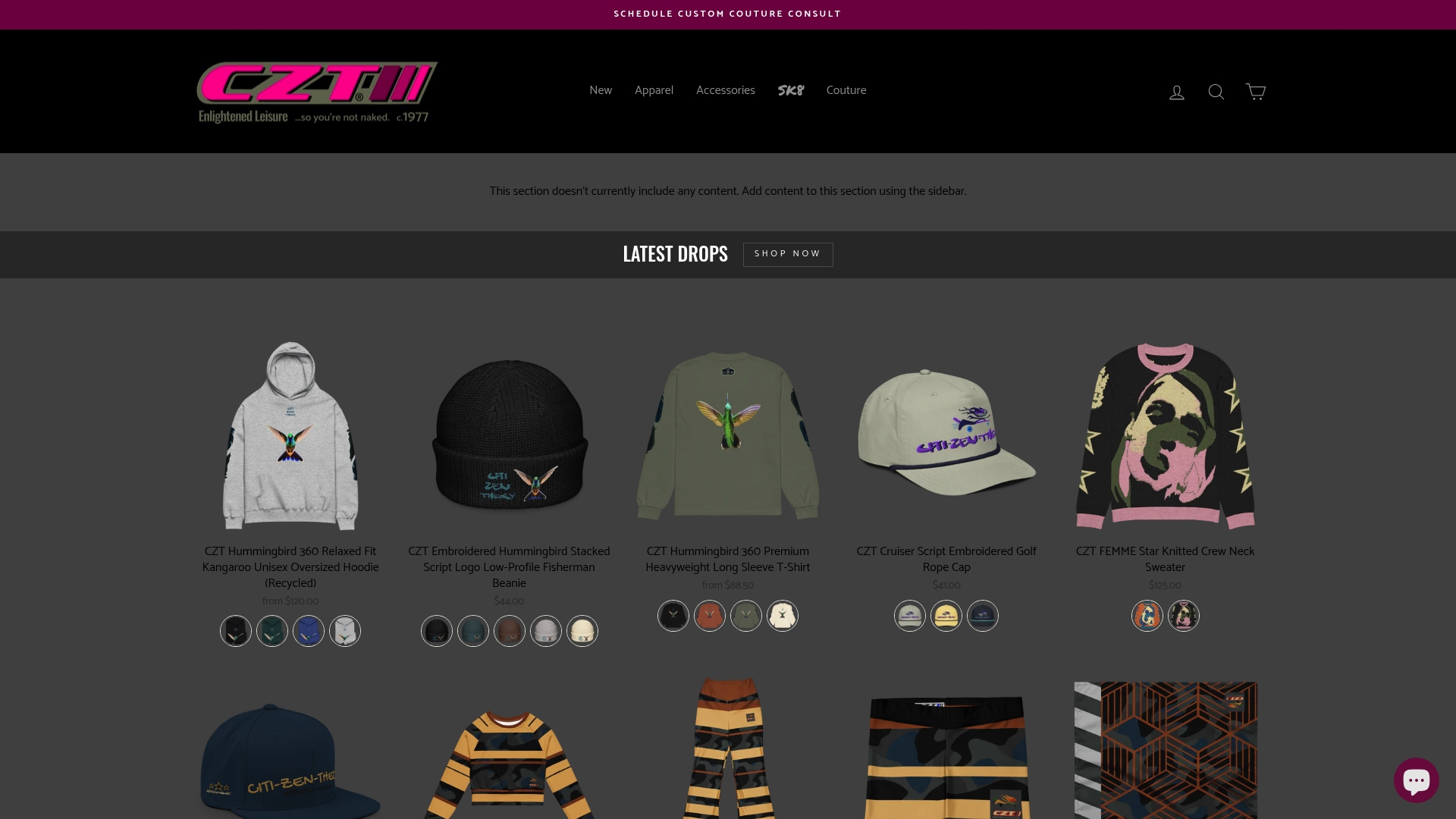
If you want to see recycled-fabric detail up close before buying, browse the current collection or book a couture consultation to build a piece around fit and longevity from the start. Either path starts with the same product-page transparency this guide just walked you through.
Sources
- In search of fashion’s sustainability seekers (AP News / McKinsey summary)
- Perceptions and value of circular fashion (PMC / scientific review)
- Fair Trade clothing guide (Fair Trade Certified)
- A beginner’s guide to ethical and sustainable fashion (Scientific American)
- Recycled textiles in fashion: opportunities and limits (Istanbul Factory)