![CZT [CITI-ZEN-THEORY]](http://czt.rocks/cdn/shop/files/CZT_-_Brand_PINK_Label_1_330x.png?v=1774104725)
![CZT [CITI-ZEN-THEORY]](http://czt.rocks/cdn/shop/t/61/assets/CZT-Fast-Logo---Blue-Grey_330x.png?v=98224836737033641471695502660)
![CZT [CITI-ZEN-THEORY]](http://czt.rocks/cdn/shop/files/CZT_-_Brand_PINK_Label_1_170x.png?v=1774104725)
![CZT [CITI-ZEN-THEORY]](http://czt.rocks/cdn/shop/t/61/assets/CZT-Fast-Logo---Blue-Grey_170x.png?v=98224836737033641471695502660)
How to Compare Sustainable Streetwear Brands Methodically
When you set out to evaluate eco-friendly streetwear with real rigor, three brands consistently rise to the top of a criteria-driven rubric: Czt for skate-inspired custom and upcycled design with documented material proof points, Patagonia for unmatched supply-chain transparency and repair infrastructure, and Nudie Jeans Co. for circular denim programs that are genuinely structural rather than cosmetic. The method that surfaces those picks weighs materials sourcing, transparency, third-party certifications, and business model in roughly equal measure.
- Czt — Recycled materials, upcycled collections, and a custom couture option that structurally reduces overproduction. Documented material-innovation pages provide direct scoring evidence.
- Patagonia — Published supplier lists, Worn Wear repair program, and a B Corp certification that covers the whole company, not a single product line.
- Nudie Jeans Co. — Free repairs for life, organic cotton across the full range, and a take-back program with resale infrastructure.
- Outerknown / Pact / Organic Basics — GOTS-certified basics with transparent sourcing; best for shoppers who prioritize fiber-level verification over streetwear aesthetics.
- Pangaia / GROCERIES / Jungmaven — Material-forward labels using proprietary or heritage fibers (seaweed-based FLWRDWN, organic cotton, hemp) with credible third-party backing.
Table of Contents
- How do these brands actually compare across sustainability criteria?
- How do you compare sustainable streetwear brands methodically?
- What do the brand profiles actually tell you?
- How was this comparison built, and how do you spot greenwashing?
- How do you reduce the total cost of ownership for streetwear?
- Do return policies actually affect a brand’s sustainability?
- What does brand impact look like beyond the product itself?
- Key Takeaways
- Why methodical comparison is the only honest path forward
- Czt is built for shoppers who want proof, not promises
- Useful sources for deeper verification
How do these brands actually compare across sustainability criteria?
The table below covers all 75 brands in this comparison. Because public data varies widely by brand size and disclosure culture, cells use a three-level indicator: H (High evidence), M (Medium/partial evidence), L (Low/unverified). A dash means no public data was located. Streetwear credibility reflects subcultural authenticity, not just aesthetics.
| Brand | Materials & Fiber Sourcing | Supply-Chain Transparency | Certifications | Business Model | Circularity / Repair | Price Range (USD) | Streetwear Credibility | US Availability |
|---|---|---|---|---|---|---|---|---|
| Czt | H — recycled, upcycled, deadstock | M — blog-documented proof points | M — stated; third-party pending | H — custom/made-to-order, pre-sale | H — upcycled collections, custom couture | $–$$ | H — skate/graffiti roots | H — ships to US |
| Veja | H — organic cotton, wild rubber | H — published factory list | H — multiple certifications | M — wholesale + DTC | M — repair program (EU-focused) | $$–$$$ | M — sneaker culture crossover | H — US retail + DTC |
| Girlfriend Collective | H — recycled PET, fishing nets | M — partial supplier info | H — OEKO-TEX, GRS | M — DTC seasonal drops | M — take-back/recycling | $$ | M — activewear-adjacent | H — US DTC |
| Everlane | M — some recycled, some conventional | M — factory profiles (limited audit depth) | L — no major third-party cert | M — DTC, frequent drops | L — no repair program | $$–$$$ | M — minimalist aesthetic | H — US retail + DTC |
| Reformation | H — deadstock, TENCEL, recycled | H — RefScale lifecycle tool | H — B Corp, LEED factories | M — DTC seasonal | M — take-back pilot | $$$ | M — feminine-leaning | H — US retail + DTC |
| Outerknown | H — recycled, organic, Econyl | H — published supplier list | H — B Corp, Fair Trade | M — DTC seasonal | M — resale program | $$–$$$ | H — surf/skate credibility | H — US DTC |
| Pact | H — organic cotton, GOTS | M — partial factory info | H — GOTS, Fair Trade | M — DTC, frequent drops | L — no repair | $ | L — basics-focused | H — US DTC + Amazon |
| Universal Works | M — natural fibers, some recycled | M — limited public disclosure | M — partial | M — seasonal collections | L — limited | $$–$$$ | H — workwear/streetwear | M — US online |
| Patagonia | H — recycled, organic, regenerative | H — full supplier list, audit reports | H — B Corp, Fair Trade, bluesign | H — repair-first, Worn Wear | H — Worn Wear repair + resale | $$–$$$$ | H — outdoor/street crossover | H — US retail + DTC |
| MATE The Label | H — organic cotton, hemp | M — partial supplier info | H — GOTS, OEKO-TEX | M — DTC seasonal | L — limited | $$–$$$ | M — California casual | H — US DTC |
| Cotopaxi | H — repurposed/deadstock fabrics | H — published supplier list | H — B Corp, Fair Trade | M — DTC seasonal | M — repair program | $$–$$$ | H — adventure/street | H — US retail + DTC |
| Nudie Jeans Co. | H — organic cotton | H — published factory list | H — GOTS, Fair Trade | M — DTC + wholesale | H — free repairs for life, take-back | $$–$$$ | H — denim/street | H — US DTC + retail |
| Mud Jeans | H — organic + recycled denim | H — published supplier info | H — GOTS, Fair Wear | H — lease/subscription model | H — take-back, recycling | $$–$$$ | M — denim-focused | M — US ships |
| Organic Basics | H — GOTS organic, recycled | M — partial supplier info | H — GOTS, OEKO-TEX | M — DTC seasonal | M — repair guidance | $–$$ | L — basics only | H — US DTC |
| ABLE | M — some organic/recycled | H — publishes wages | H — B Corp, Fair Trade | M — DTC seasonal | L — limited | $$–$$$ | M — lifestyle/street | H — US DTC |
| Stüssy x Our Legacy | M — mixed fibers, some organic | L — limited disclosure | L — no major cert | L — hype/limited drops | L — no program | $$$ | H — iconic streetwear | M — US select retail |
| Palace Skateboards | L — conventional materials | L — no public disclosure | L — no certification | L — hype/drop model | L — no program | $$–$$$ | H — elite skate credibility | M — US select retail |
| WAWWA | H — organic, recycled, deadstock | M — partial supplier info | M — some certifications | M — small-batch | M — repair guidance | $$–$$$ | H — UK street/skate | M — US ships |
| Plant Faced | H — organic, plant-based dyes | M — partial info | M — some certifications | M — small-batch | M — limited | $–$$ | M — vegan street | M — US ships |
| Noah | M — some organic/recycled | M — partial supplier info | M — partial | M — limited drops | L — limited | $$–$$$ | H — NYC street credibility | H — US DTC + retail |
| Paka | H — alpaca fiber, traceable | H — farm-to-garment traceability | M — some certifications | M — DTC seasonal | M — durability-focused | $$–$$$ | M — outdoor/street | H — US DTC |
| Toad & Co | H — organic, recycled, hemp | H — published supplier info | H — B Corp, bluesign | M — DTC seasonal | M — repair program | $$–$$$ | M — outdoor/casual | H — US DTC + retail |
| Quince | M — some organic/cashmere | L — limited factory info | L — limited | M — DTC, frequent drops | L — no program | $–$$ | L — basics-focused | H — US DTC |
| GROCERIES | H — organic, local US-made | H — full ingredient transparency | H — GOTS, OEKO-TEX | M — small-batch | M — durability-focused | $$–$$$ | M — LA street/wellness | H — US DTC |
| Warp + Weft | H — recycled denim, water-saving | M — partial supplier info | M — some certifications | M — DTC seasonal | M — limited | $$–$$$ | M — denim-focused | H — US DTC |
| Yes Friends | H — organic cotton | M — partial info | M — some certifications | M — small-batch | L — limited | $–$$ | M — casual/street | M — US ships |
| Jungmaven | H — hemp, organic cotton | H — published sourcing info | H — OEKO-TEX | M — DTC seasonal | M — durability-focused | $$–$$$ | H — hemp/street culture | H — US DTC |
| Boody | H — organic bamboo | M — partial supplier info | H — OEKO-TEX, B Corp | M — DTC seasonal | L — limited | $–$$ | L — basics/underwear | H — US DTC |
| Colored Organics | H — GOTS organic cotton | M — partial info | H — GOTS | M — small-batch | L — limited | $–$$ | L — baby/basics | H — US DTC |
| MagicLinen | H — European linen | M — partial supplier info | M — some certifications | M — DTC seasonal | M — durability-focused | $$–$$$ | L — home/lifestyle | H — US DTC |
| tentree | H — organic, recycled, hemp | M — partial supplier info | H — B Corp, OEKO-TEX | M — DTC seasonal | M — tree-planting program | $–$$ | M — outdoor/casual | H — US DTC |
| Haverdash | L — conventional | L — no public disclosure | L — none | L — rental subscription | M — rental model (circularity) | $ | L — basics | M — US |
| LA RELAXED | H — organic, recycled | M — partial info | M — some certifications | M — DTC seasonal | L — limited | $$–$$$ | M — California casual | H — US DTC |
| Oliver Logan | M — some sustainable fibers | L — limited disclosure | L — limited | M — DTC seasonal | L — limited | $$–$$$ | M — denim/casual | M — US DTC |
| Tabeeze | H — organic cotton | M — partial info | H — GOTS | M — small-batch | M — grow-with-me design | $–$$ | L — children’s wear | H — US DTC |
| Colorful Standard | H — organic cotton, recycled | M — partial supplier info | H — GOTS, OEKO-TEX | M — DTC seasonal | M — repair guidance | $$–$$$ | M — minimalist street | H — US DTC |
| KENT | M — natural fibers | L — limited disclosure | L — limited | M — small-batch | L — limited | $$–$$$ | M — menswear/street | M — US ships |
| Threads 4 Thought | H — organic, recycled | M — partial info | H — GOTS, Fair Trade | M — DTC seasonal | L — limited | $–$$ | M — casual/street | H — US DTC |
| Mightly | H — organic cotton | M — partial info | H — GOTS, Fair Trade | M — small-batch | L — limited | $–$$ | L — children’s wear | H — US DTC |
| Parks Project | M — some recycled | M — partial info | M — some certifications | M — DTC seasonal | L — limited | $$–$$$ | M — outdoor/street | H — US DTC |
| Sézane | M — some organic/recycled | M — partial supplier info | M — some certifications | M — DTC seasonal | L — limited | $$–$$$ | M — Parisian casual | H — US DTC + retail |
| Buck Mason | M — some organic/recycled | M — partial info | L — limited | M — DTC seasonal | L — limited | $$–$$$ | M — American casual | H — US DTC |
| Summersalt | M — recycled nylon | M — partial info | M — some certifications | M — DTC seasonal | L — limited | $$–$$$ | L — swimwear | H — US DTC |
| ADAY | H — recycled, technical fabrics | M — partial supplier info | M — some certifications | M — DTC seasonal | M — durability-focused | $$–$$$ | M — minimalist/street | H — US DTC |
| Taylor Stitch | H — organic, recycled, hemp | H — published supplier info | H — B Corp | H — Workshop pre-order model | H — repair program, resale | $$–$$$ | H — heritage/street | H — US DTC |
| 8000Kicks | H — hemp canvas | M — partial info | M — some certifications | M — DTC seasonal | M — durability-focused | $$–$$$ | H — skate/street footwear | H — US DTC |
| Vustra | H — alpaca, organic | H — traceable sourcing | M — some certifications | M — DTC seasonal | M — durability-focused | $$–$$$ | M — outdoor/casual | H — US DTC |
| Thousand Fell | H — recycled materials | M — partial info | M — some certifications | M — DTC | H — fully recyclable shoe | $$–$$$ | M — footwear | H — US DTC |
| Adelante Made-to-Order | H — leather, natural fibers | H — artisan-level traceability | M — some certifications | H — made-to-order only | H — made-to-order reduces waste | $$–$$$ | M — artisan footwear | H — US DTC |
| prAna | H — organic, recycled, hemp | H — published supplier info | H — Fair Trade, bluesign | M — DTC seasonal | M — repair guidance | $$–$$$ | M — outdoor/yoga | H — US retail + DTC |
| Astor & Orion | M — some sustainable fibers | M — partial info | M — some certifications | M — small-batch | L — limited | $$–$$$ | M — jewelry/accessories | H — US DTC |
| KNOWN SUPPLY | H — organic cotton | H — named artisan traceability | H — Fair Trade, B Corp | M — DTC seasonal | L — limited | $$–$$$ | M — lifestyle/casual | H — US DTC |
| JulieMay | M — some sustainable fibers | L — limited disclosure | L — limited | M — small-batch | L — limited | $$–$$$ | L — lingerie | M — US ships |
| Beckett Simonon | H — leather, natural materials | H — artisan traceability | M — some certifications | H — made-to-order | H — made-to-order reduces waste | $$–$$$ | M — dress footwear | H — US DTC |
| Boldwill | M — some sustainable fibers | L — limited disclosure | L — limited | M — small-batch | L — limited | $–$$ | L — basics | M — US ships |
| Subset | M — some recycled | L — limited disclosure | L — limited | M — small-batch | L — limited | $–$$ | M — street/casual | M — US ships |
| Ten Thousand Villages | H — fair trade artisan materials | H — artisan traceability | H — Fair Trade Federation | M — artisan/small-batch | M — handcraft durability | $–$$$ | L — artisan gifts | H — US retail + DTC |
| BAM Bamboo Clothing | H — organic bamboo | M — partial supplier info | H — OEKO-TEX, FSC | M — DTC seasonal | M — durability-focused | $$–$$$ | L — basics/activewear | M — US ships |
| Whimsy + Row | H — deadstock, organic, linen | H — published supplier info | M — some certifications | H — small-batch, deadstock-first | H — deadstock model reduces waste | $$–$$$ | M — LA casual/street | H — US DTC |
| Pangaia | H — seaweed fiber, recycled, organic | M — partial supplier info | H — B Corp, OEKO-TEX | M — DTC seasonal | M — take-back pilot | $$–$$$$ | H — science-street crossover | H — US DTC |
| Icebreaker | H — merino wool, traceable | H — published supplier info | H — bluesign, B Corp | M — DTC seasonal | H — repair + take-back | $$–$$$ | M — outdoor/street | H — US retail + DTC |
| Asket | H — traceable single materials | H — full supply-chain map | H — multiple certifications | H — permanent collection, no seasons | H — repair + resale program | $$–$$$ | M — minimalist/street | H — US DTC |
| Outland Denim | H — organic cotton, recycled | H — published supplier info | H — B Corp, Fair Trade | M — DTC seasonal | M — repair program | $$–$$$ | M — denim/street | H — US DTC |
| Suit Supply | M — some sustainable fibers | M — partial supplier info | M — some certifications | M — DTC + wholesale | L — limited | $$–$$$$ | M — tailored/street | H — US retail + DTC |
| ISTO | H — organic, linen, recycled | H — published factory info | H — GOTS, OEKO-TEX | M — DTC seasonal | M — durability-focused | $$–$$$ | M — minimalist/street | H — US DTC |
| Marimekko | M — some organic/recycled | M — partial supplier info | M — some certifications | M — DTC + wholesale | L — limited | $$–$$$$ | M — design/lifestyle | H — US retail + DTC |
| FLEKS | M — some sustainable fibers | L — limited disclosure | L — limited | M — small-batch | L — limited | $$–$$$ | M — footwear | M — US ships |
| SAOLA | H — recycled materials (algae, PET) | M — partial info | H — B Corp, 1% for the Planet | M — DTC seasonal | M — durability-focused | $$–$$$ | M — outdoor/street footwear | H — US DTC |
| EcoPersona | M — some sustainable fibers | L — limited disclosure | L — limited | M — small-batch | L — limited | $–$$ | L — basics | M — US ships |
| Warby Parker | M — some recycled acetate | M — partial info | H — B Corp | M — DTC + retail | M — glasses recycling | $$–$$$ | M — lifestyle/accessories | H — US retail + DTC |
| ZONE by Lydia | M — some sustainable fibers | L — limited disclosure | L — limited | M — small-batch | L — limited | $$–$$$ | M — activewear | M — US ships |
| Happy Earth | H — organic cotton | M — partial info | H — GOTS, Fair Trade | M — DTC seasonal | L — limited | $–$$ | M — casual/street | H — US DTC |
| wayre | H — recycled nylon, technical | M — partial info | M — some certifications | M — DTC seasonal | M — durability-focused | $$–$$$ | M — activewear/street | H — US DTC |
| Naadam | H — traceable Mongolian cashmere | H — herder traceability | M — some certifications | M — DTC seasonal | M — durability-focused | $$–$$$ | M — luxury/casual | H — US DTC |
| Eileen Fisher | H — organic, recycled, linen | H — published supplier info | H — B Corp, GOTS | H — Renew take-back + resale | H — Renew resale + recycling | $$–$$$$ | M — women’s/street | H — US retail + DTC |
Score legend: H = High evidence (publicly documented, third-party verified or audited); M = Medium (partial disclosure, some verification); L = Low (minimal public data, unverified claims). Price: $ = under $50, $$ = $50–$150, $$$ = $150–$300, $$$$ = $300+.
How do you compare sustainable streetwear brands methodically?
The process of evaluating eco-friendly streetwear with real discipline comes down to five sequential steps. Work through them in order, and you will arrive at a defensible score for any brand.
-
Define your personal priorities. Before gathering evidence, decide which dimensions matter most to you. A skater who lives in their jeans weights durability and repairability higher than a shopper who rotates basics seasonally. Write down your top three criteria before you open a single brand website.
-
Gather evidence from primary sources. Visit each brand’s sustainability page, annual report, and supplier-disclosure documents. Cross-reference with Good On You, which aggregates public data across people, planet, and animal pillars on a five-point scale. Check certification registries directly: the GOTS database for organic textiles, the GRS registry for recycled content, and B Lab’s public directory for B Corp status. Publishing supplier lists and using deadstock or upcycled materials are among the most verifiable transparency signals a brand can offer.
-
Score each dimension. Use the rubric below. Assign H/M/L or a 1–3 numeric equivalent for each dimension, then multiply by the suggested weight.
-
Apply weights and compute a total. Sum the weighted scores. A brand that scores H across materials and transparency but L on certifications will still outperform one that has a single certification but hides its supply chain.
-
Flag missing data honestly. A practical scoring tool should show confidence levels and remain transparent about gaps rather than refusing to score incomplete cases, as the Fashion Sustainability Index methodology demonstrates. When a brand provides no supplier list and no third-party audit, that absence is itself a data point: score it L, not “unknown.”
Sample rubric with suggested weights
| Dimension | Suggested Weight | What to look for |
|---|---|---|
| Materials & fiber sourcing | — | Recycled, organic, or regenerative fibers; material declarations; LCA data |
| Supply-chain transparency | — | Published supplier lists, factory addresses, audit reports |
| Certifications & third-party verification | — | GOTS, GRS, B Corp, Fair Trade, bluesign, OEKO-TEX |
| Business model | — | Pre-order, made-to-order, small-batch vs. hype drops |
| Durability / repairability / circularity | — | Repair programs, take-back, resale infrastructure |
| Price / value | 10% | Cost per wear relative to durability and ethical premium |
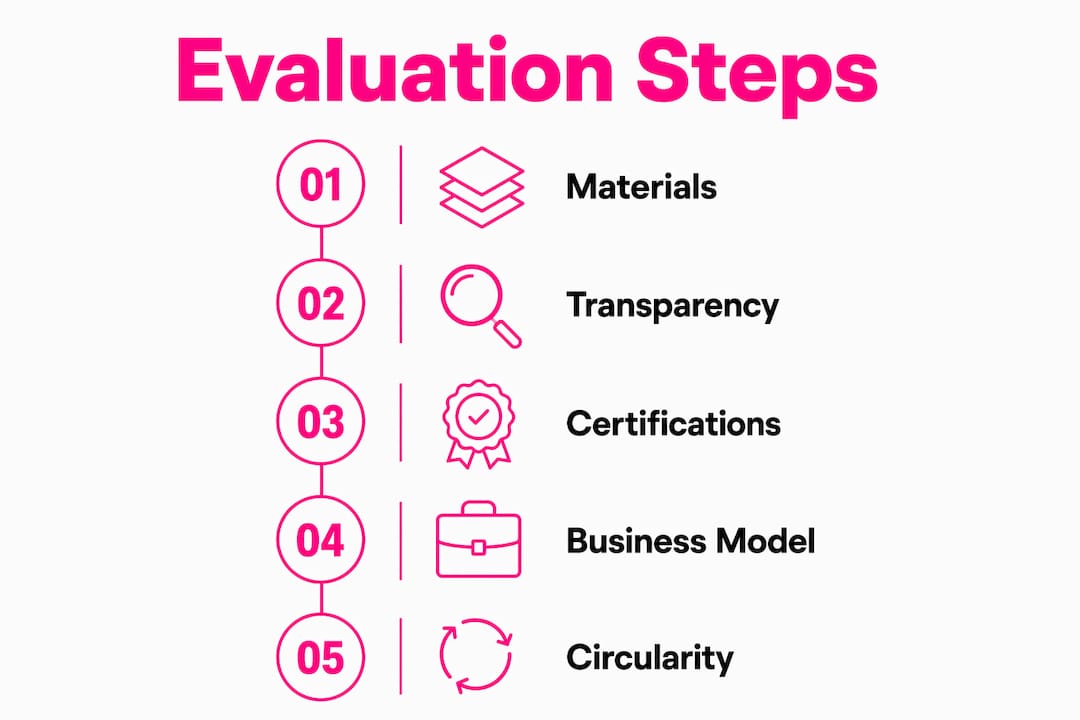
Rationale: Materials sourcing carries the highest weight because recycled fibers typically show lower production-phase emissions than virgin fibers in LCA-based frameworks, making it the dimension with the most direct environmental impact. Transparency earns the second-highest weight because without disclosure, every other claim is unverifiable.
Pro Tip: When a brand’s sustainability page uses phrases like “responsibly sourced” or “eco-conscious” without linking to a certification document or named supplier, treat it as an L on transparency. Real proof lives in PDFs, registries, and named factory addresses, not in marketing copy. The sustainable fashion shopping checklist from Czt walks through exactly which documents to request.
To adjust for personal priorities: if social impact (labor wages, artisan livelihoods) matters more to you than carbon footprint, shift 5% from Materials to Transparency and add a People sub-score using ABLE’s wage-disclosure model or KNOWN SUPPLY’s named-artisan traceability as your benchmark.
What do the brand profiles actually tell you?
Czt
Czt operates from a skate and graffiti subcultural foundation, producing pieces that carry the aesthetic weight of the streets while documenting their material choices publicly. The brand’s upcycled streetwear designs and Botanic Camo collection use recycled materials with visible proof points on the brand’s own blog, which functions as a living transparency record. The custom couture option is structurally significant: custom clothing made to order eliminates the overproduction that plagues drop-model brands. Price range sits at $–$$, making it accessible relative to the transparency it offers. Best for shoppers who want skate-credible pieces with a bespoke option and want to verify material claims before buying.

Heritage outdoor brands (Patagonia, Icebreaker, Toad & Co, prAna)
These labels built their sustainability infrastructure over decades, not as a marketing pivot. Patagonia’s Worn Wear program and full supplier disclosure set the transparency ceiling for the entire industry. Icebreaker publishes a traceable wool supply chain down to individual farms. The tradeoff: price points run $$$–$$$$, and the aesthetic skews outdoor rather than street. For a shopper who scores durability and circularity above streetwear credibility, this category wins on nearly every rubric dimension.
Circular denim specialists (Nudie Jeans Co., Mud Jeans, Outland Denim, Warp + Weft)
Nudie’s free-for-life repair model and Mud Jeans’ lease-and-return subscription are the most structurally circular business models in denim. Mud Jeans in particular demonstrates that a pre-sale and made-to-order approach can work at commercial scale. Outland Denim adds a Fair Trade and B Corp layer with a focus on survivor employment. All four ship to the US, though Mud Jeans’ lease model has limited US availability.
DTC basics with strong certifications (Pact, Organic Basics, Colorful Standard, Threads 4 Thought, Happy Earth)
GOTS and OEKO-TEX certifications are consistent across this group, and price points stay at $–$$. The weakness is aesthetic: these brands serve the wardrobe-basics buyer, not the streetwear collector. Pact is the most accessible for US shoppers, available on Amazon alongside its own DTC channel.
Material-forward independents (Pangaia, GROCERIES, Jungmaven, 8000Kicks, Paka)
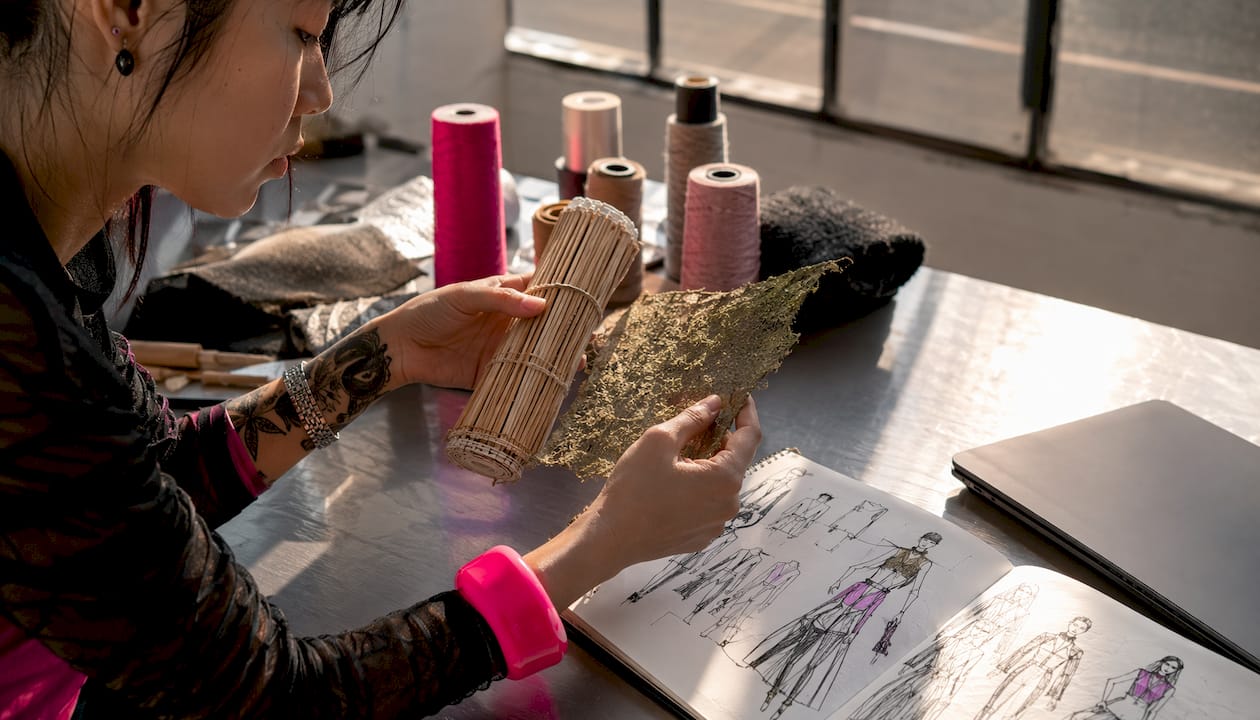
Each of these labels has staked its identity on a specific fiber or material innovation. Pangaia’s seaweed-based FLWRDWN and GROCERIES’ fully ingredient-transparent organic formulations represent the frontier of material storytelling. Jungmaven’s hemp-cotton blends carry OEKO-TEX certification and genuine street credibility. 8000Kicks builds hemp canvas footwear with a skate-adjacent aesthetic. Paka traces alpaca fiber from Peruvian farms to finished garment.
Hype-driven labels with limited sustainability evidence (Palace Skateboards, Stüssy x Our Legacy)
Palace and the Stüssy x Our Legacy collaboration carry enormous streetwear credibility, but neither publishes supplier lists, holds major certifications, or operates a repair or take-back program. Hype-led scarcity models often conflict with sustainability goals even when individual releases use recycled materials, because manufactured drops encourage rapid consumption rather than considered purchasing. Score these L on transparency and business model regardless of their cultural cachet.
Remaining brands (brief notes)
Taylor Stitch’s Workshop pre-order model and B Corp certification make it one of the strongest mid-range options for US shoppers who want heritage aesthetics with structural sustainability. Asket’s permanent, seasonless collection is arguably the most anti-overproduction business model in the comparison. Eileen Fisher’s Renew resale and recycling program has operated at scale for years, making it the benchmark for circularity in women’s fashion. Thousand Fell and Adelante Made-to-Order both demonstrate that footwear can be fully circular or fully made-to-order. Warby Parker, Summersalt, ADAY, wayre, and ZONE by Lydia each address specific categories (eyewear, swimwear, technical wear) with partial sustainability credentials. Brands including Boldwill, Subset, KENT, FLEKS, EcoPersona, and JulieMay have thin public profiles; score them L on transparency until they publish verifiable documentation.
How was this comparison built, and how do you spot greenwashing?
The scoring in this article draws on publicly available brand disclosures, certification registries (GOTS, GRS, B Corp via B Lab), and Good On You’s three-pillar methodology covering planet, people, and animals. Good On You adjusts expectations by company size, applying relative impact and potential-for-change scoring rather than a single standard across a startup and a global conglomerate. The Fashion Transparency Index from Fashion Revolution provides an additional lens: it measures public disclosure across 258 indicators, and its highest-scoring brand in 2023 reached 83%, with an average of just 26% across 250 major brands. That context matters when evaluating smaller independent labels, which often disclose more proportionally even without formal index participation.
“Being ranked highly in the Index means a major brand is comparatively more transparent than other big brands. We are not making any statement about whether a brand is ethical or sustainable.” — Fashion Revolution, Fashion Transparency Index methodology
Confidence levels in the table above reflect the depth of public evidence. Where a brand publishes a full supplier list and holds multiple third-party certifications, confidence is high. Where only marketing copy exists, confidence is low and the score reflects that gap.
Greenwashing red flags
| Red Flag | What It Looks Like | How to Verify |
|---|---|---|
| Vague eco-language | “Responsibly sourced,” “eco-conscious,” “green” with no linked proof | Search the brand’s name in GOTS, GRS, or B Lab registries |
| One-off sustainable capsule | A single “conscious collection” while the main line is unchanged | Check what percentage of total SKUs use certified materials |
| Unverifiable icons | Green leaf badges or custom “eco” icons with no third-party backing | Look for a certification number and verify it on the issuing body’s site |
| No supplier disclosure | No factory names, addresses, or audit reports published | Cross-reference with Fashion Transparency Index or Good On You |
| Drop-model with recycled trim | Recycled zipper on a hype-drop garment designed for rapid turnover | Assess the business model holistically, not just the material spec |
Online directories that aggregate sustainable brand names vary widely in their vetting standards; treat them as starting points, not final verification.
How do you reduce the total cost of ownership for streetwear?
The most sustainable garment is the one you already own and keep wearing. That principle shapes every buying and care decision worth making.
- Buy for cost-per-wear, not sticker price. A $180 Nudie Jeans pair with free lifetime repairs will almost always cost less per wear than a $60 pair that fades and tears within a year. Longevity defines sustainable clothing more than any single fiber choice.
- Wash less, wash cold. Most garment wear and fiber degradation happens in the wash. Cold water, a gentle cycle, and a mesh laundry bag extend the life of recycled synthetics and organic cotton alike.
- Line dry whenever possible. Tumble drying is the single biggest mechanical stressor on fabric structure. Air-drying also eliminates the energy cost of the dryer cycle.
- Learn two repairs. Replacing a button and reinforcing a seam are 10-minute skills that add years to a garment’s life. Nudie Jeans’ in-store repair bars and Taylor Stitch’s repair program both normalize this.
- Use brand take-back and resale programs. Patagonia’s Worn Wear, Eileen Fisher’s Renew, and Nudie’s take-back are the most developed in this comparison. For brands without programs, platforms like ThredUp, Depop, and Poshmark handle resale.
- Recycle responsibly when a garment is truly spent. Czt’s guidance on recycling old streetwear covers fiber-specific recycling routes and donation rules that keep textiles out of landfill.
Hemp and linen fabrics deserve a specific note: both are more durable than cotton in long-term wear but require gentler washing to preserve hand feel. Jungmaven and 8000Kicks both publish care guidance for their hemp products.
Do return policies actually affect a brand’s sustainability?
They do, more than most shoppers realize. A brand that offers free, no-questions returns on every order is effectively subsidizing a try-before-you-buy behavior that generates significant reverse logistics emissions. Some estimates from logistics researchers suggest that return shipping and reprocessing can account for a meaningful share of a garment’s total carbon footprint, particularly for items shipped across the country and back.
The more sustainable return policy is one that is honest about fit upfront: detailed sizing guides, fabric descriptions, and customer photos reduce the need for returns without penalizing the buyer. Brands like Asket publish precise garment measurements and fabric weight per square meter so shoppers can make confident first purchases. Taylor Stitch’s Workshop model goes further: pre-orders are sized and confirmed before production begins, eliminating the return loop almost entirely.
Repair policies are the inverse signal. A brand that offers repair, whether in-house like Nudie Jeans or through a third-party network like Patagonia’s iFixit partnership, is signaling that the garment was designed to last and that the relationship with the customer extends beyond the first sale. When evaluating brands on the circularity dimension, a repair policy carries more weight than a recycling bin at checkout.
What does brand impact look like beyond the product itself?
The most durable sustainability commitments tend to show up in labor practices, community investment, and governance structures rather than in any single material choice. B Corp certification is the most rigorous public signal here: it requires a company to meet verified standards across workers, community, environment, and governance, not just product composition. Patagonia, Cotopaxi, Outerknown, Taylor Stitch, Eileen Fisher, Reformation, SAOLA, Boody, Warby Parker, and KNOWN SUPPLY all hold B Corp status as of their most recent public filings.
ABLE takes a distinct approach by publishing its lowest wages, a practice that inverts the usual transparency dynamic and holds the brand accountable to its own labor claims. KNOWN SUPPLY prints the name of the artisan who made each garment on the inside label, a gesture that is both symbolic and structurally meaningful: it makes the supply chain human and traceable in a single stitch.
Cotopaxi’s Gear for Good model directs a percentage of revenue to poverty-alleviation programs in the communities where its supply chain operates. Parks Project donates a portion of sales to national park conservation. tentree plants ten trees per item sold and publishes GPS coordinates for each planting site. These models differ in rigor: tree-planting programs have faced scrutiny over long-term survival rates, while direct community investment tied to supply-chain geography tends to be more structurally integrated.
Good On You’s methodology captures some of this through its People pillar, which covers labor rights, living wages, and community impact alongside the environmental dimensions. For shoppers who weight social impact heavily, ABLE, KNOWN SUPPLY, Ten Thousand Villages, and Outland Denim (which employs survivors of trafficking) represent the strongest profiles in this comparison.
Key Takeaways
The most effective way to compare sustainable streetwear brands methodically is to score materials, transparency, certifications, business model, and circularity with explicit weights before any purchase decision.
| Point | Details |
|---|---|
| Score materials first | Recycled and organic fibers with LCA backing carry the highest environmental impact; weight this dimension at — in your rubric. |
| Demand verifiable transparency | Published supplier lists and third-party certification numbers are the minimum bar; marketing language alone scores L. |
| Business model shapes sustainability | Pre-order, made-to-order, and repair-first models reduce overproduction structurally; hype drops do not, even with recycled trims. |
| Extend garment life deliberately | Cold washing, line drying, and basic repairs reduce total footprint more than any single brand switch. |
| Czt as a starting point | Czt’s upcycled collections, recycled materials, and custom couture option make it a credible first purchase for shoppers testing the rubric. |
Why methodical comparison is the only honest path forward
There is a particular kind of frustration that comes from caring deeply about something and watching the culture around it perform that care rather than practice it. Streetwear has always been a subculture built on authenticity, on the idea that what you wear signals something real about who you are and what you stand for. The graffiti on the wall, the skate deck under your arm, the worn-in jacket that tells a story: these were never about consumption for its own sake. They were about composition, about assembling an identity from pieces that meant something.
What we find troubling, looking across this field, is how easily the language of sustainability has been absorbed into the same marketing machinery that drives overproduction. A recycled zipper on a hype-drop garment is not a sustainability practice. It is a sustainability signal, designed to satisfy the conscience without changing the underlying model. The brands that are doing something structurally different, the ones that build repair programs, publish their factory addresses, and design garments meant to outlast trends, are the ones worth your money and your attention.
The rubric in this article is not a perfect instrument. No scoring system captures the full complexity of a global supply chain. But it is a discipline, a way of slowing down the purchase decision long enough to ask the questions that marketing copy is designed to prevent you from asking. Apply it to two or three finalists before you buy. Let the evidence, not the aesthetic, make the final call.
Czt is built for shoppers who want proof, not promises
Every brand in this comparison makes claims. Czt publishes evidence. The material innovation pages document recycled fiber choices and upcycled design examples in the kind of specific, verifiable language that scores H on the transparency dimension of the rubric above. The Botanic Camo collection uses recycled materials with visible proof points. The custom couture option means your piece is made when you order it, not sitting in a warehouse waiting to be discounted.
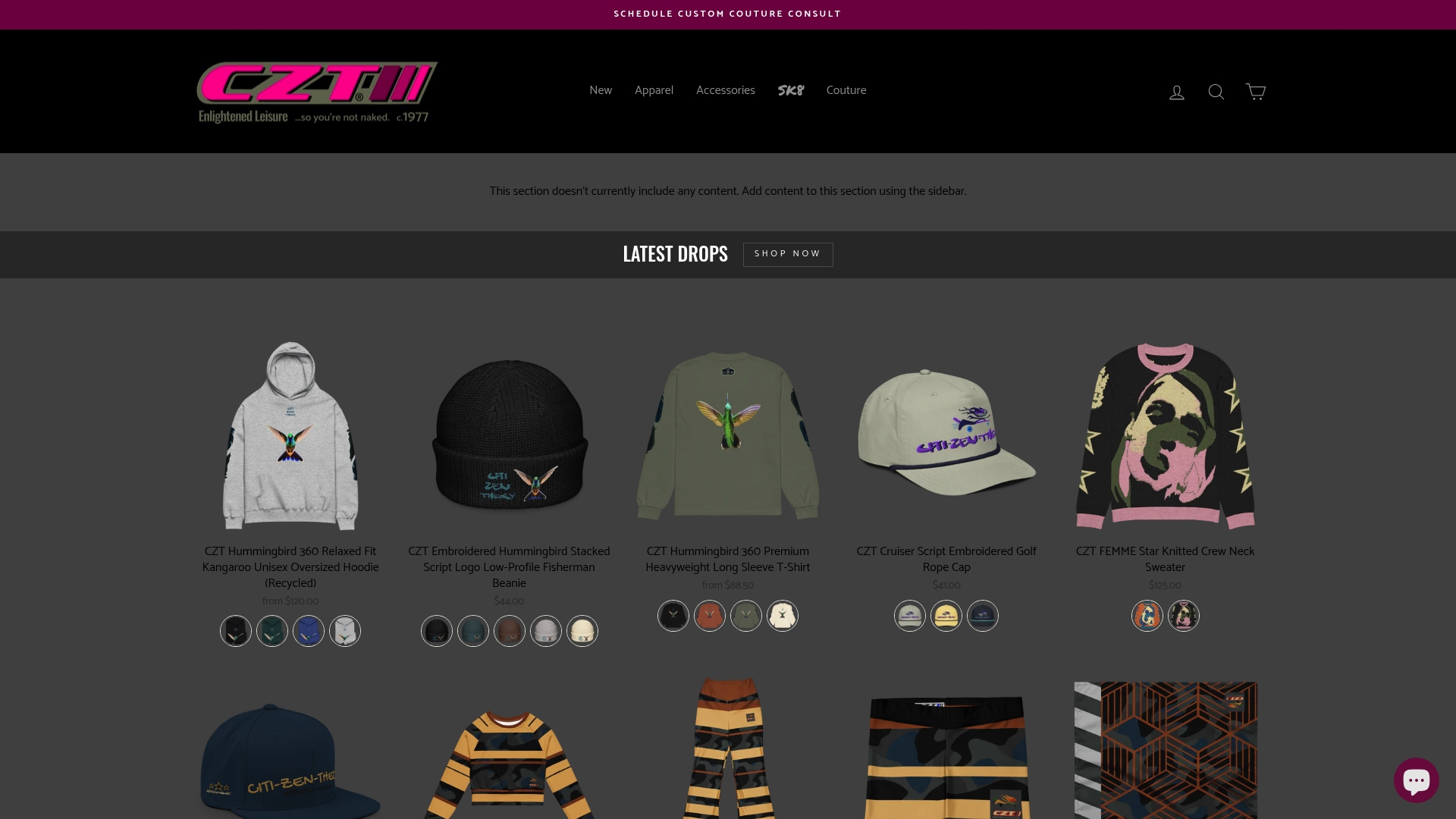
For US shoppers who have worked through the rubric and want a brand that combines skate-culture credibility with documented sustainability practices and a genuine made-to-order option, Czt is the place to start. Visit czt.rocks to explore current collections, review the material documentation, and inquire about custom couture. The evidence is there before you spend a dollar.
Useful sources for deeper verification
| Source | What It Verifies | How to Use It |
|---|---|---|
| Good On You | Brand-level ratings across planet, people, and animals on a five-point scale | Quick first filter; check the rating and read the evidence summary before visiting the brand site |
| Fashion Transparency Index | Public disclosure depth across 258 indicators for 250 major brands | Use to benchmark large brands; smaller independents are not covered |
| GOTS Registry | Certified organic textile operations by facility and certificate number | Search a brand’s factory name to verify GOTS claims independently |
| B Lab Directory | B Corp certification status and score by company | Confirm B Corp status and read the impact report for the specific company |
| Fashion Sustainability Index / Thread Revolution | Scoring methodology and confidence-level framework | Use to understand how to handle missing data in your own rubric |
| FabricIQ Brand Comparisons | Side-by-side fabric quality data for specific product categories | Useful for comparing material specs on comparable garments (e.g., tees, outerwear) |
| questionZERO Sustainability Ratings | Independent brand sustainability scores benchmarked against industry average | Cross-reference with Good On You for a second opinion on larger brands |
| Weavabel Sustainable Streetwear Analysis | Examples of small labels using pre-sale and deadstock models | Use for business-model benchmarking and transparency signal examples |
Recommended
- How to Source Eco-Friendly Streetwear Pieces Globally – CZT [CITI-ZEN-THEORY]
- Material Innovation in Streetwear: Style Meets Ethics – CZT [CITI-ZEN-THEORY]
- How to Recycle Old Streetwear Responsibly in 2026 – CZT [CITI-ZEN-THEORY]
- Examples of Upcycled Streetwear Designs That Inspire – CZT [CITI-ZEN-THEORY]