![CZT [CITI-ZEN-THEORY]](http://czt.rocks/cdn/shop/files/CZT_-_Brand_PINK_Label_1_330x.png?v=1774104725)
![CZT [CITI-ZEN-THEORY]](http://czt.rocks/cdn/shop/t/61/assets/CZT-Fast-Logo---Blue-Grey_330x.png?v=98224836737033641471695502660)
![CZT [CITI-ZEN-THEORY]](http://czt.rocks/cdn/shop/files/CZT_-_Brand_PINK_Label_1_170x.png?v=1774104725)
![CZT [CITI-ZEN-THEORY]](http://czt.rocks/cdn/shop/t/61/assets/CZT-Fast-Logo---Blue-Grey_170x.png?v=98224836737033641471695502660)
Verify OEKO-TEX Certified Clothing in 5 Steps for Shoppers
An OEKO-TEX Standard 100 label means the finished garment and every single component inside it, from the thread to the buttons, passed independent testing for harmful substances. That testing screens against a list of roughly 1,000 restricted chemicals. You can verify any claim in seconds using the certificate number or QR code stitched into the tag, which means the label is not just marketing language. It is a checkable promise about what touches your skin.
TL;DR:
- Certificates for garments are valid for one year, and verifying the certificate number or QR code is essential before purchase.
- OEKO-TEX Standard 100 tests for about 1,000 restricted chemicals, focusing on substances realistically present in textiles.
- The Standard 100 label guarantees skin safety but does not address broader sustainability or ethical production practices.
- Additional labels like Made in Green and STeP provide traceability and factory-level environmental and social certifications but are separate from Standard 100.
- Vague claims or missing certificate details should be treated as marketing rather than proof of true chemical safety.
Table of Contents
- What OEKO-TEX Standard 100 Testing Actually Covers
- Made in Green, STeP, Eco Passport, and Leather: Which Label Means What
- How to Verify an OEKO-TEX Label Before You Buy
- What OEKO-TEX Certification Does Not Promise
- Your Practical Checklist for Buying OEKO-TEX Certified Clothing
- How We Apply OEKO-TEX Thinking to Sustainable Streetwear
- Shop With Confidence in Materials Built to Earn It
- Sources
What OEKO-TEX Standard 100 Testing Actually Covers
We think about Standard 100 the way a luthier thinks about the wood before it ever becomes a guitar: the raw material gets scrutinized before the craft even begins. The purpose of the standard is straightforward. Independent labs test the finished textile product and its components for substances that could pose a risk to human health, whether that risk comes from prolonged skin contact, absorption, or accumulation over years of wear.
The scope is wide but not arbitrary. Testing checks for roughly 1,000 harmful substances, covering everything from banned azo dyes to formaldehyde, heavy metals, pesticide residues, and allergenic disperse dyes. Labs do not run every possible test on every garment. Testing is calibrated to the substances realistically found in the fibers, dyes, and finishing agents actually used, which keeps the process rigorous without becoming a blunt instrument.
Standard 100 splits products into four classes based on how close they sit to your body:
- Product Class I: Baby clothing and textiles for infants under three, held to the strictest limits.
- Product Class II: Garments worn in direct, extended contact with skin, such as T-shirts, underwear, bedsheets.
- Product Class III: Garments without direct skin contact, like jackets with lining.
- Product Class IV: Furnishing and decoration textiles, with minimal human contact.
Class II is the one that matters most for the hoodies, tees, and joggers filling your closet, because it assumes your skin is in near-constant contact with the fabric.
Here is a piece of mechanics almost no consumer guide explains well: the modular testing principle. If a fabric mill already holds a valid Standard 100 certificate for its yarn or fabric, that certificate can be reused by the brand assembling the finished garment, instead of retesting the same material from scratch. That is why some certified pieces reach the market faster and at lower cost than you might expect. The system rewards suppliers who invest early in clean materials, and it rewards brands who build relationships with those suppliers.
Made in Green, STeP, Eco Passport, and Leather: Which Label Means What
Confusion around OEKO-TEX labels usually comes from one wrong assumption: that all the logos mean the same thing. They don’t. Standard 100 answers one question, is this product safe against my skin, while the rest of the OEKO-TEX portfolio answers different questions about where and how a product was made.
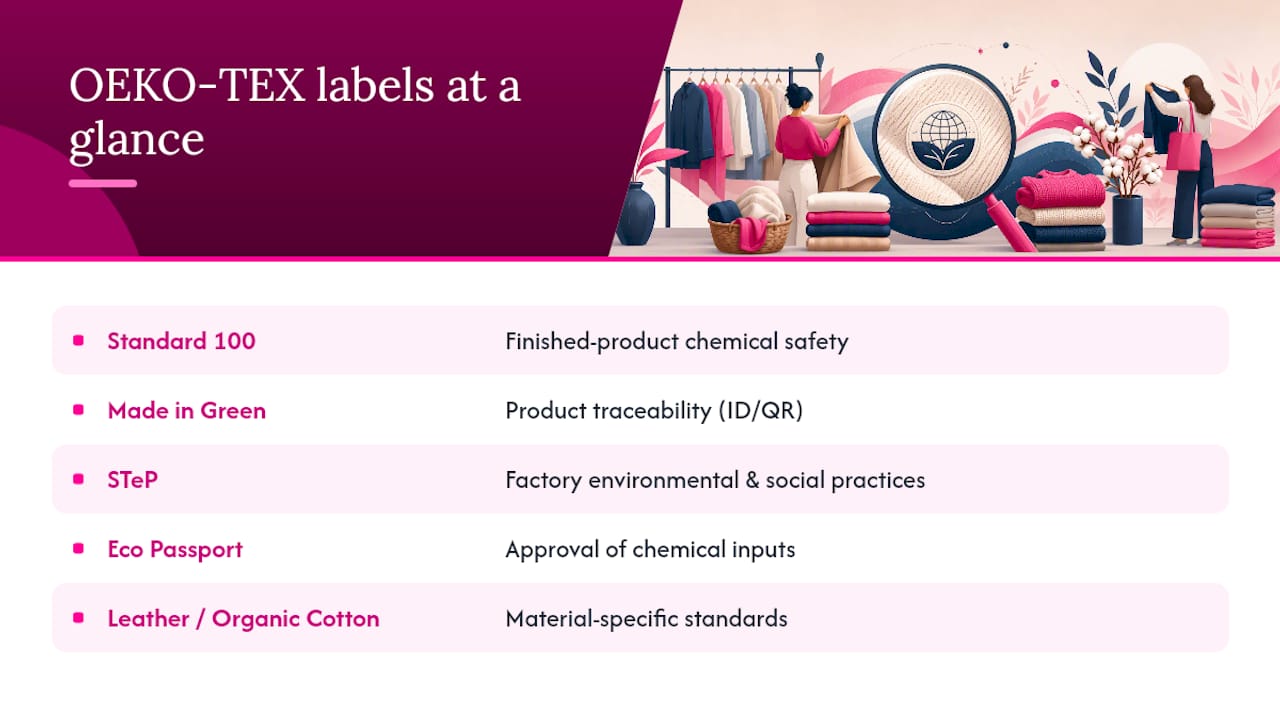
Made in Green builds on Standard 100’s chemical testing and adds traceability. Each Made in Green product carries its own product ID or QR code that lets you trace the garment back through its supply chain, and confirms it was manufactured in facilities that meet defined environmental and social criteria. If you care not just about what’s in the fabric but where it was sewn and under what conditions, this is the label to look for.
STeP (Sustainable Textile Production) certifies the factory, not the garment. It evaluates a production site’s environmental management, chemical handling, and social practices, and the certification runs on a multi-year validity cycle rather than the one-year window Standard 100 uses.
Eco Passport certifies the chemical inputs, dyes, auxiliaries, and finishing agents themselves, confirming they are approved for use in sustainable textile production before they ever touch a fiber.
Leather Standard and Organic Cotton labels apply to specific material categories that Standard 100 explicitly excludes or treats differently, since leather has its own chemical profile and organic cotton claims speak to farming practices rather than finished-product chemistry.
By the numbers: OEKO-TEX issued more than 43,000 certificates and labels in a single recent year, spread across this entire family of standards, which tells you how deeply embedded these labels already are in global apparel manufacturing.
If your goal is basic skin safety, Standard 100 is the baseline. If you care about traceability and the humans behind the stitching, look for Made in Green or a supplier holding STeP certification alongside it.
How to Verify an OEKO-TEX Label Before You Buy
Trust, in our world, is not something you take on faith. It is something you check. Here is exactly how to confirm a garment’s OEKO-TEX claim is real rather than printed on a swing tag for effect.
- Locate the label and certificate number. Every legitimate STANDARD 100 tag carries a certificate number, usually formatted with the issuing institute’s code, printed directly on the garment tag or hangtag.
- Run it through the Label Check or Buying Guide. OEKO-TEX maintains a public verification tool where you scan the QR code or enter the certificate number directly, which pulls the certificate’s actual scope and status.
- Confirm the scope, not just the existence, of the certificate. Check whether the certificate covers the whole garment, or only the base fabric, since trims, prints, zippers, and embellishments sometimes fall outside the tested scope.
- Check the expiration date. Certificates run for one year, so a certificate number tied to an expired cycle is a red flag worth asking about.
- Ask the retailer directly if anything feels vague. A brand confident in its sourcing will hand over supplier certificates without hesitation.
Pro Tip: Screenshot the verification result the moment you confirm it. Certificate records can update or expire, and having your own timestamped proof protects you if a return or warranty question ever comes up.
What OEKO-TEX Certification Does Not Promise
Here is where a lot of well-meaning shoppers get it wrong, and it is worth saying plainly: a Standard 100 label is not a stamp of full sustainability, and it was never designed to be one. Standard 100 is a chemical-safety check. It says nothing directly about whether the cotton was grown organically, whether the factory paid a living wage, or how much carbon the supply chain produced getting the garment to your door.
Reporting on the certification system has been consistent on this point: OEKO-TEX is robust for human-ecological safety, but it represents one slice of a much larger sustainability picture, not the whole picture. Confusing the two is how greenwashing sneaks past well-intentioned buyers.
The other OEKO-TEX labels fill some of that gap, but only some of it:
- Made in Green adds traceability and baseline social and environmental production criteria on top of the chemical test.
- STeP certifies the factory’s environmental and social systems, not the individual garment’s chemistry.
- A shirt with only a Standard 100 label may be perfectly safe against your skin while telling you nothing about labor conditions or water usage in its production.
The smartest move is treating certification labels as one input among several, alongside a brand’s own material sourcing transparency and honest disclosure practices. A label tells you what was tested. It doesn’t tell you the whole story of how the garment came to exist.
Your Practical Checklist for Buying OEKO-TEX Certified Clothing
Treat this like a pre-purchase ritual, not a chore. Four things, checked in order, before you commit to a garment carrying an OEKO-TEX claim:
- Visible label with certificate number. No number, no verification, no purchase.
- QR code or number that actually resolves. Run it through the Label Check before checkout, not after.
- Recent certification date. Since certificates are valid for one year, a stale-looking date is worth a direct question to the retailer.
- Clear scope language. Know whether the fabric, the trims, or the entire assembled garment carries the certification.
For higher-exposure items, babywear, underwear, bedding, layers worn against sensitive skin, it’s worth going a step further and looking for Made in Green or a supplier with STeP certification layered on top of Standard 100. Those extra labels tell you something about the factory floor, not just the fiber.
On cost: certification is not free for brands, and that reality shows up in pricing. A garment carrying real, verified OEKO-TEX certification will typically sit at a slightly higher price point than an uncertified equivalent, since testing and modular certification fees get built into production costs. That is a reasonable trade, not a red flag.
Watch for the actual warning signs: vague language like “eco-friendly materials” with no certificate number attached, product photography that never shows a tag close-up, or a retailer that dodges direct questions about supplier certificates. A sustainable fashion shopping checklist built around these specifics will save you from a lot of guesswork at checkout.
Pro Tip: If a product page shows a certification badge but zero tag photography and zero certificate number, treat that as marketing shorthand, not proof, until the retailer sends you something you can actually verify.
How We Apply OEKO-TEX Thinking to Sustainable Streetwear
We built our approach to material sourcing the same way a skater learns a new line: by testing the ground before committing your full weight to it. Our Botanic Camo collection runs on recycled materials chosen with the same scrutiny this article just walked you through, because recycled content does not automatically mean chemically clean content. Recycled fiber can carry residue from its previous life, which is exactly why testing philosophy matters as much as the sourcing story printed on a hangtag.
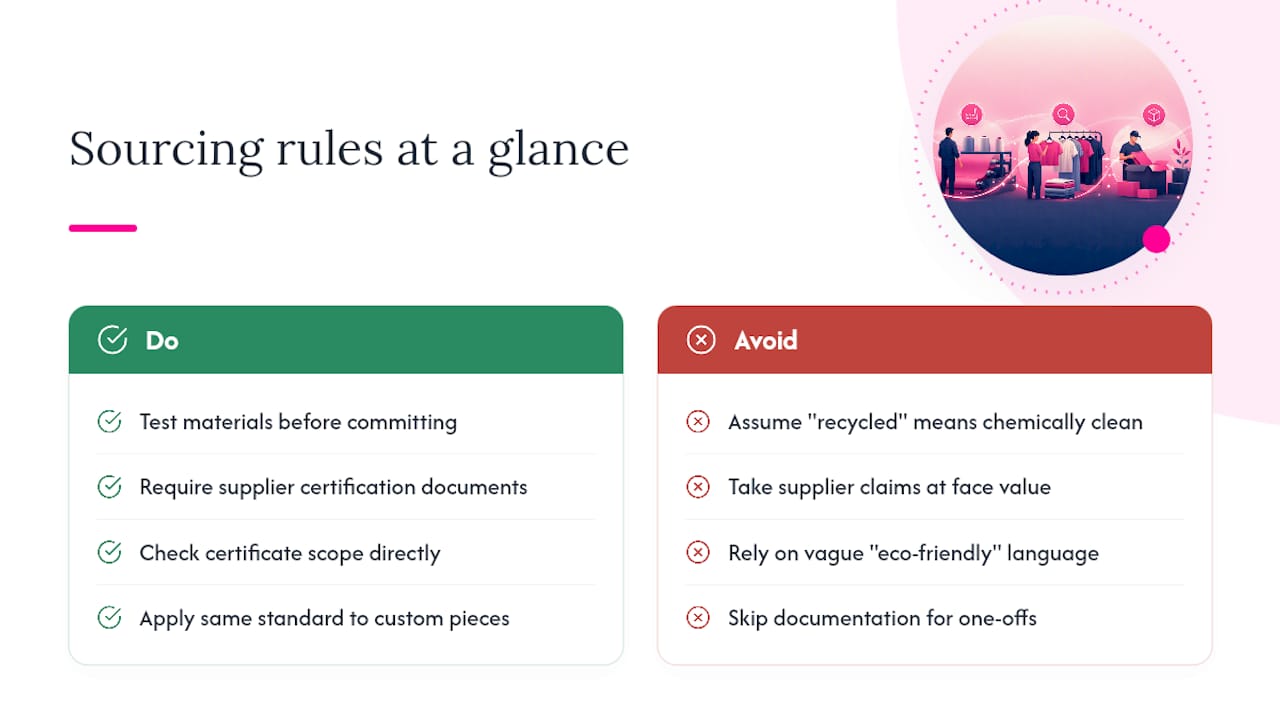
That philosophy extends into how we work with suppliers. We favor partners who can produce certification documentation for the components they hand us, rather than taking a supplier’s word for it, and we reference certificate scope directly when we can, rather than leaning on vague “eco-friendly” language that tells you nothing checkable. It is a slower way to build a supply chain. It is also the only way we know how to build one we would actually stand behind.
Our custom couture design service applies the same sourcing standard to one-off pieces. When you commission something personal, whether it’s a reworked jacket or a full custom fit, the same sourcing questions apply: what’s in the fabric, and can we prove it. We are still growing this documentation into something fully public-facing, and we will keep expanding our educational content as that work matures.
— CZT
Shop With Confidence in Materials Built to Earn It
Czt built its Botanic Camo collection on recycled materials chosen with the same testing-minded scrutiny this article just laid out, because “sustainable and safe” should never be two separate conversations happening in two different aisles. If you have read this far, you already know the difference between a garment that tells a good story and one that can actually back it up.
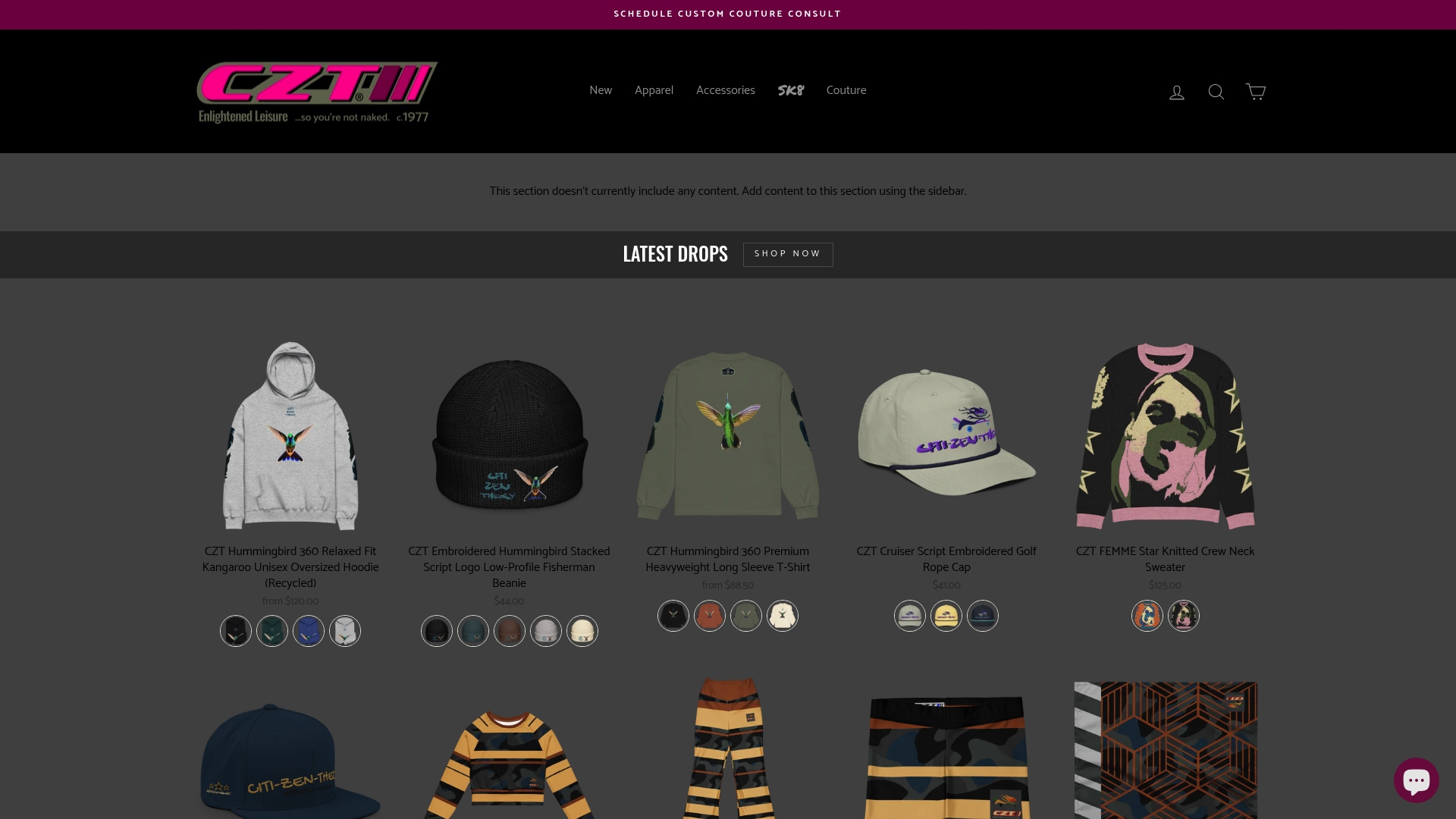
That is the gap we designed our sourcing process to close, checkable materials, transparent components, and a custom couture design service built for shoppers and skaters who want their gear to hold up to the same questions this article just taught you to ask. Whether you are eyeing a piece from Botanic Camo or thinking through a fully custom commission, start by browsing what is currently available and see how our material choices stack up against the checklist you just read. Book a couture consultation or explore the current collection to see it firsthand.
Sources
- OEKO-TEX STANDARD 100 — StandardsMap factsheet
- OEKO-TEX® STANDARD 100 Certification — Hohenstein
- OEKO-TEX® - Tailor-made solutions for the textile and leather industry
- OEKO-TEX STANDARD 100 — standard document (2026 excerpt)