![CZT [CITI-ZEN-THEORY]](http://czt.rocks/cdn/shop/files/CZT_-_Brand_PINK_Label_1_330x.png?v=1774104725)
![CZT [CITI-ZEN-THEORY]](http://czt.rocks/cdn/shop/t/61/assets/CZT-Fast-Logo---Blue-Grey_330x.png?v=98224836737033641471695502660)
![CZT [CITI-ZEN-THEORY]](http://czt.rocks/cdn/shop/files/CZT_-_Brand_PINK_Label_1_170x.png?v=1774104725)
![CZT [CITI-ZEN-THEORY]](http://czt.rocks/cdn/shop/t/61/assets/CZT-Fast-Logo---Blue-Grey_170x.png?v=98224836737033641471695502660)
The Fashion Certifications Worth Trusting When You Shop
The certifications worth learning before your next purchase are the Global Organic Textile Standard (GOTS), OEKO-TEX STANDARD 100 and Made in Green, the Global Recycled Standard (GRS), Fairtrade, Bluesign, Fair Wear Foundation, and B Corp. Each measures something different, which is exactly why so many shoppers get burned by the fine print. Some track fiber origin. Some test for chemicals. Some audit factory floors. None of them, alone, tells the whole story.
The rule that actually matters at checkout: favor product-level certified labels over vague brand claims, and verify the certificate ID or QR code directly on the certifier’s own lookup tool before you trust it.
- Product-level marks (verify these on the item itself): GOTS, OEKO-TEX STANDARD 100, GRS
- Facility or company-level marks (verify these about the maker): STeP, Fair Wear Foundation, B Corp
- Traceable, consumer-checkable IDs: Made in Green product IDs and QR codes
Pro Tip: A logo on a hangtag proves nothing by itself. The certificate number printed near it is the part that’s actually verifiable.
Key Takeaways
Verified certificate numbers, not logos alone, are what separate a real sustainability claim from marketing language on a fashion label.
| Point | Details |
|---|---|
| Know the core certifications | GOTS, OEKO-TEX STANDARD 100/Made in Green, GRS, Fairtrade, Bluesign, Fair Wear, and B Corp each measure something different. |
| Verify before you trust | Check certificate IDs or QR codes on the certifier’s own lookup tool, not the brand’s description. |
| Separate product from facility scope | GOTS, STANDARD 100, and GRS certify the item; STeP, Fair Wear, and B Corp certify the maker. |
| Certifications have limits | No mark covers full lifecycle impact, so pair certified claims with other evidence like a public restricted substances list. |
| Czt applies the same standard | Czt verifies supplier certificates and product traceability behind its recycled Botanic Camo collection and custom couture pieces. |
Table of Contents
- Fashion Sustainability Certifications: What Each One Actually Covers
- How to Verify a Certification Before You Buy
- What Certifications Can’t Tell You
- Your Checklist for Shopping Certified Fashion Right Now
- How Czt Verifies Its Own Recycled Materials
- What the Research Actually Supports, and Where Conventional Advice Falls Short
- Shop Certified Recycled Streetwear at Czt
- Sources
Fashion Sustainability Certifications: What Each One Actually Covers
No single fashion sustainability certification measures everything you’d want to know about a garment. Fiber origin, chemical safety, recycled content, and factory labor conditions are four separate questions, and most certifications answer only one or two of them well. Here’s what you’re actually looking at when you see each mark.
-
GOTS (Global Organic Textile Standard). For a garment to carry the GOTS label, it needs at least 70% certified organic fibers, and the standard doesn’t stop at the fiber field. It covers ecological and social criteria across every processing stage, from spinning to dyeing to packaging, and every operator in that chain gets an independent third-party audit. That chain-of-custody piece is what separates GOTS from a simple “organic cotton” claim on a swing tag.
-
OEKO-TEX STANDARD 100. This one tests the finished product, not the supply chain story behind it. Certified items are checked against a list of more than 1,000 potentially harmful substances, sorted into four product classes based on skin contact (baby items face the strictest limits). Certificates require regular renewal and fresh component-level testing each time, so an old hangtag photo isn’t proof of anything current.
-
OEKO-TEX Made in Green. Think of this as STANDARD 100 plus a paper trail. It adds an evaluation of environmental production practices and workplace safety, and it attaches a product ID or QR code you can scan to see where and how the item was made.
-
OEKO-TEX STeP. This one certifies the factory, not the garment. It looks at chemical management, environmental performance, and social responsibility at the facility level, with certificates typically valid for three years between audits.
-
Global Recycled Standard (GRS). GRS verifies recycled content and tracks it through chain-of-custody accounting all the way to the finished product. This matters because “made with recycled materials” on a label is a marketing phrase with no enforcement behind it, while a GRS certificate number is something you can actually check.
-
Fairtrade / Fairtrade Textile Standard. Built around producer and worker protections, this standard requires premium payments back to farming communities and factory workers, plus supply chain traceability from raw cotton onward.
-
Bluesign. This system focuses almost entirely on chemical inputs, screening what goes into dyeing and finishing before it ever reaches a garment, and approving factories that meet its input standards.
-
Fair Wear Foundation. A factory-level labor monitoring system, Fair Wear conducts audits and, when it finds problems, requires documented remediation rather than a quiet delisting.
-
B Corp. This is a company-level assessment covering governance, transparency, and overall accountability, not a product label. A brand can be B Corp certified while individual garments carry no certification at all, so don’t expect to find this one on a hangtag.
How to Verify a Certification Before You Buy
Reading a fashion label the right way takes less time than picking a size. Here’s what to actually check.
- Find the certificate number or QR code. A logo alone means nothing; the number next to it is what you type into the certifier’s own database.
- Identify the scope. GOTS, STANDARD 100, and GRS certify the product in your hands. STeP, Fair Wear, and B Corp certify the maker, not the specific item.
- Check the renewal date. STANDARD 100 certificates run on annual cycles, while STeP facility audits span roughly three years, so an expired certificate is a real red flag.
- Ask for a transaction certificate on big purchases. For custom or high-value orders, brands can supply documentation proving a specific shipment matches its certified scope.
- Use the certifier’s own lookup tool, not the brand’s word for it, whenever a claim is worth more than a few dollars to you.
Pro Tip: If a brand can’t produce a certificate number within a day of asking, treat the claim as unverified, no matter how confident the marketing copy sounds.
What Certifications Can’t Tell You
Certifications are specific instruments, not umbrellas. For example, our ethical swimwear guide details how certifications intersect with worker rights and supply-chain accountability. GOTS tells you about organic fiber content and processing, not about how far the garment traveled to reach you. STANDARD 100 tells you the fabric won’t expose you to a tested list of chemicals, not whether the factory paid a living wage. GRS tells you recycled content was tracked and verified, not that the garment will last five years instead of one wash cycle.
- Lifecycle factors like transport emissions, durability, and end-of-life disposal usually fall outside any certificate’s scope.
- “Made with recycled content” is not the same claim as “GRS-certified.” One is marketing language; the other has an auditable number behind it.
- Chain-of-custody and independent third-party audits are the real trust anchors here. Good On You notes that certifications hold up precisely because they depend on outside auditing instead of a brand’s self-reporting.
Treat any single badge as one data point, not a verdict on the whole garment.
Your Checklist for Shopping Certified Fashion Right Now
- Locate the certification mark and its ID number on the product page or physical tag, then verify it directly through the certifier’s lookup tool rather than trusting the brand’s description of it.
- Confirm the scope. Decide whether the mark you’re looking at certifies the item itself or the factory that made it, since those answer different questions.
- Check the expiry or renewal window. A STANDARD 100 certificate older than a year, or a STeP audit older than three, deserves a follow-up question.
- Request a transaction or scope certificate for larger purchases, especially custom or made-to-order pieces where traceability matters more.
- Layer product certs with company-level signals. Pairing a GRS-certified item with a brand that publishes a restricted substances list or holds B Corp status gives you a fuller picture than either signal alone.
Pro Tip: Keep a screenshot of the certificate lookup result when you buy something you plan to review or resell later. Certifier databases occasionally get restructured, and having your own record saves you a search headache down the road.
How Czt Verifies Its Own Recycled Materials
We built the Botanic Camo collection out of recycled materials because we wanted proof in the seams, not just in the copy on a product page. That commitment only means something if it survives a supplier audit, so we treat certificate numbers and product traceability as part of the design process, not an afterthought bolted on before launch.
- We check supplier certificates against the issuing body’s own records before a fabric ever reaches a sample run.
- We keep product traceability documentation available for customers who ask, because a claim you can’t back up with a number isn’t a claim worth making.
- We’d rather answer a hard question about sourcing than lose your trust to a vague label.
Ask any brand three questions before you buy: What’s the certificate number? Who’s the certifying body? Can I look this up myself? A brand with nothing to hide answers all three without hesitation.
If a brand can’t answer those, that silence tells you more than any hangtag could. For a deeper walkthrough of the traps to watch for, our guide on avoiding greenwashing in fashion covers the specific phrases that should make you pause.
What the Research Actually Supports, and Where Conventional Advice Falls Short
Most advice on this topic treats certifications like a single seal of approval: find the badge, feel good, buy the shirt. That’s backward. The research supports something more specific: certifications are only as useful as the verification step you take after you spot them. A GOTS logo without a checked certificate number is just a picture. A “Made in Green” tag without a scanned product ID is a promise, not a proof.
Where conventional advice really breaks down is the assumption that more badges automatically mean more sustainability. A garment stacked with five certifications isn’t necessarily better than one carrying a single, well-verified GRS certificate, if that one certificate actually gets checked and the other five don’t.
Prioritize verification over collection. Pick the one or two certifications that map to what you personally care about most, whether that’s chemical safety, recycled content, or factory labor conditions, and actually confirm those claims instead of counting logos.
— CZT
Shop Certified Recycled Streetwear at Czt
You’ve just learned how to separate a verified claim from a marketing flourish. Czt applies that same standard to the Botanic Camo collection, where recycled materials come with traceable sourcing instead of a vague “eco-friendly” sticker, and where our custom couture service lets you shape a piece around your own values instead of picking from a generic rack.
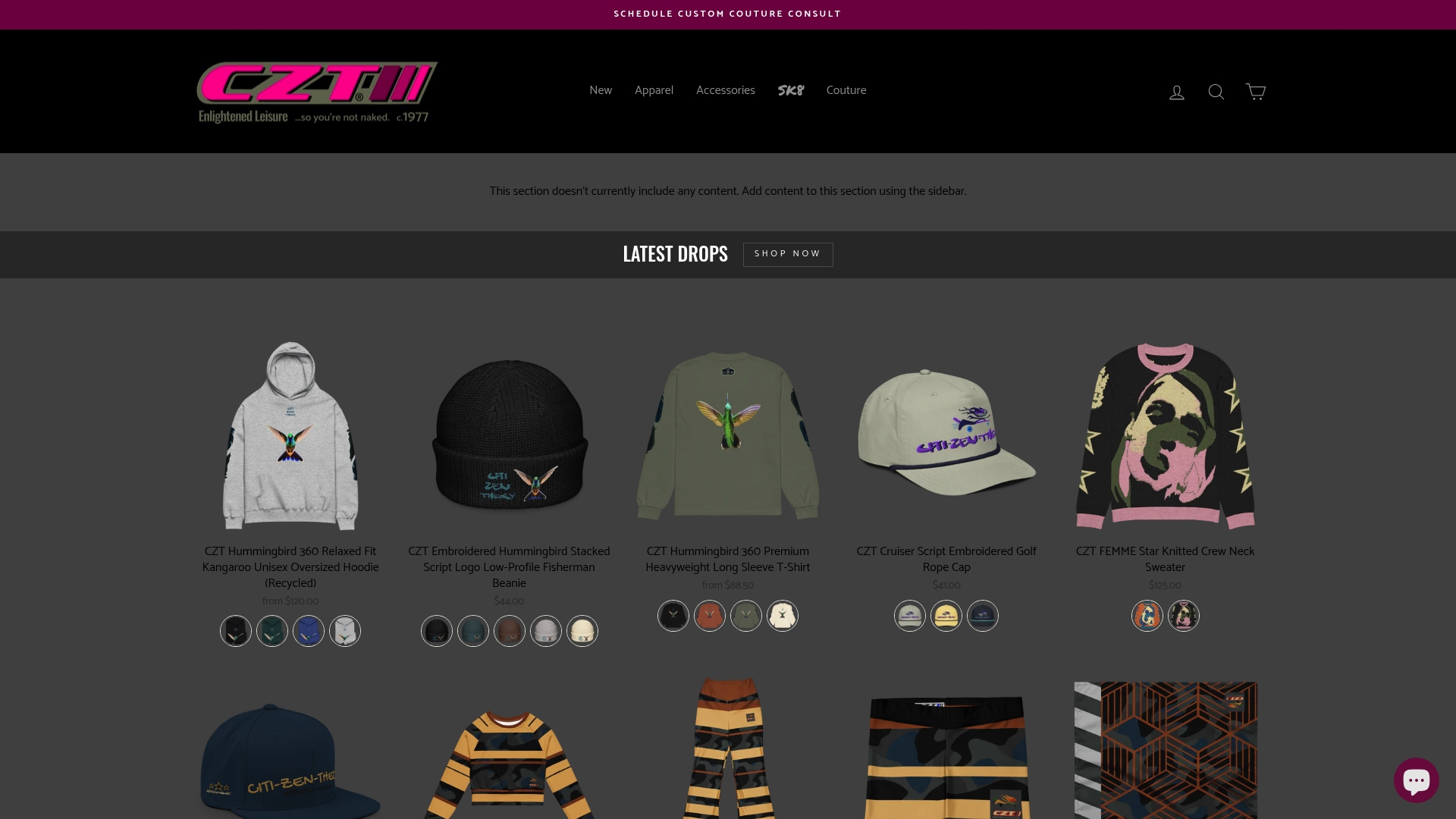
If you want the full walkthrough before you buy, our sustainable fashion shopping checklist breaks down exactly what to look for on any product page, certified or not. When you’re ready, browse the Czt shop and see recycled streetwear built with the same verification standard this guide just walked you through.
Sources
- OEKO-TEX® STANDARD 100 (official standard document, 2026)
- Global Organic Textile Standard (GOTS) - Textile Exchange glossary
- Intertek — GOTS textiles assurance and certification services
Recommended
- How to Avoid Greenwashing in Fashion: A Buyer’s Guide – CZT [CITI-ZEN-THEORY]
- Sustainable Fashion Shopping Checklist for 2026 – CZT [CITI-ZEN-THEORY]
- How to Source Eco-Friendly Streetwear Pieces Globally – CZT [CITI-ZEN-THEORY]
- Top Bespoke Urban Fashion Alternatives for Eco-Conscious Style – CZT [CITI-ZEN-THEORY]