![CZT [CITI-ZEN-THEORY]](http://czt.rocks/cdn/shop/files/CZT_-_Brand_PINK_Label_1_330x.png?v=1774104725)
![CZT [CITI-ZEN-THEORY]](http://czt.rocks/cdn/shop/t/61/assets/CZT-Fast-Logo---Blue-Grey_330x.png?v=98224836737033641471695502660)
![CZT [CITI-ZEN-THEORY]](http://czt.rocks/cdn/shop/files/CZT_-_Brand_PINK_Label_1_170x.png?v=1774104725)
![CZT [CITI-ZEN-THEORY]](http://czt.rocks/cdn/shop/t/61/assets/CZT-Fast-Logo---Blue-Grey_170x.png?v=98224836737033641471695502660)
Bartacks Matter: Gusseted Crotch Pants for Workwear and Active Use
A gusset is a diamond or triangular fabric panel sewn into the crotch seam to redistribute tension and add mobility where fabric would otherwise strain and tear. Gusseted crotch pants belong on anyone whose day includes squatting, climbing, kneeling, or skating, because the added panel means the seam stops fighting the body. If your work or your sport asks your legs to move past a standing stride, this construction detail is worth seeking out.
TL;DR:
- Gussets provide significant increases in mobility for pants used in demanding activities like climbing, skating, and workwear, preventing seam tearing during deep movements.
- Using reinforced stitching and proper fabric choices at gusset junctions dramatically extends the garment’s lifespan under repeated stress.
- Deep gussets allow greater range of motion but may add bulk or alter the fit, so selecting the right shape and depth depends on specific activity demands.
- Factory-made gusseted pants generally outperform retrofitted ones, as they are designed from the start to integrate stress points without weakening the fabric.
- Inspect gusset stitching carefully, especially bartacks and double seams, to ensure durability, rather than relying solely on panel size or shape.
Table of Contents
- What Gusseted Crotch Pants Actually Are
- Why Gusseted Pants Win in Workwear and Active Settings
- Construction Details That Determine How Long Gusseted Pants Last
- A Buyer’s Checklist for Choosing Gusseted Pants
- Should You Retrofit a Gusset or Buy Factory-Made Pants?
- How CZT Builds Gussets Into Functional Streetwear
- The Real Limitations of Gusseted Crotch Pants
- Our Take on What Actually Matters Here
- Get Custom-Fit Gusseted Pants From CZT
- Sources
What Gusseted Crotch Pants Actually Are
The word itself comes from old tailoring vocabulary. A gusset is, technically, a triangular or rhomboidal insert stitched into a seam to add breadth or relieve stress on tight-fitting cloth, and that definition has barely changed since it applied to shirts and armor padding centuries before it applied to work pants. Merriam-Webster puts it more plainly: a gusset is an extra piece of cloth sewn into a garment to make it wider, stronger, or more comfortable. Both descriptions point at the same mechanical trick.
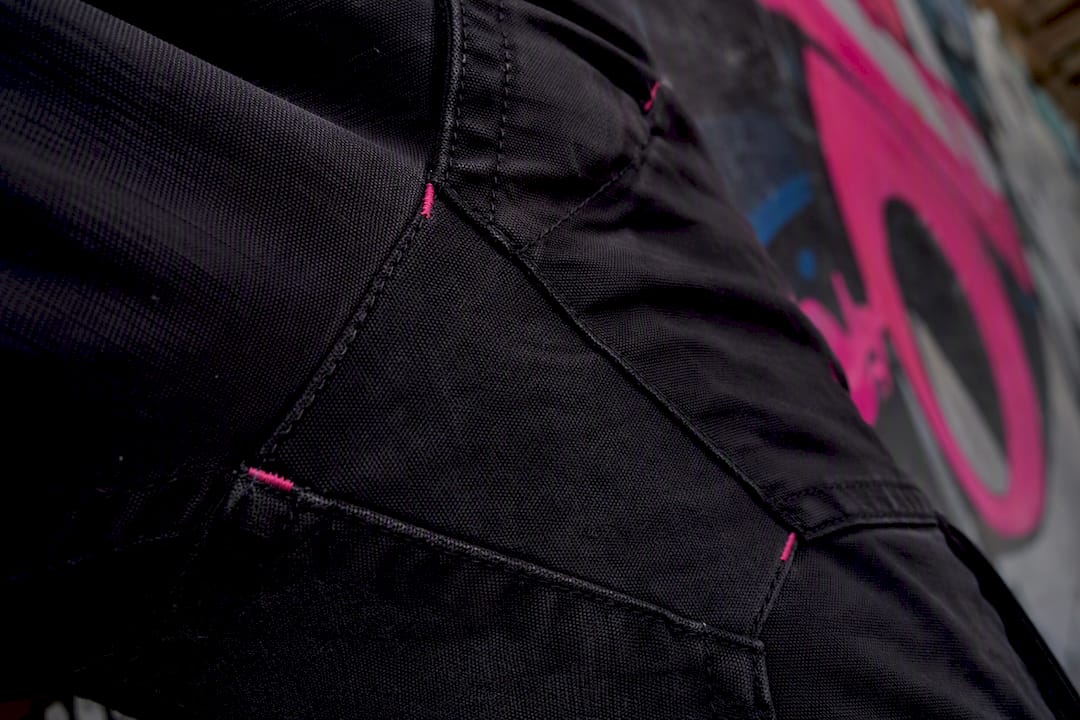
Standard pants cut the crotch seam as two flat panels meeting at a single point. Every squat, lunge, or high step pulls that point in three directions at once, which is exactly where cheap pants blow out first. A gusset panel absorbs that pull by giving the fabric somewhere to go instead of somewhere to tear.
Common shapes and placements include:
- Diamond gusset: the classic four-sided insert, favored for climbing and workwear because it distributes stress evenly.
- Triangular gusset: a simpler three-point version, often used in lighter athletic pants.
- T-shaped or multi-panel gusset: adds a vertical extension up the inseam for pants that need extreme squat depth, like some skate and martial arts designs.
Why Gusseted Pants Win in Workwear and Active Settings
Ask a mechanic sliding under a truck, a climber high-stepping onto a foothold, or a skater dropping into a crouch what they need from their pants, and none of them will say “a tighter waistband.” They need range of motion that doesn’t fight back. That’s the entire case for choosing gusseted pants over a standard cut.
The mobility gain is real and measurable in how the fabric behaves under load. Without a gusset, hip flexion pulls the crotch seam taut until it either restricts movement or splits. With one, outdoor apparel makers pair the panel with articulated knees and stretch technical fabric specifically to let alpine and climbing pants move with the body rather than against it.
Durability follows the same logic. A seam under constant tension fatigues faster than one that distributes load across a panel, and retailers marketing crotch gusset pants consistently frame the feature around range of motion and longer wear life for outdoor and active use.
Real-world cases where this matters most:
- Trade workers who kneel, climb ladders, and crouch through a ten-hour shift.
- Climbers who need full hip flexion for high steps without a seam blowout mid-route.
- Skaters dropping into deep crouches where a standard crotch seam simply cannot stretch.
- Mechanics and installers working in tight, twisted positions under vehicles or fixtures.
Pro Tip: Do a deep squat in the fitting room before buying. If you feel pulling at the crotch seam rather than smooth give, the pants don’t have enough gusset or stretch to survive your actual workday.
Construction Details That Determine How Long Gusseted Pants Last
The panel itself is only half the engineering. What holds it in place determines whether your gusset survives two years of hard use or blows out at month four.
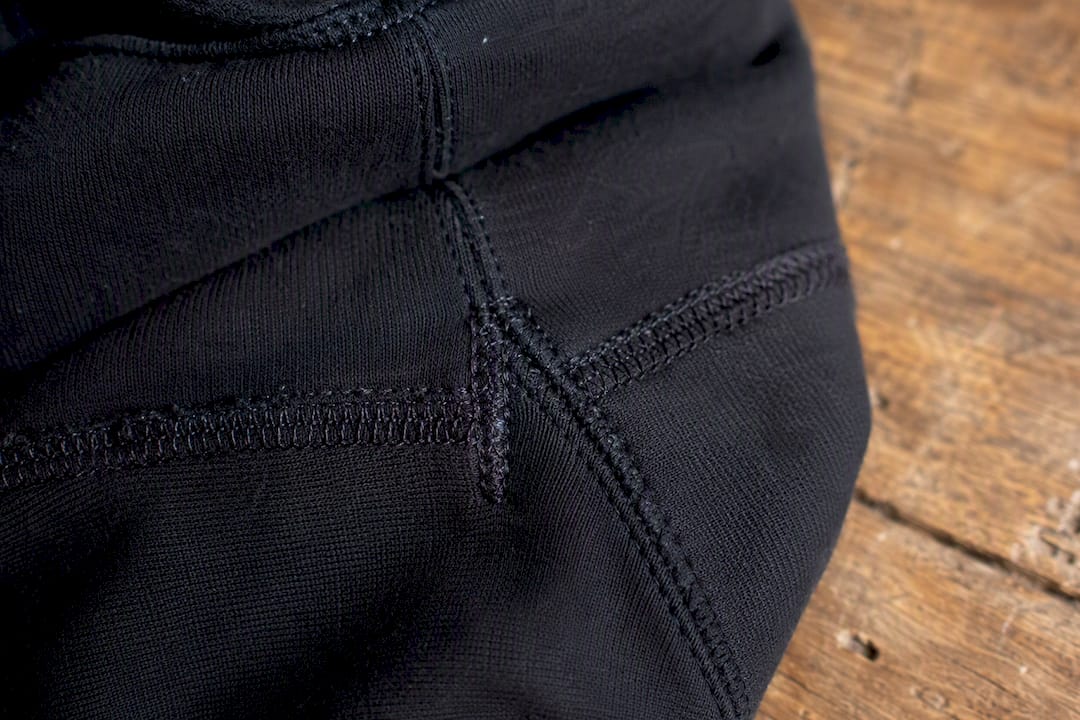
Fabric choice sets the baseline. Nylon and spandex blends give stretch recovery for climbing and skate pants, while heavier cotton canvas or cotton-poly duck holds up better against abrasion on job sites where you’re dragging knees across concrete or gravel. Technical synthetic blends split the difference, offering breathability plus decent abrasion resistance for pants that need to move but also take a beating.
Stitching matters just as much as the panel shape:
- Bartacks at the gusset’s stress points prevent the panel from pulling away under repeated flexion.
- Double-needle seams add redundancy so one broken thread line doesn’t cascade into a full seam failure.
- Tacked gussets, reinforced stitches specifically at the junctions where the panel meets the main seam, are the single detail worth asking about before you buy, since that junction takes the most repeated stress of any point on the garment.
Gusset depth is a tradeoff, not a pure upgrade. A deeper gusset allows more extreme range of motion but can add bulk or change how the pants sit at rest. Look for it at the inner thigh seam junction, usually visible as a diamond-shaped panel if you turn the pants inside out.
Wash gusseted pants inside out when possible, and check tacked points periodically. A loose thread at a bartack is a five-minute fix; a fully separated gusset seam is a trip to a tailor.
A Buyer’s Checklist for Choosing Gusseted Pants
Shopping for gusseted pants without a plan usually ends in either buying too much stretch for a desk-adjacent job or too little for a climbing wall. Work through this in order.
- Define your activity’s actual range of motion. A warehouse job needs deep squats and reaching; a climbing pant needs extreme hip flexion for high steps. Match the gusset shape and depth to what your body actually does.
- Run the bend and squat test on the fabric itself. Stretch crotch pants should recover their shape immediately after a deep squat with no sagging or visible strain lines at the seam.
- Inspect the gusset panel and stitch reinforcement directly. Turn the pants inside out if you can and look for bartacks or double stitching at the junction points, not just a diamond-shaped patch of fabric.
- Confirm the fit tradeoffs and care instructions. A deeper gusset sometimes changes how the pants drape when standing still, and stretch fabrics often need cooler washes to preserve elasticity.
Fit questions get easier once you know your own measurements rather than guessing off a size chart, and a guide to taking body measurements removes most of the trial and error before you ever place an order.
Should You Retrofit a Gusset or Buy Factory-Made Pants?
Retrofitting an existing pair of pants with a gusset is possible, but it’s a genuinely technical alteration, not a weekend sewing project. It requires cutting directly into the original crotch seam and re-patterning around the new panel without distorting the leg’s hang or the waist’s balance.
The risks are concrete:
- Seam weakening where the original stitch line was unpicked and re-sewn.
- Fit distortion, since inserting a panel changes how the inseam falls even when the tailoring is skilled.
- Visible repair lines that telegraph the alteration instead of blending into the garment.
A skilled tailor can pull it off when you request matched fabric weight and explicit tacking at the new stress points, and that’s a reasonable route for a sentimental pair of jeans or a specialty garment you can’t replace. For anything getting heavy daily use, factory-integrated construction wins. Retrofitting requires cutting original seams and precise re-patterning that can compromise structural integrity in ways a factory panel, engineered from the first cut, simply doesn’t risk.
How CZT Builds Gussets Into Functional Streetwear
We didn’t come to gusseted construction through a workwear catalog. We came to it through skate culture, where a blown-out crotch seam mid session is a design failure, not bad luck. Our patched joggers and skate pants carry diamond gussets sized for real deep-crouch movement, not a decorative nod to the shape.
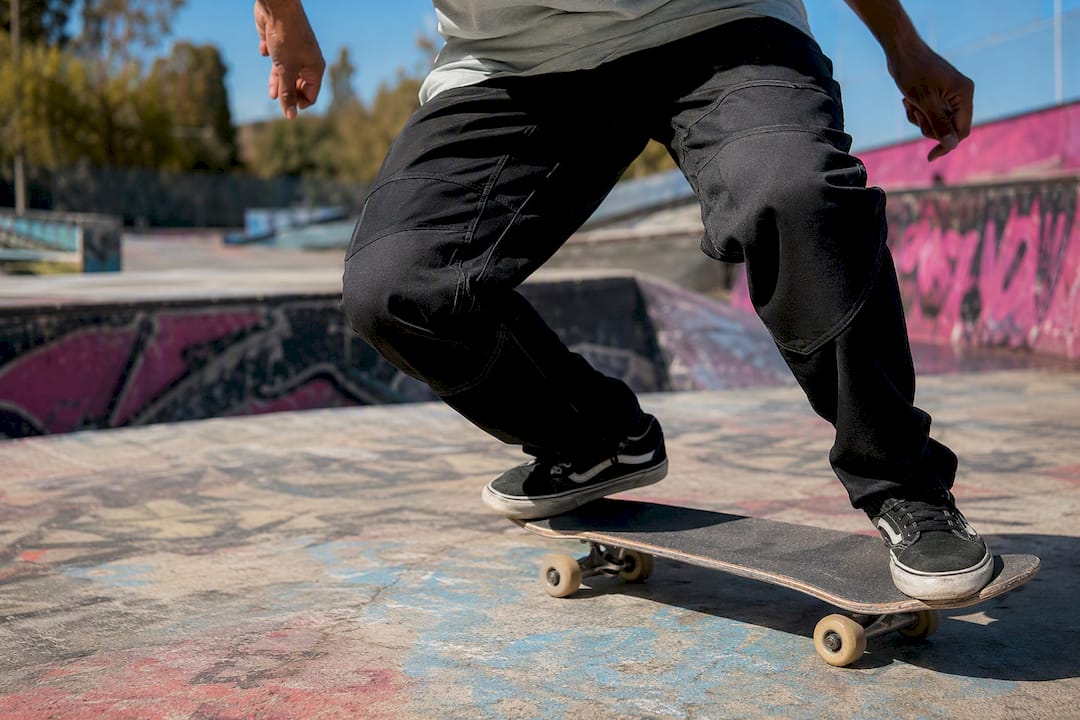
Materials matter as much as the panel itself. We build from recycled blends, including the fabrics behind our Botanic Camo collection, chosen for stretch recovery and abrasion resistance rather than just look. Readers curious about how fit and cut interact with skate culture can dig into our piece on drop-crotch skate pants.
For anyone who needs a gusset depth or reinforcement pattern beyond what’s on the rack, our custom couture consultations let you specify exactly that, tailored to your own range of motion, not a size chart’s average.
The Real Limitations of Gusseted Crotch Pants
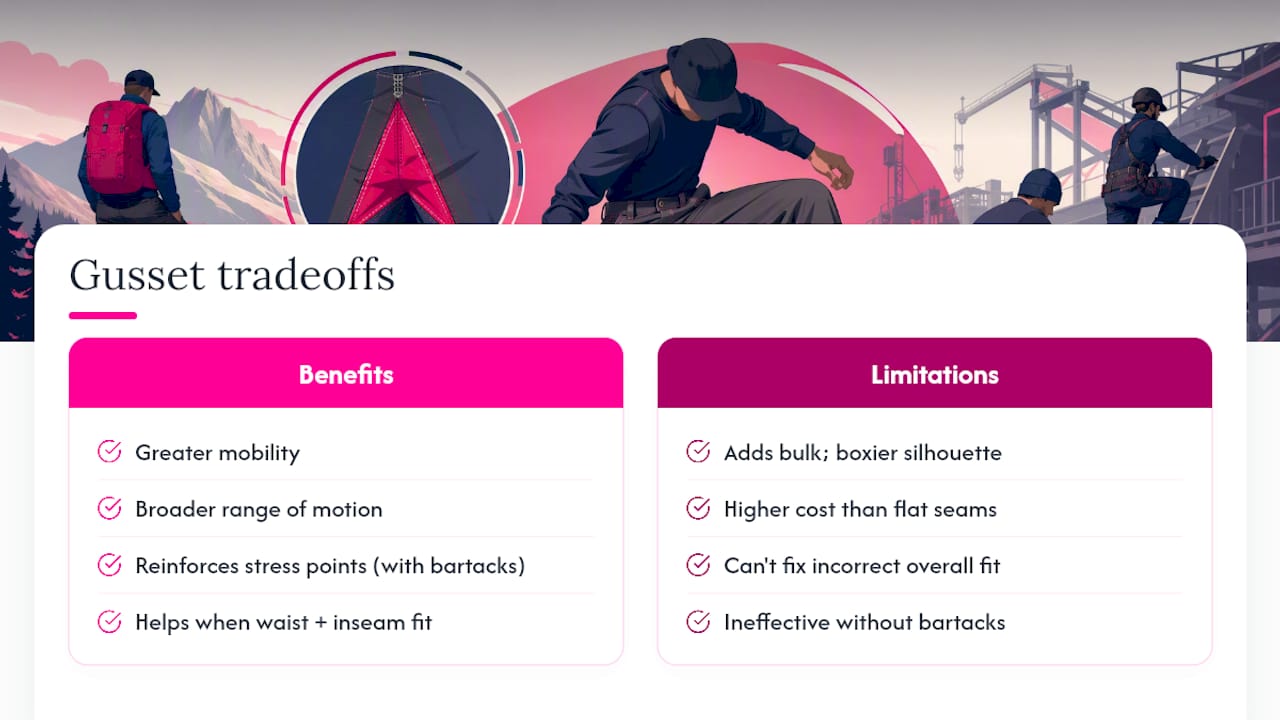
Gussets solve a real problem, but they aren’t a universal upgrade, and pretending otherwise does readers a disservice.
Added fabric means added bulk in some cuts. A diamond gusset sized for extreme mobility can create a slightly boxier silhouette at rest, which matters if you’re layering under a slim jacket or want a pant that reads clean at a desk. Price is another honest tradeoff: gusseted construction takes more fabric and more labor at the stitch line, so expect to pay somewhat more than a basic flat-seam pant at a comparable quality tier.
Gusseted pants also don’t fix a fundamentally wrong size. A gusset improves range of motion within a pant that already fits your waist and inseam correctly, but it can’t compensate for a pair that’s simply too small or too large through the seat. And the reinforcement is only as good as its weakest stitch: a gusset with no bartacking at the junction points offers little more durability than no gusset at all, no matter how the marketing copy describes it.
Finally, retrofitted gussets carry their own limitation set beyond what a factory garment does. Even a well-executed alteration introduces a seam line the original pattern never accounted for, and that line will always be a slightly weaker point than fabric that was cut and stitched as one integrated piece from the start.
Our Take on What Actually Matters Here
Most explainers on this topic stop at “gussets add mobility” and leave it there, which undersells what actually separates a pair of pants that lasts from one that doesn’t. The panel shape gets all the attention because it’s visible and easy to photograph. The stitch reinforcement at the gusset junction is the detail that actually predicts whether you’re wearing these pants in two years or patching them in four months.
We’d argue the conventional buying advice has the priority backwards. Shoppers fixate on gusset size and shape, then treat stitching as an afterthought, when a modest gusset with proper bartacking will outlast an oversized panel with a single stitch line at the junction every time. If you’re evaluating a pair of pants, inspect the stitching before you evaluate the cut.
The other gap: factory-made construction beats retrofitting for anyone putting real hours into these pants, not because retrofitting is impossible, but because it introduces a compromise the original pattern never had to make. Buy the gusset built in, or have it built in properly from the start.
— CZT
Get Custom-Fit Gusseted Pants From CZT
You’ve read what separates a gusset that lasts from one that doesn’t. CZT builds that difference in from the first cut, using recycled fabric blends chosen for stretch recovery and abrasion resistance, not just appearance, and we back every seam with the tacking and reinforcement this article just walked you through.
If a rack size doesn’t match your actual range of motion, a custom couture consultation lets you specify gusset depth and reinforcement to your own body and activity, whether that’s skating, climbing, or a job that has you kneeling all day. Start by telling us how you specify your preferences using our guide to setting fit preferences for custom garments, then book a couture consultation to get a gusset built for how you actually move.
Sources
The technical definition of a gusset draws from Wikipedia’s sewing reference and Merriam-Webster’s dictionary entry. Product examples came from Outdoor Research’s Cirque Lite Pant and DICK’S Sporting Goods’ crotch gusset pants collection. For fit and fabric guidance, see CZT’s resources on durable fabrics for active use and stretch fabric fit testing.
- Gusset - Wikipedia
- GUSSET Definition & Meaning - Merriam-Webster
- Men’s Cirque Lite Pant | Outdoor Research
- Crotch Gusset Pants | DICK’S Sporting Goods