![CZT [CITI-ZEN-THEORY]](http://czt.rocks/cdn/shop/files/CZT_-_Brand_PINK_Label_1_330x.png?v=1774104725)
![CZT [CITI-ZEN-THEORY]](http://czt.rocks/cdn/shop/t/61/assets/CZT-Fast-Logo---Blue-Grey_330x.png?v=98224836737033641471695502660)
![CZT [CITI-ZEN-THEORY]](http://czt.rocks/cdn/shop/files/CZT_-_Brand_PINK_Label_1_170x.png?v=1774104725)
![CZT [CITI-ZEN-THEORY]](http://czt.rocks/cdn/shop/t/61/assets/CZT-Fast-Logo---Blue-Grey_170x.png?v=98224836737033641471695502660)
After 20 Washes: Water-Based Ink or Plastisol for Printers and Brands
For soft, retail-grade cotton tees and the smallest environmental footprint, water-based ink is the better choice. For opaque graphics on dark or synthetic fabrics and high-speed production runs, plastisol remains the practical workhorse. The real decision hinges on dryer capacity, fabric type, and how much your customer cares about certifications such as GOTS and OEKO-TEX ECO PASSPORT.
TL;DR:
- Water-based ink performs best on 100% cotton fabrics, offering a soft feel and eco-friendly benefits when free of co-solvents, but requires larger dryers and longer curing times.
- Plastisol provides superior opacity on dark or synthetic fabrics and is ideal for high-volume runs, though it raises environmental concerns due to its PVC content and can feel stiff after large coverage.
- Proper curing of water-based ink depends heavily on dryer capacity and process management, with underbaked prints prone to cracking and early fading, especially on synthetic fabrics.
- Certification from GOTS or OEKO-TEX ECO PASSPORT is essential to verify eco-friendly claims, as many formulations still contain harmful chemicals and require wastewater treatment.
- Cost considerations include dryer energy, batch size, and labor, with water-based ink favoring small runs and plastics being more practical for large-scale production, regardless of per-pound price.
Table of Contents
- Water Based Ink vs Plastisol: The Quick Comparison
- Why They Cure So Differently
- How the Print Actually Feels and Looks
- What Happens After 20 Washes
- Matching Ink to Fabric and Technique
- Running a Shop Without Wasting a Batch
- The Real Environmental and Health Tradeoffs
- Costing the Job Before You Quote It
- Why CZT Still Chooses the Harder Ink
- The Take Nobody Wants to Hear
- Sources
- FAQ
Water Based Ink vs Plastisol: The Quick Comparison
Neither ink wins every category, which is exactly why so many shops stock both. Here’s how they stack up where it actually counts.
Water-based ink pros:
- Soft hand that feels woven into the shirt, not sitting on top of it — ideal for premium cotton streetwear.
- Lower environmental footprint when formulated without co-solvents; some versions qualify for GOTS certification.
- No PVC, easier disposal, better shop air quality.
Water-based ink cons:
- Needs bigger dryers or longer dwell time to fully evaporate and cure.
- Struggles with bright opacity on dark garments without extra passes.
- Screens dry in fast without water-resistant emulsion.
Plastisol pros:
- Superior opacity in a single pass, even on black or navy fabric.
- Doesn’t dry in the screen, so long runs stay trouble-free.
- Works across cotton, polyester, and blends without special prep.
Plastisol cons:
- PVC-based composition raises disposal and lifecycle concerns.
- Heavier, plastic-like hand when print coverage is large.
- Cleanup solvents carry occupational health risks.
Band merch on black shirts favors plastisol. A boutique cotton tee line favors water-based. Most working shops end up running both, matched to the job in front of them, exploring custom ink alternatives to optimize their print results.
Why They Cure So Differently
The two inks aren’t just different colors in a bucket. They’re built from entirely different chemistry, and that difference dictates everything downstream.
Plastisol is a suspension of PVC resin in liquid plasticizer, and it doesn’t actually dry the way paint does. It cures when heat around 300 to 330 degrees Fahrenheit fuses the resin particles into a continuous plastic film. Because it never sets at room temperature, plastisol sits stable in the screen indefinitely, which is why long print runs rarely stall for cleanup.
Water-based ink works on a completely different principle: pigment and binder suspended in water, curing through evaporation followed by a chemical binder reaction. Catalyzed versions add a hardener with a limited pot life of roughly 4 to 12 hours, so shops mix in small batches rather than one giant vat. That evaporation step is why waterbase demands more dryer capacity and more energy per piece than plastisol.
How the Print Actually Feels and Looks
Water-based ink soaks into the fiber instead of coating it, which is why a well-printed waterbase graphic feels like part of the shirt rather than a decal glued on top. On 100% cotton, that softness is the whole selling point for premium streetwear and retail apparel.
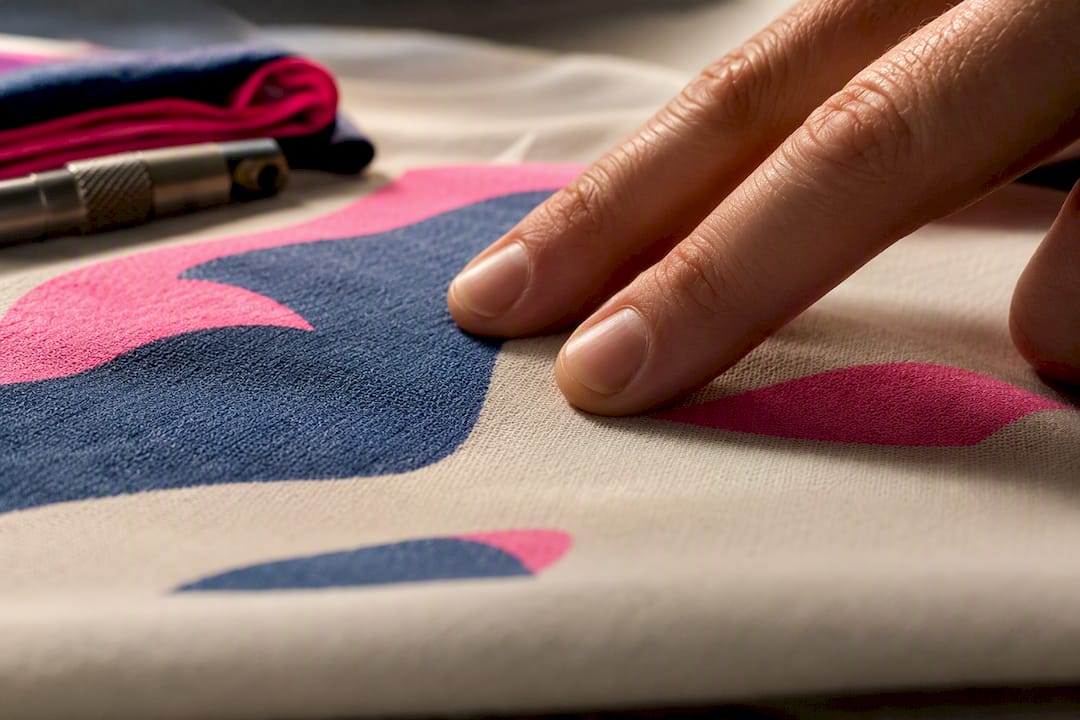
Plastisol takes the opposite approach. It builds a raised, opaque film on top of the fabric, which is exactly why it dominates dark-garment printing. A single layer of white plastisol underbase can knock out a black shirt completely, something waterbase struggles to match without multiple passes and a skilled printer. The tradeoff is hand: heavy plastisol coverage on a large chest print can feel stiff or plastic-like after a few washes.
Printers wanting a middle ground use discharge ink, which chemically removes the garment’s dye before depositing new color, or a hybrid soft-hand additive (HSA) mixed into plastisol to soften its feel without losing opacity.
What Happens After 20 Washes
Cured correctly, both inks hold up well in home laundering. Plastisol’s plastic film resists cracking and fading for years, which is part of why it remains the preferred choice for high-volume commercial runs and industrial laundering. Water-based prints, when fully cured and not underbaked, bond into the fiber and often outlast the garment itself since there’s no separate film layer to peel or crack.
Most durability complaints trace back to process errors, not the ink itself. Undercured plastisol washes out in a dozen cycles because the PVC never fully fused. Undercured waterbase cracks or fades early because residual moisture kept the binder from setting. Printing waterbase on the wrong fabric, or reclaiming screens improperly between waterbase runs, causes ghosting and adhesion failures that have nothing to do with the ink’s actual lifespan. Where plastisol still clearly leads is synthetic-heavy garments subjected to repeated industrial washing, where its plastic film resists abrasion better than a fiber-penetrating water-based print.
Matching Ink to Fabric and Technique
Water-based ink performs best on 100% cotton and cotton-heavy blends, where its fiber-penetrating nature has something to actually bond with. Push it onto 100% polyester and you’ll fight dye migration and weak adhesion, since synthetic fibers don’t absorb water-based binder the way cotton does.
Plastisol handles that mismatch without complaint. Its plastic film sits on top of virtually any substrate, cotton, poly, blends, even some performance fabrics, which is why so many shops default to it for mixed-fabric orders. That flexibility comes with technique tradeoffs of its own: discharge printing only works on reactive-dyed cotton, and waterbase jobs require water-resistant emulsion on the screens, or the ink dries in the mesh mid-run and ruins the stencil.
Running a Shop Without Wasting a Batch
Water-based ink’s dry-in tendency changes how you plan a production day. Runs need to move steadily, since the same evaporation that cures the print on the shirt will just as happily cure it inside the screen if the press sits idle too long.
A few habits keep waterbase jobs from becoming expensive lessons:
- Mix catalyzed ink in batches sized to your actual run, not your whole order, since pot life caps out around 4 to 12 hours.
- Coat screens with water-resistant emulsion before any waterbase job, never standard diazo.
- Keep a spray bottle and speed ball on press at all times to rewet ink the moment flow slows.
- Confirm dryer belt speed and temperature against fabric weight, heavier garments need more dwell time to fully evaporate and cure.
- Reclaim screens the same day; waterbase residue left overnight is far harder to strip than plastisol.
Pro Tip: Run a flash cure test on a scrap swatch before starting any waterbase job on dark cotton. If the underbase doesn’t look opaque after flash, you’ll need another pass, and it’s cheaper to find that out on scrap than on a customer’s shirt.
The Real Environmental and Health Tradeoffs
The eco story around these two inks is more layered than most marketing copy admits. Plastisol’s PVC base is the bigger long-term concern: it persists in landfills and can release toxic by-products, including dioxins, if incinerated. Cleanup adds another layer of risk, since plastisol solvents often contain hazardous air pollutants like hexane, MEK, and xylene, and NIOSH specifically recommends shops move toward low or no-solvent alternatives to cut worker exposure.
Water-based ink isn’t automatically clean, though. Some formulations are ISO 14855-rated biodegradable, but many still contain co-solvents and acrylic binders that require proper wastewater capture, not just a drain and a shrug.
What actually verifies a claim of “eco-friendly” is independent certification, not a label on a squeeze bottle:
- Check for GOTS certification on the finished garment and ink system together.
- Look for OEKO-TEX ECO PASSPORT, which screens ink chemistry for harmful substances.
- Ask whether the shop captures and treats wastewater from waterbase cleanup.
- Confirm any plastisol used is phthalate-free, since some formulations now are, but plenty still aren’t.
Costing the Job Before You Quote It
Ink price per pound is rarely the number that decides your margin. Catalyzed waterbase wasted to pot-life expiration, dryer capacity upgrades, and the extra labor of managing evaporation-based curing all add up faster than the ink itself.
Run through this checklist before quoting either option:
- Fabric: cotton favors waterbase; poly-heavy blends favor plastisol.
- Look needed: soft integrated print or bold raised opacity?
- Volume: small boutique batches tolerate waterbase’s slower dry-in; 1,000-piece runs favor plastisol’s screen stability.
- Certification needs: GOTS or OEKO-TEX buyers require waterbase or verified phthalate-free plastisol.
- Budget: dryer energy and pot-life waste push waterbase costs up per piece.
- Wash durability required: industrial laundering leans plastisol; retail home-wash leans either, if cured right.
A 250-piece cotton tee run for a boutique brand: waterbase, easily. A 1,000-piece dark polyester run for a corporate order: plastisol, without much debate.
Why CZT Still Chooses the Harder Ink
Some brands print premium pieces, including collections like Botanic Camo, on water-based ink even when it costs more in dryer time and batch planning. The softer hand matters on garments meant to be worn daily, not just printed and shipped. Customers who care enough to ask about recycled materials also ask what’s actually in the ink, and a vague answer undoes the sustainability story fast.
Certification and transparency aren’t marketing decoration here. When ingredients are verifiable against standards like GOTS, the claim holds up under scrutiny instead of collapsing into greenwashing. That’s a standard some companies try to hold every custom couture piece to, ink included.
The Take Nobody Wants to Hear
The conventional advice, pick plastisol for durability and waterbase for feel, isn’t wrong, but it treats the decision as a fabric problem when it’s usually a dryer problem. Most shops that swear off water-based ink after one bad experience never had the belt speed or dwell time to cure it properly in the first place. That’s not the ink failing. That’s undercapacity dressed up as a chemistry complaint.
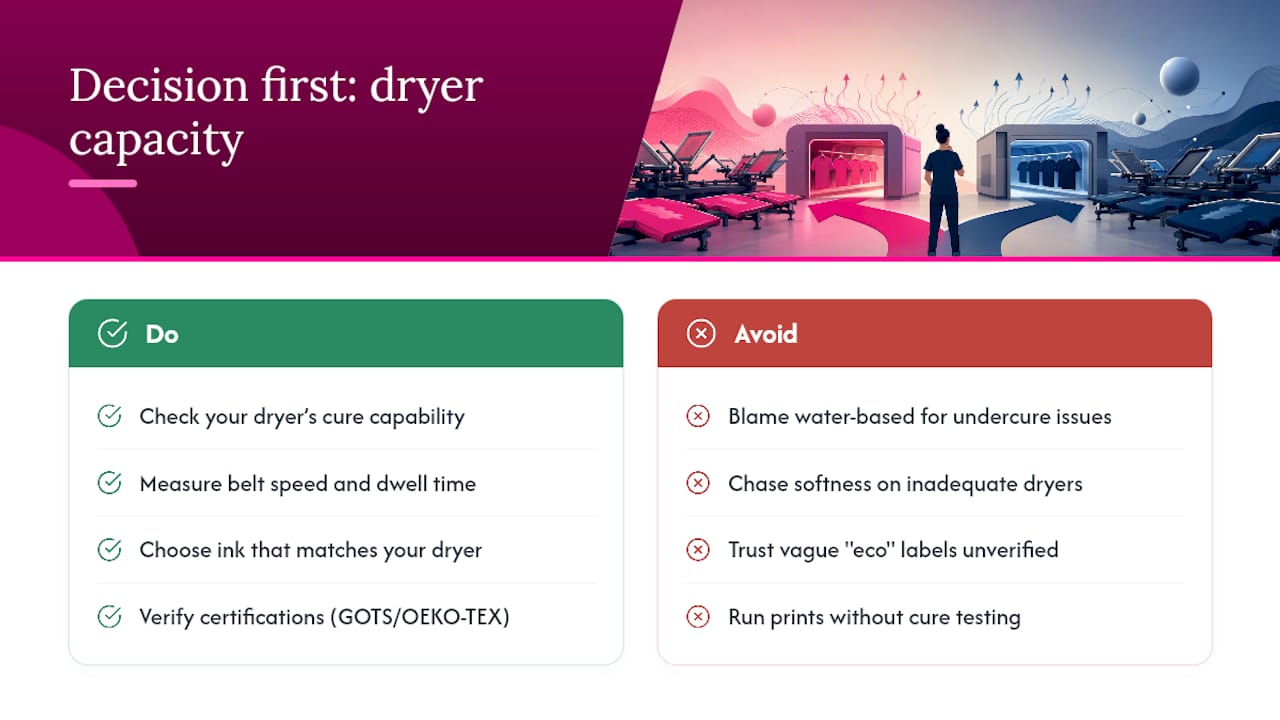
The certification conversation deserves more skepticism too. “Eco-friendly” printed on a hang tag means nothing without GOTS or OEKO-TEX ECO PASSPORT behind it, and plenty of brands lean on the vibe of water-based ink without verifying what’s actually in the binder. Co-solvents and acrylic content can undercut the story fast.
If you’re choosing between these inks for the first time, prioritize your equipment reality before your aesthetic preference. Figure out what your dryer can actually cure reliably, then pick the ink that matches. Chasing softness on a press that can’t dwell long enough just produces cracked prints and refunded orders, no matter how good the intention was.
— CZT
Sources
- Screenprinting
- Screen Printing Ink Types: Plastisol vs Water-Based vs Discharge – NW Custom Apparel
- Chemicalsafetyfacts
FAQ
What Are the Downsides of Using Water-Based Ink?
Water-based ink requires more dryer capacity and dwell time to cure fully, struggles with bright opacity on dark garments without multiple passes, and dries in the screen quickly without water-resistant emulsion.
Can You Mix Plastisol and Water-Based Inks?
You generally shouldn’t mix the two directly in a single ink batch, since their cure chemistry is incompatible, but many shops layer them on the same garment, using plastisol for an opaque underbase and waterbase for a soft topcoat.
Is Water-Based Ink Good for Screen Printing?
Yes, especially on 100% cotton, where it produces a soft, fiber-integrated print and carries a lower environmental footprint when formulated without heavy co-solvents.
What Are the Disadvantages of Using Plastisol?
Plastisol’s PVC base raises disposal and lifecycle concerns, its cleanup solvents can contain hazardous air pollutants that NIOSH recommends limiting, and heavy print coverage can leave a stiffer, plastic-like hand.