![CZT [CITI-ZEN-THEORY]](http://czt.rocks/cdn/shop/files/CZT_-_Brand_PINK_Label_1_330x.png?v=1774104725)
![CZT [CITI-ZEN-THEORY]](http://czt.rocks/cdn/shop/t/61/assets/CZT-Fast-Logo---Blue-Grey_330x.png?v=98224836737033641471695502660)
![CZT [CITI-ZEN-THEORY]](http://czt.rocks/cdn/shop/files/CZT_-_Brand_PINK_Label_1_170x.png?v=1774104725)
![CZT [CITI-ZEN-THEORY]](http://czt.rocks/cdn/shop/t/61/assets/CZT-Fast-Logo---Blue-Grey_170x.png?v=98224836737033641471695502660)
CZT Skate Pants: Fit First, Recycled Fabrics, 1–2 Inches Hem Break
Measure your waist, hips, and inseam first, then check that number against the brand’s own size chart rather than your usual jeans size. Once you know your numbers, default to a mid-rise cut with a relaxed or tapered leg and a touch of stretch, unless a specific silhouette is calling to you. Tighten the cut for street, loosen it slightly for park, and go fully relaxed for cruising or longboarding.
TL;DR:
- Accurate waist, hip, and inseam measurements are essential, as skate pant sizing varies widely between brands and standard labels are unreliable.
- Slim fits provide better board feel but may restrict movement without elastane, while tapered and straight cuts offer versatility and comfort across different skate styles.
- Fabric choices such as cotton-poly blends or stretch denim enhance durability and flexibility, especially when reinforced at stress points like knees and seat.
- Proper fit should be tested in motion through deep crouches, ollies, and seated bends to ensure the pants do not bind or ride up during actual skateboarding.
- Custom sizing options focus on mobility, durability, and sustainability, allowing skaters to get performance gear tailored to their specific needs and body measurements.
Table of Contents
- How to Measure Yourself for a Skate Pants Fit Guide
- What Do Slim, Tapered, Straight, and Baggy Fits Actually Do?
- Materials and Construction: What Keeps Skate Pants From Falling Apart
- How to Check Fit and Make Quick Adjustments
- Quick Buying Checklist by Skating Discipline
- The CZT Approach to Fit: Mobility First, Waste Second
- Rise Guidance: Mid, Low, High, and What Each Does to Your Proportions
- Layering and Protective Gear Underneath Skate Pants
- Stretch and Break-In: What to Expect From Different Fabrics
- Why Fit Comes Before Everything Else at CZT
- Get a Fit Built Around How You Actually Skate
- Sources
- FAQ
How to Measure Yourself for a Skate Pants Fit Guide
Every real fit conversation starts with the tape measure, not the size sticker on last year’s pair. Skateboard sizing runs inconsistently between brands, so a number you trust has to come from your own body, not from what fit you at a different shop two seasons ago.
Wrap the tape around your natural waist, which sits roughly at belly button height, not where your current pants happen to ride. For hips, measure at the fullest point, usually across the seat and upper thigh, since that’s where a restrictive cut will bind first when you crouch or push off. Inseam is the trickiest of the three: stand straight with a friend measuring from the top of your inner thigh straight down to where you want the hem to land, or measure an existing pair that fits well laid flat from crotch seam to hem.
A few mistakes throw off almost every measurement:
- Pulling the tape too tight adds false room and leaves you sizing down into a pant that binds on your first ollie.
- Measuring over thick jeans or shorts inflates waist and hip numbers by an inch or more.
- Confusing “leg length” (your actual leg) with “pant inseam” (the garment’s finished measurement) leads to hems that either drag or float above the ankle.
CZT’s own guide to taking body measurements for custom streetwear walks through this in more detail if you’re planning a custom order rather than buying off the rack.
What Do Slim, Tapered, Straight, and Baggy Fits Actually Do?
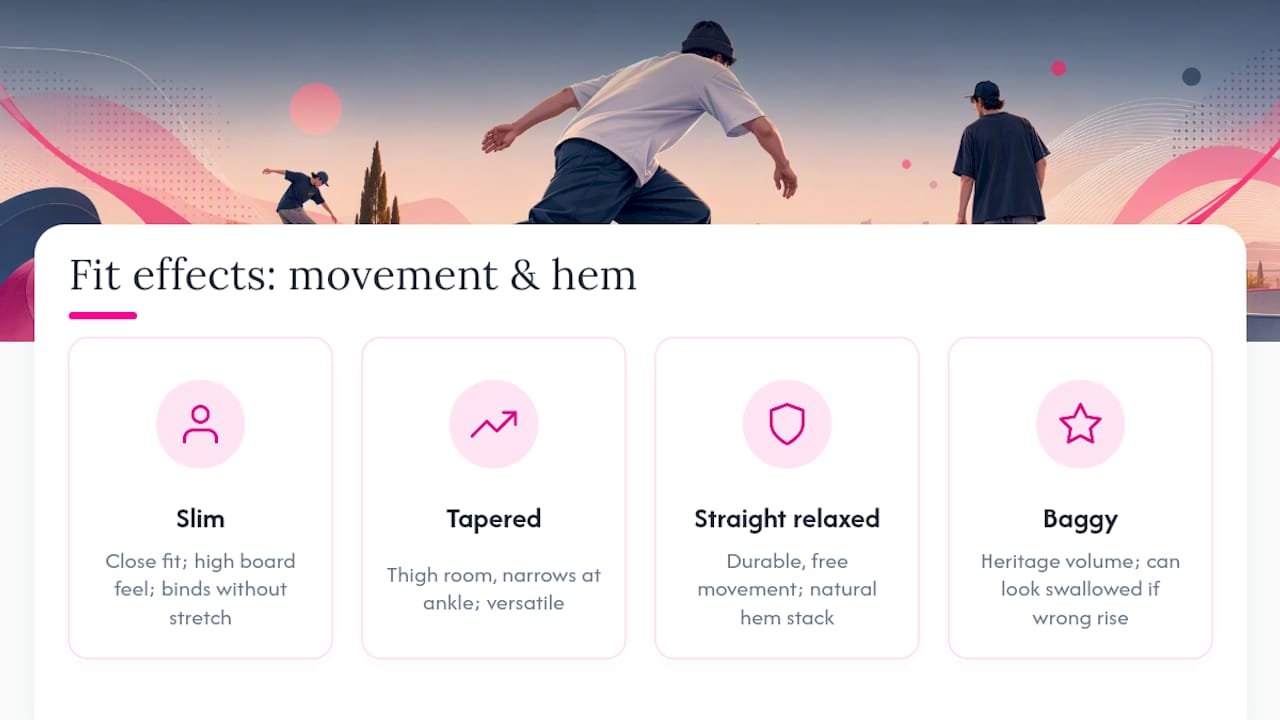
The cut you choose changes how the pant behaves the second you bend your knees, not just how it looks standing still.
Slim fits track close to the leg with minimal drag, which some street skaters like for board feel and pop-shove-it precision. The trade-off is mobility: without added stretch, a slim cut binds hard on a deep crouch, so look for at least a small percentage of elastane woven in before committing.
Tapered fits hold room through the thigh and narrow gradually toward the ankle. This is the most versatile cut on the market right now. It reads clean off the board and still gives you the room to land a trick without the fabric fighting your knee.
Straight and relaxed fits trade a little visual snugness for durability and unrestricted movement, and they naturally stack at the hem for that classic broken-in look.
Baggy fits carry real skate heritage, evoking the volume that defined vert and street video parts through the 1990s, but volume without control turns sloppy fast. Get the rise and hem length wrong on a baggy cut and you look swallowed rather than styled.
Pro Tip: If you love the tapered silhouette but keep landing between sizes, check the drop-crotch skate pants guide before assuming you need a different size. Sometimes it’s the rise, not the waist, that’s off.
Materials and Construction: What Keeps Skate Pants From Falling Apart
Fit only matters if the pant survives contact with grip tape, concrete, and your own falls. Fabric choice and construction detail decide how long that fit lasts.
Cotton blended with a small amount of polyester gives you breathability with a bit more recovery than pure cotton, while stretch denim with a touch of elastane keeps a jean-like look without sacrificing the crouch. Performance nylon and poly blends push the furthest on flexibility and moisture management, which matters more in warm weather or longer park sessions.
Construction details separate a pant that lasts a season from one that lasts years:
- Double-layered fabric at the knees resists the abrasion of repeated slides and falls.
- Bar tacks at stress points (pocket corners, fly, belt loops) stop seams from blowing out under repeated movement.
- A gusseted crotch adds a diamond-shaped fabric panel that reduces strain exactly where a deep squat or slide puts the most pressure.
- Triple stitching in high-wear zones extends the seam’s working life well past standard double stitching.
Skateboard Trends recommends exactly this combination, cotton-poly blends or stretch denim paired with reinforced knees and seat, as the baseline for anyone skating regularly rather than just wearing the look. Heavier weave fabrics resist tearing better but need a longer break-in before they move naturally with your body; lighter weaves flex from day one but wear thinner faster.
How to Check Fit and Make Quick Adjustments
A pant can look right on the rack and still fail the moment you drop into a crouch, so the real test happens in motion, not in a mirror.
- Deep crouch. Drop into your lowest riding stance and hold it for a few seconds. Binding at the knee or thigh means the cut is too tight for your movement, not that you need to size up.
- Simulated ollie. Pop up onto your toes and snap your knees toward your chest. Watch for excess fabric catching under your foot or riding up too far at the ankle.
- Seated knee bend. Sit and bend your knee past 90 degrees. This mimics the angle your leg holds through a long grind or manual.
For hem length, aim for one to two inches of break at the shoe. Piling fabric past that hides your shoe entirely and can visually shorten your leg, especially if you’re on the shorter side. Fobwp’s fit guide backs this same approach: test fit through motion, not just static measurement, before deciding a pant doesn’t work.
Pro Tip: If the waist fits but you want more room through the leg, size across to a wider cut instead of sizing up the waist. Going up a full size to chase leg volume usually wrecks the crotch depth and drops the whole pant too low.
Quick Buying Checklist by Skating Discipline
Not every discipline asks the same thing of a pant, and matching cut to riding style saves you from buying twice.
- Street: tapered or straight cut with stretch woven in, reinforced seat and knees for curb slides and stair sets, and a narrower hem that won’t catch on your board.
- Park: slightly roomier through the thigh for ramp transitions, reinforced knees for bowl slams, and a mid-rise that stays put through airs and grabs.
- Longboard or cruising: relaxed fit, breathable fabric for long sessions, and a comfortable rise that won’t dig in when you’re crouched into a tuck for speed.
- Vert or high-impact: higher rise for extra coverage on hard landings, denser fabric for abrasion resistance, and reinforced construction throughout, since vert punishes seams faster than any other discipline.
The CZT Approach to Fit: Mobility First, Waste Second
We built our own fit philosophy around one non-negotiable: a pant has to move the way your body moves before it earns a place in a lineup, no matter how good the silhouette looks hanging on a rack. Mid-rise with a gusseted crotch is our default recommendation for most riders because it gives you waist stability without robbing you of the range a deep squat demands.
A few pieces worth reading if you want to go deeper on construction and styling:
- The gusseted crotch construction guide breaks down why that diamond panel matters more than most riders realize.
- Layering techniques for skate apparel covers how to dress underneath your pants without losing fit.
- Our drop-crotch style and culture piece traces where that specific silhouette came from and where it still works today.
Rise Guidance: Mid, Low, High, and What Each Does to Your Proportions
Rise decides more about how a pant reads and performs than almost any other single measurement, and it’s the one most skaters skip when they’re chasing a specific waist size.
Mid-rise sits at or just below the natural waist and is the safest starting point for most riders. It works whether you tuck a shirt in or wear something long and untucked, and it balances mobility with visual proportion better than either extreme. The baggy skater jeans fit guide points to mid-rise as the default recommendation across body types, with a note that shorter riders should lean toward the higher end of that range so volume doesn’t overwhelm the leg line.
Low-rise sits below the natural waist and pairs well with a slim or tapered leg for a leaner overall silhouette. The catch is coverage: low-rise pants can gap or slide during a deep crouch or slide, which is a real concern if you’re sessioning stairs or rails for hours at a time.
High-rise sits at or above the natural waist and adds coverage for high-impact falls, which is part of why it shows up more often in vert and transition riding. It also visually lengthens the leg, which flatters a baggier cut by keeping the volume from swallowing your torso.
If you’re unsure which to pick, mid-rise remains the reasonable default. Reserve low-rise for slimmer street-focused fits and high-rise for anything involving harder landings or a fuller leg silhouette you want to balance out.
Layering and Protective Gear Underneath Skate Pants
Pants that fit perfectly bare-legged can turn restrictive the moment you add knee pads, thermal layers, or a base layer for cold weather sessions, so it pays to think about what’s going underneath before you buy.
Knee pads are the biggest variable. If you skate park or vert with hard pads, size your thigh and knee measurement with the pads on, or at minimum add an inch of ease to your usual hip number. A tapered cut that fits perfectly bare-legged can turn genuinely restrictive over gear, which pushes a lot of park riders toward straight or relaxed cuts even when they’d prefer a slimmer look for street sessions.
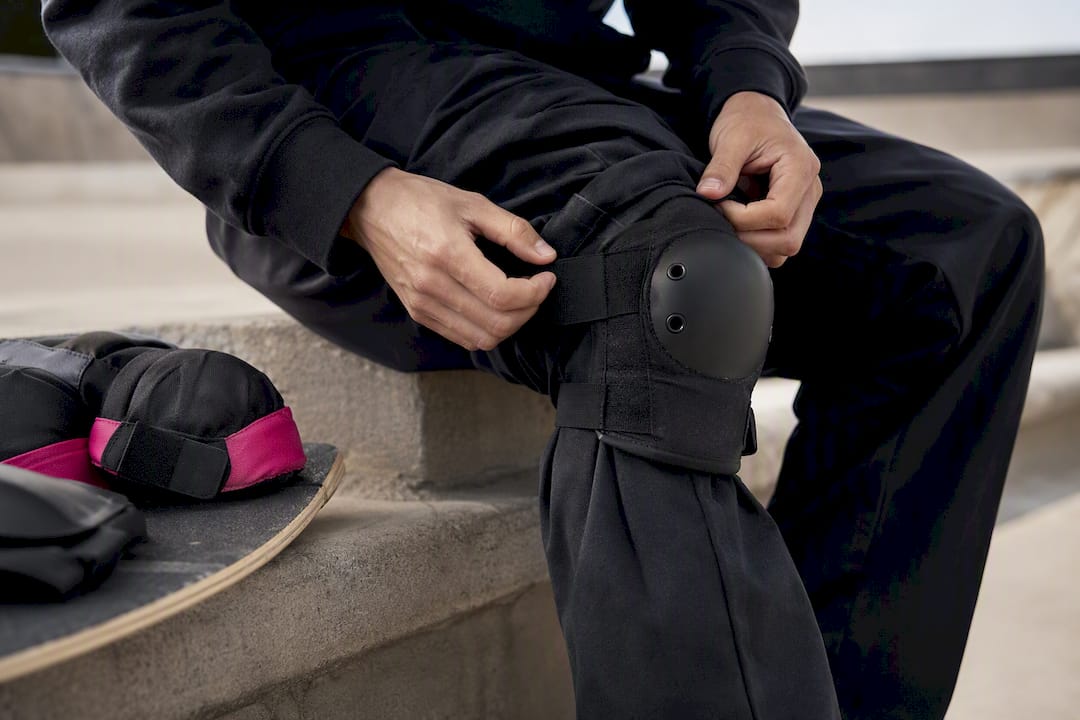
Cold-weather layering asks less of you but still matters. A thin base layer under stretch denim or a cotton-poly blend rarely changes fit enough to notice, but bulkier thermal layers under a slim cut will. If you’re skating through winter regularly, a relaxed or straight fit gives you room to layer without buying a separate cold-weather pair.
The rise matters here too. A higher rise keeps base layers tucked and covered through movement, while a low-rise pant paired with a bulky layer underneath tends to gap at the waist exactly when you don’t want it to. When in doubt, buy for the layered version of your setup, not the bare-legged one. It’s easier to skate a slightly roomier pant solo than to fight a too-tight one over pads.
Stretch and Break-In: What to Expect From Different Fabrics
Every fabric moves differently for the first few wears, and knowing what to expect saves you from returning a pant that just needs a week of riding to settle in.
Stretch denim with a small elastane content offers the fastest comfort, usually easing into your movement within the first two or three sessions as the fibers relax slightly around your knees and hips. Pure cotton or heavier cotton-poly blends behave differently: they start stiffer, especially around bar-tacked stress points, and typically need several washes and a couple of weeks of regular wear before the fabric softens and moves naturally with a crouch.
Performance nylon and poly blends sit at the other extreme. They arrive close to their final feel out of the package, with minimal break-in needed, which makes them a reasonable choice if you need a pant to perform well on day one for a trip or contest. The trade-off is usually a less broken-in, less “worn” look compared to denim or heavier cotton.
A general rule: the stiffer the fabric feels new, the more mobility gain you’ll see after a few weeks of wear, so don’t judge a heavier cotton or denim pant’s crouch test too harshly on the first try. Give it a handful of sessions before deciding the cut is wrong. If a stretch-blend pant still feels tight in the crouch after a week of regular wear, that’s a fit problem, not a break-in one, and it’s worth sizing across to a roomier cut instead of waiting it out.
Why Fit Comes Before Everything Else at CZT
We think about fit the same way we think about material: it should serve the body doing the work, not just the photo on a lookbook page. Prioritize mobility and longevity when you shop, choose fabrics that hold up to real slides and falls, and lean on sustainable construction where you can. Use the measurement steps here, then reach out if you want help dialing in a custom fit.
— CZT
Get a Fit Built Around How You Actually Skate
Custom couture design services can let you start from your actual measurements instead of fixed small, medium, or large sizes. If the fit types and rise guidance above left you between sizes, or you skate in a way that doesn’t match a standard cut, that’s exactly the gap a made-to-fit approach closes.
Our Botanic Camo collection and the rest of our recycled-material lineup carry the same construction details covered here, reinforced knees, gusseted crotch, mid-rise defaults, built with sustainable fabrics instead of virgin synthetics. You get the durability skating demands without the environmental cost of another pair of pants headed to a landfill in a year. Book a custom fit consultation through our landing page and tell us your measurements, your discipline, and the silhouette you’re after. We’ll build from there.
Sources
- How to Choose the Best Skate Pants for Comfort and Durability - Skateboard Trends
- Baggy Skater Jeans: Fit, Sizing & Styling Guide (2026) | The Baggy Jeans Co.
- Skateboarding Pants: Your Ultimate Guide to Comfort and Style
FAQ
Is a Size 32 Waist Considered Medium or Large?
It depends entirely on the brand’s own chart, since waist sizing runs inconsistently between brands. Always check the specific brand’s measurement chart rather than assuming a universal size label.
Is a 32 Inch Waist a Size 12 or 14?
Waist sizing varies by brand and cut, so cross-check your actual waist measurement against that brand’s chart rather than relying on size labels alone.
How Does Baggy or Relaxed Skatewear Typically Fit?
Relaxed and baggy skate pants are designed to sit at a comfortable mid-rise with extra room through the thigh and leg, and sizing guides recommend choosing a wider cut for more volume rather than sizing up your waist.
What Is the Best Way to Use a Skate Pants Size Chart?
Measure your waist, hips, and inseam first, then match those numbers to the brand’s chart rather than your usual pants size, since skatewear sizing runs differently than everyday denim.
Does CZT Offer Custom Sizing for Skate Pants?
Custom couture design consultations are available that let customers build a pant around their own measurements and preferred rise, cut, and fabric instead of choosing from fixed sizes.