![CZT [CITI-ZEN-THEORY]](http://czt.rocks/cdn/shop/files/CZT_-_Brand_PINK_Label_1_330x.png?v=1774104725)
![CZT [CITI-ZEN-THEORY]](http://czt.rocks/cdn/shop/t/61/assets/CZT-Fast-Logo---Blue-Grey_330x.png?v=98224836737033641471695502660)
![CZT [CITI-ZEN-THEORY]](http://czt.rocks/cdn/shop/files/CZT_-_Brand_PINK_Label_1_170x.png?v=1774104725)
![CZT [CITI-ZEN-THEORY]](http://czt.rocks/cdn/shop/t/61/assets/CZT-Fast-Logo---Blue-Grey_170x.png?v=98224836737033641471695502660)
Nature-Inspired Fashion Patterns: 8 Stunning Examples
Nature-inspired fashion patterns are defined as textile designs that translate natural forms, processes, and systems into wearable compositions, spanning literal botanical prints to abstract biomimetic structures. The best examples of nature inspired fashion patterns do far more than decorate fabric. Designers like Maryam Yazdanpanah, Payal Pratap, and House of Hackney prove that nature’s logic, from whale migration acoustics to zebra stripe geometry, can drive both aesthetic and ecological innovation. For anyone building a wardrobe grounded in ecological awareness, understanding these patterns is the first step toward dressing with genuine intention.
1. Examples of nature inspired fashion patterns: botanical prints
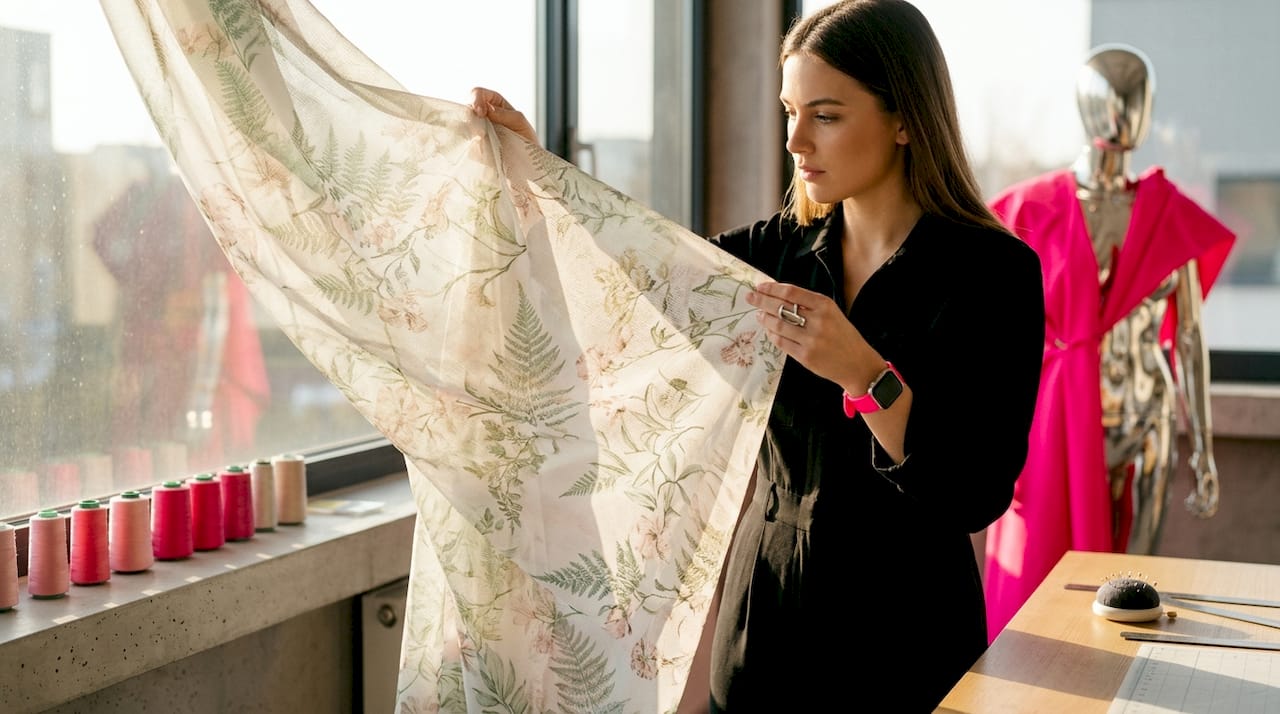
Botanical print fashion is the most widely recognized category of nature-inspired clothing designs, and its range is far wider than the average floral dress suggests. Erdem’s cotton-linen midi dress uses a 70% cotton, 30% linen blend with a repeat fern print that reads as both delicate and architecturally precise. That fiber ratio matters: natural blends accept plant-based dyes more evenly than synthetics, which means the print ages gracefully rather than fading into a ghost of itself.
Payal Pratap pushed botanical print fashion further at Lakme Fashion Week X FDCI 2026, pressing actual leaves and florals onto denim silhouettes using cyanotype-inspired indigo techniques. The result is a surface that carries the ghost of a real plant, not a reproduction of one. This approach aligns with slow fashion principles because each piece is inherently unique, which reduces the pressure to produce identical units at scale.
- Look for garments labeled with natural fiber content above 60% when buying botanical prints.
- Cyanotype and resist-dye methods produce the most visually layered organic textile patterns.
- Natural botanical dyes create slight color variation between pieces, which is a mark of quality, not inconsistency.
Pro Tip: When evaluating botanical print quality, hold the fabric to light. A well-engineered repeat print will show clean registration on both sides of the cloth, while a cheap screen print bleeds through unevenly.
2. Animal and wildlife motifs with sustainable construction
Animal motifs in fashion carry a long compositional history, but the most compelling contemporary examples combine visual boldness with ethical material choices. House of Hackney’s DAZZLE zebra fabric uses a blend of 67% organic cotton and 23% recycled cotton, with precise tile repeat specifications and published rub test ratings. Those technical details signal something important: this is not decorative wallpaper repurposed as clothing. It is engineered textile design where the pattern’s tile repeat and alignment are calculated to survive real wear.
The sustainability angle here is structural, not just cosmetic. Organic cotton eliminates synthetic pesticide residue from the fiber, while recycled cotton diverts post-industrial waste from landfill. Together, these choices make the zebra print a genuinely eco-friendly fashion pattern rather than a greenwashed one.
| Feature | Conventional Animal Print | Sustainable Animal Print |
|---|---|---|
| Fiber source | Virgin synthetic or conventional cotton | Organic or recycled cotton blends |
| Dye process | Reactive synthetic dyes | Low-impact or natural dyes |
| Pattern engineering | Generic repeat | Calculated tile repeat with match specs |
| End-of-life | Landfill | Recyclable or biodegradable |
Pro Tip: Ask brands for their fabric composition breakdown before purchasing animal print pieces. A genuine eco-friendly fashion pattern will list fiber percentages, certifications like GOTS or OEKO-TEX, and ideally a country of origin for the textile mill.
3. Abstract nature patterns: sound waves and desert landscapes
Abstract nature patterns represent the most intellectually ambitious category of nature-inspired clothing designs, translating invisible natural phenomena into woven or beaded compositions. Maryam Yazdanpanah’s Humpback Whale Song collection contains 12 looks built on ikat fabric patterning that replicates the acoustic wave structure of whale migration songs. Ikat weaving, a technique where threads are resist-dyed before weaving, produces the soft-edged, frequency-like gradients that make sound waves visible in cloth.
Ngô Mạnh Đông Đông’s Desert of a Thousand Lakes collection draws from the Lençóis Maranhenses desert in Brazil, translating its colors, resilience, and floral life into garment form. One dress alone contains over 9,500 handcrafted flower chains, densely arranged to evoke the desert’s paradox of arid terrain producing extraordinary bloom. That level of craft transforms a garment into a document of a specific place and ecosystem.
- Identify the natural phenomenon the designer is translating, whether acoustic, geological, or meteorological.
- Study the technique used: ikat, pleating, beadwork, and resist-dyeing each produce distinct visual frequencies.
- Consider how the abstraction functions as storytelling, giving the wearer a connection to a specific ecosystem or natural event.
“When fashion translates nature’s invisible systems into textile logic, it stops being decoration and becomes a form of ecological literacy.”
4. Biomimicry: learning nature’s logic, not just its appearance
Biomimicry in fashion is defined as the practice of learning from nature’s processes and structures to develop materials and production systems, rather than simply copying natural imagery. Fashion for Good documents spider-silk-inspired fibers spun at room temperature using water, offering a biodegradable alternative to petroleum-based synthetics. That single innovation reframes what an organic textile pattern can mean: not a print on fabric, but a fabric that is itself nature-derived.
Reefit footwear takes biomimicry into three-dimensional structure, using coral skeleton frameworks and seaweed-derived bioplastics to build shoes designed to repurpose as artificial reefs after their useful life ends. This closed-loop thinking, where the product’s end-of-life is designed before the product is made, represents the most advanced expression of nature-inspired design. Biophilic design theory supports this direction, framing nature-inspired garment silhouettes as extending beyond surface prints to include structural movement that mimics natural forms.
The distinction between a botanical print dress and a biomimetic garment is the difference between quoting nature and thinking like it. Both have value, but only one changes how fashion is manufactured at its foundation.
5. Floral design trends: from runway to everyday wear
Floral design trends in 2026 have moved decisively away from the generic rose-on-white-cotton template toward compositions that carry cultural and ecological weight. The most compelling floral patterns now reference specific plant species, regional ecosystems, or conservation narratives, giving the wearer a story rather than a motif. Exhibits combining nature and fashion conservation reinforce this shift, framing floral pattern inspiration as inseparable from ecological responsibility.
Botanical skirts using plant-dyed textile printing demonstrate how zero-waste slow fashion principles apply directly to floral design. Natural dye processes produce inherent color variation between pieces, which means no two garments are identical. That uniqueness is the point. Mass-produced floral prints erase the variation that makes botanical forms beautiful in the first place.
The practical takeaway for your wardrobe: prioritize floral pieces where the brand names the plant species, the dye source, or the artisan technique. Specificity in labeling is the clearest signal that the pattern carries genuine ecological intention rather than seasonal trend-chasing.
6. How to build a nature-inspired wardrobe sustainably
Building a wardrobe around nature-inspired clothing designs requires three decisions made in sequence: what you buy, how you combine it, and how you care for it. Each decision compounds the ecological impact of the one before it.
- Buy with fiber transparency. Prioritize garments listing natural fiber content, dye methods, and certifications like GOTS, OEKO-TEX, or Bluesign. A botanical print on polyester undermines the ecological narrative entirely.
- Style with neutral anchors. Natural color palettes, earthy tones, stone, moss, and sand, allow bold botanical or animal prints to carry a look without competing with each other. One statement pattern per outfit is a composition principle, not a limitation.
- Care to preserve natural dyes. Wash in cold water, avoid direct sunlight for drying, and use pH-neutral detergents. Natural dyes are sensitive to heat and alkaline conditions, and proper care extends garment life by years.
- Explore independent artisans. Platforms featuring hand-dyed and hand-printed textiles often offer more authentic organic textile patterns than mass-market brands, frequently at comparable price points.
Pro Tip: Before purchasing, search the brand’s website for a materials page or sustainability report. Brands genuinely committed to eco-friendly fashion patterns publish fiber sourcing details, not just marketing language about “loving the planet.”
Key takeaways
Nature-inspired fashion patterns are most powerful when they combine authentic natural motifs with sustainable fiber choices, ethical production, and design techniques that reflect nature’s own logic rather than simply reproducing its surface appearance.
| Point | Details |
|---|---|
| Botanical prints lead the category | Erdem and Payal Pratap show how fern and pressed-leaf prints work best on natural fiber blends. |
| Animal motifs require technical rigor | House of Hackney’s tile repeat specs and recycled cotton blends set the standard for ethical animal prints. |
| Abstract patterns carry the deepest narrative | Whale song ikat weaves and desert beadwork translate invisible natural phenomena into wearable storytelling. |
| Biomimicry changes the material itself | Spider-silk fibers and coral-inspired footwear prove nature’s logic applies to production, not just decoration. |
| Care extends ecological value | Cold washing and pH-neutral detergents preserve natural dyes and extend the life of every nature-inspired piece. |
Why nature-inspired patterns feel personal to us at Czt
We did not arrive at nature-inspired design through trend reports. We arrived through the same streets and skate parks where youth frolicking dangerously to the soundtrack of their own subculture taught us that the most resonant compositions are the ones that carry a real story. Nature has always been that story, written in forms more precise and more beautiful than anything a design studio invents from scratch.
What strikes us most, after years of working with recycled materials and building collections like our Botanic Camo line, is how rarely fashion treats nature as a system rather than a source of imagery. The designers who move us, Yazdanpanah translating whale acoustics into ikat, Ngô Mạnh Đông Đông encoding desert resilience into 9,500 hand-sewn flower chains, are not borrowing from nature. They are thinking with it. That distinction is the difference between a pattern that decorates and a pattern that means something.
Our own appreciation for this craft deepens every time we see a customer wear a piece that carries ecological intention. The responsibility is not a constraint on creativity. It is, in our experience, the condition that makes creativity worth the effort.
— CZT
Wear the world you want to protect
Czt builds nature-inspired pieces for people who understand that style and responsibility are not opposing forces. The CZT BEE Maze Pencil Dress translates bold natural patterning into a contouring silhouette designed for presence and purpose, using production practices that minimize waste from the first cut. For those who carry their ecological values into every workout, the Elephants Athletic Shorts are built from recycled materials with animal-inspired design that performs as well as it looks.

Every Czt piece is designed with the same conviction: that the most powerful fashion statement you can make is one that reflects both who you are and what you stand for. Explore the full collection at czt.rocks and find the pattern that speaks your language.
FAQ
What are the most common examples of nature inspired fashion patterns?
Botanical prints, animal motifs, and abstract nature-derived patterns are the three primary categories. Examples include Erdem’s fern print cotton-linen dresses, House of Hackney’s organic cotton zebra fabrics, and Maryam Yazdanpanah’s ikat whale song collection.
How do I know if a botanical print is genuinely sustainable?
Check the fiber composition for natural or recycled content above 60%, look for certifications like GOTS or OEKO-TEX, and confirm the dye method. Brands using natural or low-impact dyes will typically state this on their product pages.
What is biomimicry in fashion design?
Biomimicry in fashion means applying nature’s structural logic to materials and production processes, not just copying natural imagery. Fashion for Good documents spider-silk-inspired biodegradable fibers as one leading example of this approach.
Can nature-inspired patterns work in streetwear?
Nature-inspired patterns translate directly into streetwear when grounded in bold composition and durable materials. Czt’s Botanic Camo collection and animal-motif activewear demonstrate how ecological design and street-ready aesthetics reinforce rather than contradict each other.
How should I care for garments with natural dyes?
Wash in cold water using a pH-neutral detergent and dry away from direct sunlight. Heat and alkaline conditions degrade natural dyes faster than any other factor, so cold care is the single most effective way to preserve color integrity over time.
Recommended
- CZT FEATHER n CAMO Earthtone Classic Casual Slip-Ons - Comfortable Canvas Shoes – CZT [CITI-ZEN-THEORY]
- CZT x KP - ELEPHANTS Athletic Shorts | Recycled Women’s Activewear – CZT [CITI-ZEN-THEORY]
- CZT SK8 Oasis Classic Casual Slip-Ons - Sustainable Canvas Footwear – CZT [CITI-ZEN-THEORY]
- CZT OG Dapper Duffel - Bold Botanic Camo & Graffiti Prints | Shop Now – CZT [CITI-ZEN-THEORY]